






14 Effective Thanksgiving Marketing Ideas to Boost Your Sales in 2026
Discover creative Thanksgiving marketing ideas to engage customers, build buzz, and drive sales before Black Friday and Cyber Monday.
Temu has attracted a huge consumer base since its launch in 2022. Why did they become so popular? And how can you compete with them?
In short
Discover effective strategies for Shopify stores to compete with Temu, a rapidly growing Chinese ecommerce platform known for its aggressive marketing and low prices. Learn how small businesses can optimize product strategies, enhance user journeys, focus on conversion rate optimization, and utilize list-building and gamification popups to stay competitive in the ecommerce landscape.
Temu is a fast-growing Chinese ecommerce platform that has made significant waves since its launch in the United States in September 2022.
They’re known for their aggressive marketing strategies and low prices.
Thanks to this, they’ve attracted a huge consumer base, including notable celebrities like Megan Fox, who admitted to being "a victim of Temu" on the Call Her Daddy podcast.
But what does this mean for your Shopify store? Is Temu taking over the American market? Why did they become so popular? And most importantly, how can you compete with them?
Let's dive in and find out.
In 2023, TEMU was the top-performing shopping app globally. They collected 338 million downloads across the Apple App Store and Google Play Store.
But what made it so popular?
2022 was a year that could be best described as an economic rollercoaster.
Thanks to a mix of global unrest—COVID-19 aftermath, supply chain nightmares, and geopolitical tensions—the U.S. was wrestling with an 8.3% inflation rate.
Temu’s timing was perfect as they launched in the middle of this economic uncertainty. They weren’t just another online marketplace, they were a shining light for budget-conscious shoppers.
With their slogan “Shop like a billionaire,” Temu found exactly what their target audience was seeking.
Standing out in the ecommerce industry can be a challenge. That’s why Temu transformed shopping into a gamified journey.
Let’s take a look at some of the gamification strategies Temu uses:

Another key factor behind Temu's popularity lies in its approach to connecting consumers directly with manufacturers through a concept called C2M, or consumer-to-manufacturer.
C2M disrupts traditional retail by eliminating middlemen.
For consumers, C2M translates to better prices. By cutting out intermediaries, manufacturers can offer products at competitive rates.
On the manufacturer's side, C2M streamlines the supply chain, reducing costs and improving efficiency. Without the need to navigate through multiple layers of distribution, products can reach consumers faster and at a lower cost.
While others shotgun their way into new markets with a "spray and pray" approach, Temu’s expansion was more like a well-thought-out game of chess.
They moved strategically from one region to another.
In the image below, you can see their global marketing entry timeline between Q4 2022 and Q4 2023.

Ever felt like Temu's ads were following you around? You weren't imagining things.
From Super Bowl commercials that cost them $21 million to omnipresent social media ads, Temu made sure they were everywhere.
In fact, they were the biggest advertiser in the US in 2023. They spent billions of dollars!


Their strategy was about making so much noise that no one could hear the competition.
Thanks to their massive investment in ads, Temu got millions of downloads, which was a clear win in the short term.
But the long game is all about monetization.
Researchers estimate that Temu made around $13 billion globally last year, but it may still be incurring a loss of $3.65 billion.
That’s a lot of money loss! So how can they keep this up in the long run?
The success or failure of Temu hinges on their ability to turn first-time buyers into repeat customers.
As a small business owner, competing with Temu's massive marketing budget is impossible. Instead of trying to match their financial firepower, you need to employ alternative strategies.
As a small business owner, you should reevaluate your product strategies to stand out in the market.
Here are some key considerations:
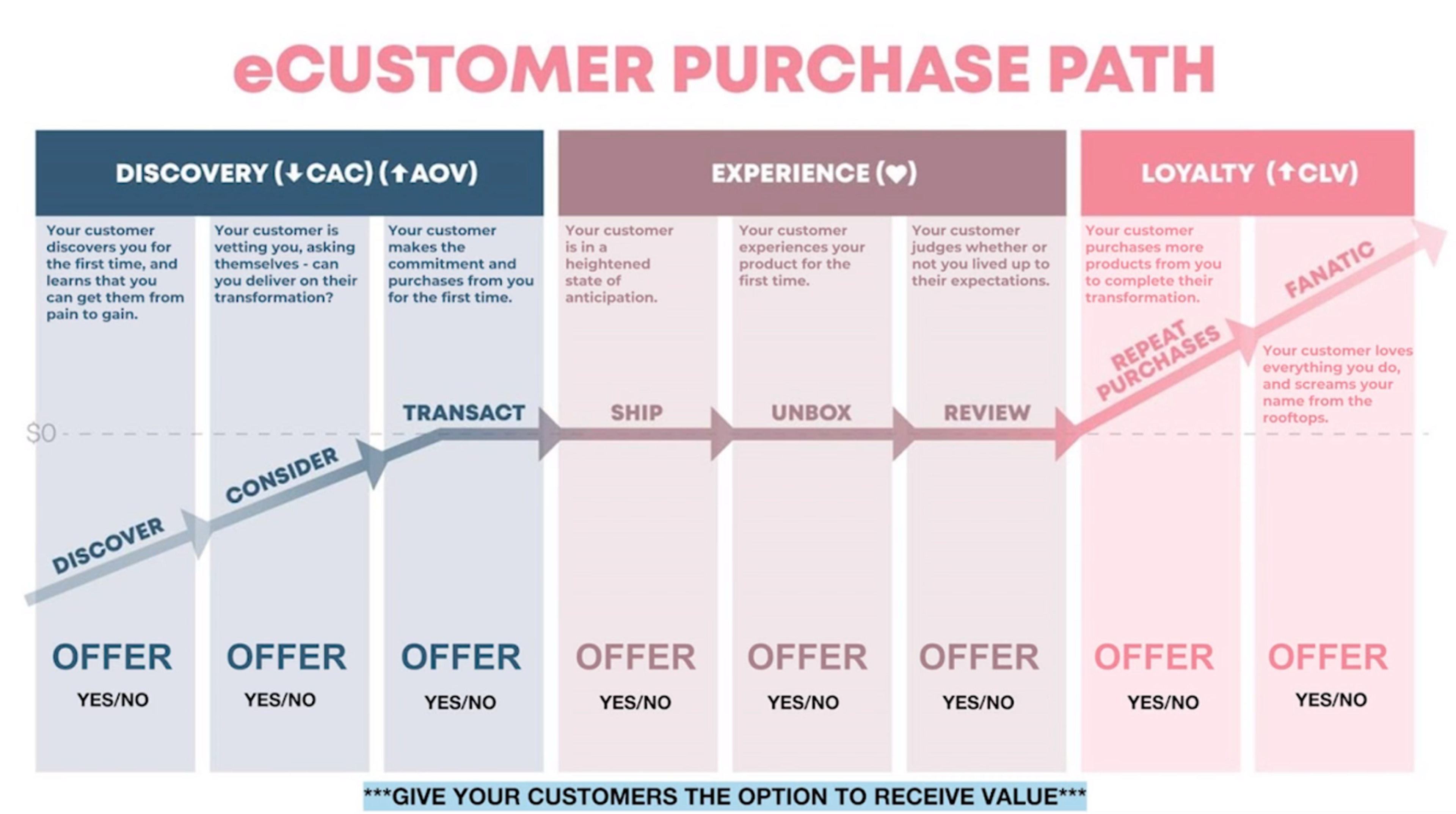
For small businesses aiming to compete effectively in the online marketplace, improving the customer journey is essential.
Here are a couple of things to keep an eye on when optimizing different stages of the user journey:
Watch Scott Cunningham’s webinar for more ideas on what to focus on at each stage of the user journey.
Given the rising costs of digital advertising, it's essential to maximize the value of every visitor to your site. This is where conversion rate optimization (CRO) comes in.
Instead of focusing only on attracting more traffic, you should focus on improving your website to get more conversions.
The easiest way to improve conversions is to A/B test your value propositions and headlines to see which grabs attention best.
When you try different headlines, you’ll be able to see what clicks with your audience. The best part is that you’ll be making data-driven decisions instead of just relying on gut feelings.
Take Crown & Paw for example. They played around with four different headlines on their homepage. And they achieved a 16% increase in orders with this one simple A/B test.

Another important part you should focus on when it comes to CRO is your product pages.
Product pages have huge potential: this is where the action happens on your ecommerce site. They're like a storefront window—if they're not appealing, customers simply won't stick around.
What’s more, most people skip the homepage and head straight to the product pages from ads, meaning that's where you need to make an impact.
Well-optimized product pages are visually appealing, benefit-focused, and provide all the necessary information to help customers make informed purchasing decisions.
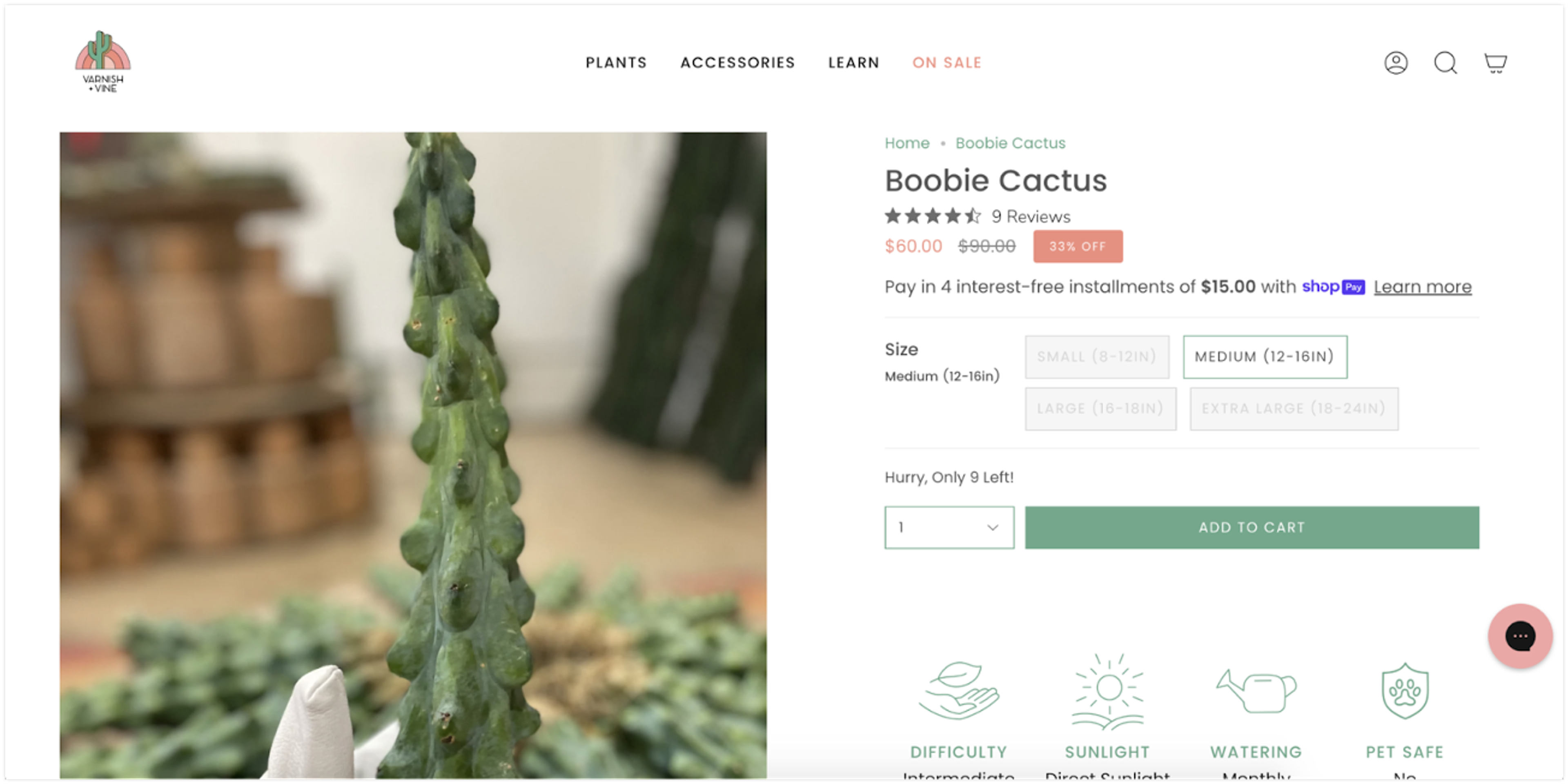
Take a look at how Varnish & Vine optimized its product pages.
Before, their product pages were a bit “blah.” They’d been using the product names as the main headline and didn’t really offer any other useful information in the above-the-fold section.
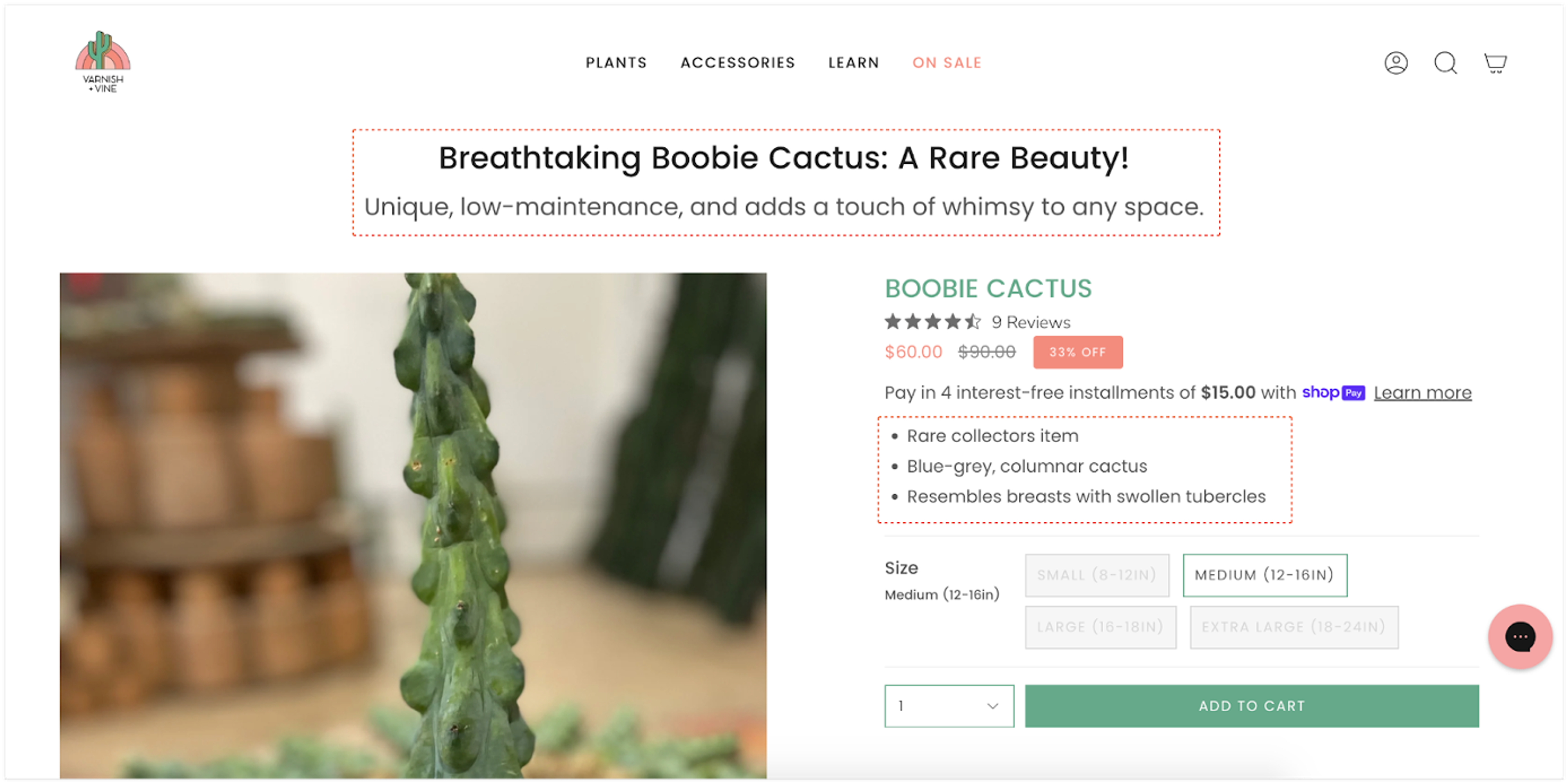
But they stepped it up, adding new headlines and benefit lists that spoke directly to their audience.
This is what the updated product pages looked like:
Have you ever heard of the 3/47/50 rule in ecommerce?
It means that:
You need to make sure that you convert those 47% of visitors into email subscribers so you can encourage them via emails to buy from you later.
Popups are a great way to do this if they’re well designed, non-intrusive, and offer genuine value to the user.
Here's a recipe for the perfect email popup:

Trust us, if you follow this recipe, your subscriber rate will skyrocket.
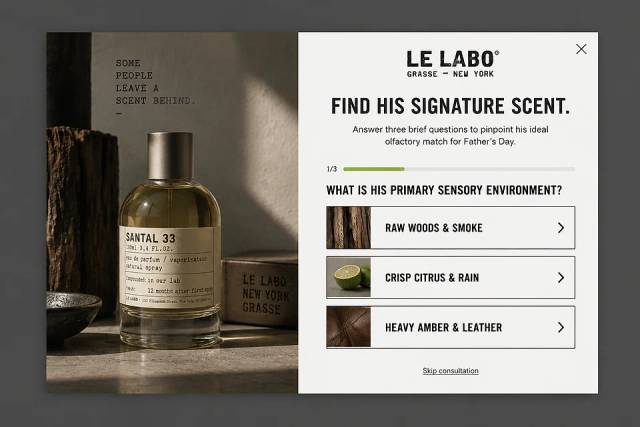
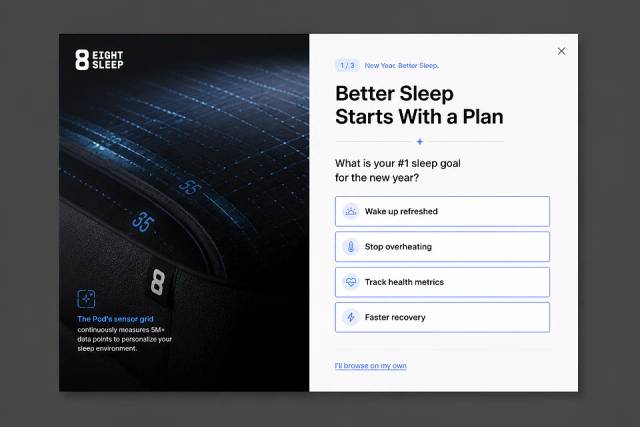
Here are some popup ideas to get you started:
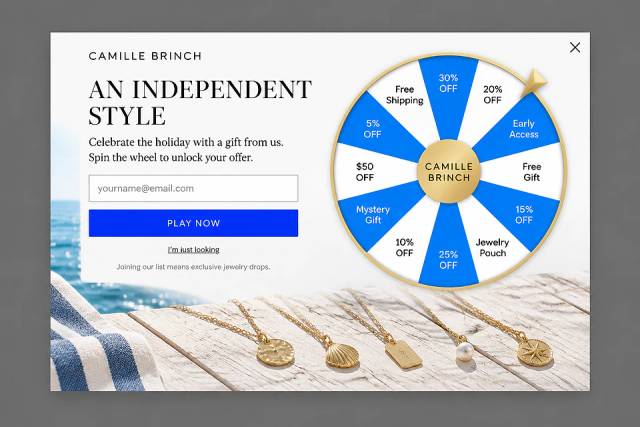
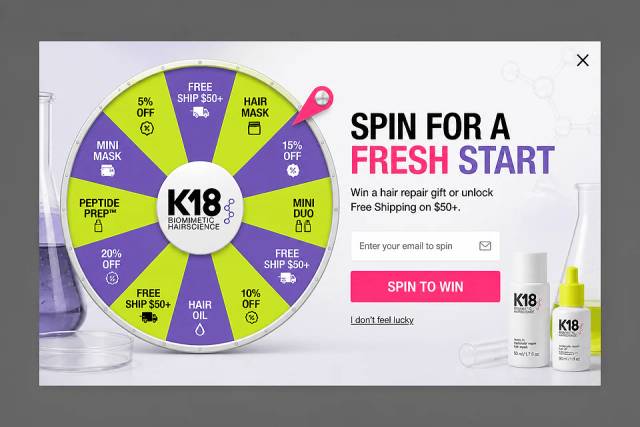
If you’d like to gamify the user experience just like Temu does, you can try these gamified popups:
While you may not be able to use the sheer size of your marketing budget to dominate the advertising space like Temu, there are alternative strategies you can employ to compete effectively.
Focus on product differentiation, user journey optimization, conversion rate optimization, and effective list-building and gamification techniques.
By staying focused, understanding your audience, and continuously optimizing your website, you can carve out your own space in the competitive ecommerce landscape—even in the shadow of giants like Temu.


Discover creative Thanksgiving marketing ideas to engage customers, build buzz, and drive sales before Black Friday and Cyber Monday.

Learn 5 ways ecommerce brands can turn new subscribers into recurring revenue using welcome flows, personalization, loyalty programs, re-engagement, and referrals.

In this article, we’ve compiled a list of the 25 top ecommerce apps that will help you streamline your operations, boost sales, and grow your online business.