








Black Friday Marketing Strategy: 30 Ideas for 2026
In this article, we'll share 30 actionable Black Friday marketing ideas for ecommerce businesses to make 2026 your most successful yet.
Let's take a look at the 21 best lead generation software for 2026 and discuss the features that any lead generation tool should have.
In short
Discover the top 21 lead generation software tools for 2026, designed to automate and enhance your prospecting efforts. From free options to premium solutions, these tools help businesses attract, capture, and nurture leads efficiently. Explore features like popups, landing pages, and CRM systems to optimize your sales pipeline and drive business growth.
Lead generation is one of the most important pillars of business growth.
Whether you run an ecommerce store, SaaS company, or service business, you need a steady stream of qualified prospects to fuel your sales pipeline.
That’s where lead generation software comes in. These tools automate the process of attracting, capturing, and nurturing leads—helping you reach more potential customers with less manual effort.
In this guide, we’ll break down:
Let's break it down.
Lead generation is the process of attracting potential customers to your business and capturing their information so you can nurture them into buyers. A lead generation platform automates this process by helping you:
These tools often streamline multiple parts of the funnel—saving time, improving efficiency, and delivering higher-quality leads to sales and marketing teams.
The primary goal of a lead gen tool is simple: build predictable, scalable pipelines of potential customers.
Successful lead generation typically uses both inbound and outbound strategies.
Here’s how they differ:
Inbound focuses on attracting prospects organically through valuable content and experiences.
Common inbound tactics include:
Inbound works because prospects come to you; they’re already interested or problem-aware.
Outbound is proactive. You reach out to potential customers directly.
Common outbound tactics include:
Outbound helps you scale faster by putting your message in front of people who may not know you yet.
Lead generation tools come in many forms, each supporting different stages of the customer journey.
Some tools help capture leads directly on your website, while others focus on finding contact data, qualifying prospects, or managing customer relationships.
Here are the main categories of lead generation tools you’ll encounter:
These tools help convert website visitors into leads using onsite messages like popups, sticky bars, surveys, or embedded forms.
Examples: popup builders, onsite personalization tools, lead form builders.
Create dedicated, conversion-focused pages for capturing leads—perfect for campaigns, downloads, and paid ads.
Examples: LeadPages, Unbounce.
Serve tailored content, offers, or messaging to increase conversions for different audience segments.
These tools help sales teams find email addresses, build prospect lists, and automate outreach.
Examples: AeroLeads, LeadFuze.
Centralize all lead data, score leads, and nurture prospects with sales pipelines and automation.
Examples: HubSpot, Pipedrive, EngageBay.
Send automated email campaigns, run segmentation, and score leads based on behavior.
Examples: ActiveCampaign, HubSpot, GetResponse.
Capture leads through paid channels like social ads, Google Ads, and retargeting campaigns.
If you're short on time, here's a tl;dr of the top 10 lead generation software tools to try out.
| Top 10 lead generation sotware | Free version of free trial | Pricing |
|---|---|---|
| OptiMonk | Free plan | From $19/month (billed yearly) |
| HubSpot | Free version | From $50/month |
| Skrapp | 100 free credits/month | From $30/month |
| Pipedrive | 14-day free trial | From €19.90/month |
| LeadPages | 14-day free trial | From $99/month |
| Unbounce | 14-day free trial | From $90/month |
| Sumo | Free version | From $39/month |
| OptinMonster | No | From $19/month |
| Sleeknote | 7-day free trial | From €62/month |
| EngageBay | Free version | From $14.99/month |
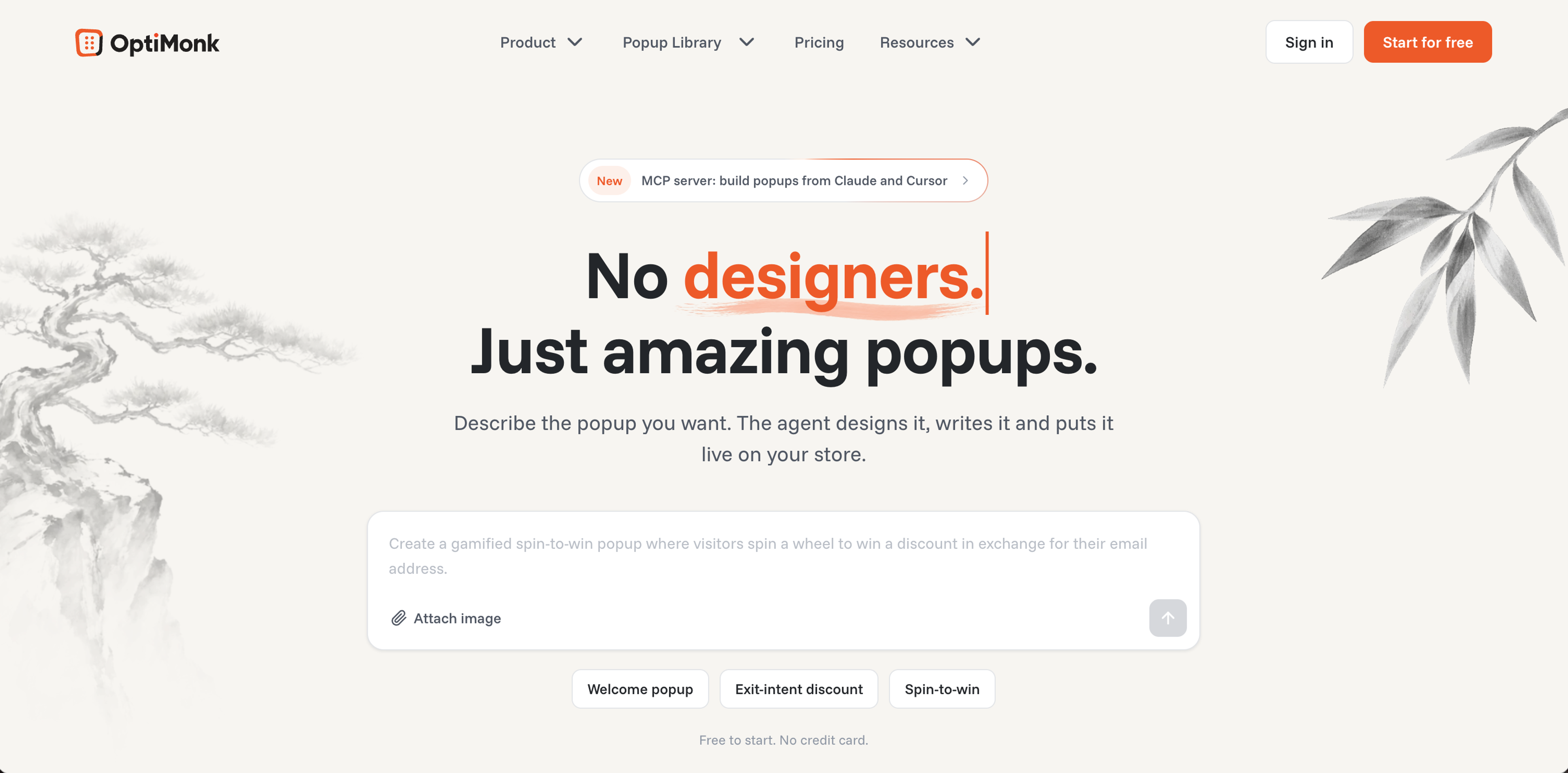
We believe that OptiMonk is the best lead generation tool out there. We're clearly biased, but 30,000+ brands use it, and it's rated 4.8 stars from 457 reviews on the Shopify App Store.
OptiMonk is an agentic popup builder for ecommerce stores. You describe the lead capture popup you want, and the AI agent designs it on brand, writes the copy, builds a mobile version and sets who sees it and when.
Use it for email and SMS signups, welcome discounts, exit-intent offers, lucky wheels, scratch cards and surveys.
Let's see how OptiMonk can help you to generate more leads!
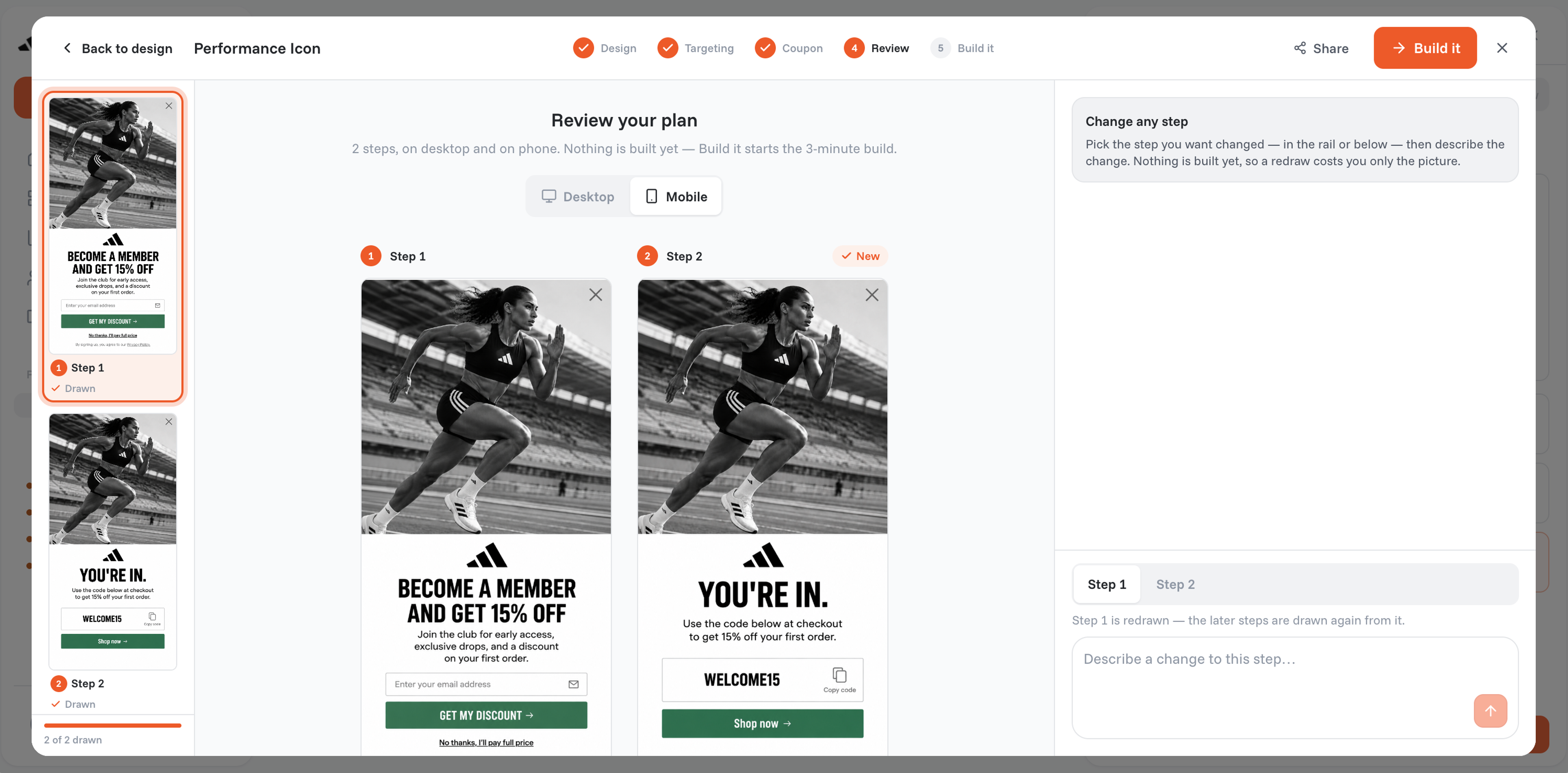
You don't start a lead capture popup from a template or a blank canvas. Tell the agent what you need, for example "a 10% welcome discount for first-time visitors, shown after 5 seconds", and it draws four concepts in your brand's colors, fonts and logo.
Every popup gets its own mobile version. To change something, ask the agent in plain words or adjust it by hand in the visual editor.
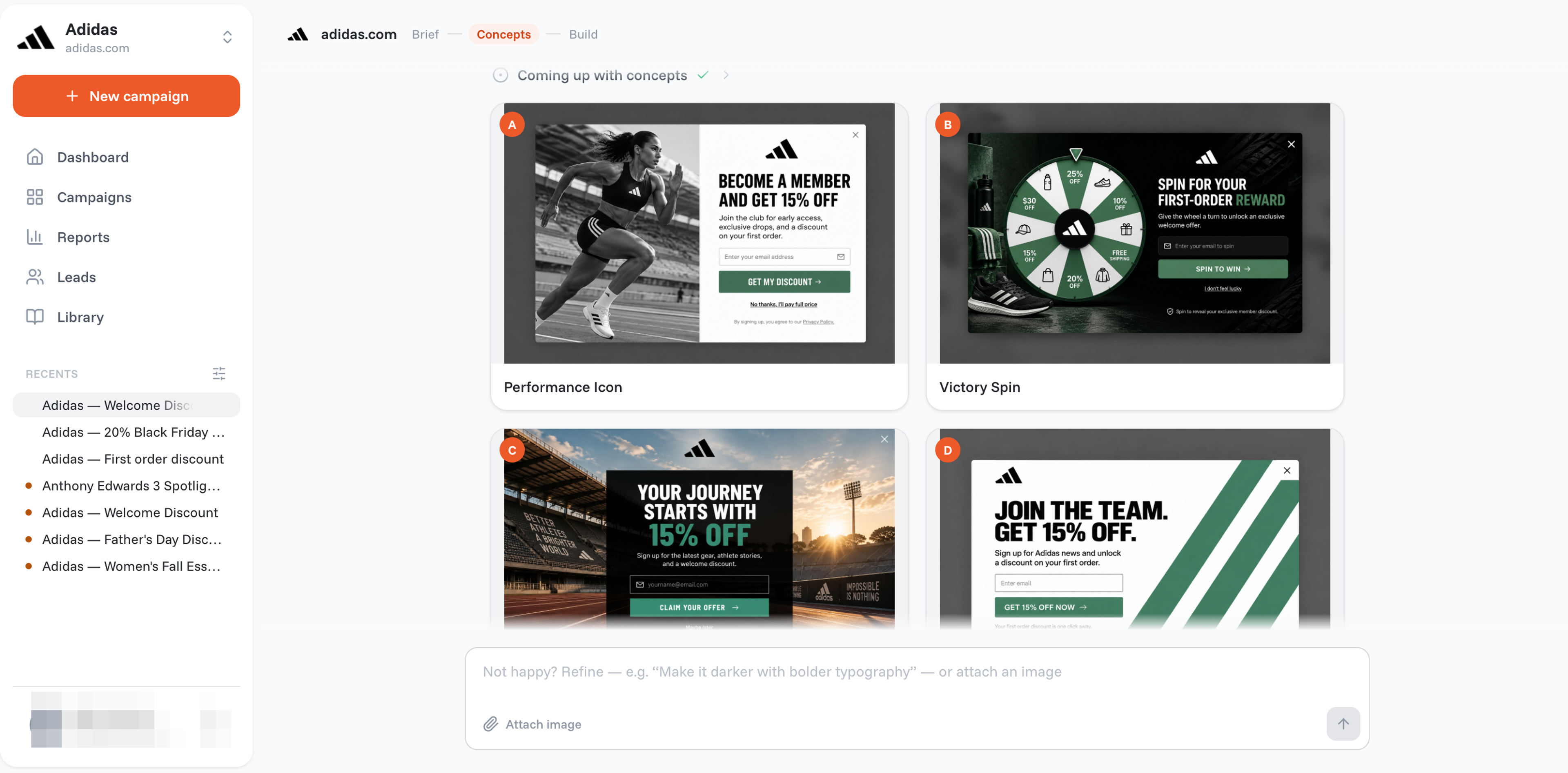
Multi-step popups help you collect more qualified leads.
Ask a question first and the contact details second, or show the discount code on a second "You're in" step after signup. The agent designs every step, on desktop and on mobile.
You can also use custom form fields to collect any additional contact details you need besides the first name and email address. You can gather info like date of birth, gender, address, and more.
Need ideas? Here are a few popups from the OptiMonk Popup Library:
Survey popups collect zero-party data: ask visitors what they're shopping for, then use their answers to target the next popup they see.
Quiz funnels are an increasingly popular way to generate information about qualified leads that can be used to personalize various touch points along the sales pipeline.
OptiMonk’s strength lies in its precise targeting capabilities. You can create tailored experiences using rules such as:
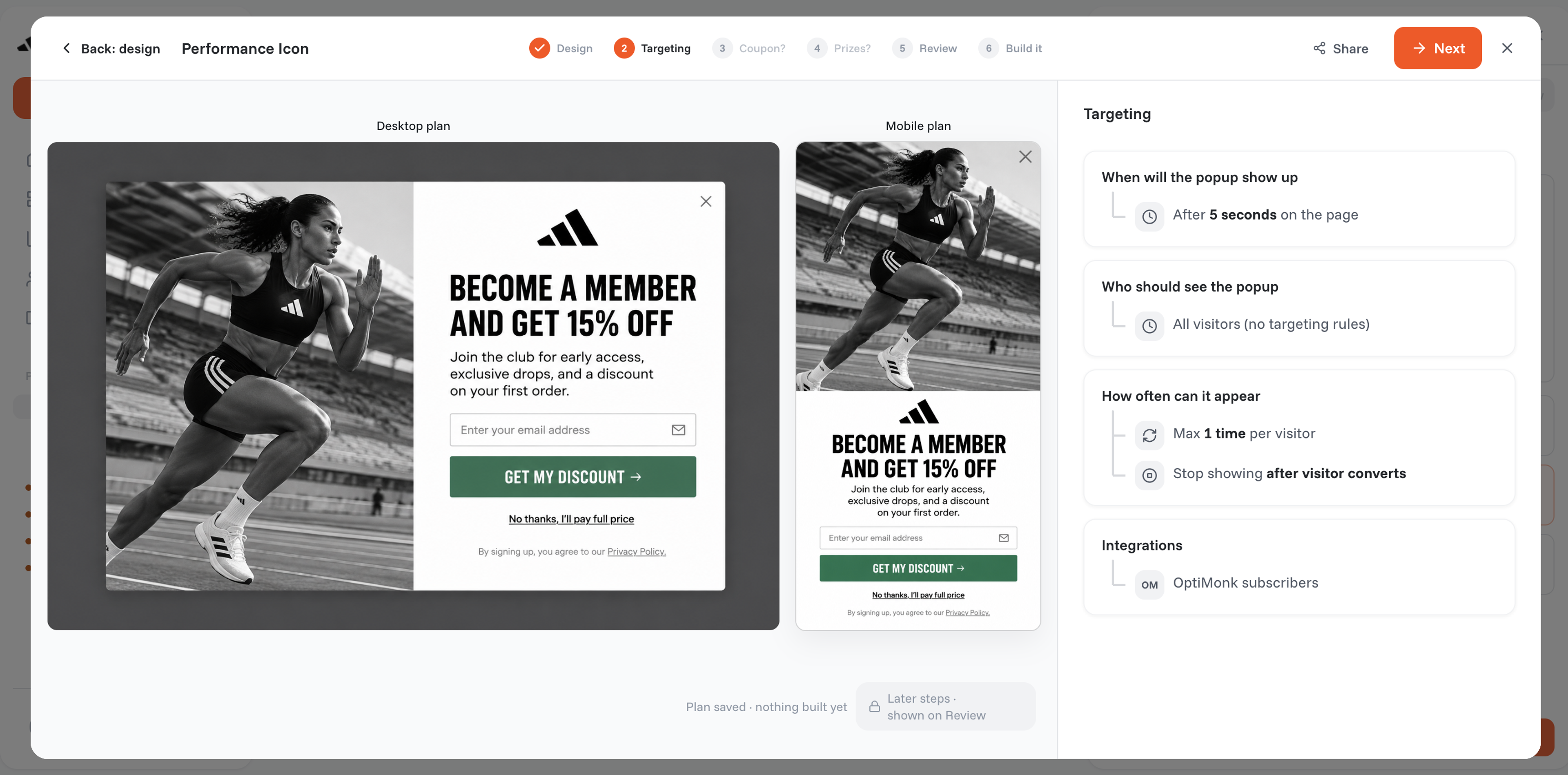
Free plan with every feature (10,000 pageviews/month). Paid plans from $19/month billed yearly ($29 monthly).
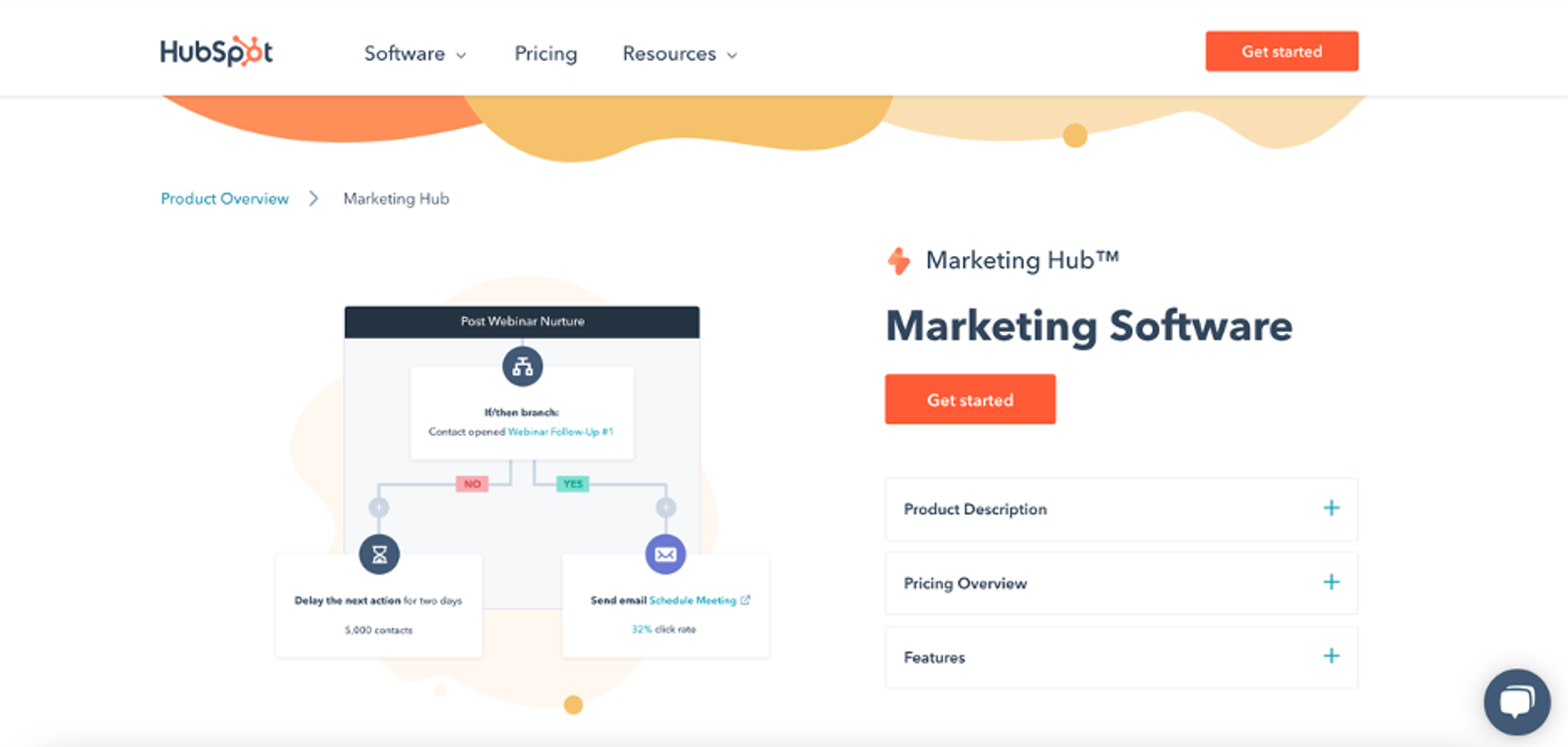
HubSpot is an integrated platform with marketing, sales, customer service, operations, and customer relationship management (CRM) software designed to empower your team and help your business grow. It's got all the common features of a CRM.
Essentially, you get an all-in-one solution including many marketing automation functionalities such as chatbots, live chat, and forms, making it one of the most versatile options among different lead generation software available today.
From $50/month, or the CRM software is free.
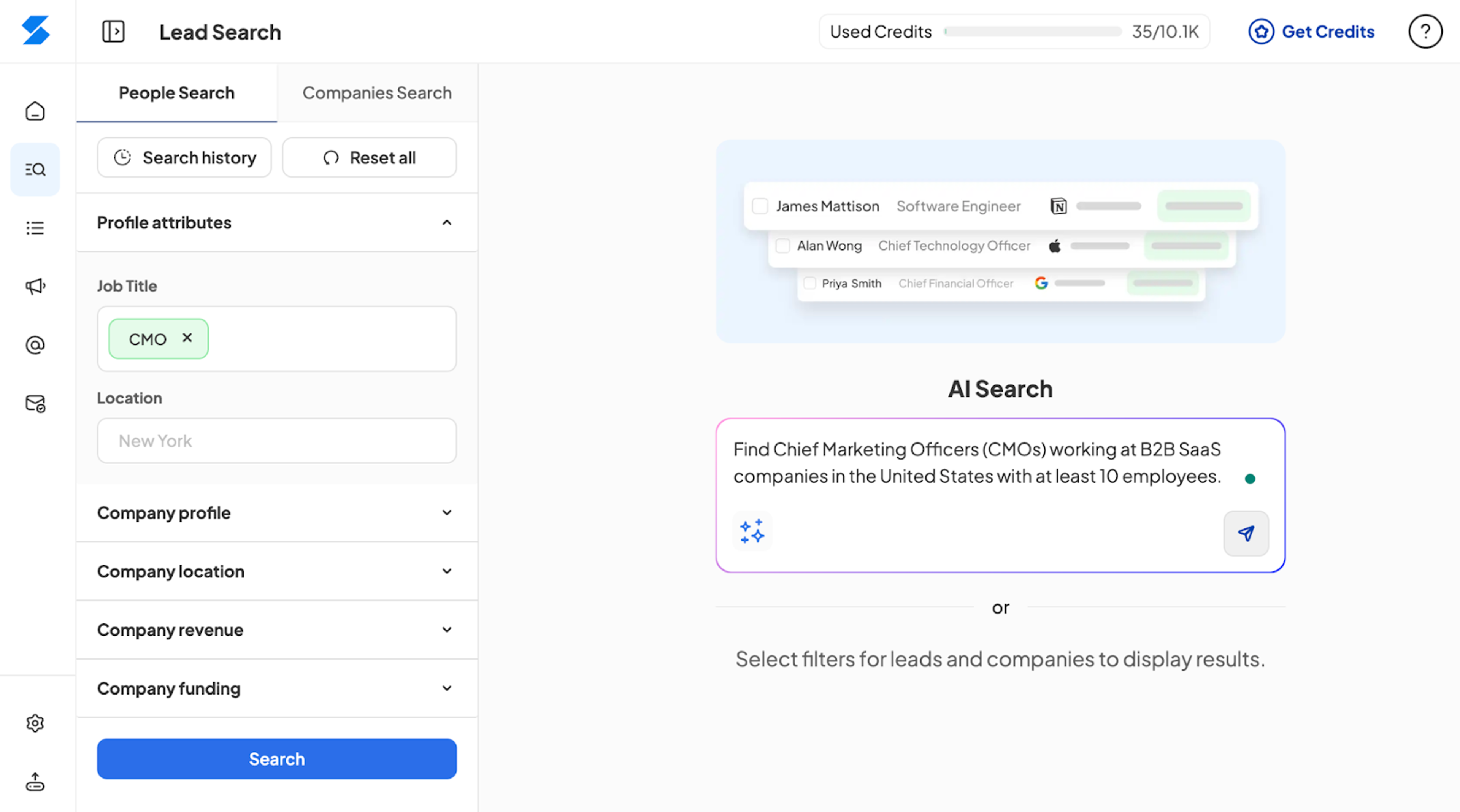
Skrapp helps you quickly find verified B2B email contacts and build targeted outbound lead lists. Search by name, company domain, or browse a database of 200M+ professionals by role, industry, or location.
The Chrome extension integrates with LinkedIn and Sales Navigator, allowing you to collect verified email addresses directly from targeted profiles. You will appreciate this feature if you already include LinkedIn in your prospecting workflow.
After you build the list, export it as CSV or sync it with your CRM. Skrapp also verifies emails, filtering out invalid and suspicious addresses before you launch outreach, which maintains low bounce rates.
Free plan available with 100 credits. Paid plans start at $30 per month.

Pipedrive's lead generation software is an easy-to-use CRM tool that allows you to get more qualified leads and grow your business. Pipeline helps streamline each step involved in converting a lead into a sale.
From $29/month. 14-day free trial available.
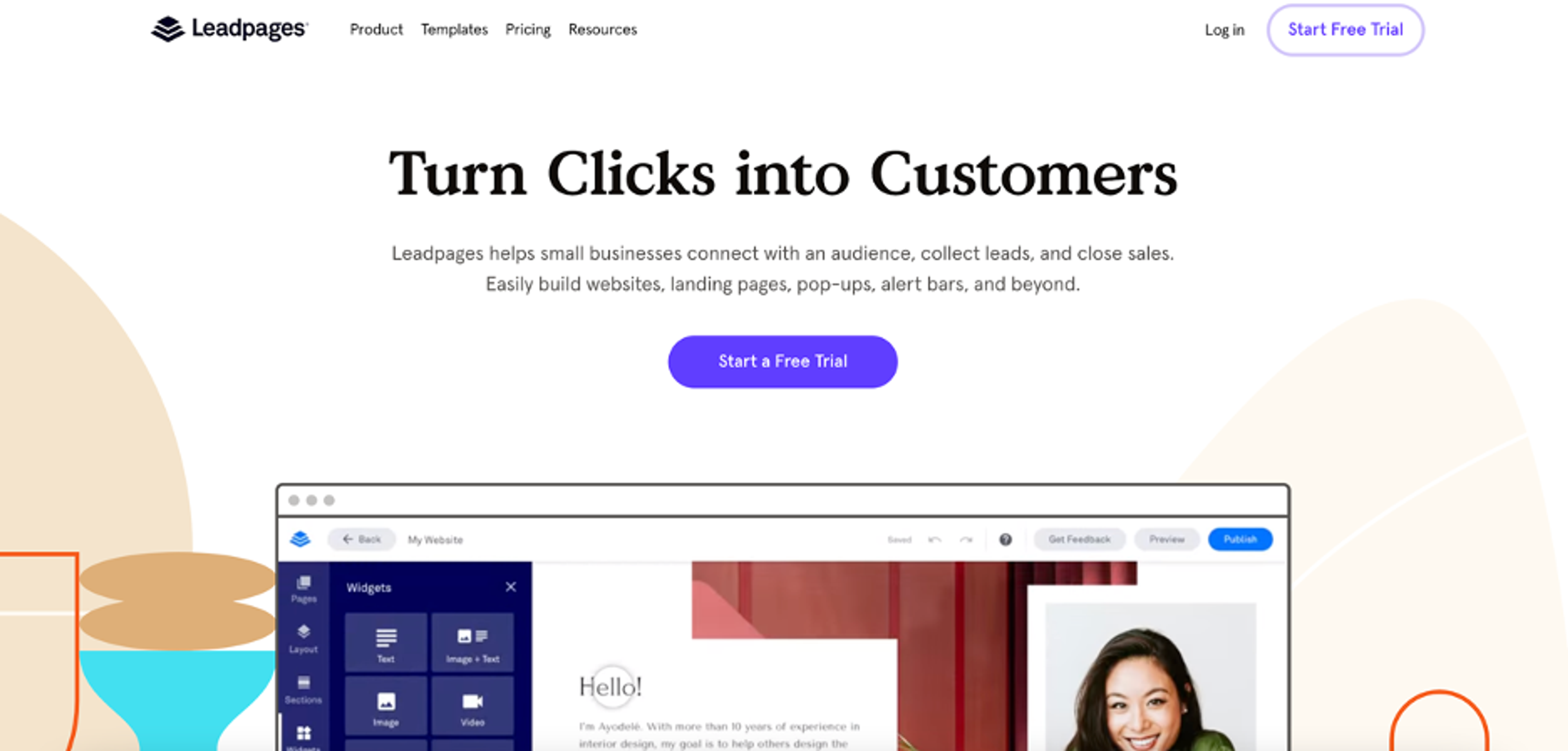
LeadPages is a landing page builder that helps small businesses improve their lead generation efforts and close sales. You'll be able to create attractive landing pages without any coding knowledge by customizing their pre-built templates.
From $49/month. 14-day free trial available.

Unbounce is an AI-powered landing page builder with features that allow you to quickly create beautiful, high-performing marketing campaigns and capture leads.
From $99/month. 14-day free trial available.

Sumo makes a suite of ecommerce apps that includes a powerful lead generation tool. Using their lead generation tool, you can create high-converting forms that generate new leads quickly and reliably.
One of Sumo's catchphrases is “set it and forget it,” which encourages users to set up their popups quickly and then let them run. It's a great option if you don't have much time to invest in running your popup campaigns.
The basic plan is free, or from $49/month.

OptinMonster is another lead generation tool that helps ecommerce businesses convert their website traffic into leads using popups and other onsite message tools.
From $16/month. There's no free trial available.

Sleeknote is a popup builder tool that allows you to create beautiful popup lead capture forms quickly and easily. This lead generation tool lets you collect more emails, increase your sales, guide website visitors around, or get in touch with them, all designed to boost your website conversions.
From €62/month. 7-day free trial available.

Engagebay is an all-in-one CRM software that allows you to capture quality leads and improve your communication with new and existing customers. In the CRM software, you can store unlimited contacts and keep track of all your customer details in one place.
Free, or from $14.99/month.
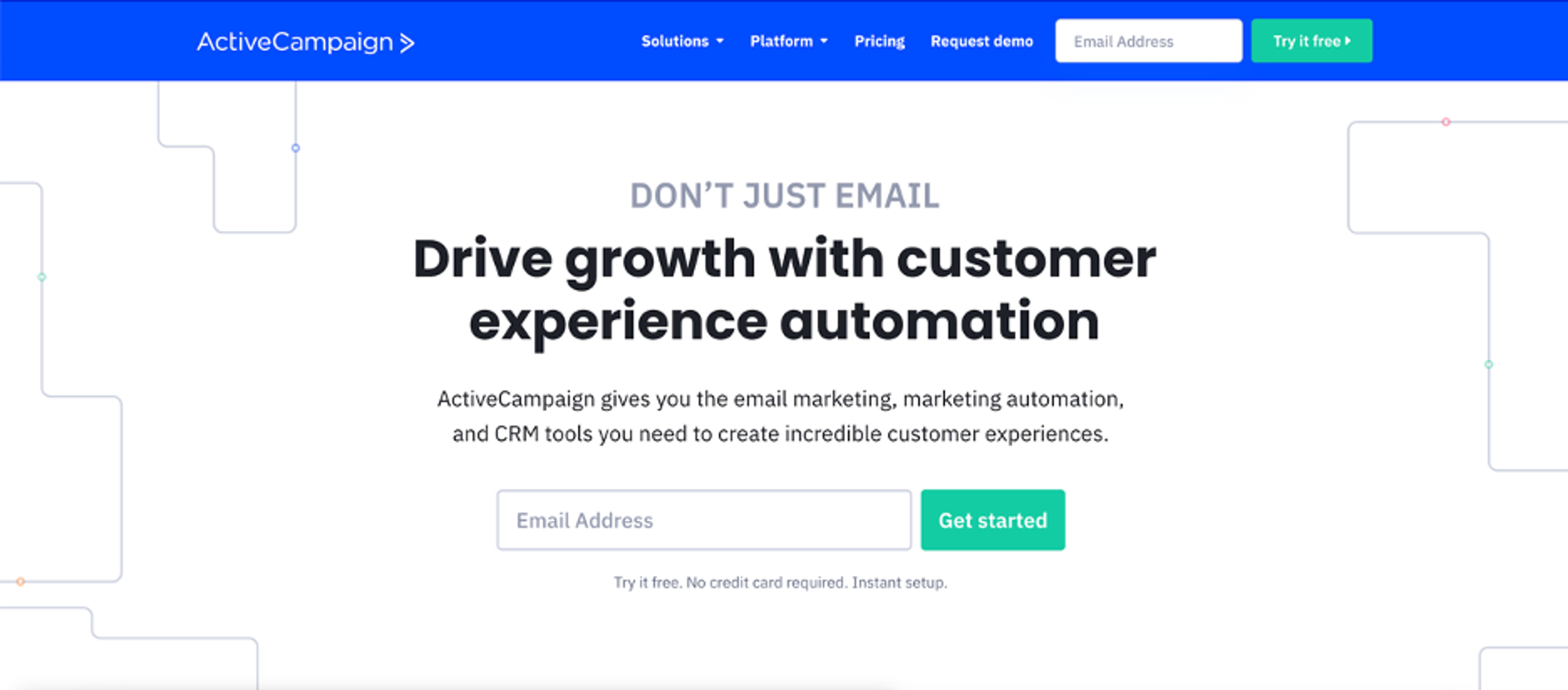
ActiveCampaign is a customer experience management tool that leans heavily on AI and automation. It's on this list because it allows you to create lead generation popups and inline forms.
The pricing depends on the tools you'd like to use. The email & marketing automation tool starts from $9/month (if paid yearly). Free trial available.

Mailchimp is primarily known as an email marketing tool, but it also allows you to create on-site popups and lead generation forms to collect new leads.
Free, or from $11/month.

GetResponse is another all-in-one marketing platform that has email marketing features as well as a lead generation software that helps online stores collect contact information from their website visitors by using lead capture forms and landing pages.
You can start for free (up to 500 contacts).

Wishpond offers several online marketing solutions in addition to their lead generation software, including tools for building landing pages, websites, and payment processing.
Speak with a Wishpond specialist for details.

Sendinblue is another all-in-one marketing solution that doesn't just allow you to generate leads, but also send email & SMS marketing messages and build landing pages.
Free, or from $25/month.
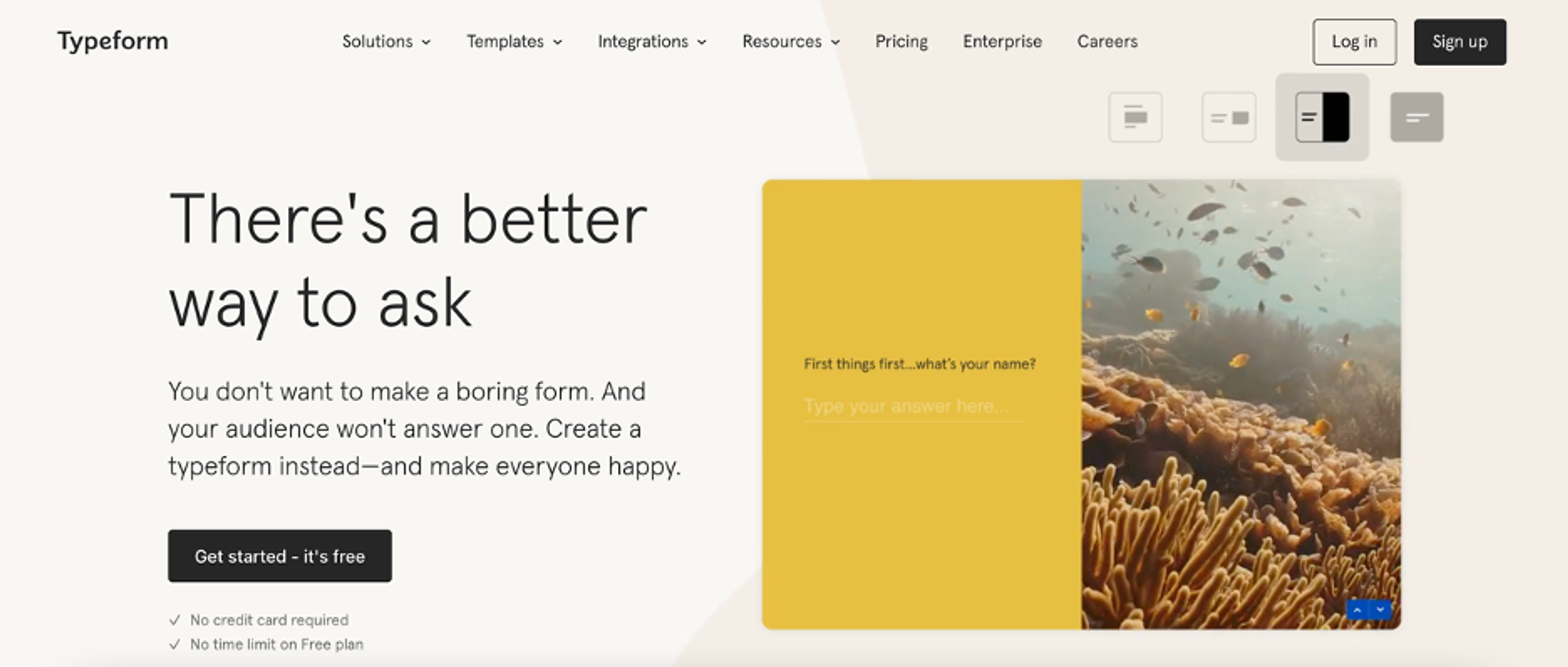
Typeform also allows you to create multi-step lead generation forms that have a similar style to Google forms. This is a great lead generation system for finding out more about your target audience, as well as receiving feedback from your customers.
Free, or from €25/month.

Agile CRM is an easy yet affordable Customer Relationship Management (CRM) software that helps to automate your sales, marketing, and service in one platform.
Free, or from $14.99/month.
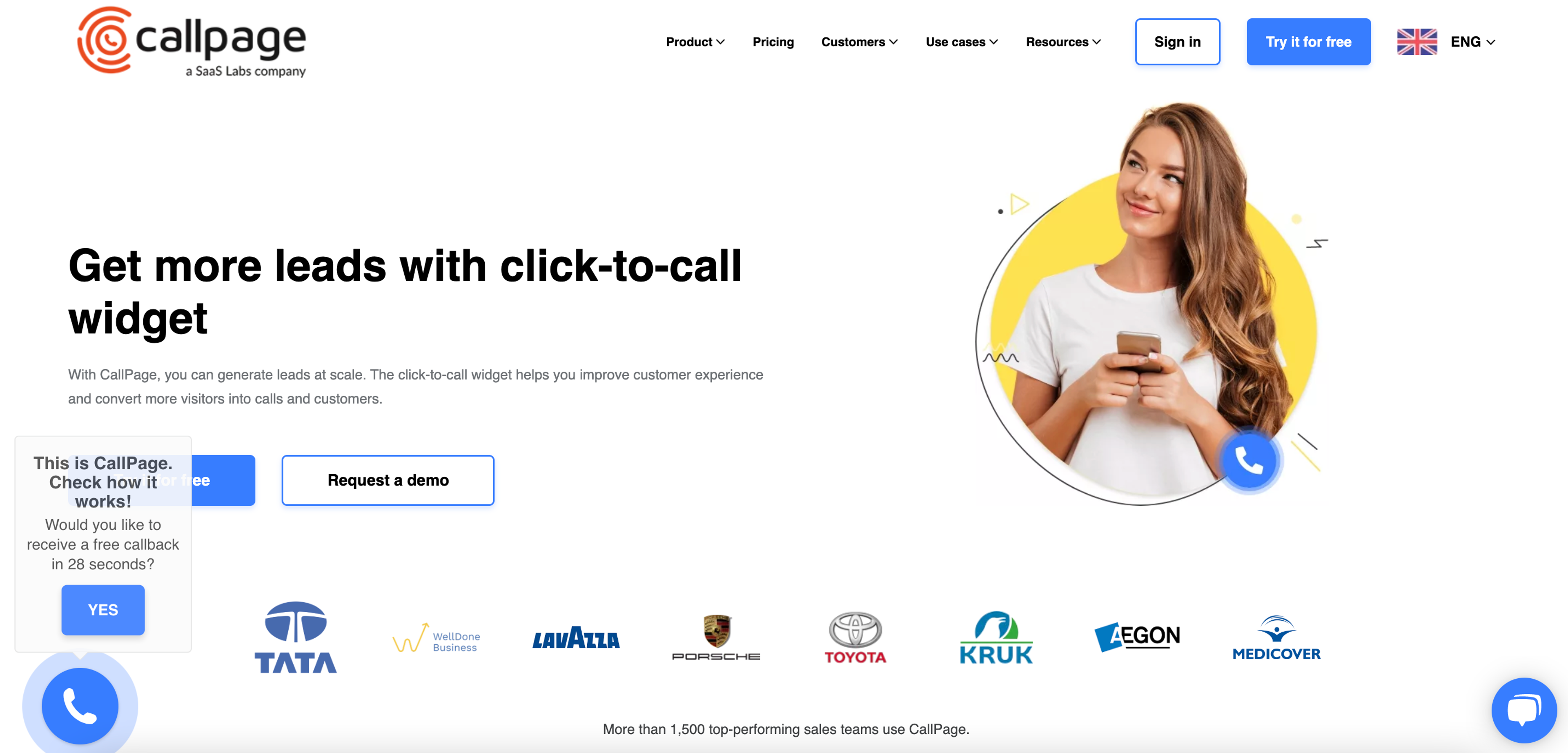
With CallPage's lead generation tool, you can generate more sales calls and qualified leads from your website using a click-to-call widget.
From $25/month. Free trial available.

AeroLeads is an email finder tool that is especially useful for sales teams. It helps to find an email address and build an email list for your business.
From $49/month. Free trial available.

LeadFuze calls itself a search engine for leads. It's a prospecting tool that helps to create a list of leads and candidates for your business by aggregating the world's professional data and the companies they work for.
From $132.30/month. Free trial available.
LeadsBridge is an Integration Platform as a Service (iPaaS) solution that enables companies to enhance their omnichannel strategy by orchestrating their business data.
This is one of the best lead generation tools for getting the most out of your potential leads by bringing together all the data you have about each customer.
Free, or from $29/month.
Choosing the best lead generation software depends on your business goals, workflow, and available resources.
Rather than picking a single “best” tool, focus on finding the solution that aligns with your strategy, budget, and growth stage.
Start by identifying what you want to achieve with lead generation. Ask yourself:
Clear goals help you choose tools with the right features, whether it's popups, landing pages, prospecting, or CRM workflows.
Cost isn’t just the monthly subscription. It may also include:
Evaluate whether the tool will deliver ROI, not just whether it fits the budget. A more expensive tool that increases conversions may pay for itself faster than a cheap tool that doesn’t move the needle.
Your lead generation needs will evolve as your business grows. Choose tools that can scale with you without forcing a full system switch later.
Look for:
A scalable tool reduces long-term friction and prevents costly migrations.
Reviews from real users, especially businesses that resemble yours, provide valuable insight into what you can expect from a tool in practice. These testimonials often highlight factors such as ease of use, reliability, customer support quality, and actual performance results.
They can also uncover hidden limitations that aren’t immediately obvious from product pages. Checking platforms like G2, Capterra, or Trustpilot helps validate your decision with real-world feedback.
Most lead generation tools offer some form of hands-on access, including free plans, free trials, live demos, or sandbox environments. These options let you test the tool’s usability, explore its feature depth, and confirm it integrates smoothly with your existing systems.
It’s also the best way to check reporting quality, load speed, and overall workflow intuitiveness.
Getting real experience with the software ensures you choose a tool that fits your team’s daily processes, not just one that looks good on paper.
Now that you know how to choose a tool strategically, let’s move on to the essential features every lead generation platform should include.
Lead generation tools should be built for marketers and sales teams, not developers.
Look for:
If a tool feels complicated from the start, it will slow down your workflow and reduce adoption across your team.
Your lead gen software needs to communicate seamlessly with your CRM, email marketing system, analytics tools, and ecommerce platform.
Before choosing a tool:
Strong integrations ensure your lead data flows automatically—saving time and reducing manual work.
To optimize results, you need full visibility into how each campaign performs. Look for analytics that offer real-time performance data, A/B testing insights, detailed conversion tracking, segmentation analytics, and funnel-level visibility.
The more comprehensive your reporting, the easier it becomes to refine your lead generation strategy and scale what works.
B2B lead generation is the process of identifying and attracting potential business clients. Unlike B2C, where campaigns target large groups of consumers, B2B typically involves longer sales cycles, higher-value contracts, and more personalized outreach.
Because of this, B2B lead generation relies heavily on tailored messaging, relationship-building, and multi-step nurturing to move prospects toward a purchasing decision.
Lead generation software supports both marketing and sales teams.
Together, these systems create a unified pipeline—from awareness to conversion.
Demand generation focuses on creating awareness and interest in your product or category. Lead generation focuses on capturing and converting that interest into contact information. Demand gen builds the audience; lead gen captures and qualifies it.
Data enrichment enhances basic lead information (like name and email) with additional details such as company size, job title, location, or engagement behavior. This helps you better understand your prospects, score leads more accurately, and reach the right decision makers with personalized messaging.
Cold email remains one of the most effective outbound tactics for reaching high-value prospects. When combined with data enrichment and segmentation, cold email helps teams identify the best leads and deliver personalized messages that convert more consistently.
As you can tell from this long list, there are plenty of great lead generation tools to choose from. Your lead generation tool should have the basic features we identified, as well as extra features that will help you accomplish your marketing goals.
However, you shouldn’t just pick one lead generation tool and run with it. Ideally, you want to create a lead generation system that keeps new leads flowing into your sales pipeline.
To do that, you’ll need to use a few lead generation tools at once to pull from different channels. We’d recommend slowly adding more tools to your lead generation system and experimenting with what brings you the most success (especially when you have access to a free plan or free trial).
Ready to capture more leads on your store? Describe your first popup to the OptiMonk agent. It's free to start, no credit card.


In this article, we'll share 30 actionable Black Friday marketing ideas for ecommerce businesses to make 2026 your most successful yet.

Learn about email marketing frequency for ecommerce stores. Most send 1-3 emails per week, with frequency adjusted by subscriber engagement and store type.

In this guide, you'll learn what UTM codes are, how they work, and how to generate UTM links for email, social, and ads.