




40 Welcome Message Examples for Your Website (Copy and Paste)
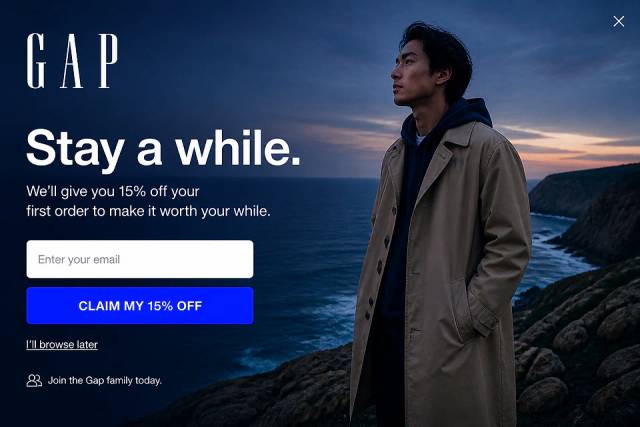
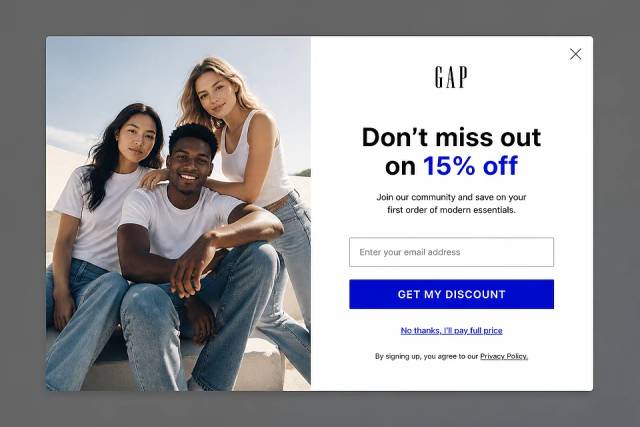
40 website welcome message examples for online stores, grouped by situation and industry, ready to copy into a welcome popup.
Compare 8 OptinMonster alternatives for online stores, with prices from each vendor's own pricing page, free plans and Shopify fit.
In short
The best OptinMonster alternatives for online stores are OptiMonk, Privy, Sleeknote, Wisepops, Poptin, Klaviyo sign-up forms, Justuno and Popup Maker. Stores switch because OptinMonster has no free plan, renews at a higher price and keeps exit intent and ecommerce integrations on its higher tiers. This guide compares their prices, free plans and Shopify fit.
The best OptinMonster alternatives for online stores are OptiMonk, Privy, Sleeknote, Wisepops, Poptin, Klaviyo sign-up forms, Justuno and Popup Maker. Stores usually switch because OptinMonster has no free plan, renews at a higher price, and keeps exit intent and ecommerce integrations on its higher tiers. If you run a store, choose a tool with cart-based targeting and a native Shopify app.
Prices below are from each vendor's own pricing page, as of October 2026. If you're new to onsite popups, start with our guide to what a popup window is.
| Tool | Free plan | Entry paid plan | Priced by | Exit intent on entry plan | Best for |
|---|---|---|---|---|---|
| OptiMonk | Yes, all features (10,000 pageviews/mo) | $19/mo billed yearly ($29 monthly) | Pageviews + AI credits | Yes, every plan incl. Free | Stores that want popups designed by AI |
| Privy | No (15-day trial) | Pop-ups only: from $24/mo | Pageviews (pop-ups) or contacts (email) | Yes | Shopify stores that also want email |
| Sleeknote | No (14-day trial) | Core: €49/mo billed yearly | Monthly visitors | Yes | Mid-size stores with a marketing team |
| Wisepops | Not published | Not published (quote after a demo) | Not published | Not stated | Stores wanting popups plus other onsite formats |
| Poptin | Yes (1,000 visitors/mo) | Basic: $25/mo billed yearly | Monthly visitors | Yes | Small stores on a budget |
| Klaviyo sign-up forms | Yes (forms on the free Klaviyo plan, 250 profiles) | From $20/mo (up to 500 active profiles) | Active profiles | Not stated | Stores already on Klaviyo email |
| Justuno | No | Lite: $59/mo (up to 10K visitors) | Monthly visitors | Not stated on pricing page | Larger stores, done-for-you services |
| Popup Maker | Yes (free WordPress plugin) | Pro: $99/yr | Number of sites | Yes (Pro) | WordPress sites |
| OptinMonster (for reference) | No | Basic: $9/mo billed yearly | Impressions | No, from Pro ($37/mo) | WordPress lead generation |
Note: tools measure usage differently (pageviews, visitors, impressions, contacts), so compare what each plan covers for your traffic, not just the headline price.
OptinMonster is a capable lead-generation tool, and many sites use it happily. Online stores tend to leave for five reasons.
OptinMonster states on its own site that it doesn't offer a free version or a freemium plan; you get a 14-day money-back guarantee instead. Its WordPress plugin is free to install, but it needs an OptinMonster account to work.
On OptinMonster's pricing page, A/B testing starts on Plus ($27/mo billed yearly), Exit Intent® on Pro ($37/mo), and integrations with Shopify, WooCommerce and other ecommerce platforms on Growth ($67/mo). For a store, those are core features, not extras.
The yearly prices shown are introductory. As of October 2026, OptinMonster's pricing page lists:
| Plan | First year | Renews at (per year) | Sites | Impressions/mo |
|---|---|---|---|---|
| Basic | $108 | $210 | 1 | 2,500 |
| Plus | $324 | $570 | 2 | 10,000 |
| Pro | $444 | $870 | 3 | 25,000 |
| Growth | $804 | $1,470 | 5 | 100,000 |
OptinMonster grew up as a WordPress lead-capture tool. Stores often want targeting built on shopping behavior (cart value, products in the cart, returning customers) and a native app for their store platform.
OptinMonster's plans are capped by campaign impressions: every time a campaign is shown counts. On a busy store with several campaigns, impressions run out faster than you might expect.
We looked for tools an online store can run on its own and compared them on:
We're OptiMonk, so we put ourselves first; we've tried to describe every tool fairly, including our own downsides.
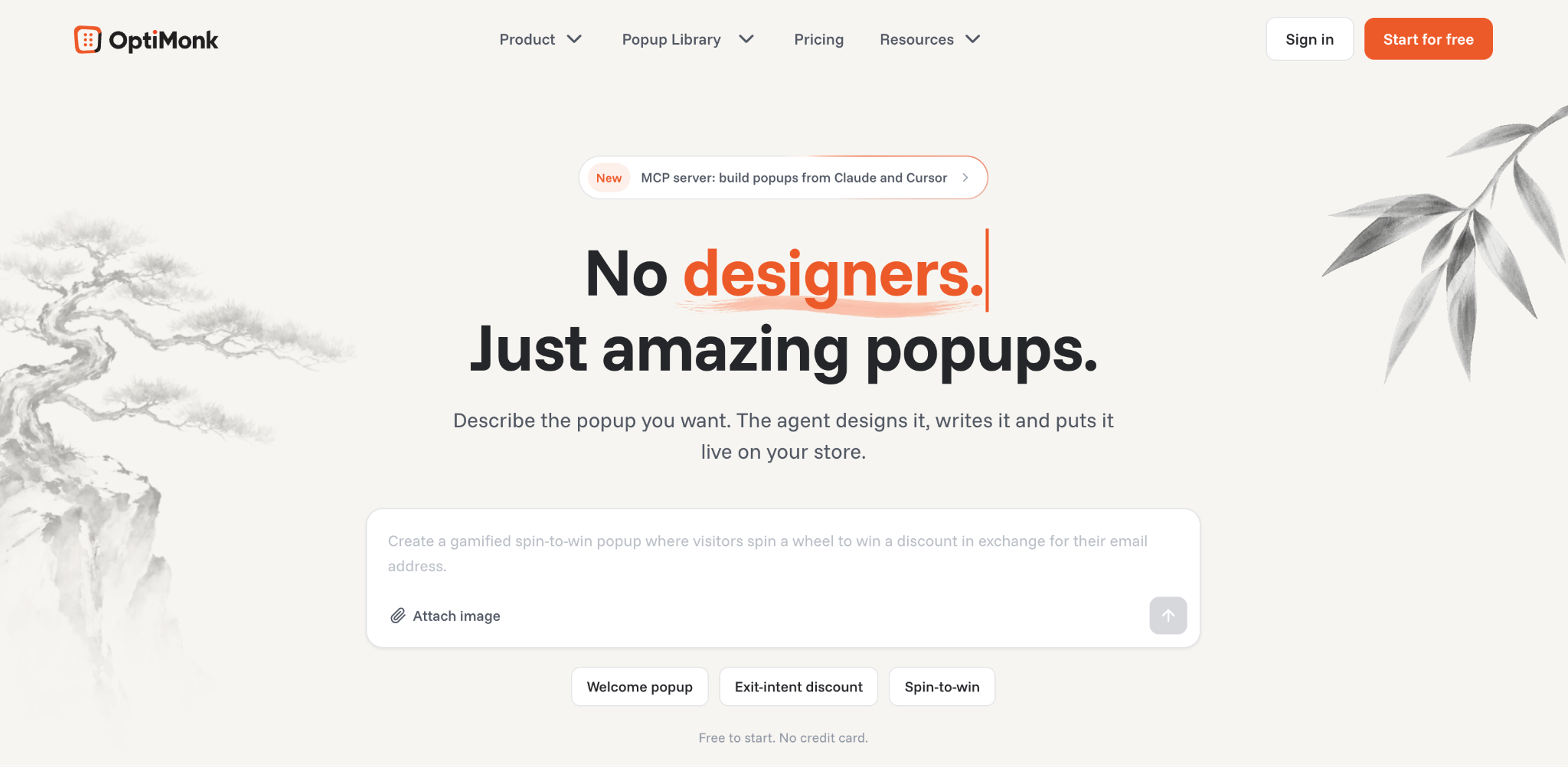
Best for: stores that want popups designed for them, not built from a template.
OptiMonk is an agentic popup builder. You describe the popup you want in one sentence, the AI agent draws four concepts for your brand, and after you pick one it builds the popup, including a separate mobile version, and puts it live. The same conversation keeps going after launch: it runs A/B tests and suggests the next campaign.
Key features
Pricing: Free plan with every feature, up to 10,000 pageviews and 1,000 AI credits a month on one domain. Paid plans from $19/mo billed yearly ($29 billed monthly). Plans differ only in traffic, AI credits and domains.
Pros
Cons
Comparing directly? See OptiMonk vs OptinMonster.
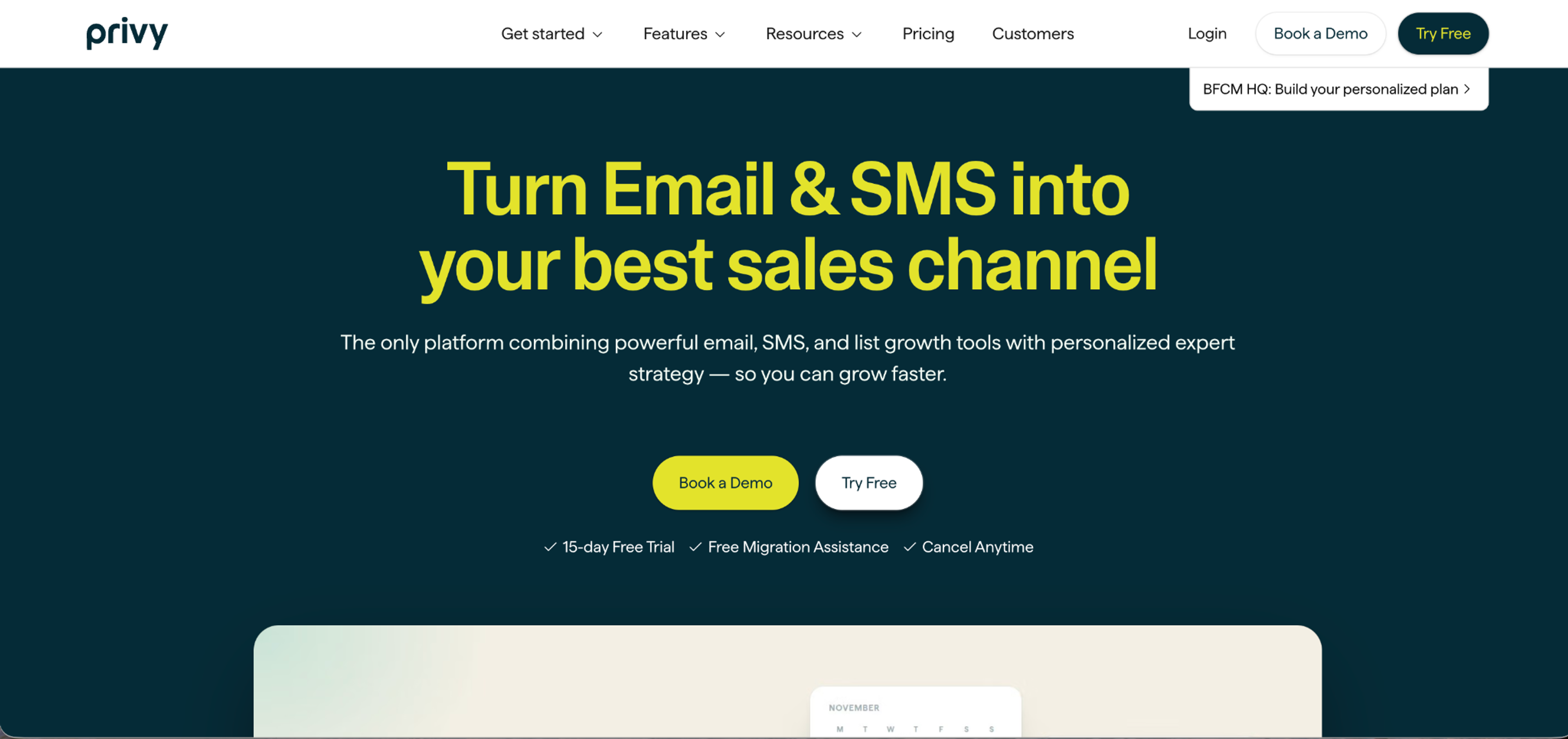
Best for: Shopify stores that want popups and email marketing in one tool.
Privy combines onsite displays with email and SMS marketing for small and mid-size stores.
Pricing (Privy's pricing page, Oct 2026): no forever-free plan; 15-day free trial with no card. Pop-ups & Displays plans from $24/mo (up to 10,000 pageviews). Email plans from $30/mo (up to 1,500 contacts). Exit intent popups are listed on the plans.
Pros: popups and email in one place; built for ecommerce; syncs contacts with Shopify, BigCommerce and Wix.
Cons: no free plan; email pricing grows with your contact list.
See also: Privy alternatives.
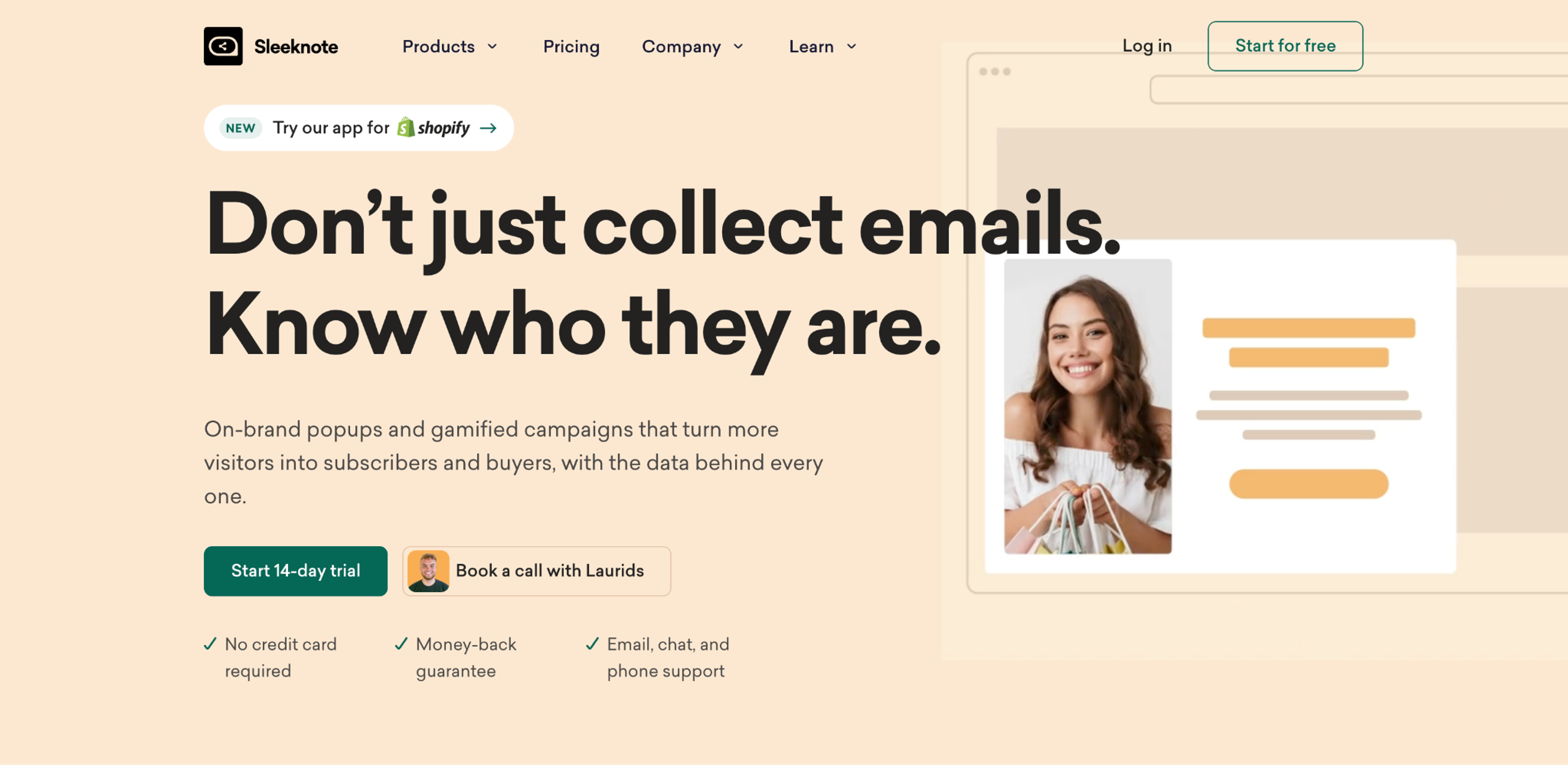
Best for: mid-size stores with a marketing team that wants a polished onsite tool.
Pricing (Sleeknote's pricing page, Oct 2026): no free plan; 14-day trial. Core plan €49/mo billed yearly, for up to 25,000 monthly visitors. Exit-intent trigger included on Core. Shopify app available.
Pros: ecommerce focus; exit intent on the entry plan.
Cons: no free plan; priced in euros and billed yearly at the entry level.
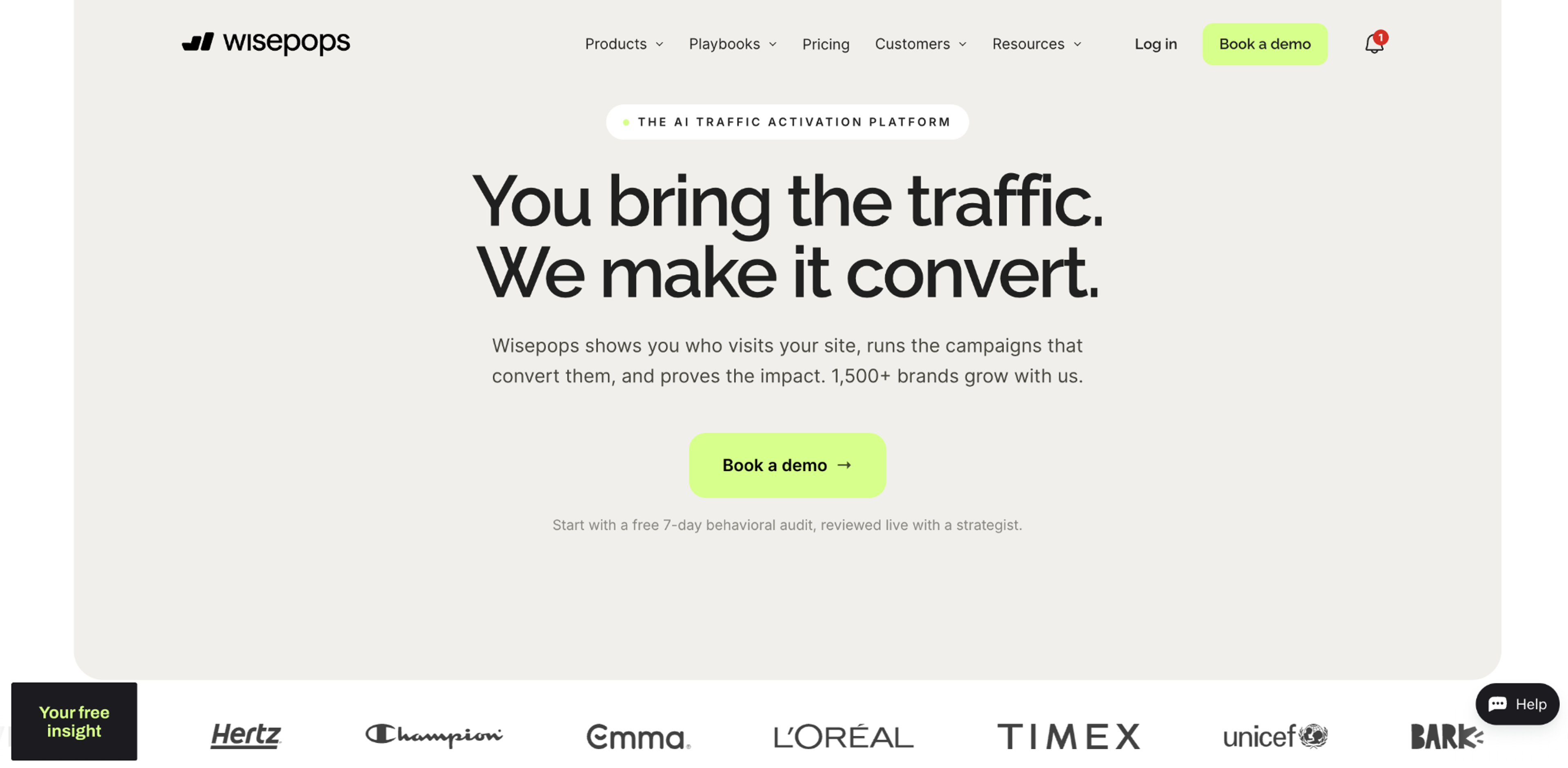
Best for: stores that want popups alongside other onsite formats.
Pricing (Wisepops' website, Oct 2026): prices aren't published. You request a demo and get a quote, so you can't compare costs before talking to sales.
Pros: many onsite formats beyond popups.
Cons: no public pricing; you need a demo to get a quote.
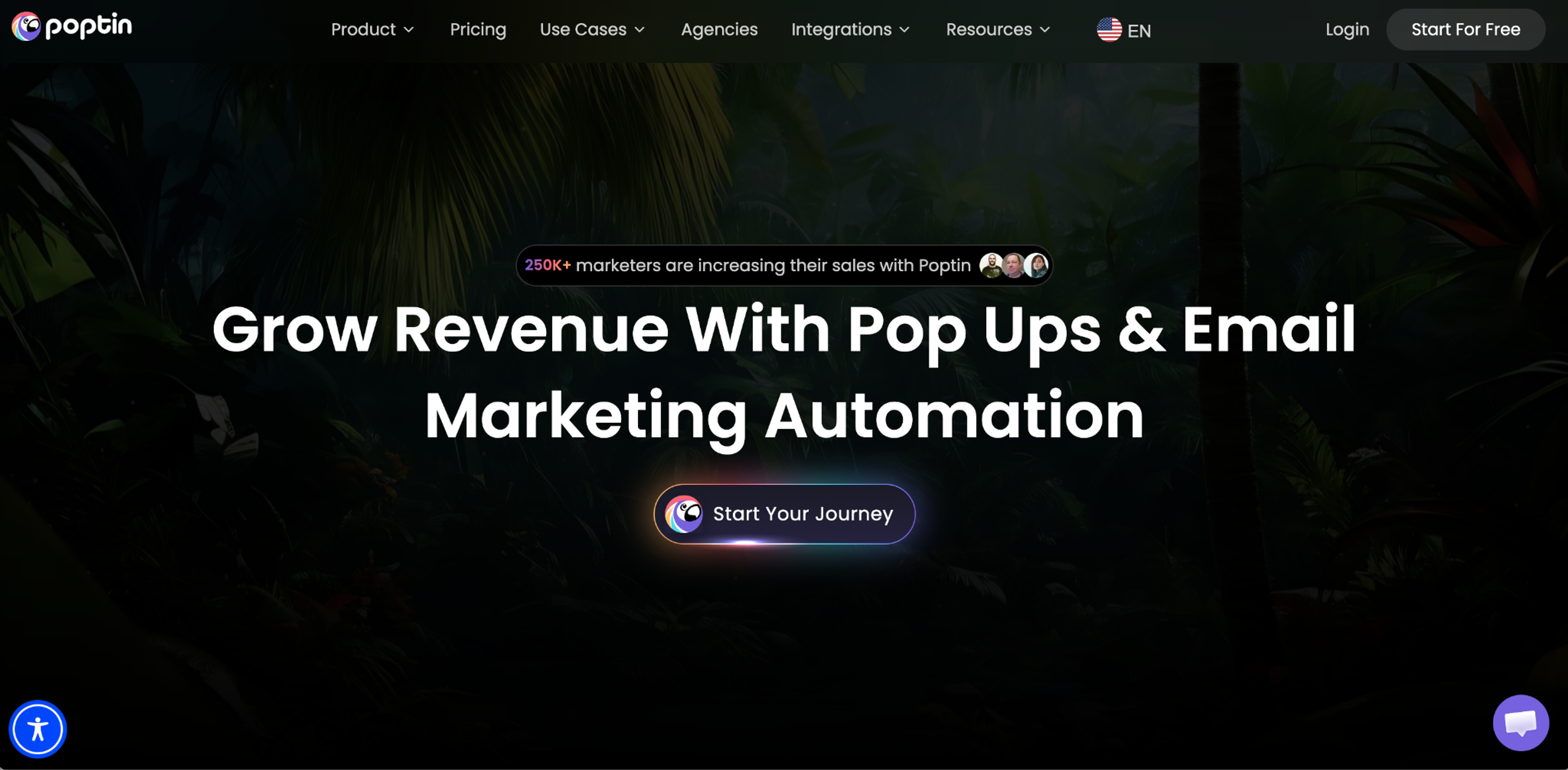
Best for: small stores on a tight budget.
Pricing (Poptin's pricing page, Oct 2026): free plan for 1,000 visitors a month on one domain. Basic plan $25/mo billed yearly ($240/yr). Exit intent included in Basic. Shopify and Wix features listed.
Pros: a usable free plan; low entry price.
Cons: visitor limits are low on the free plan; design is drag-and-drop, so the design work is yours.
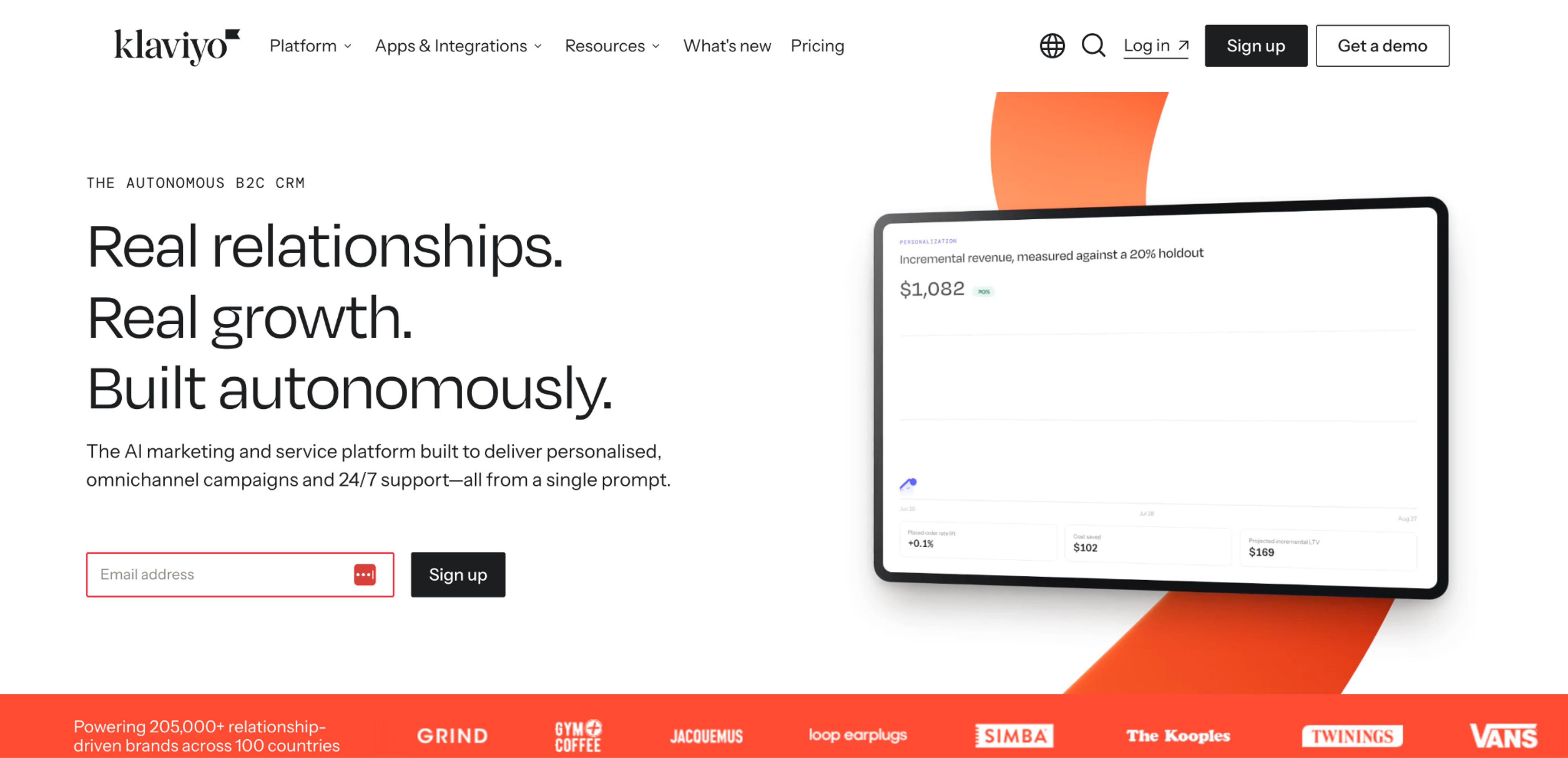
Best for: stores that already send email with Klaviyo.
Klaviyo's own forms let you collect emails and phone numbers straight into your Klaviyo lists.
Pricing (Klaviyo's pricing page, Oct 2026): web forms are included in the free Klaviyo plan (up to 250 profiles and 500 emails a month). Paid plans start at $20/mo for up to 500 active profiles and grow with your list: $150/mo at 10,000 and $720/mo at 50,000 active profiles.
Pros: no extra tool if you're already on Klaviyo; data lands directly in your lists.
Cons: forms are one part of an email platform, with fewer onsite formats and targeting options than a dedicated popup tool.
Already on Klaviyo and want more? OptiMonk can show or hide campaigns by Klaviyo list or segment.
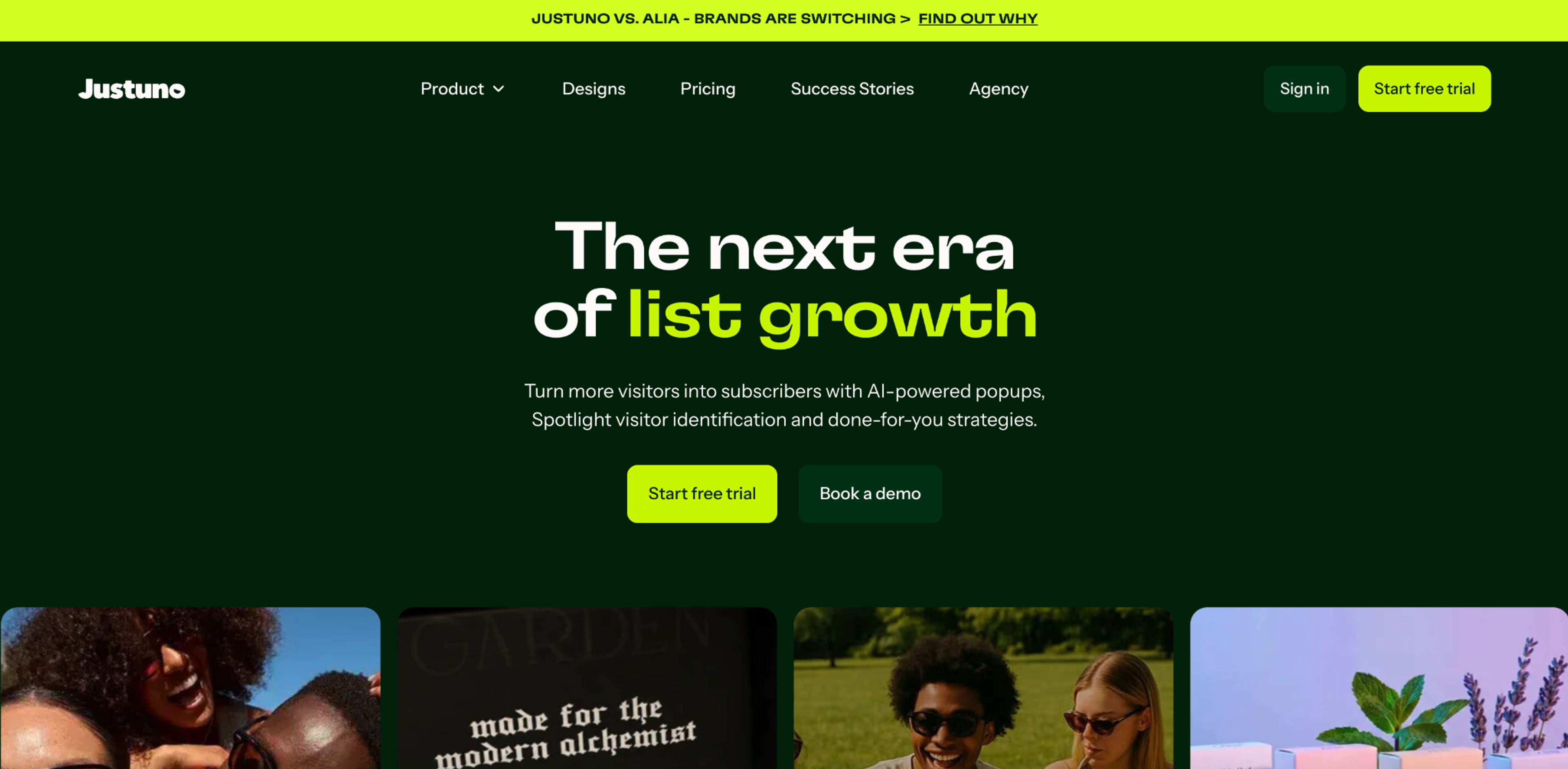
Best for: larger stores that want done-for-you help.
Pricing (Justuno's pricing page, Oct 2026): no free plan. Lite plan $59/mo, no contract, for up to 10,000 visitors a month; annual billing saves 10%. AI product recommendations are part of its Done-For-You plan.
Pros: done-for-you service options; product recommendations.
Cons: highest entry price on this list; no free plan.
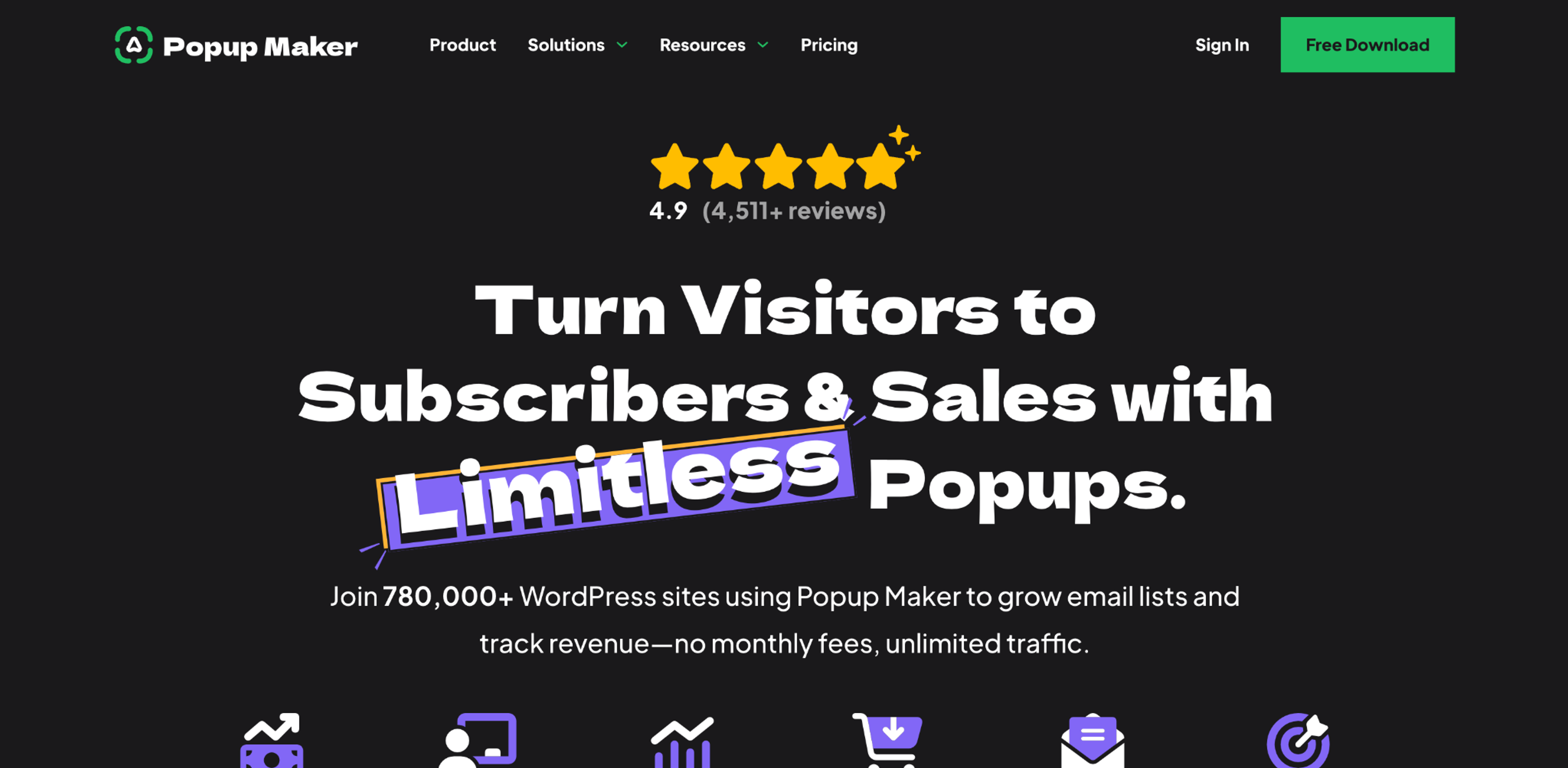
Best for: WordPress sites that want a plugin they install and manage themselves.
Pricing (wppopupmaker.com, Oct 2026): free WordPress plugin with unlimited popups and limited features. Pro $99/yr (shown at a lower first-year price), billed yearly by number of sites. Exit intent and scroll triggers are in Pro.
Pros: free core plugin; priced per site, not per visitor.
Cons: WordPress only; you host, update and design everything yourself.
Comparing WordPress options? See the best WordPress popup plugins.
As of October 2026, OptinMonster's plans cost $9, $27, $37 and $67 a month billed yearly (Basic, Plus, Pro, Growth), and renew at $210, $570, $870 and $1,470 a year. Basic covers 1 site and 2,500 impressions a month; Growth covers 5 sites and 100,000 impressions. Exit intent starts on Pro, and Shopify and other ecommerce integrations on Growth.
No. OptinMonster says it doesn't offer a free version or freemium plan, and offers a 14-day money-back guarantee instead. The WordPress plugin is free to install but needs an OptinMonster account.
Your subscribers stay in your email tool, so nothing is lost in the move.
Yes. OptiMonk has a free plan with every feature up to 10,000 pageviews a month. Poptin has a free plan for 1,000 visitors a month, Klaviyo's free plan includes sign-up forms, and Popup Maker has a free WordPress plugin.
Choose a tool with a Shopify app, cart-based targeting and Shopify discount codes. OptiMonk, Privy and Sleeknote all offer Shopify apps; OptiMonk can also create Shopify discount codes and apply them at checkout automatically.
It can be, but check which plan you'd need: exit intent starts on Pro and ecommerce integrations on Growth ($67/mo billed yearly, renewing at $1,470/yr as of October 2026). Compare that with tools that include these features on lower plans or for free.
So that every plan includes every feature and unlimited campaigns: you pay for the traffic the campaigns run on, not for features or the number of popups. If most of your pageviews are on pages without campaigns, compare plans at your real traffic.
Describe your first popup in one sentence and see it on your store today.
Free to start. No credit card.

40 website welcome message examples for online stores, grouped by situation and industry, ready to copy into a welcome popup.

12 Christmas popup examples for online stores, from welcome offers and spin-to-win wheels to gift quizzes and last-chance countdowns.
In this article, we'll share the best alternatives to Sleeknote that help you to get more leads in 2026.