


Black Friday Marketing Strategy: 30 Ideas for 2026
In this article, we'll share 30 actionable Black Friday marketing ideas for ecommerce businesses to make 2026 your most successful yet.
In this guide, you'll learn what UTM codes are, how they work, and how to generate UTM links for email, social, and ads.
In short
UTM codes are essential for tracking and analyzing marketing campaign performance by providing insights into traffic sources, mediums, and campaigns. This guide explains how to create and use UTM parameters effectively to optimize your ROI and personalize user experiences. Learn how to generate UTM codes using tools like Google Analytics Campaign URL Builder and avoid common mistakes for accurate data
Are you struggling to track the performance of your marketing campaigns?
If so, you're not alone. Many businesses face difficulties in tracking and analyzing the effectiveness of their campaigns, which can lead to wasted resources and missed opportunities for growth.
Fortunately, there's a solution that can help you take your campaign tracking to the next level: UTM codes. These seemingly cryptic snippets of text can revolutionize your marketing game. They’ll help you unlock valuable insights that can optimize your efforts and drive tangible results.
In this article, you’ll discover the true potential of UTM codes and unlock the secrets to maximizing your ROI. Ready? Let’s go!
As an ecommerce website owner looking to effectively track the results of your marketing campaigns, you've probably come across the term "UTM codes." But what are UTM codes exactly, and why are they a must-have for your campaign tracking?
"UTM" stands for "Urchin tracking module," which might sound a bit technical, but fear not! UTM codes are actually quite simple to understand and implement.
They‘re added to the end of URLs after a question mark symbol (?) and consist of various parameters that help track the performance of your marketing efforts.
Incorporating UTM codes into your URLs helps you gain the power to analyze valuable insights into user behavior, demographics, and more. These codes act as a tracking mechanism that allows you to measure the effectiveness of your campaigns.
UTM codes go by several different names, including UTM parameters or UTM tags, but their purpose is always to provide you with granular data on how your marketing initiatives are performing.
Let's take a look at the following UTM code to see how it works in action: https://optimonk.com/?utm_source=facebook&utm_medium=cpc&utm_campaign=article_promo.
The UTM code in this example consists of three parameters: "utm_source," "utm_medium," and "utm_campaign." These parameters provide specific information about the source, medium, and campaign that directed users to your website.
In this case, the UTM code tells us that the traffic originated from Facebook (utm_source), was driven through cost-per-click advertising (utm_medium), and was part of an article promotion campaign (utm_campaign).
You already know how crucial it is to track the performance of your marketing campaigns: you can’t simply launch a campaign and hope for the best. You need to gather actionable data, gain insights into user behavior, and optimize your campaigns for a better return on investment (ROI).
This is where UTM tracking comes in. It offers a wide range of benefits that can take your campaign tracking to new heights.
One of the significant advantages of using UTM tracking is the ability to conduct a detailed analysis of your campaign performance, which means that you can measure the effectiveness of your marketing efforts with precision and accuracy.
Incorporating these codes into your URLs helps you see which campaigns drive the most website traffic and generate the most conversions. This level of detailed analysis enables you to make data-driven decisions and refine your strategies for optimal results.
But UTM tracking goes beyond basic performance metrics. It also provides valuable insights into user behavior and demographics.
With UTM codes in place, you can understand where your website visitors are coming from, which channels are most effective at reaching your target audience, and even demographic information such as age, gender, and interests.
Armed with this knowledge, you can tailor your marketing messages to resonate with your audience and create personalized experiences that drive engagement and conversions.
Furthermore, UTM tracking empowers you to optimize your campaigns for better ROI. You can identify the sources, mediums, and campaigns that are delivering the highest ROI by analyzing the data collected through UTM parameters.
With UTM tracking, you can allocate your marketing budget wisely, focusing on the channels and campaigns that yield the best results.
First, let's take a closer look at the structure of UTM parameters.
A UTM code consists of key-value pairs added to the end of your URLs. The structure follows the format of "parameter=value." There are five main UTM parameters you can use:
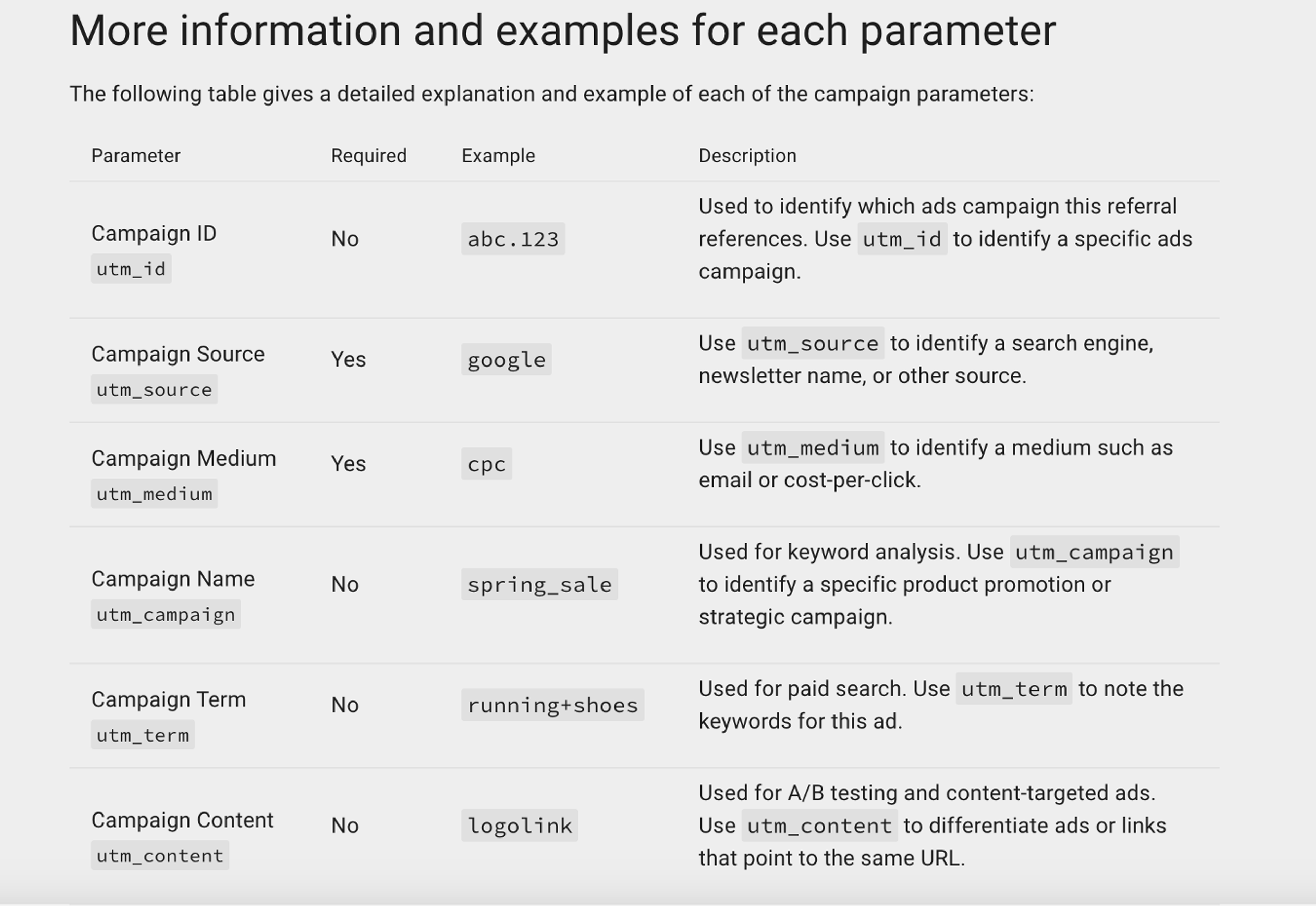
Now that you understand the structure of UTM codes, let's talk about some best practices for naming conventions:
Now, let's take a look at the tools that can make generating UTM codes a breeze.
One popular tool is the Google Analytics Campaign URL Builder. You can access it at https://ga-dev-tools.google/campaign-url-builder/.
Within the URL Builder, you’ll find various fields where you can enter relevant information about your campaign. The mandatory fields include "Website URL," "Campaign Source," and "Campaign Medium."
These fields enable you to accurately specify your campaign's source, medium, and name. Fill in these details correctly to ensure precise UTM link tracking.
Furthermore, you have the option to input values for additional fields like "Campaign Term," "Campaign Name," and "Campaign Content." These fields offer more detailed tracking capabilities, allowing you to assess the performance of specific keywords or various versions of your campaign content. Although not obligatory, completing these fields can augment your tracking capabilities.
Once you’ve entered the necessary information, Google Analytics will produce a unique URL with the appended UTM tracking code. Copy the generated URL and utilize it in your campaign, such as email newsletter, social media post, or Google ads campaign.
When users click on these links and arrive on your website, Google Analytics will automatically track the UTM parameters and furnish you with comprehensive campaign data.
Another type of useful tool you might want to consider using is a URL shortening service, like Bitly or Ow.ly, which often include built-in UTM code generators. These services not only shorten your URLs but also allow you to add UTM parameters at the same time. It's a convenient way to create UTM codes while keeping your URLs concise and shareable.
It's crucial to be mindful of common mistakes that can hinder the accuracy and effectiveness of your UTM tracking. Let’s take a look at four mistakes you’ll want to avoid!
To start monitoring your UTM tracking codes in Google Analytics, ensure that you’ve opened a Google Analytics account for your website and that you have the necessary access permissions.
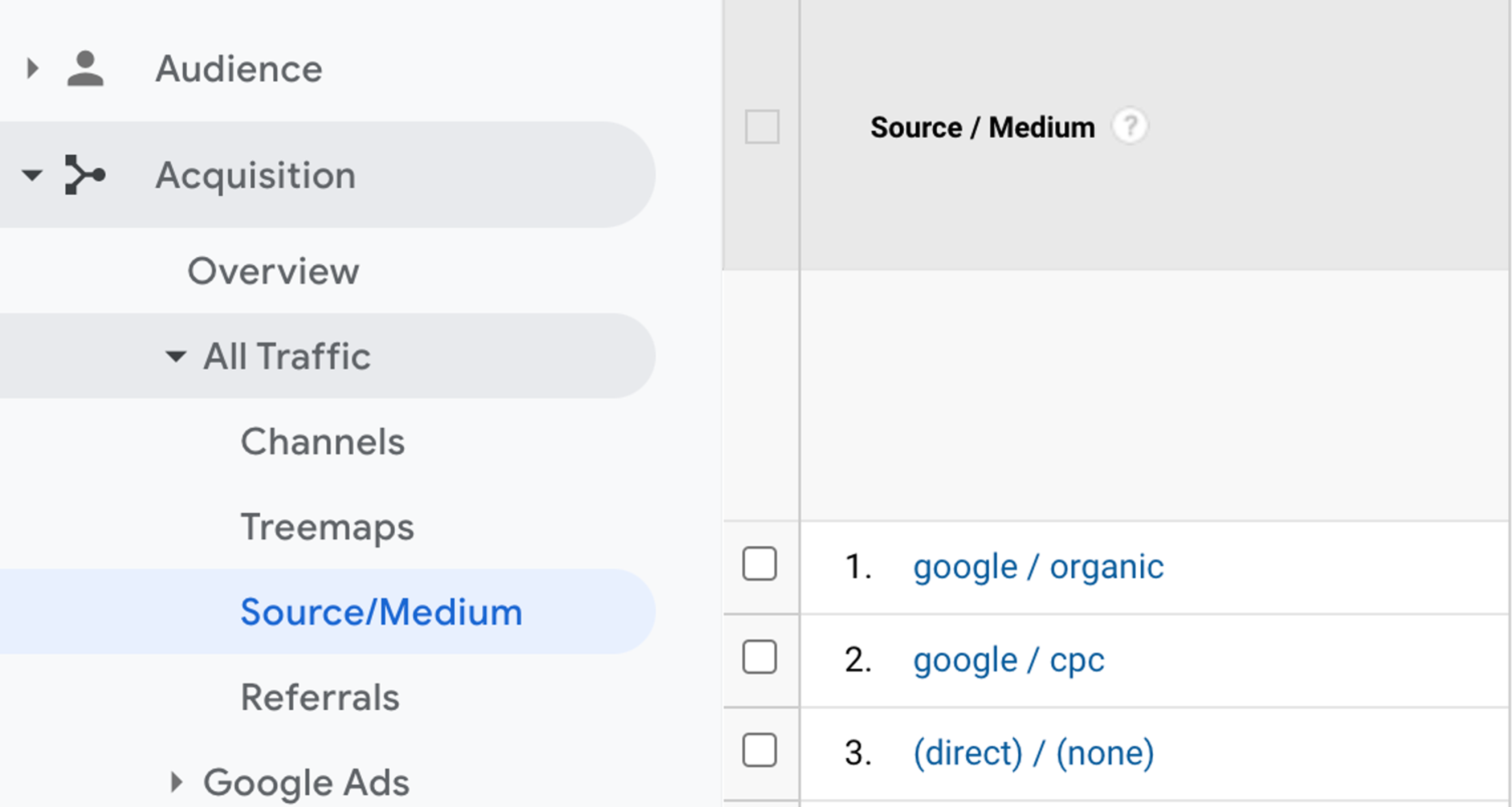
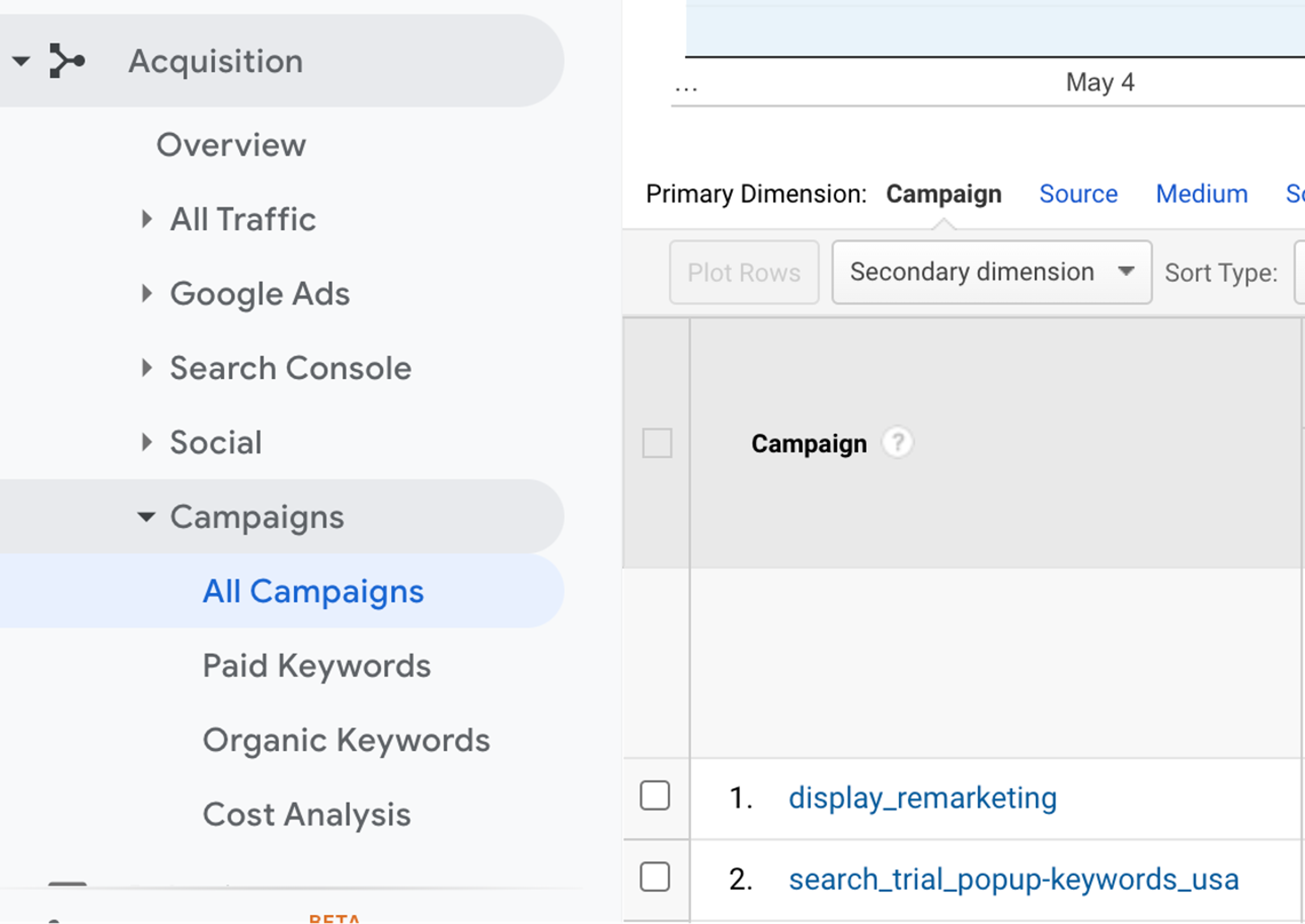
You can also analyze data based on the UTM campaign parameter by going to the "Acquisition » Campaigns » All Campaigns" section.
Now that you understand the power of UTM tracking codes and how they can revolutionize your marketing campaigns, let's delve into a practical application where they can truly shine: website personalization.
Check out how UTM codes can help you implement the following strategies:
To increase the conversion rates of your product pages, you can display personalized product messaging that aligns with the copy for each ad you have.
Imagine you sell blenders that cater to different customer segments. For instance, busy parents may be interested in quick and healthy breakfast options, while avid gym-goers might be looking to elevate their workouts with protein smoothies. You create different Facebook ads targeting each group, but they all lead to the same product page.
Using UTM codes and OptiMonk’s Dynamic Content feature, you can easily set up personalized experiences to show relevant messages and boost your conversion rates by at least 10%.

Here's how you can set it up:
Learn how to tailor product page messaging to align with your ad copy 💡
Often, marketers focus on personalizing the emails they send out to their best customer segments. However, they overlook the tremendous potential of personalizing the landing pages those customers arrive on.
Investing time in customizing these landing pages for your VIP segments can significantly increase the effectiveness of your campaigns and help you achieve a better ROI.
Here’s an example with a special sale only available for VIP customers:
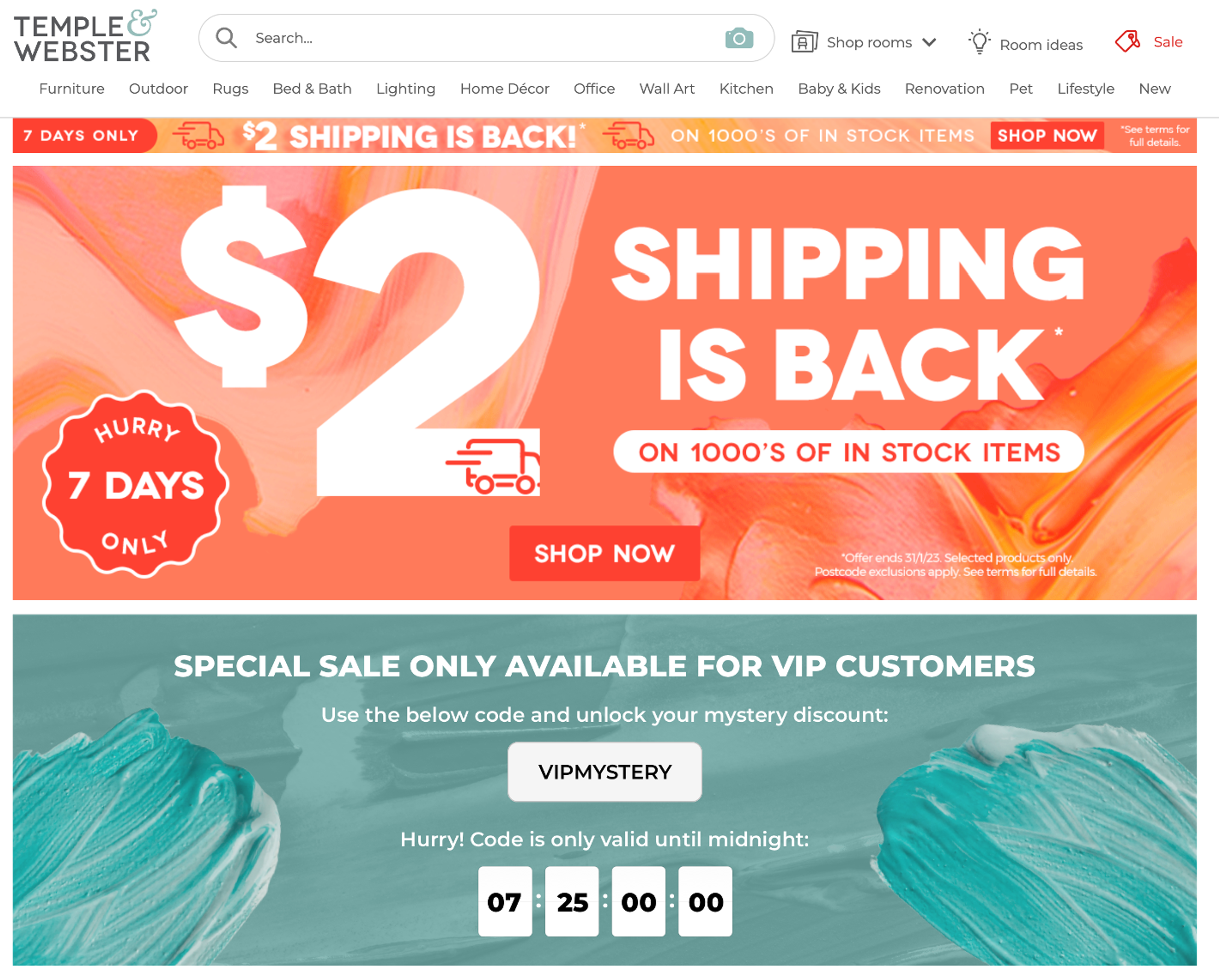
How can you set it up? It's a straightforward process:
This approach not only increases conversion rates but also strengthens customer loyalty and satisfaction.
Learn how to personalize your website for your VIP customer segments 💡
As an ecommerce website owner, you understand the importance of referral and affiliate partners who drive significant website traffic. To make these valuable partners feel appreciated and to maximize their impact, it's crucial to personalize your offers specifically for them.
Luckily, you can easily do this using UTM links and OptiMonk campaigns.
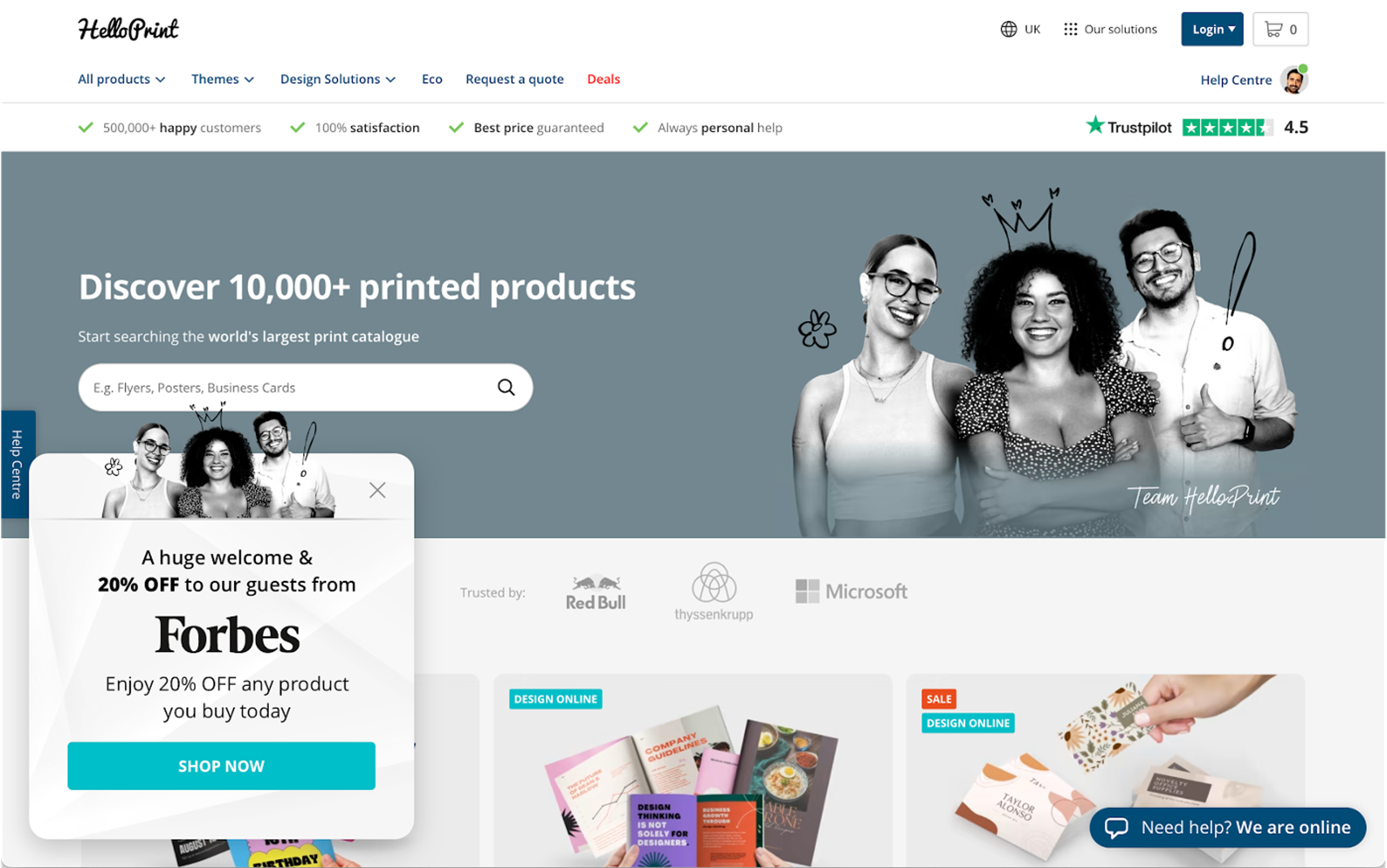
Here's a simple step-by-step guide to set it up:
Learn how to personalize your offers for top referral partners 💡
If you're driving traffic from various ads to a single landing page, personalizing the copy and value proposition of your landing page for each ad can make a significant impact. This customization tactic has the potential to increase the ROI of your Facebook ads by 10%.
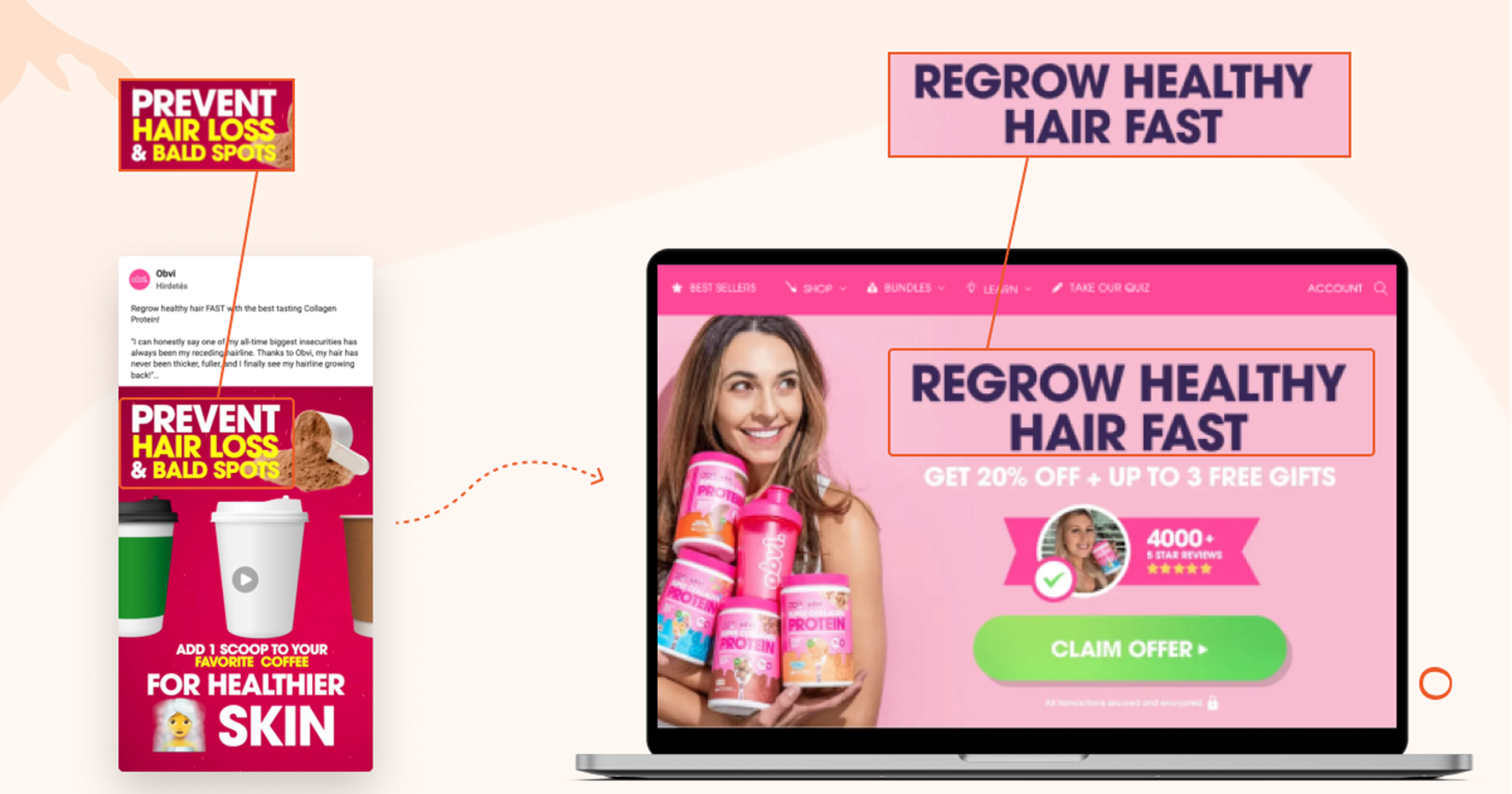
How can you set it up? Simple:
Learn how to personalize landing page headlines based on ad copy 💡
UTM stands for Urchin Tracking Module. The term comes from Urchin, the web analytics software that Google acquired and later turned into Google Analytics. UTM parameters are short tags added to URLs so you can track where your website traffic is coming from and how your marketing campaigns perform.
There are five standard UTM parameters, but three are essential for most campaigns:
Optional parameters:
You can create UTM links in a few simple ways. The easiest method is Google’s Campaign URL Builder.
Just enter:
The tool will generate a ready-to-use tracking link.
You can also create it manually. Just add parameters to your URL like this: https://example.com/?utm_source=facebook&utm_medium=social&utm_campaign=spring_sale
UTM parameters help you:
To keep your data clean and useful:
UTM codes are an indispensable tool for effective campaign tracking. They provide valuable insights into the performance of your digital marketing campaigns, allowing you to analyze user behavior, demographics, and the effectiveness of each campaign.
With UTM codes, you can conduct detailed analyses, tailor your messaging to resonate with your audience, and optimize your campaigns for better ROI. Avoiding common mistakes and following best practices for creating and implementing UTM codes can ensure accurate tracking and comprehensive campaign data.
Whether you're using Google Analytics or other tools, UTM tracking empowers you to make informed decisions, refine your strategies, and drive better results.
So if you’re ready to take your campaign tracking to the next level and unlock the full potential of your marketing efforts, UTM codes are a must-have tool in your arsenal.


In this article, we'll share 30 actionable Black Friday marketing ideas for ecommerce businesses to make 2026 your most successful yet.

Learn about email marketing frequency for ecommerce stores. Most send 1-3 emails per week, with frequency adjusted by subscriber engagement and store type.

Let's take a look at the 21 best lead generation software for 2026 and discuss the features that any lead generation tool should have.