


Tarte Cosmetics Marketing Breakdown: How a 25-Year-Old Beauty Brand Keeps Making Products Feel Viral
How Tarte turns founder storytelling, creator trips, TikTok virality, and smart on-site funnels into a repeatable beauty marketing growth engine.
In this breakdown, we'll examine the core elements of Skims' marketing magic, which helped them achieve a staggering valuation of $4 billion in just a few years.
In short
Discover how Skims, launched by Kim Kardashian, revolutionized the shapewear market with a $4 billion valuation through an innovative marketing strategy. By embracing inclusivity, leveraging social media, scarcity tactics, and targeted Facebook ads, Skims has built a loyal community and redefined fashion marketing. Explore the brand's masterclass in modern branding and its impact on the industry.
When it comes to modern-day brand success, few stories are as impressive as the story of Skims.
Launched by Kim Kardashian in 2019, Skims took the shapewear and loungewear industry by storm, amassing a staggering valuation of $4 billion in just a few years.
How did a relatively new brand rise so quickly in such a competitive market? The secret lies in its well-crafted marketing strategy, which combines inclusivity, social media mastery, scarcity tactics, and cutting-edge ad targeting.
Let's break down the core elements of Skims' marketing magic.
One of the standout aspects of Skims’ marketing is its focus on diversity.
The brand’s campaigns are filled with models of all shapes, sizes, and ethnicities, sending a clear message: Skims is for everyone.

They didn’t just include a token “plus-size” model—they made inclusivity the backbone of the brand.
Skims also took this a step further by featuring real women, including those with disabilities, in their ads.

This is more than just a marketing ploy—it’s a statement that challenges conventional beauty standards, promoting empowerment and body positivity.
The product range is a testament to this vision, offering sizes from XXS to 4X and catering to various skin tones.
Shoppers can even see additional sizes in the product photos to visualize the product on a model closer to their size.
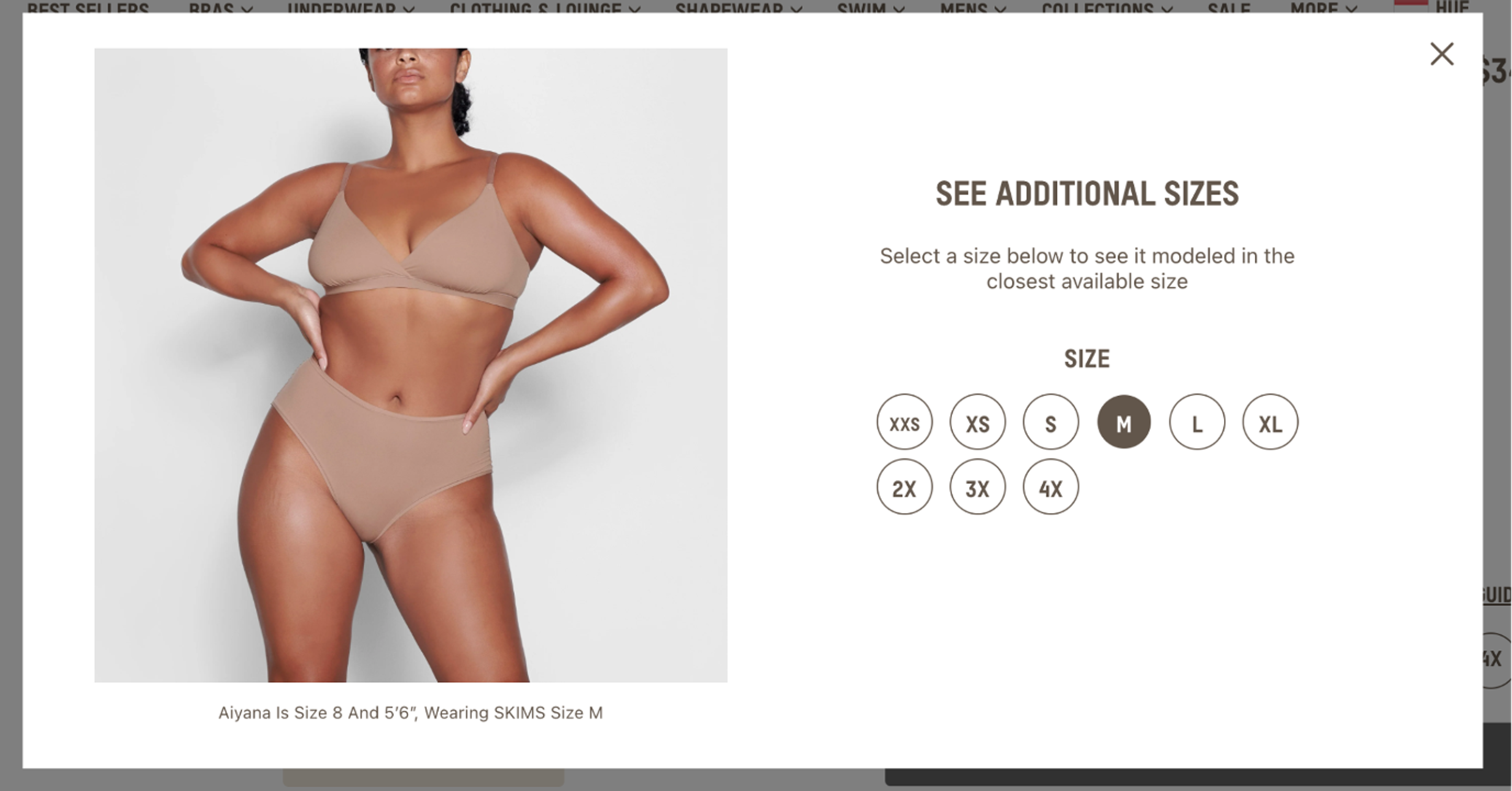
In a world where fashion often excludes, Skims made it a point to welcome all.
If you're a fan of Skims, chances are you’ve encountered the brand on Instagram or TikTok.
Skims leverages social media brilliantly to create a sense of community around its products. From sneak peeks at upcoming launches to behind-the-scenes footage, the brand’s social content feels personal and engaging.
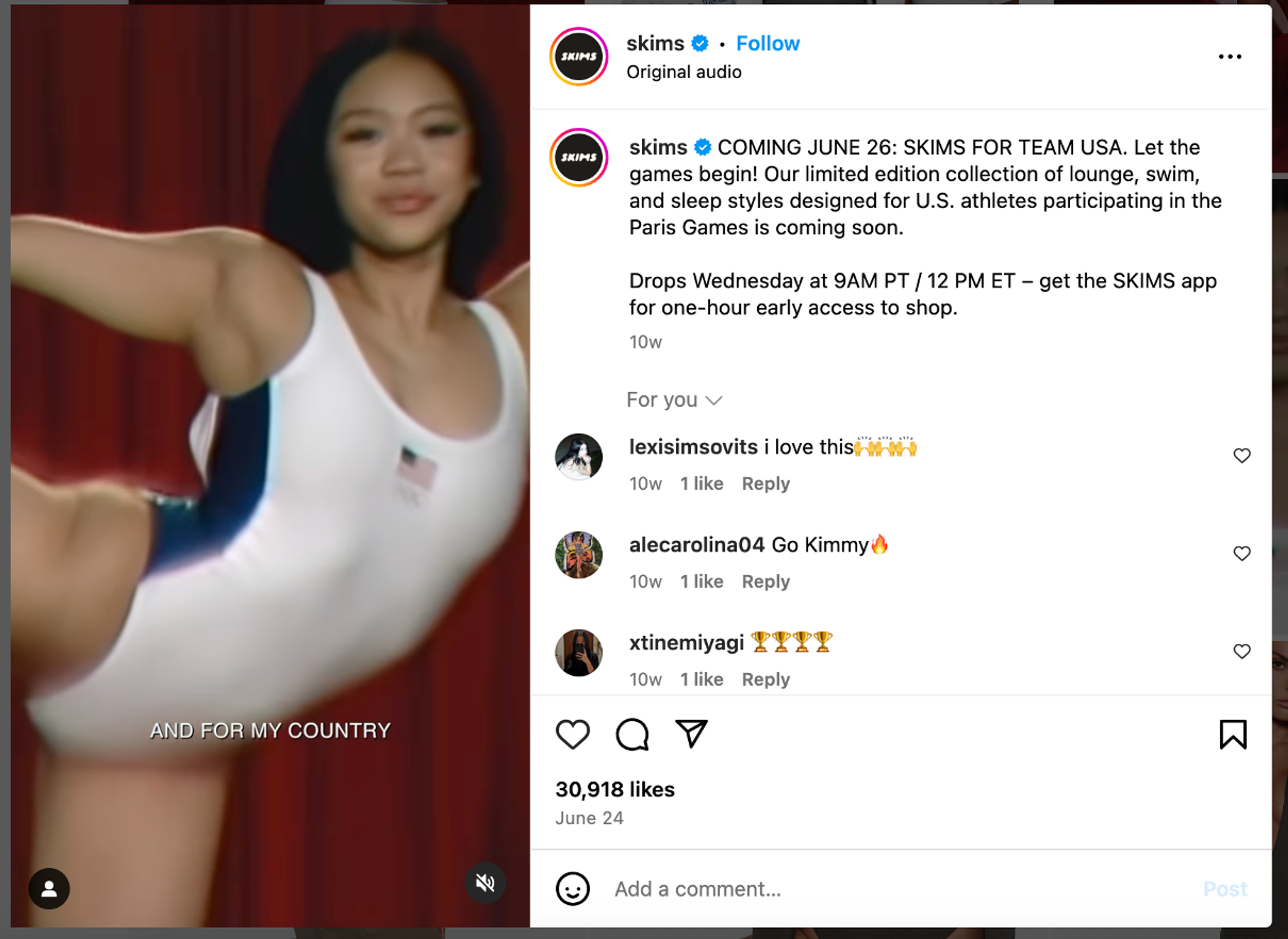
But Skims doesn’t stop at sharing—interaction is key.
The brand uses targeted hashtags like #skimshaul to encourage customers to share their purchases, turning buyers into brand advocates. And this user-generated content isn’t just free advertising, it’s a lesson in effective trust-building.
Real people showing how Skims products fit and feel? That’s social proof money can’t buy.
Scarcity marketing has always been a powerful tool, and Skims has perfected it.
The brand uses a "drop" model, releasing limited quantities of new products.
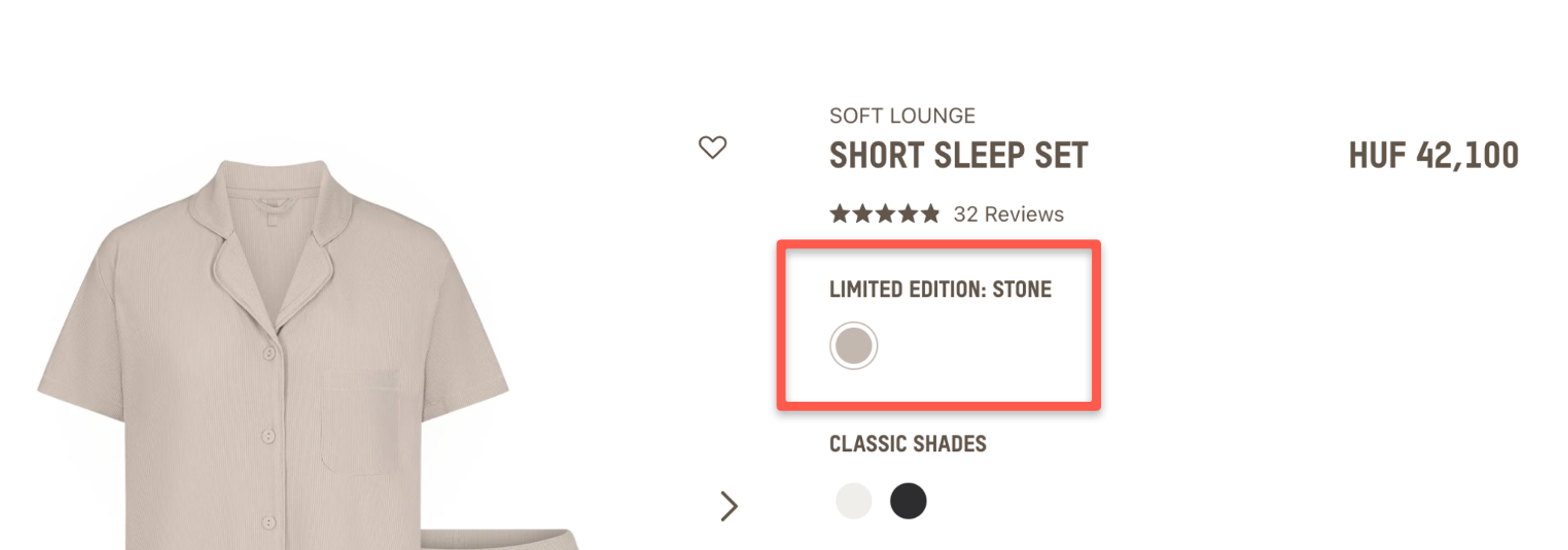
This creates a sense of urgency, prompting customers to act fast or risk missing out. It’s the classic fear of missing out (FOMO) at work, and it’s highly effective.
By keeping supply low and demand high, Skims maintains its products' desirability. The perceived value of an item increases when it's harder to get, and Skims has mastered the art of making its customers feel that when they get their hands on an in-demand product, they’re part of an exclusive club.
Facebook is a goldmine for brands that know how to use its ad tools, and Skims is no exception. By leveraging Facebook’s advanced targeting options, Skims ensures its ads hit the most relevant audience.
Here’s how they’re likely targeting their ads:
To keep things fresh, Skims uses a variety of ad formats.
Image ads showcase their commitment to inclusivity:
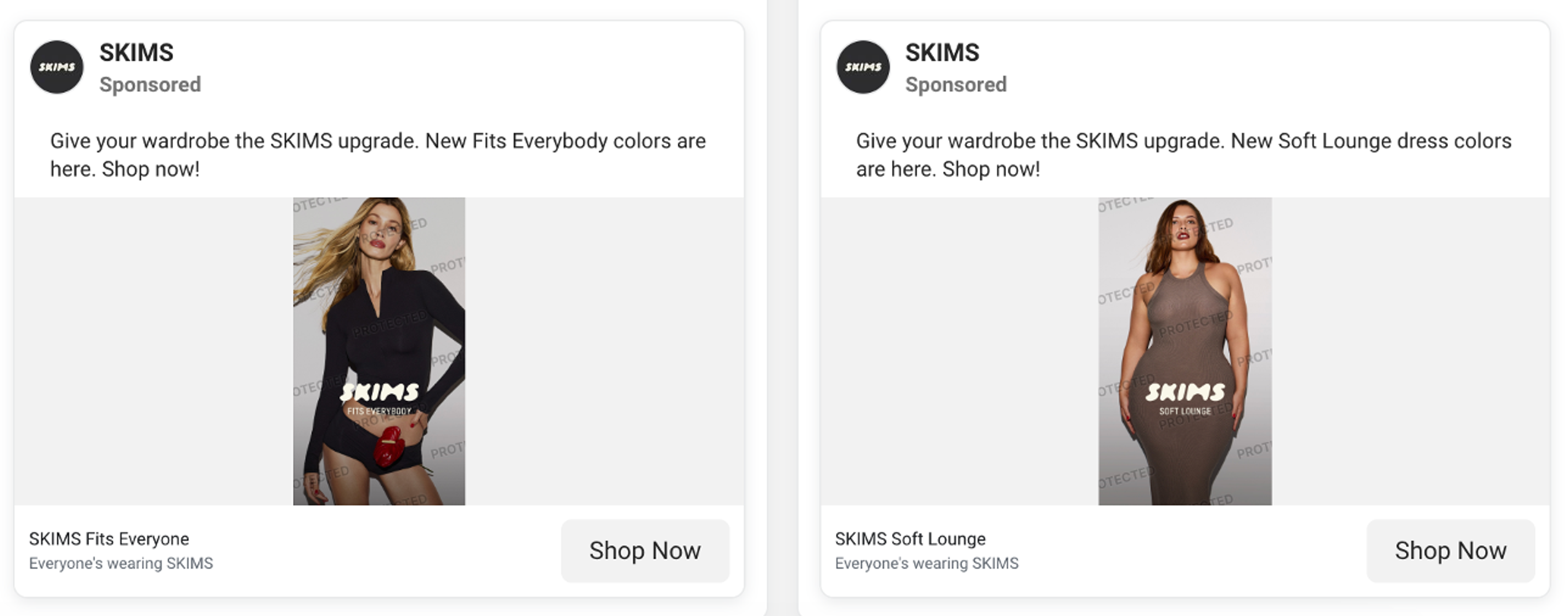
Video ads highlight product features:
Ads featuring customer reviews build trust:
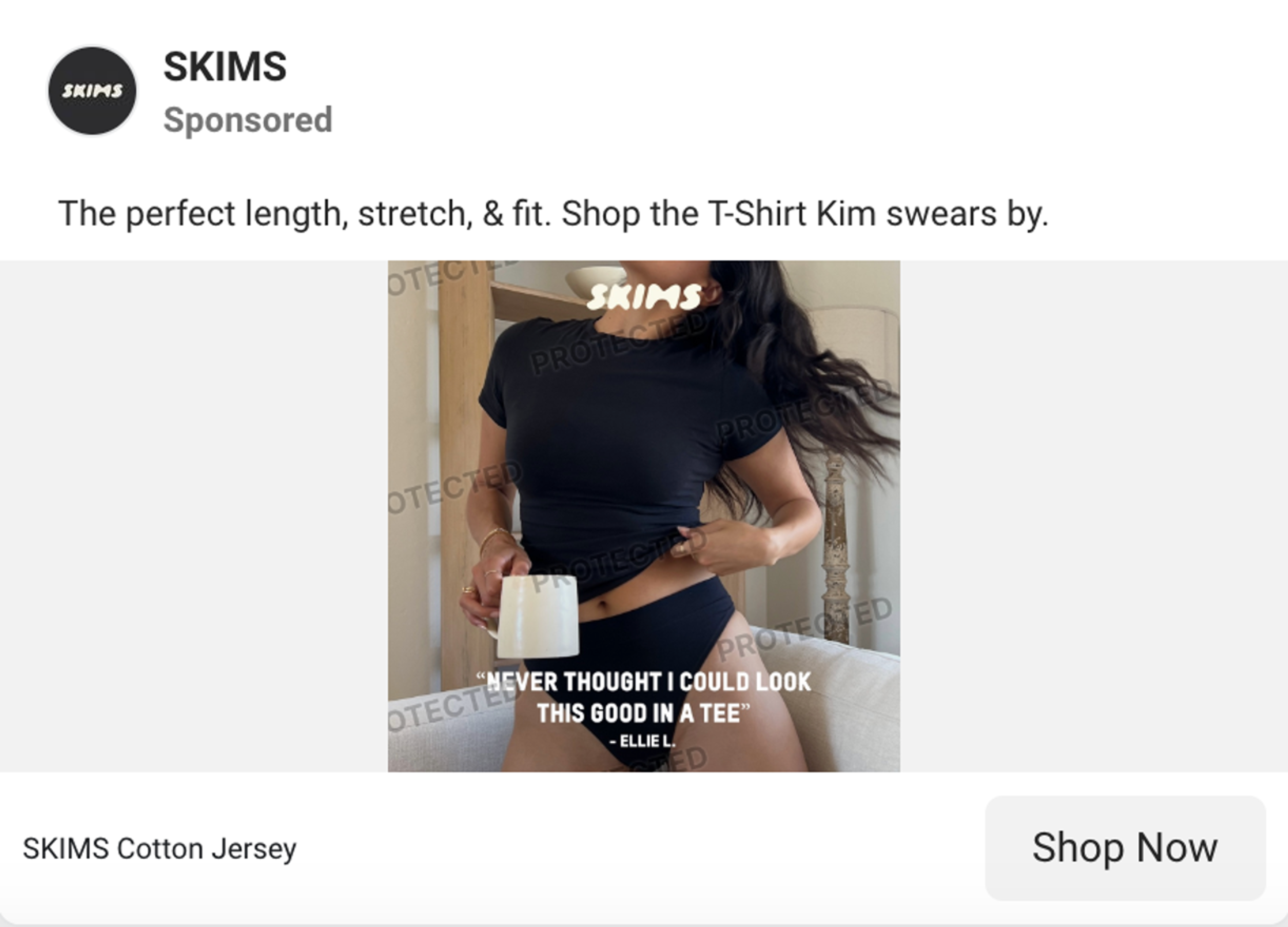
If you need fresh formats for the product catalog itself rather than for brand campaigns, a catalog ad inspiration library is a quick way to see which styles (lifestyle, callout, badge) fit your products.
And when it comes to retargeting? Skims is on point.
By serving ads to users who have previously engaged with their website, they can nudge potential buyers towards completing their purchase.
When you visit the Skims website, you'll notice several smart popup tactics they’re using to enhance the user experience and drive conversions.
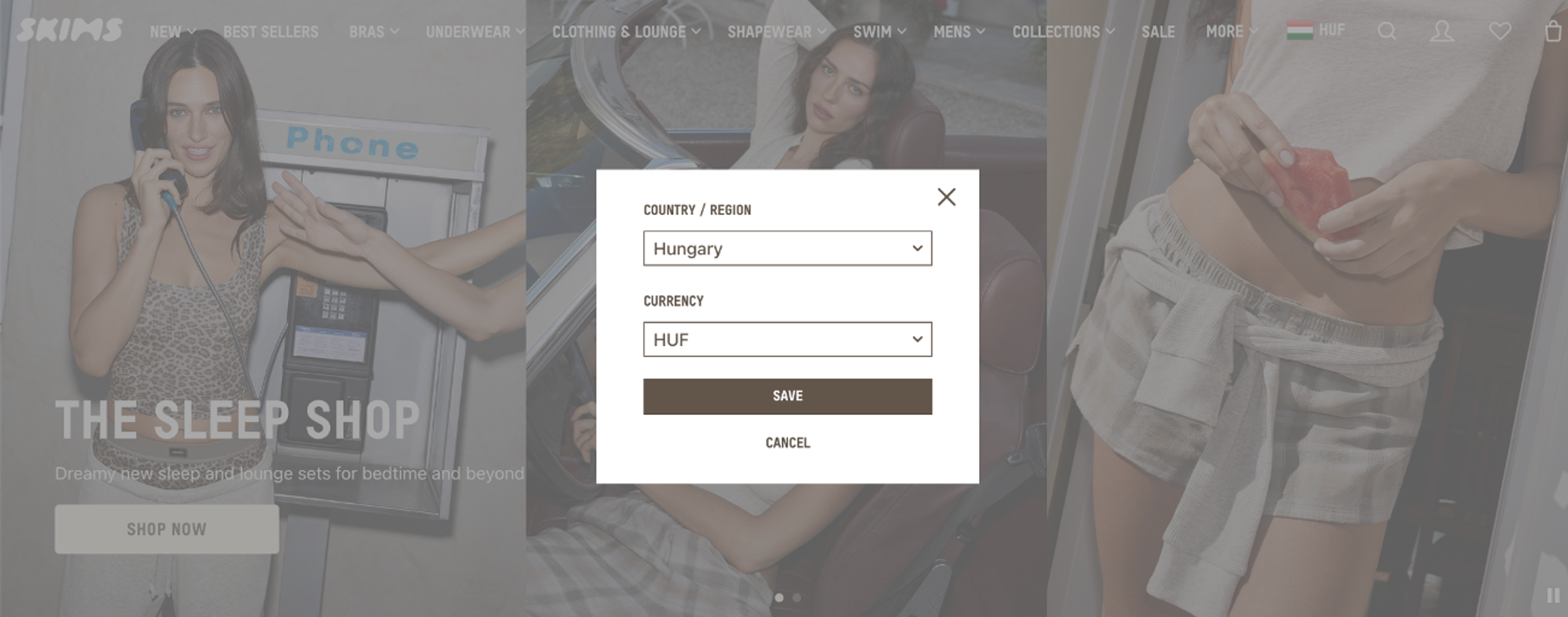
For example, a geotargeting popup asks you to select your country and currency, ensuring a smoother shopping experience.
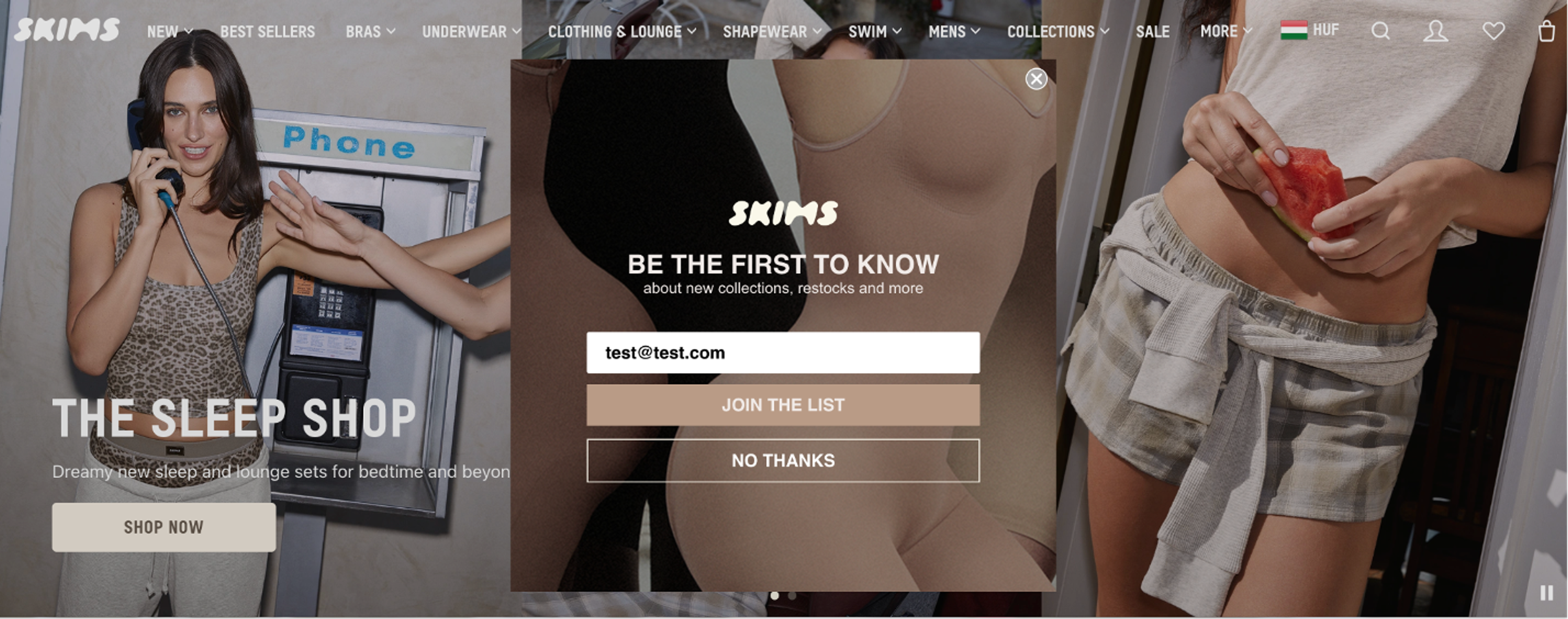
Then there’s the timed popup—after you’ve spent a little time browsing, a newsletter signup popup appears.
Interestingly, Skims doesn’t dangle the usual discount carrot. Instead, they position the value of joining the list as getting first dibs on new products and updates.
This approach creates a sense of exclusivity without devaluing the brand by overusing discounts.
Skims isn’t shy about keeping in touch with its customers. On average, they send five emails per week, keeping subscribers informed about new drops, restocks, and special events.
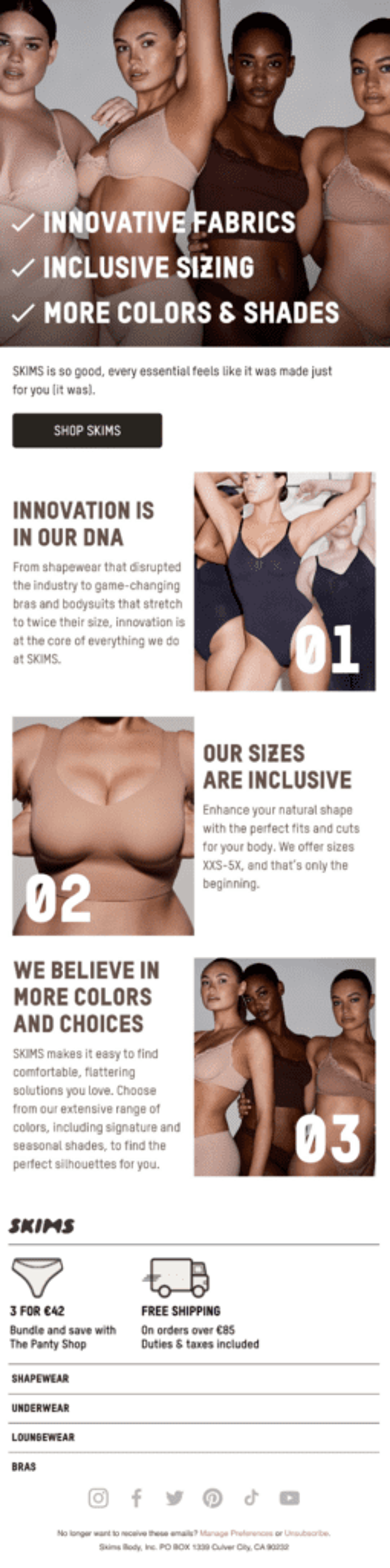
This email strategy does more than just drive sales—it fosters loyalty. Skims customers know they’re getting timely, relevant updates, and many eagerly await the next message from the brand.
Email is a direct line to the customer, and Skims uses it effectively to create a loyal base that stays highly engaged with the brand.
Skims’ marketing success is no accident. From embracing diversity to mastering social media and employing scarcity tactics, Skims has created a brand that not only resonates with its audience but keeps them coming back for more.
In an industry often criticized for being exclusive, Skims has built an empire by doing the opposite.
By welcoming all, creating urgency, and staying connected, Skims isn’t just selling shapewear—they’re shaping the future of fashion marketing.


How Tarte turns founder storytelling, creator trips, TikTok virality, and smart on-site funnels into a repeatable beauty marketing growth engine.
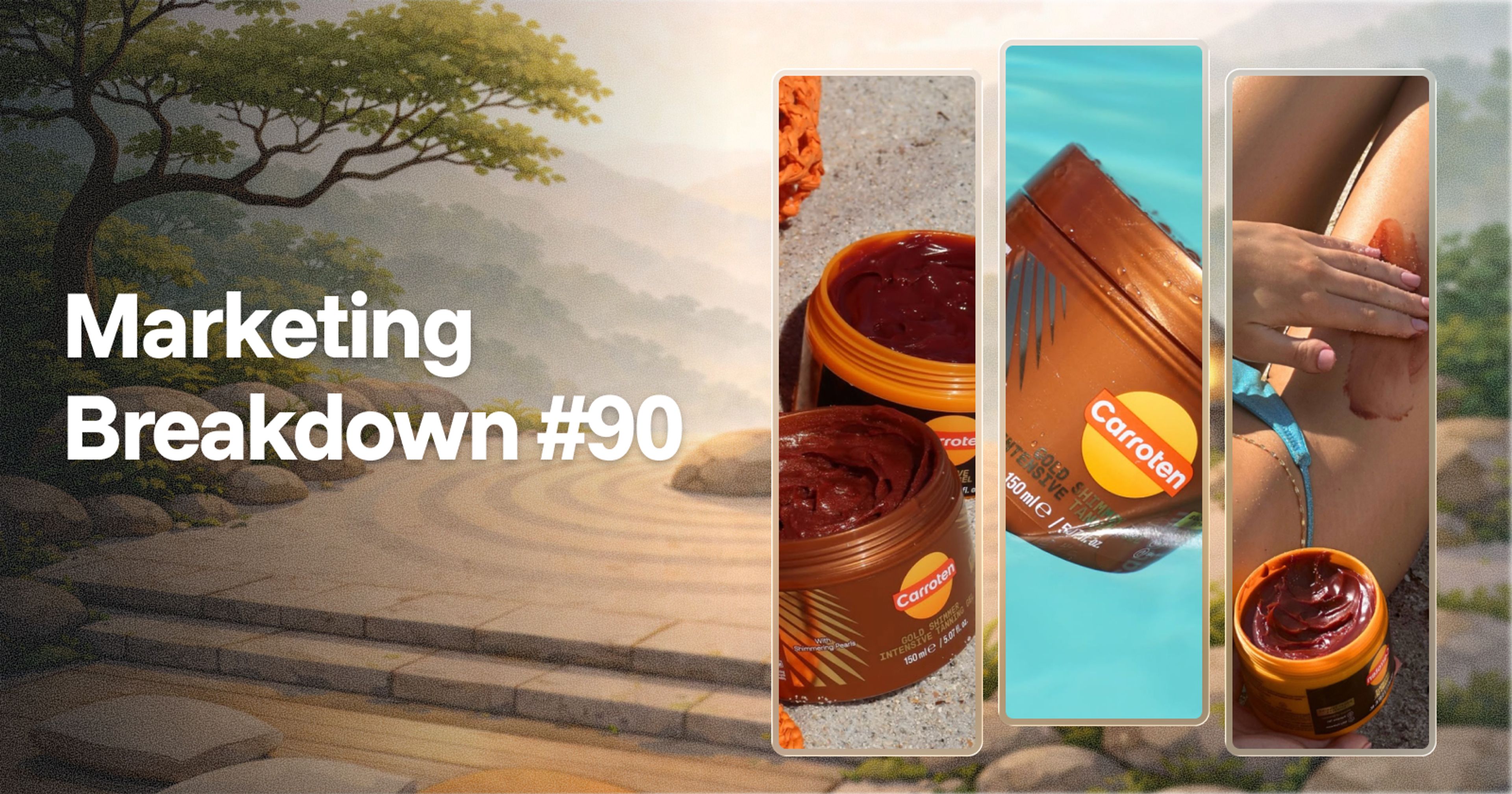
How Carroten went from unknown to every US Target shelf in under a year — using TikTok virality, creator-led commerce, and heritage brand positioning.

A deep dive into WavyTalk’s marketing strategy, from TikTok Shop and creator-led launches to UGC, cultural moments, and high-converting DTC tactics.