


14 Effective Thanksgiving Marketing Ideas to Boost Your Sales in 2026
Discover creative Thanksgiving marketing ideas to engage customers, build buzz, and drive sales before Black Friday and Cyber Monday.
In this article, we'll cover the basics of user-generated content and take a look at how 5 top ecommerce brands use UGC.
In short
Polished ads are losing ground. Today's shoppers trust strangers on the internet more than brand copy, and the smartest ecommerce brands are leaning into that. This guide breaks down how to collect, showcase, and make the most of user-generated content to build trust, reduce returns, and drive real conversions.
Ecommerce UGC — user-generated content created by real customers — is one of the most powerful trust signals an online store can have. It's word-of-mouth marketing scaled for the digital age: instead of a friend recommending a product over coffee, it's a stranger's honest review, unboxing video, or Instagram photo doing the convincing.
And it works because buyers trust other buyers. Potential customers will always find peer content more credible than anything your marketing team produces. They know other consumers don't have a sales quota to hit.
In this article, we'll cover the basics, explore real brand examples, and give you a practical guide to building a strategy that works.
User-generated content refers to any content (text, images, videos, or audio) created by real customers or users rather than the brand itself. It's shared organically on social media, review platforms, forums, and increasingly on stores' own product pages.
Ecommerce UGC most commonly takes these forms:
Brands that tap into ecommerce UGC aren't just collecting content. They're participating in the conversations their customers are already having.
The benefits of user generated content go beyond reach and awareness. In an era where consumers are increasingly sceptical of polished ads and even of curated on-site reviews, authenticity has become the real currency of trust. The rawer and more genuine the content, the more likely it is to convince a hesitant buyer.
According to PowerReviews, shoppers who interact with UGC on product pages convert at a rate over 102% higher than those who don't, meaning UGC more than doubles the likelihood of a purchase. That's not a marginal lift. It's a fundamental shift in how purchase decisions get made.
Here are the three core ways ecommerce UGC moves the needle for your brand.
Returns are one of the biggest cost pressures in ecommerce. According to the National Retail Federation, the average retail return rate hit 16.9% in 2024, with online returns running significantly higher than in-store — meaning roughly one in six purchases ends up coming back.
One of the most underappreciated benefits of user generated content is its ability to close that gap. When shoppers can see a product on a real person, with an honest review about fit, texture, or sizing, they make more informed decisions and are far less likely to return what they bought. Accurate expectations set before purchase are far cheaper than return shipping after it.
Rent the Runway does this well. They encourage customers to upload photos alongside reviews. They showcase this consumer-generated content, whereas most ecommerce sites would only show their own photos of the product.
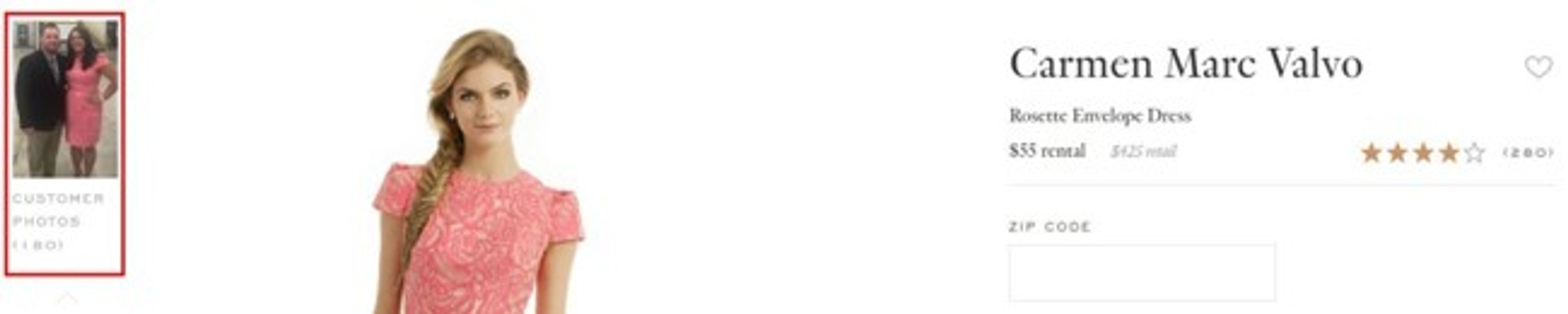
They also prompt reviewers with questions like age, size purchased, fit, and even where they wore the outfit.
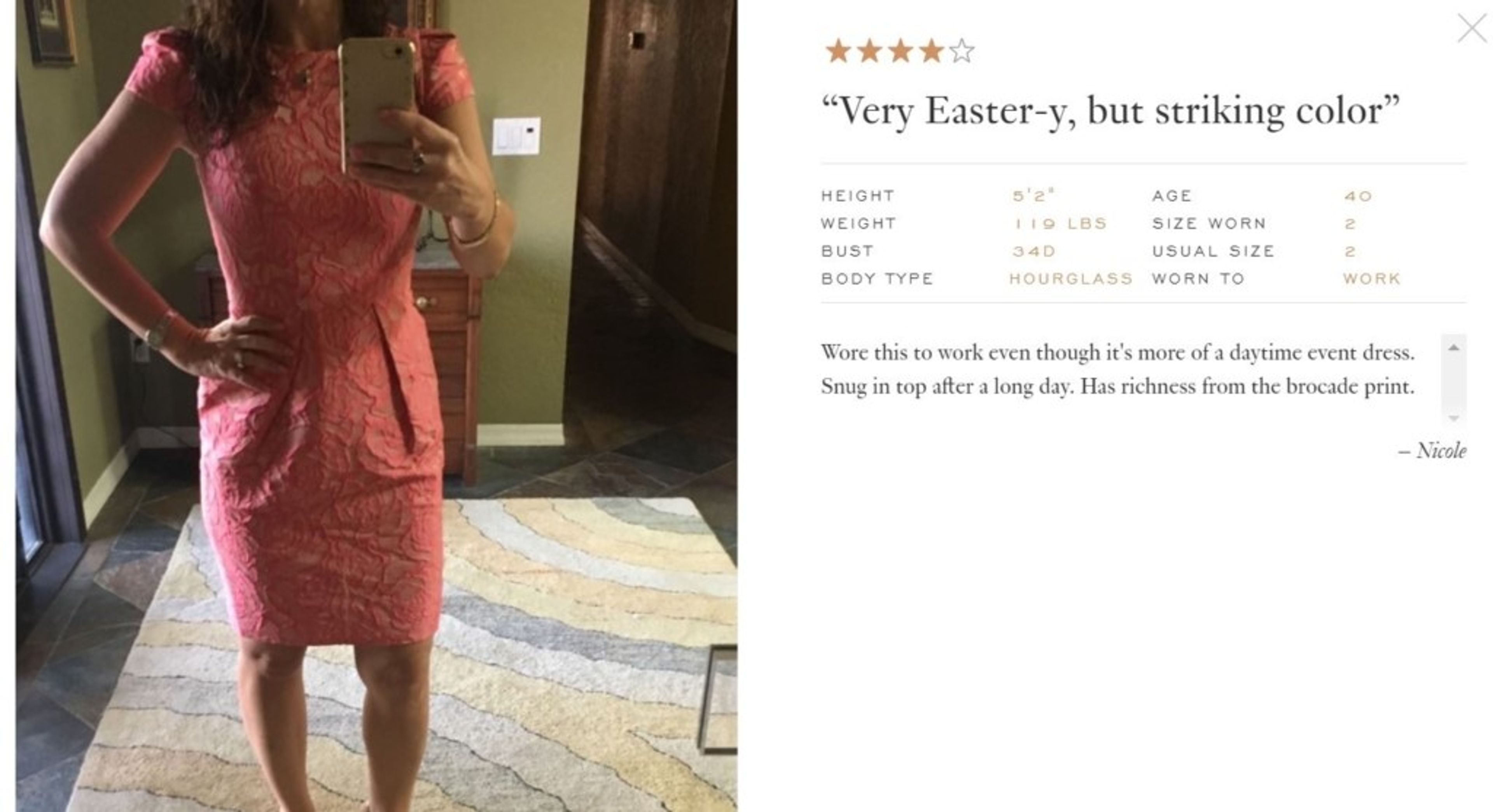
This kind of information helps visitors to imagine the outfit on themselves and decide whether it will be a good fit for them before they ever make a purchase.
Building loyalty in ecommerce is hard when competitors are one click away. A well-run UGC campaign changes that dynamic by making customers feel like participants rather than just buyers.
When a brand reshares a customer's photo, responds to a tagged post, or features a real review front and centre, it signals something that no ad budget can buy: genuine appreciation. That kind of interaction is what turns one-time buyers into repeat customers and brand advocates.
Lindblad Expeditions is a great example of this in action. They actively reach out to followers on Instagram to request permission to feature their photos on their website, and the response from customers is overwhelmingly positive.

And here’s the image on the Lindblad Expeditions site:

Social proof is one of the most reliable conversion levers in ecommerce. According to a 2025 report by Emplifi, social media posts featuring UGC drove over 10x higher conversion rates compared to non-UGC posts. And 79% of consumers say UGC directly influences their purchase decisions.
Customer reviews, photos, and videos give hesitant shoppers the final push they need. Not by selling to them, but by showing them that real people already made the same decision and were happy they did.
That said, no user generated content strategy is without its challenges, and the pros and cons are worth understanding before you dive in. The main challenges brands face are maintaining content quality, managing fake or spammy reviews, and staying on top of moderation at scale. Without a clear system in place, UGC can create noise instead of trust.
There are also legal considerations. Using a customer's photo without explicit permission can cause real problems, so always request rights before repurposing content.
These are manageable challenges, but they're worth building into your strategy from day one rather than retrofitting later.
Now that we've covered the benefits of user generated content, let's look at how real brands put it into practice. As you'll see, a UGC campaign can take many different forms, and the best ones feel completely natural to the brand running them.
GoPro is perhaps the most cited ecommerce UGC success story, and for good reason. Their entire content strategy is built around footage captured by real customers. They encourage users to share their most thrilling moments on social media, turning their product pages and channels into a living gallery of social proof.

What makes GoPro's approach so effective is that the content does the selling without feeling like an ad. Extreme sports, travel, outdoor adventures: all shot by real people, all demonstrating exactly what the camera can do in the wild.

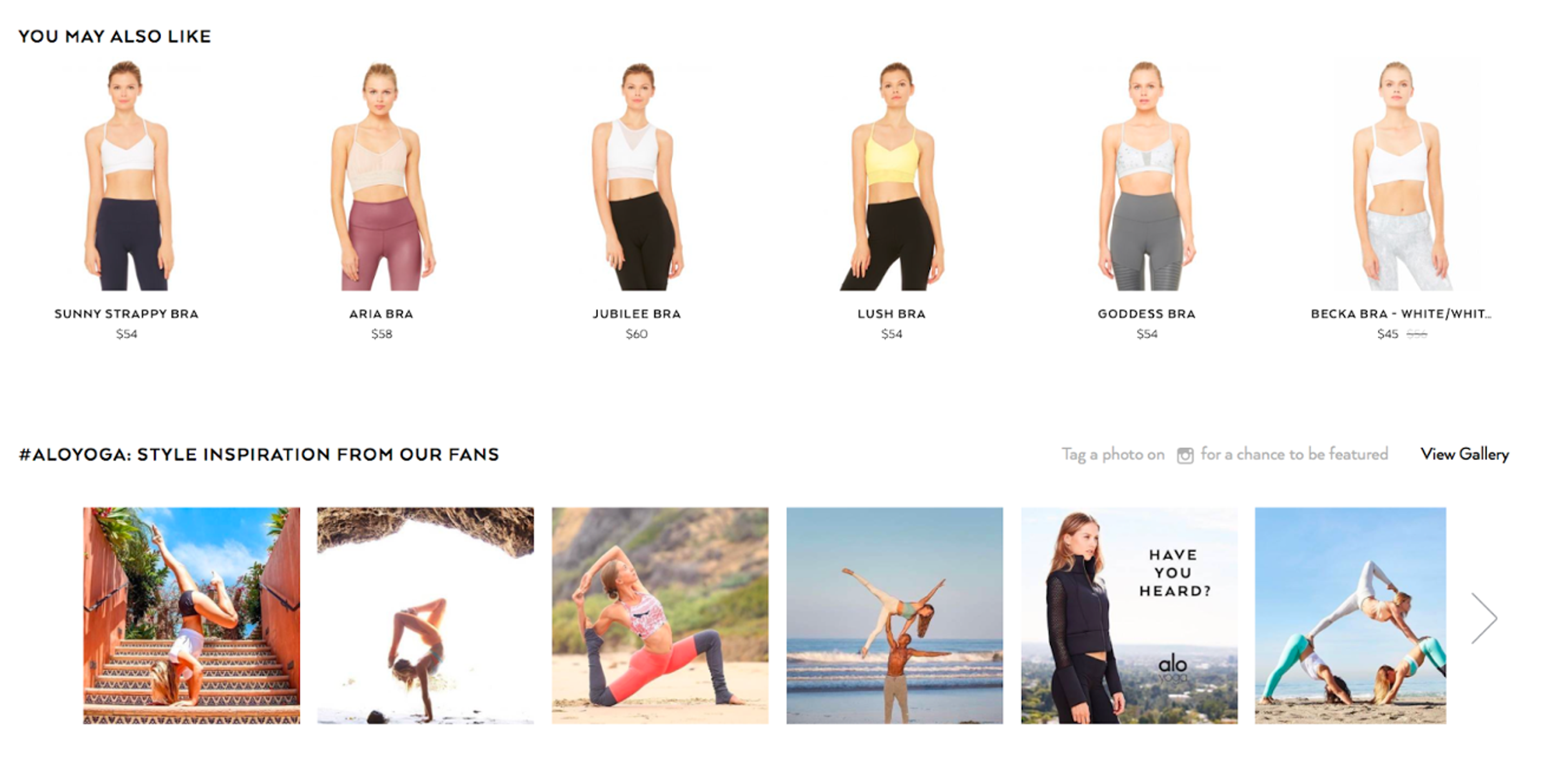
Alo Yoga pulls real customer photos from Instagram using branded hashtags and embeds them directly into their website. Rather than relying solely on studio photography, they let their community show what the products actually look like on real bodies in real settings.

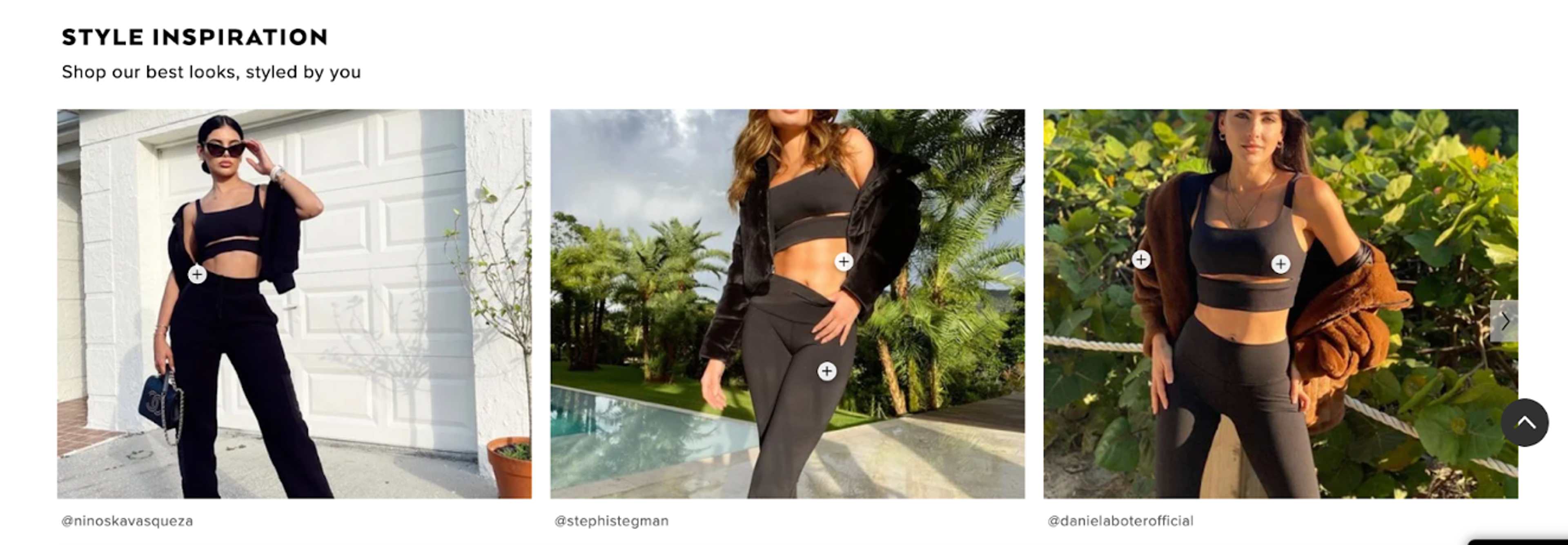
They also frame this UGC as "style inspiration," which does double duty: it showcases the product authentically while encouraging even more customers to post and get featured.
Glossier built one of the most recognisable brands in beauty almost entirely on ecommerce UGC. From the beginning, they encouraged customers to share their real skin, real routines, and real results. No filters, no studio lighting required.
Their product pages feature customer photos and reviews prominently.
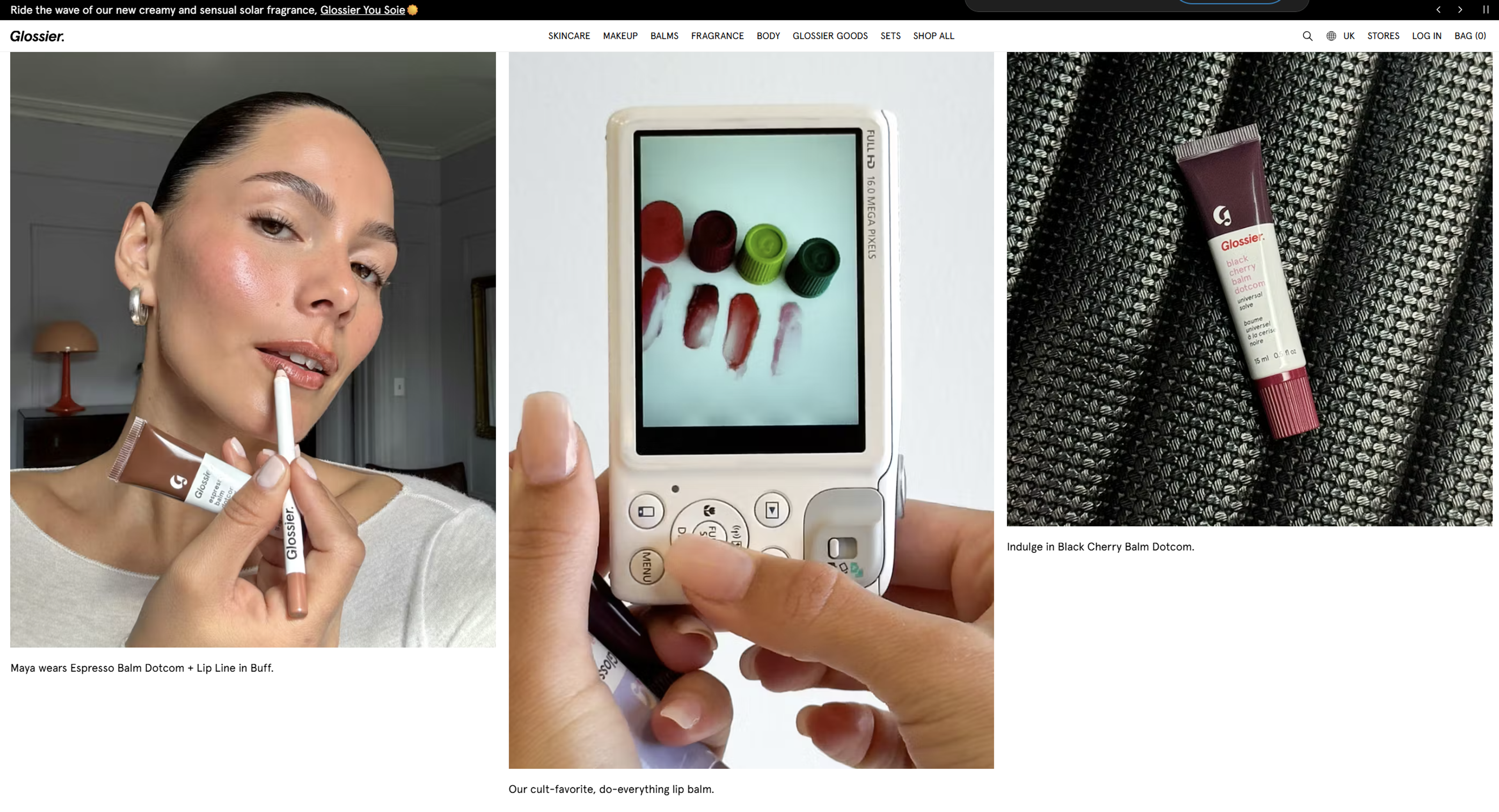
Their Instagram is a mix of brand content and reshared UGC that makes it genuinely hard to tell which is which. That's entirely the point. When your customers' content is indistinguishable from your own, you've built something most brands can only dream of: a community that markets for you.

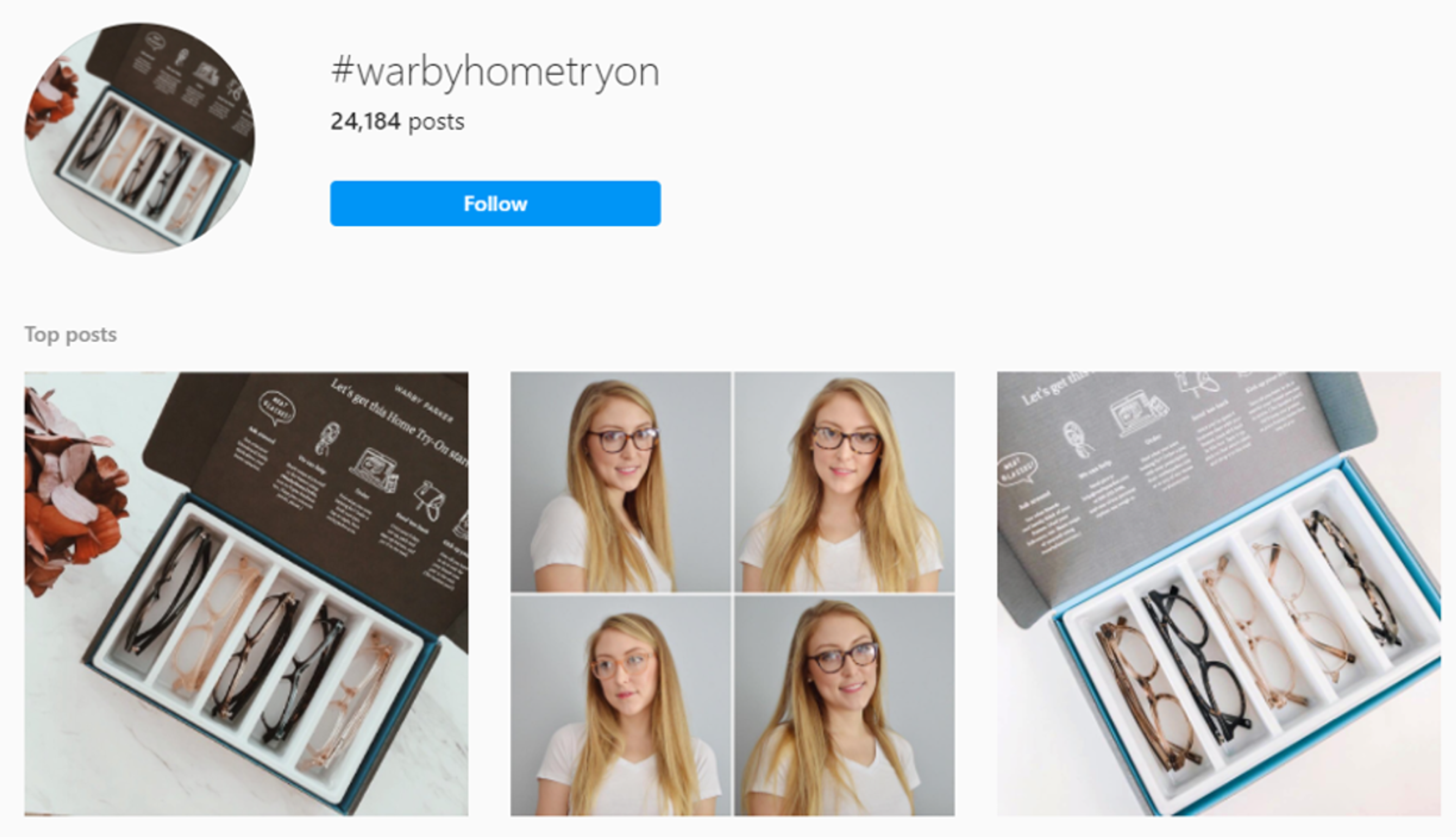
Warby Parker's UGC campaign is built around their home try-on programme. When customers receive a trial package, they're encouraged to share their experience with the #WarbyHomeTryOn hashtag on Instagram and ask friends and family for opinions.
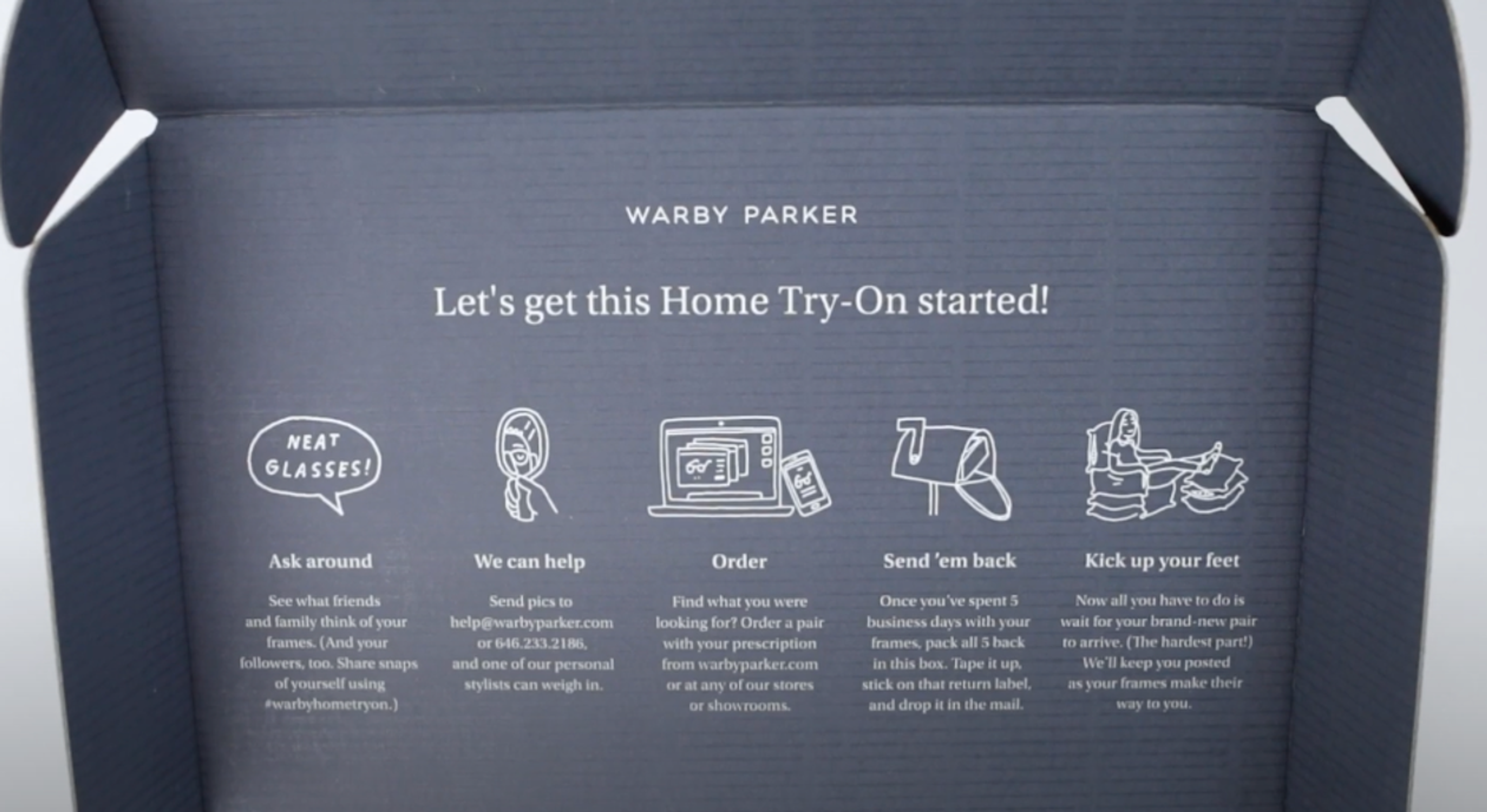
The results speak for themselves: shoppers who shared content on social media were 50% more likely to complete a purchase by the end of the try-on process. Sharing builds confidence, and confidence closes sales.
Pura Vida takes a different approach. Instead of waiting for customers to post organically, they build UGC generation directly into their post-purchase flow. Every order confirmation email includes a branded hashtag and a discount code, giving buyers a clear reason to share their purchase on social media right away.
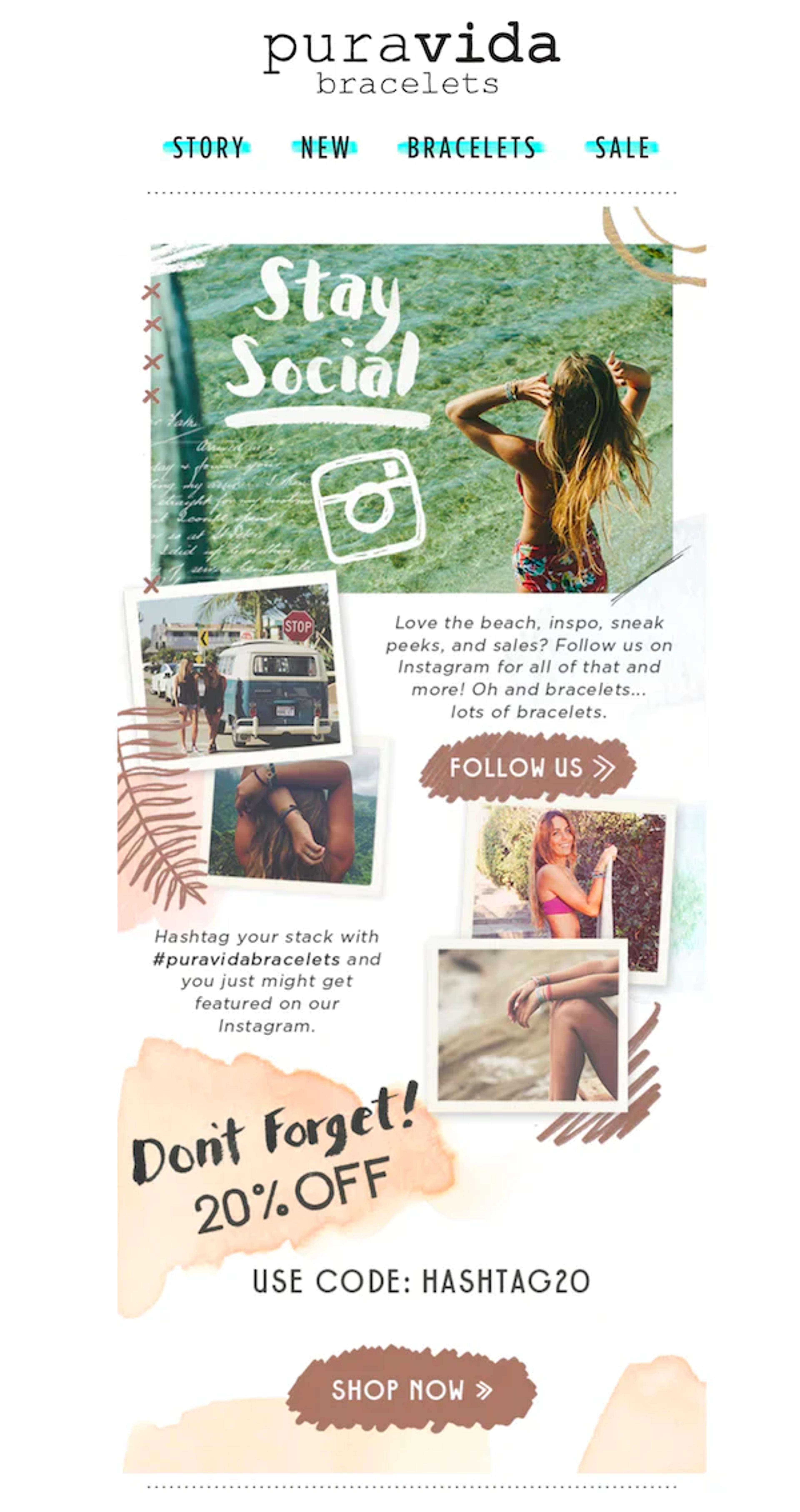
Source: Shopify
It's a simple mechanic, but an effective one: the incentive drives sharing, the sharing generates content, and the content brings in new customers who are already primed to trust what they see. For Shopify brands looking to build a steady stream of authentic content without a huge budget, Pura Vida's approach is one of the most replicable in ecommerce.
A common misconception about ecommerce UGC is that it just happens naturally. For a handful of brands with cult followings, maybe. But for most online stores, building a reliable content stream requires an actual UGC strategy: one that makes it easy, rewarding, and habitual for customers to share.
Here's how to do it.
The single most effective moment to ask for UGC is right after a customer receives their order, when the experience is fresh and excitement is high. A well-timed email asking for a photo, video, or review dramatically increases response rates compared to a generic follow-up.
Keep the ask simple and specific. Instead of "leave us a review," try "show us how you're wearing it" or "share a photo of your setup." The more concrete the prompt, the better the content you'll get back.
A branded hashtag gives your customers a clear, low-friction way to share content and get noticed by your brand. The key is to promote it everywhere: in post-purchase emails, on packaging, in your Instagram bio, and on product pages, so it becomes part of the natural post-purchase experience.
When customers see others posting with the same hashtag and getting featured, it creates a cycle that feeds itself.
Not every customer will post without a nudge. Offering a small discount, loyalty points, or a chance to be featured on your website in exchange for a photo or review gives hesitant customers the push they need. The content you get back is almost always worth far more than the incentive you gave.
This is exactly what Pura Vida does so effectively. A discount code in every post-purchase email turns a routine touchpoint into a UGC generation engine.
Customer reviews are the backbone of any how to collect UGC strategy, but most stores make the process harder than it needs to be. The fewer clicks between "I want to leave a review" and "review submitted", the higher your completion rate will be.
Tools like Loox, Yotpo, and Okendo are built specifically for Shopify stores and automate the entire collection process, from sending review requests to displaying photo and video reviews beautifully on product pages.
On-site popups are one of the most underused tools in the UGC strategy toolkit.
A well-timed popup, triggered after purchase or when a returning customer lands on a product page, can prompt a review, a social share, or a hashtag submission without ever feeling intrusive. The key is timing and targeting: showing the right ask to the right customer at the right moment, rather than blasting the same popup at everyone.
Want to put this into practice? OptiMonk makes it easy to trigger post-purchase popups that ask for reviews, social shares, or UGC submissions, so you can build your content library on autopilot.
Having a steady stream of ecommerce UGC is only half the job. The other half is putting it to work effectively. Here are five practical ways to get the most out of the content your customers create.
UGC doesn't flow in if customers don't know you want it. Make the ask obvious: on your product pages, in your post-purchase emails, and on your social channels. The clearer your instructions, the better the content you'll receive.
Research shows that only 16% of brands give customers clear guidelines on what to create, yet 53% of consumers say they'd actually like that direction. Closing that gap is one of the easiest wins in any UGC strategy.
Some customers will post for the love of it. Most need a small nudge. Discount codes, loyalty points, giveaway entries, or simply the chance to be featured on your website are all proven ways to drive participation without it feeling transactional.
You can also amplify your reach by collaborating with micro-influencers: creators with smaller but highly engaged audiences who can seed your UGC campaign and inspire their followers to do the same.
Not all UGC is created equal. A moderation system, whether manual or tool-assisted, helps you filter out spam, off-brand content, and anything that could reflect poorly on your store, while surfacing the genuine, high-quality posts worth amplifying.
This isn't about only showing five-star praise. In fact, a mix of positive and constructive customer reviews is more credible than a wall of perfect scores. Shoppers are savvy enough to be suspicious of the latter.
The brands that get the most UGC aren't just collecting content. They're building something people want to be part of. Responding to posts, resharing customer content, and acknowledging contributors by name all signal that your brand sees its customers as people, not just buyers.
That sense of recognition is what turns a one-time poster into a habitual advocate.
Social proof is most powerful at the moments of highest purchase intent: your product pages, your checkout flow, and your ads. Brands that embed customer photos and reviews directly on product pages consistently see higher conversion rates than those that relegate UGC to a separate reviews tab.
Don't save your best customer content for social media alone. Put it front and center where buying decisions actually happen.
User generated content trends in 2026 point strongly towards short-form video. TikTok reviews, Instagram Reels unboxings, and YouTube Shorts tutorials are now among the most trusted content formats for purchase decisions. Brands that make it easy for customers to share video, not just photos and text, will have a significant edge in the years ahead.
Ecommerce UGC has become the new standard in modern marketing. Even small brands are now actively seeking out everyday people on Instagram and TikTok: not celebrities, not mega-influencers, just real customers with engaged followings, to authentically represent their products. You don't need celebrity budgets to get powerful UGC. You just need customers who care enough to share.
The brands winning with UGC aren't doing anything magical. They're making it easy for customers to share, rewarding them when they do, and putting that content to work in the right places at the right time.
If you're not actively collecting and showcasing customer content yet, there's no better time to start. And if you're already doing it, the question is whether your UGC strategy is as systematic as it could be.
Either way, your customers are already talking about your brand. The only question is whether you're making the most of it.
Branded content is created and controlled by the brand itself: think product photography, ad copy, and social media posts written by a marketing team. UGC, by contrast, is created by real customers independently, which is precisely why it carries more trust. Branded content tells shoppers what a brand wants them to think; UGC shows them what real people actually experienced.
A UGC creator is someone paid to produce content that looks and feels like organic customer content: short videos, product demos, or testimonials, without necessarily posting it to their own audience. Unlike traditional influencers, UGC creators are hired for the content itself, not their follower count. Brands then use this content on their own channels, product pages, and paid ads.
Organic UGC — content created spontaneously by real customers with no compensation — tends to carry the highest trust because it's completely unscripted. Paid UGC trades some of that spontaneity for consistency and creative control, making it a useful complement when organic content is sparse. The strongest strategies use both: organic UGC for authenticity, paid UGC for volume and reliability.
Yes, and the data is compelling. According to PowerReviews, shoppers who interact with UGC on product pages convert at a rate over 102% higher than those who don't. A separate report by Emplifi found that social media posts featuring UGC drove over 10x higher conversion rates compared to non-UGC posts. The mechanism is simple: UGC reduces uncertainty, and reduced uncertainty leads to more purchases.
The biggest challenges are quality control, moderation at scale, and legal compliance. Without a clear system, UGC can include spam, fake reviews, or off-brand content that damages credibility rather than building it. There are also copyright considerations: using a customer's photo or video without explicit permission can create legal problems, so always request rights before repurposing any content.
The simplest approach is to reach out directly via comment or DM, clearly stating how you intend to use the content, and keeping a record of their approval. Some UGC platforms like Yotpo and Bazaarvoice automate this process with built-in rights management tools. As a rule of thumb: if in doubt, always ask. Most customers are happy to give permission, and the ones who aren't will appreciate being asked.
Short-form video is the dominant trend. TikTok reviews, Instagram Reels unboxings, and YouTube Shorts tutorials are now among the most trusted formats for influencing purchase decisions. Shoppable UGC is also growing fast, allowing customers to click directly on a customer photo or video to purchase the featured product. On the risk side, AI-generated fake reviews are an emerging challenge, making authentic, verified UGC more valuable than ever.


Discover creative Thanksgiving marketing ideas to engage customers, build buzz, and drive sales before Black Friday and Cyber Monday.

Learn 5 ways ecommerce brands can turn new subscribers into recurring revenue using welcome flows, personalization, loyalty programs, re-engagement, and referrals.

In this article, we’ve compiled a list of the 25 top ecommerce apps that will help you streamline your operations, boost sales, and grow your online business.