


Tarte Cosmetics Marketing Breakdown: How a 25-Year-Old Beauty Brand Keeps Making Products Feel Viral
How Tarte turns founder storytelling, creator trips, TikTok virality, and smart on-site funnels into a repeatable beauty marketing growth engine.
Knix didn’t just launch a product, it created a category. By turning taboo topics into honest conversations and backing it with real performance, it built trust and scaled to a $170M brand.
In short
Knix built a $170M brand by turning a taboo into a category. Instead of hiding problems like leaks and body changes, it made them the core message—using real customers, honest storytelling, and product-first proof to earn trust and drive conversion.
Twelve years ago, there was no such thing as leakproof underwear. There was just the quiet, daily anxiety millions of women carried around with them, the kind that made you pack extra clothes, avoid light-colored pants, and say nothing about it to anyone.
Joanna Griffiths launched Knix in 2013 to fix exactly that. Not just with a product, but with an authentic marketing philosophy that the intimates industry had spent decades carefully avoiding: show real bodies, name the problems nobody wanted to name, and build a community around a shared experience that had been invisible for too long.
The market responded immediately. Knix's 2015 Kickstarter became the highest-funded fashion campaign the platform had ever seen, generating over $1 million in sales and landing national retail distribution, the first crowdfunded brand to do so. By 2022, annual retail sales had reached $170 million, up 70% year over year.
Today, Knix operates across 14+ retail locations in North America, an Amazon store, select wholesale partners, and a DTC site that generated an estimated US$74 million in online revenue in 2025.
It has sold over 20 million pairs of leakproof underwear. It has partnered with Gabrielle Union and Kristen Bell. It has been nominated for a Cannes Lion.
So what drives the Knix marketing strategy, how did Knix grow so fast? Let's break it down!
After speaking with hundreds of women, Joanna Griffiths found a massive unmet need hiding in plain sight: functional, comfortable underwear that actually handled leaks from periods, sweat, and bladder leakage.
The research was uncomfortable. The product category didn't exist. But that was exactly the point.

From the beginning, Knix treated the absence of a category as an advantage rather than a risk. The brand became the first to offer products across every size, and the first in the women's intimate apparel space to use real customers — not models — in its photo shoots.

Both decisions were deliberate provocations — early examples of body positivity marketing — in an industry that had spent decades telling women what their bodies should look like rather than designing for the bodies they actually had.
The 2015 Kickstarter proved the thesis.
It became the highest-funded fashion campaign the platform had ever seen, and the demand signal was clear enough that Joanna Griffiths made one of the most counterintuitive decisions in DTC history: she pulled Knix out of more than 700 retail locations in 2016 to to become a direct-to-consumer brand, walking away from the majority of the brand's revenue in the process.
In the three years that followed, Knix grew nearly 3,000%.
That's what category creation looks like when it works. Not finding a gap in the market, finding a gap in the conversation, and being the first brand willing to have it.
Victoria's Secret dominated women's intimate apparel marketing for two decades by making women feel they needed to earn the right to wear their products.
Knix built its entire brand on femvertisingm doing the opposite:
The clearest example of this — and a masterclass in how to market a taboo product — is the 2024 "Sport Your Period" campaign with Megan Rapinoe.
Knix paid professional athletes up to $2,000 each to speak publicly about competing while menstruating, at press conferences, in media interviews, and on social media. There was no requirement to mention Knix at all.
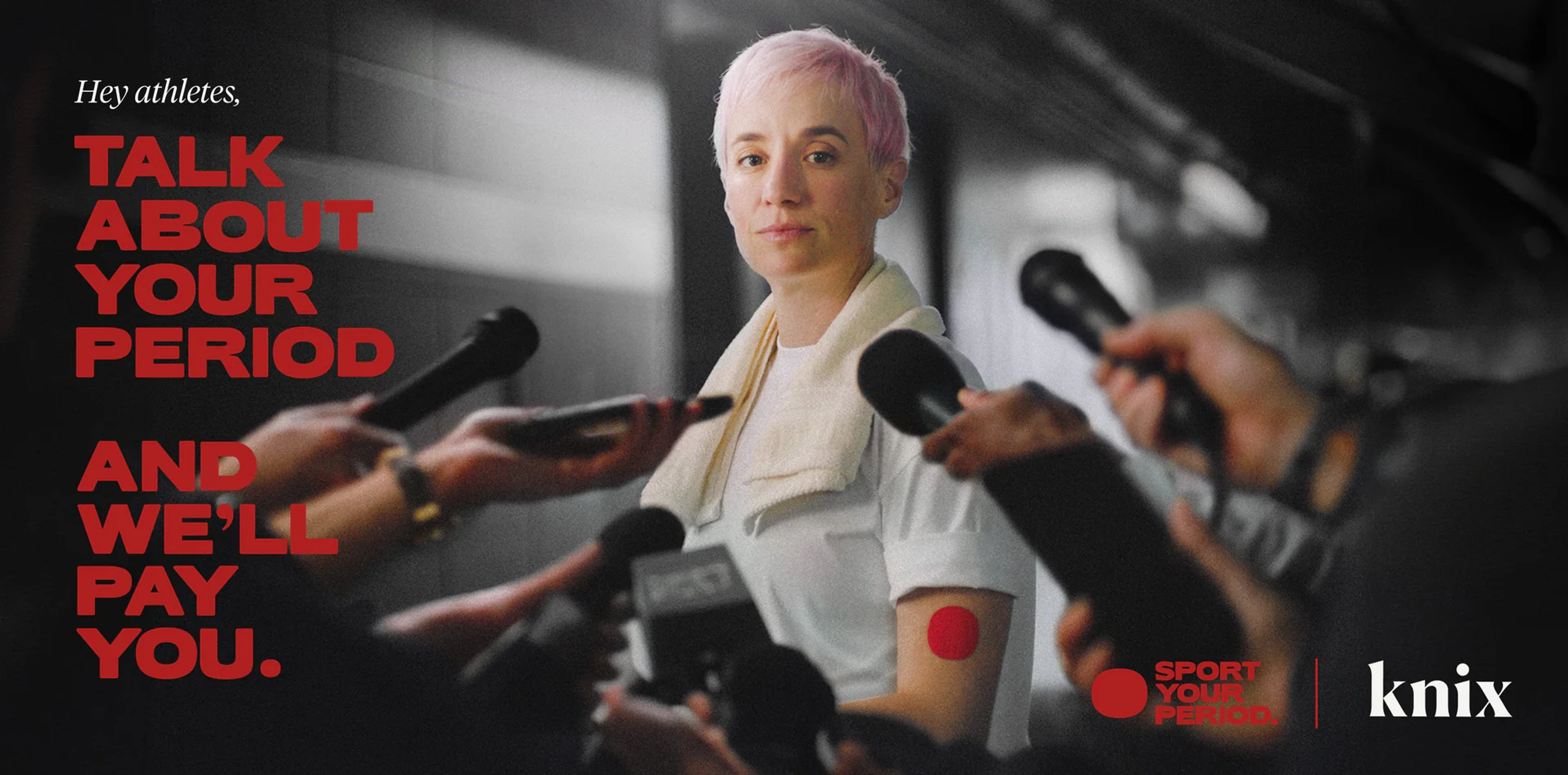
The brand wasn't buying reach. It was cause-based marketing in its purest form: funding a conversation about period stigma it wanted to exist in the world, and attaching its name to what followed.
A survey released with the campaign found that 99% of athletes had competed at international competition while on their period.
Rapinoe put it simply: "Periods are as normal as any other function of humanity, like breathing. We need to de-stigmatize talking about periods and de-stigmatize talking about products."
The 2025 "You're Good" campaign with Kristen Bell followed the same underlying logic, but added a layer.
Bell hadn't been approached as a celebrity. She had been a genuine Knix customer for a decade.
The campaign was built on brand storytelling grounded in that fact rather than her fame. Knix donated $100,000 to a period-focused charity of Bell's choosing, ran creative across billboards and subway takeovers, and timed the whole thing to coincide with Knix's first US store opening in New York City.

Two campaigns, two very different faces, the same commitment to destigmatization: the brands willing to say the uncomfortable thing first — and mean it — tend to win the longest.
Before Knix, the standard in intimates was a 34C fit model and a photographer trained to remove anything that looked imperfect. Griffiths changed the casting brief from the very first shoot.
From 2013 onward, every Knix campaign showed every size the brand makes — worn by real customers, not aspirational stand-ins.
The reasoning was partly philosophical and partly commercial. "When we tried the product on people, I was like, Wow, it looks amazing on everyone," Griffiths told Shopify.
Showing a customer someone with a similar body doesn't just make them feel seen, it's body positivity marketing that also helps them make a sizing decision with confidence. In a category built on fit, that's a conversion strategy as much as a values statement.

The approach is backed by an operational commitment most brands would find uncomfortable. Knix's technical design team fits every product on every size they manufacture — three days a week, back-to-back — with Griffiths still in the room.
Authentic marketing is only possible because the product actually performs on real bodies. One without the other doesn't work.
The "Knix for Life" campaign with Gabrielle Union in 2024 brought this femvertising philosophy to its furthest point yet.
Union, at 51, shot the campaign in leakproof underwear, narrating the full arc of a woman's body:
"Every body has a story. They evolve, change, they sweat, they bleed, they leak," Union says in the campaign spot. "That's why I wear Knix, for every stage, for every age, for every part of us."
It's the most complete articulation of what Knix has always been arguing: that the women's intimate apparel industry spent decades designing for a body type that most of its customers don't have and that the brand willing to design for everyone else would earn a brand loyalty the industry had never seen.
Knix's content flywheel runs on a simple editorial principle: talk about the things women actually experience but never see discussed.
Some examples are:
Topics the rest of the intimates industry treats as unspeakable become, in Knix's hands, the entire content brief.
The TikTok strategy reflects a more sophisticated brand architecture than it first appears. The main Knix handle mixes product demonstration with relatable period humor, keeping the tone candid and adult.
The sister brand Kt by Knix runs its own separate account,addressing the teen market with messaging around period confidence and bleeding without fear.
The separation is deliberate: Knix can speak directly to a teenage audience without the adult brand's voice getting diluted, and it can be as age-specifically resonant as it needs to be without pulling Knix off its positioning.
Knix's ambassador marketing program follows a consistent selection logic that most brands never formalize: the partner has to actually use the product before the conversation about partnership begins.
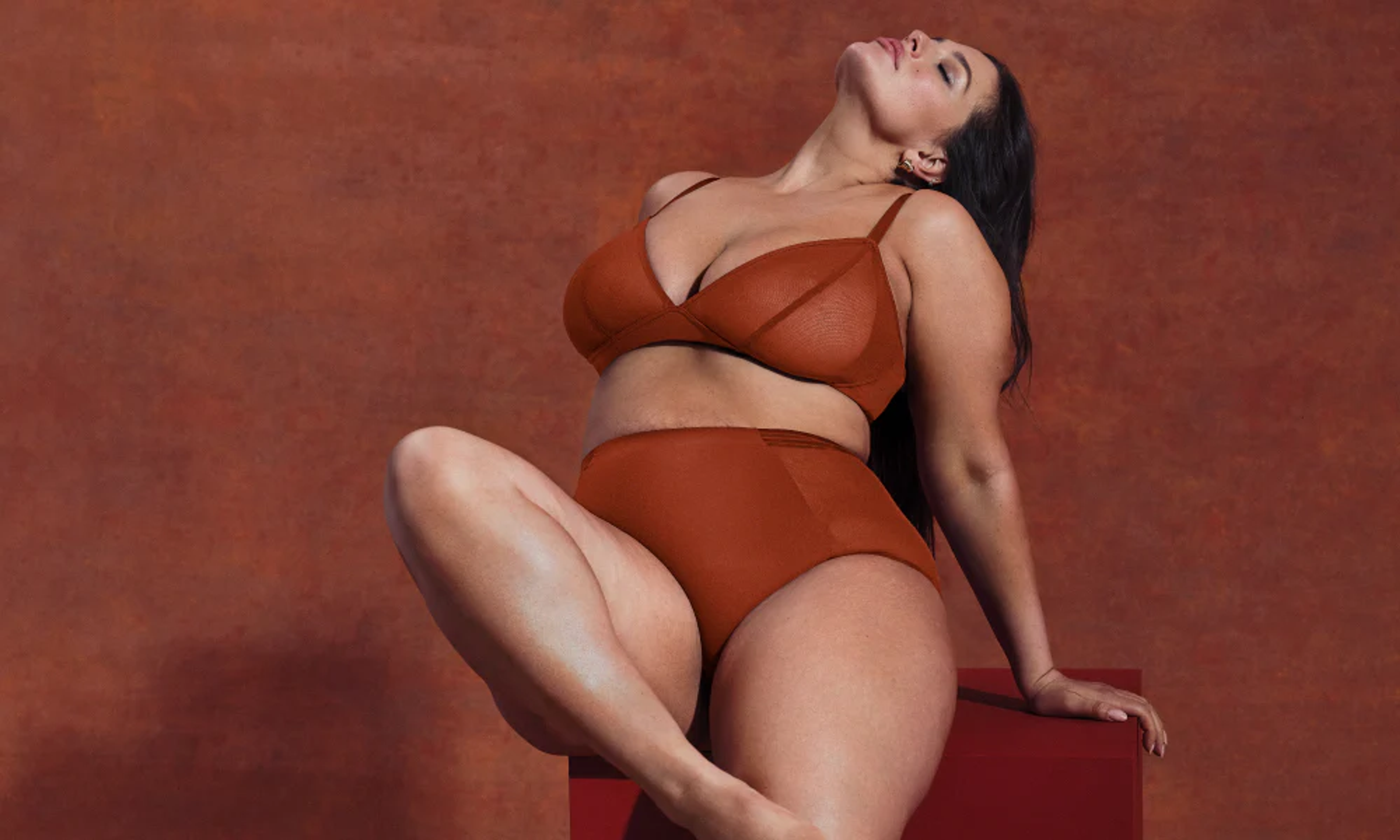
Gabrielle Union contributed to Knix's Life After Birth book in 2021 — three years before becoming global ambassador in 2024.
Kristen Bell had been buying Knix for a decade before the "You're Good" campaign put her on billboards.
In each case, the relationship with the product came first, the brand relationship second.
The broader ambassador marketing program runs on the same logic, extending it beyond celebrity to everyday customers.
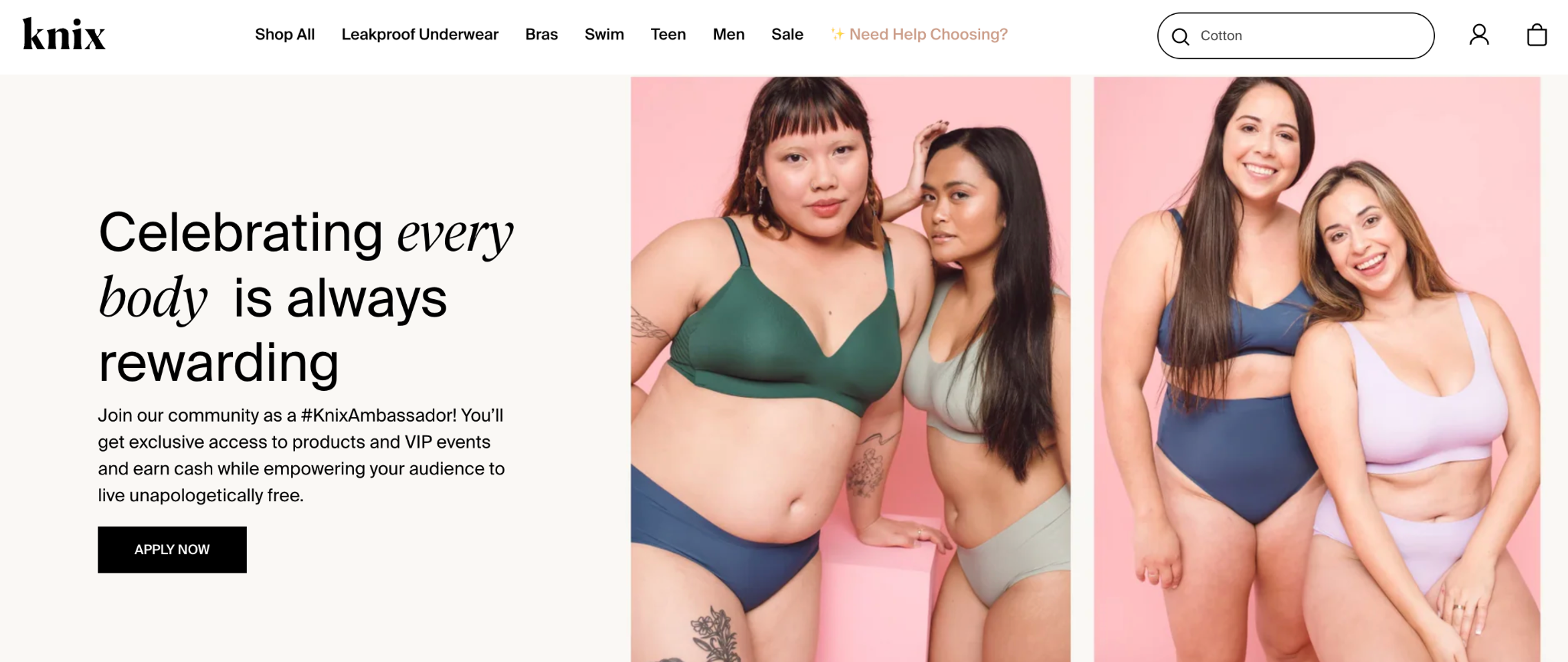
The selection criteria prioritizes genuine product believers over follower counts, which means the content that comes back is harder to fake, because it isn't being faked.
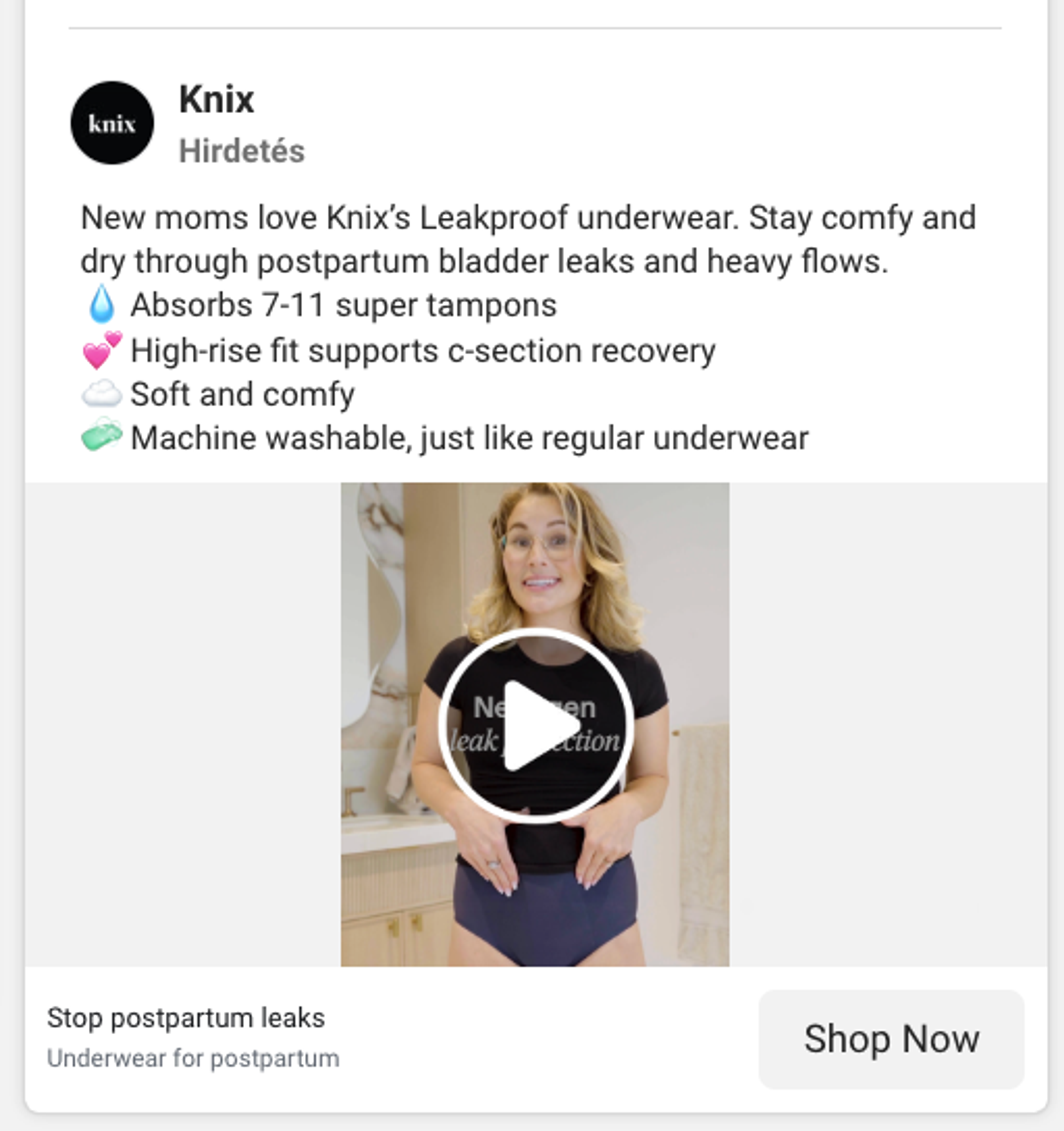
At roughly 300 active ads running across Meta at any given time, the Knix marketing strategy includes one of the highest-volume paid programs in the DTC intimates space.
That education work is where the most important ads live.
Copy like "Heavy flow doesn't have to mean leaks. SuperPlus Leakproof® gives you front-to-back protection, absorbs 7–11 super tampons' worth of liquid, with zero added bulk" is specific enough to be credible and concrete enough to move a skeptic.
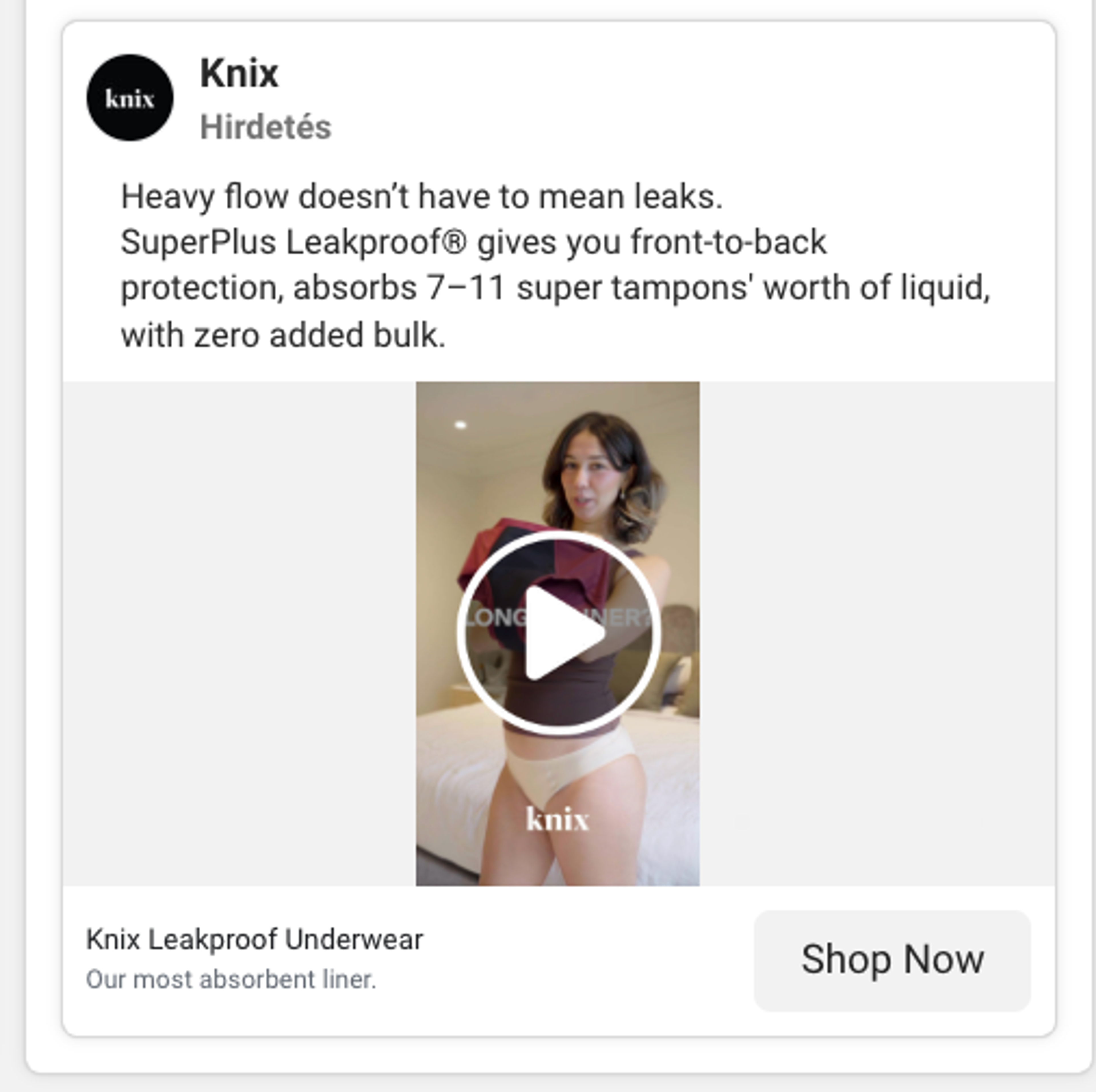
It's not selling a feeling — it's making a technical promise that no competitor has made, in language a real customer would actually use.
The second tier is UGC marketing through influencer amplification, and the creative approach is deliberately unpolished.
The third objective is upgrade conversion, moving existing customers from entry-level products toward higher-AOV bundles and newer lines.
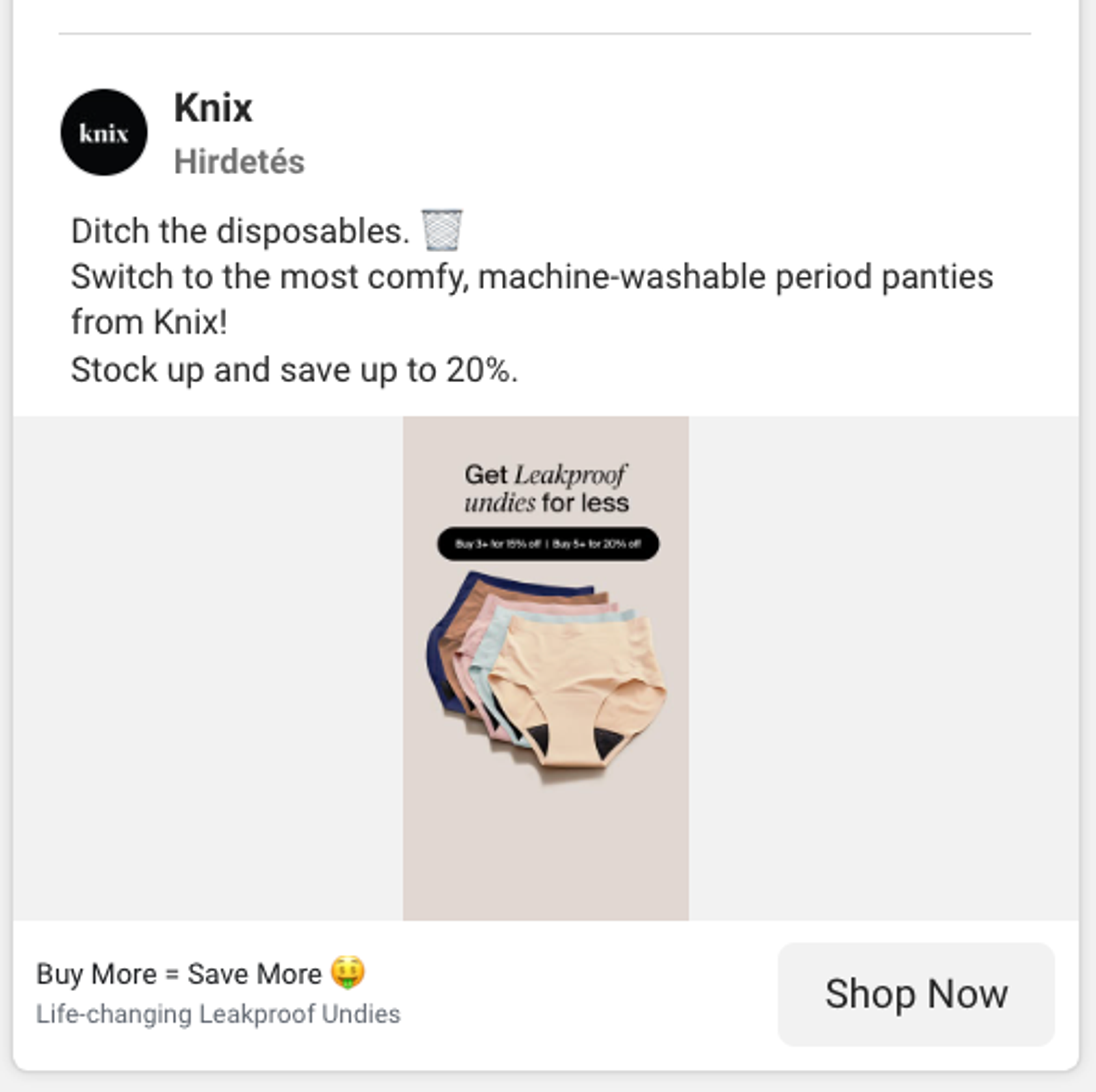
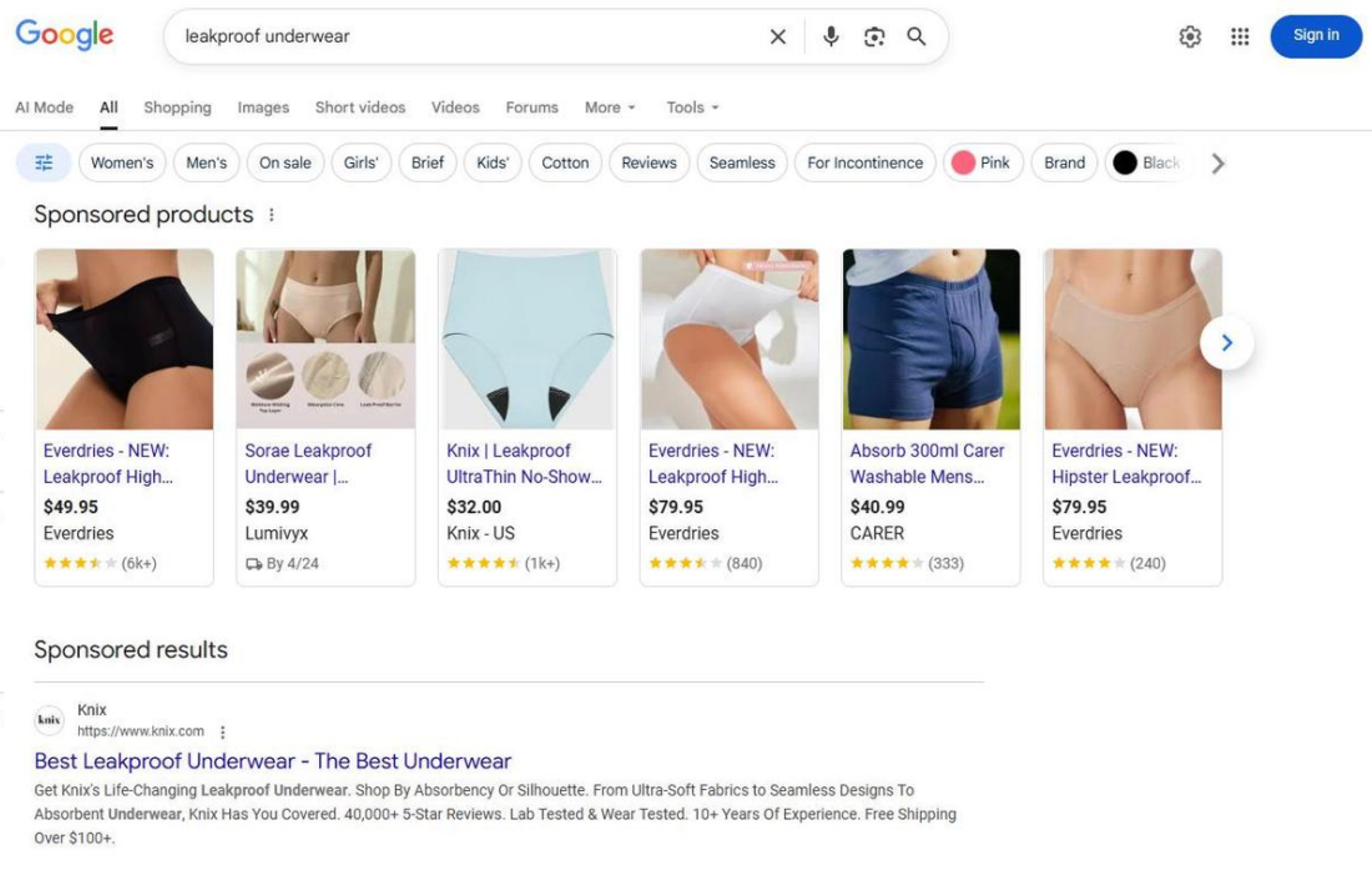
While Meta drives discovery, Google is where Knix captures the customer who already knows what she wants. The strategy runs across three distinct layers — category search, shopping, and branded defense — and each one is working.
Search "leakproof underwear" and Knix occupies the shopping carousel and the top sponsored text position at the same time.
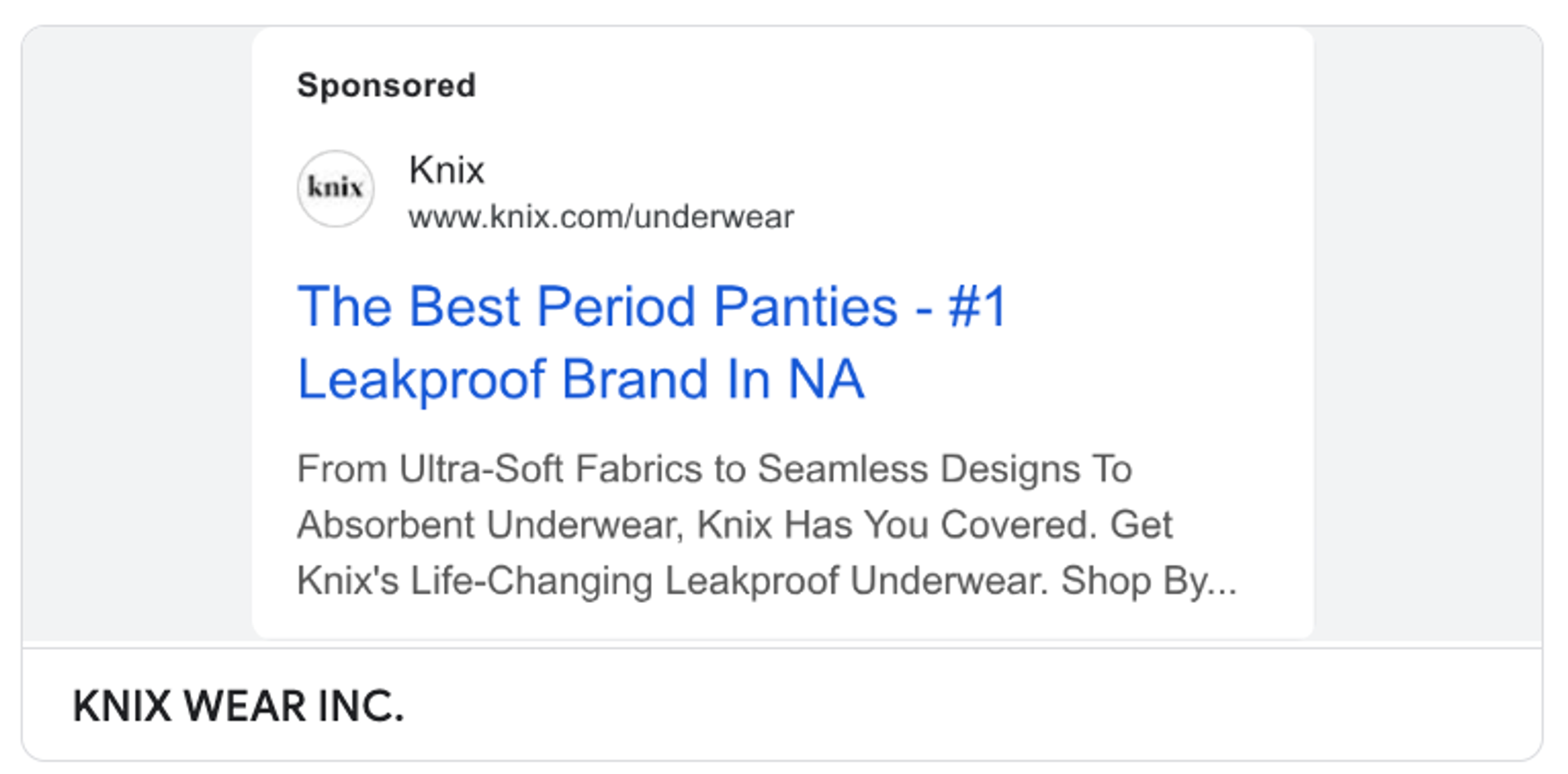
The same dual-presence holds for "period underwear." Sitelink extensions below the text ad shortcut directly to Period Underwear, Incontinence Underwear, and Best Leakproof Underwear landing pages, cutting the number of clicks between the search intent and the purchase decision to as few as possible.
On branded search — "knix underwear" — the dominance is total. All six shopping carousel positions above the fold are Knix products, priced between $27 and $48. Organic listings below mirror the ad headlines.
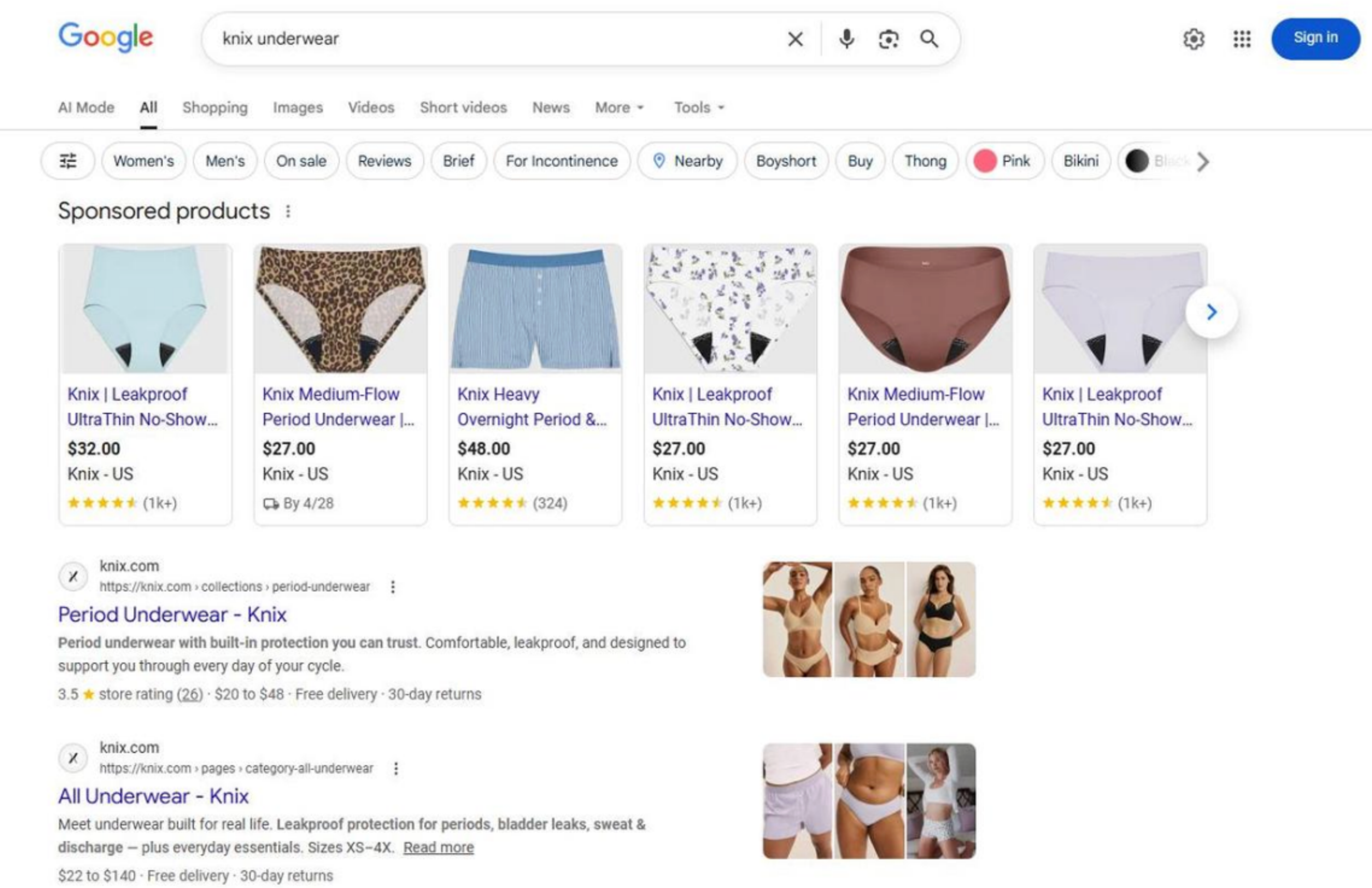
A user who clicks through from any placement lands on a page that says exactly what the ad promised. No gap, no friction, no reason to go back and check a competitor.
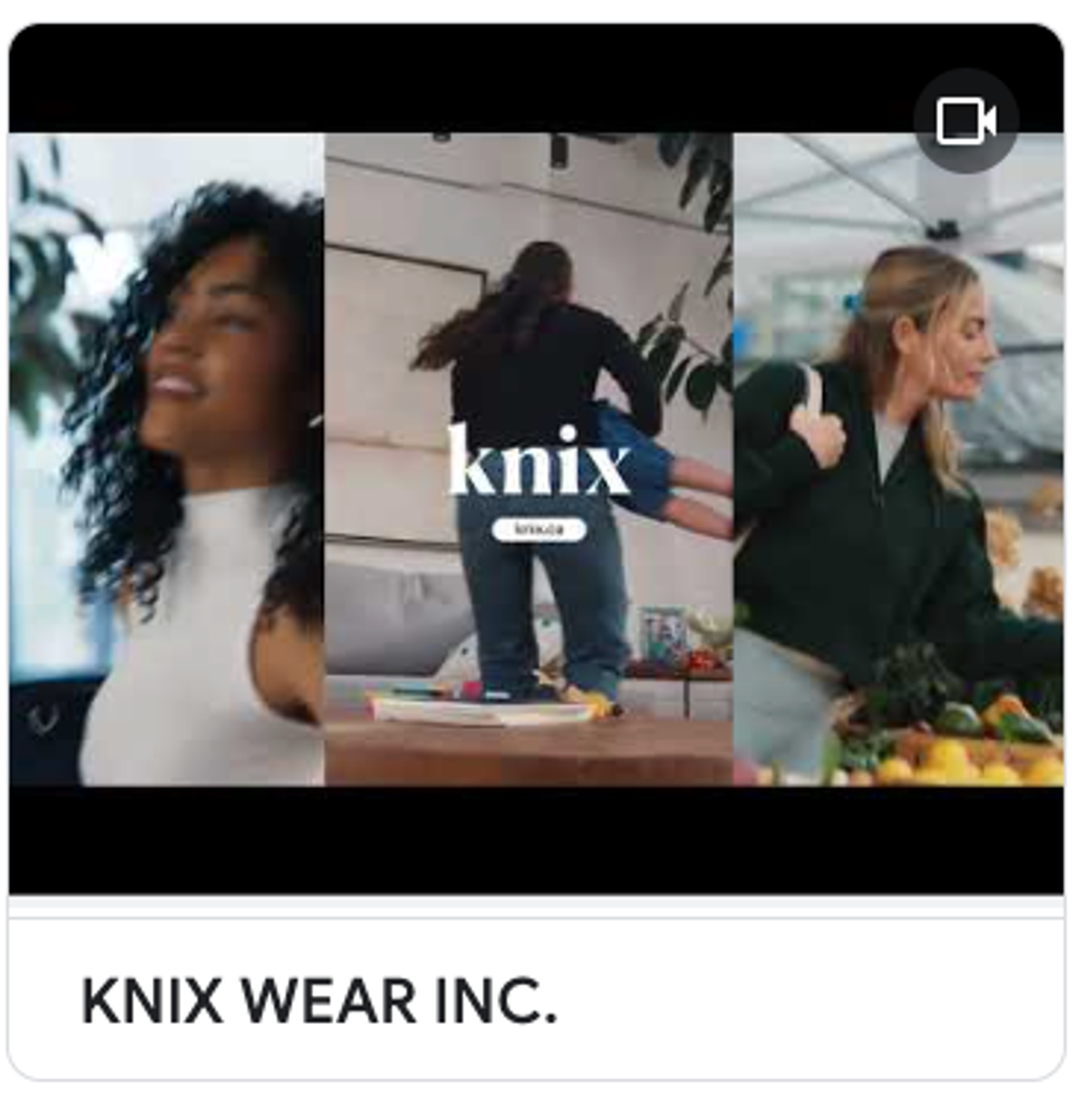
YouTube closes the loop. The "Knix for Life" and "You're Good" campaigns run as pre-roll spots that feed branded search volume back into the paid search funnel — upper-funnel video generating the demand that lower-funnel search then captures.
Knix's ecommerce conversion optimization is built to solve one specific problem: convincing a first-time visitor to trust an unfamiliar product category with her body. Every element of the conversion architecture exists to lower that barrier before any money changes hands.
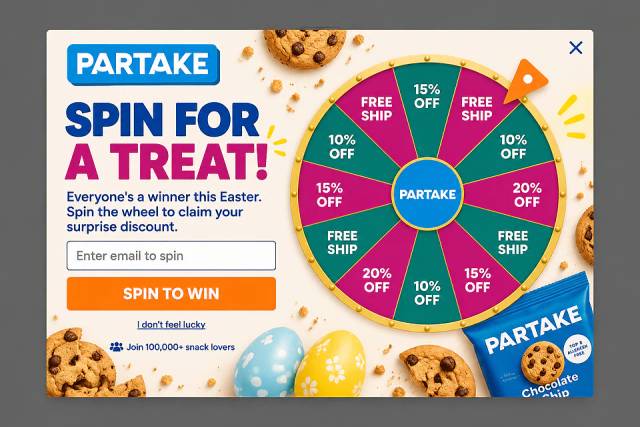
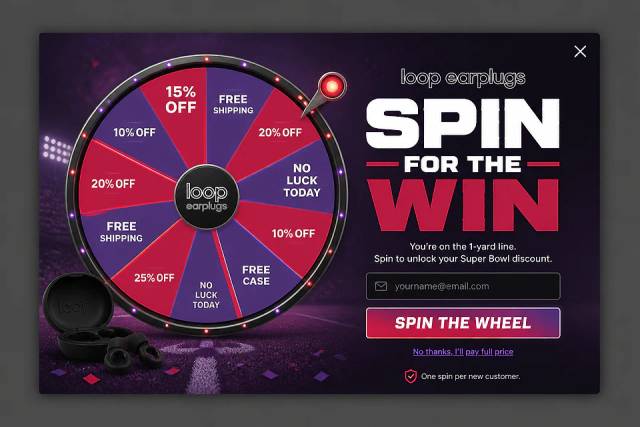
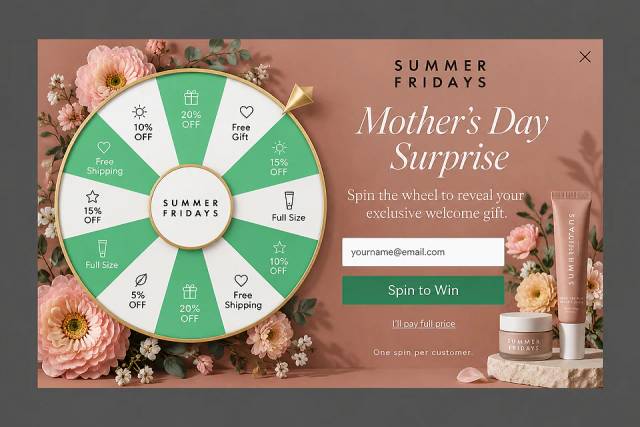
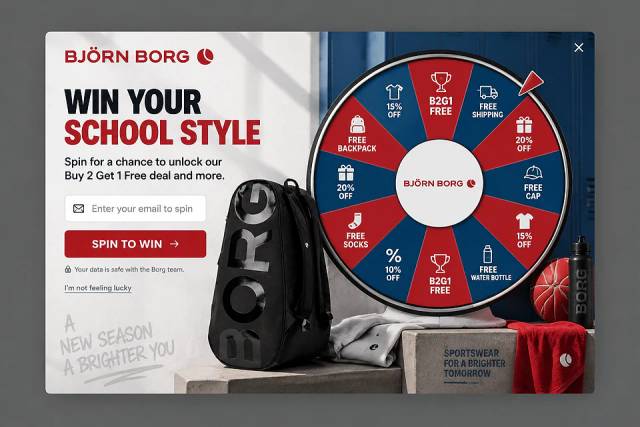
The entry point is a gambled discount. The "Spin to Win" popup appears immediately, up to 15% off, prize wheel included.
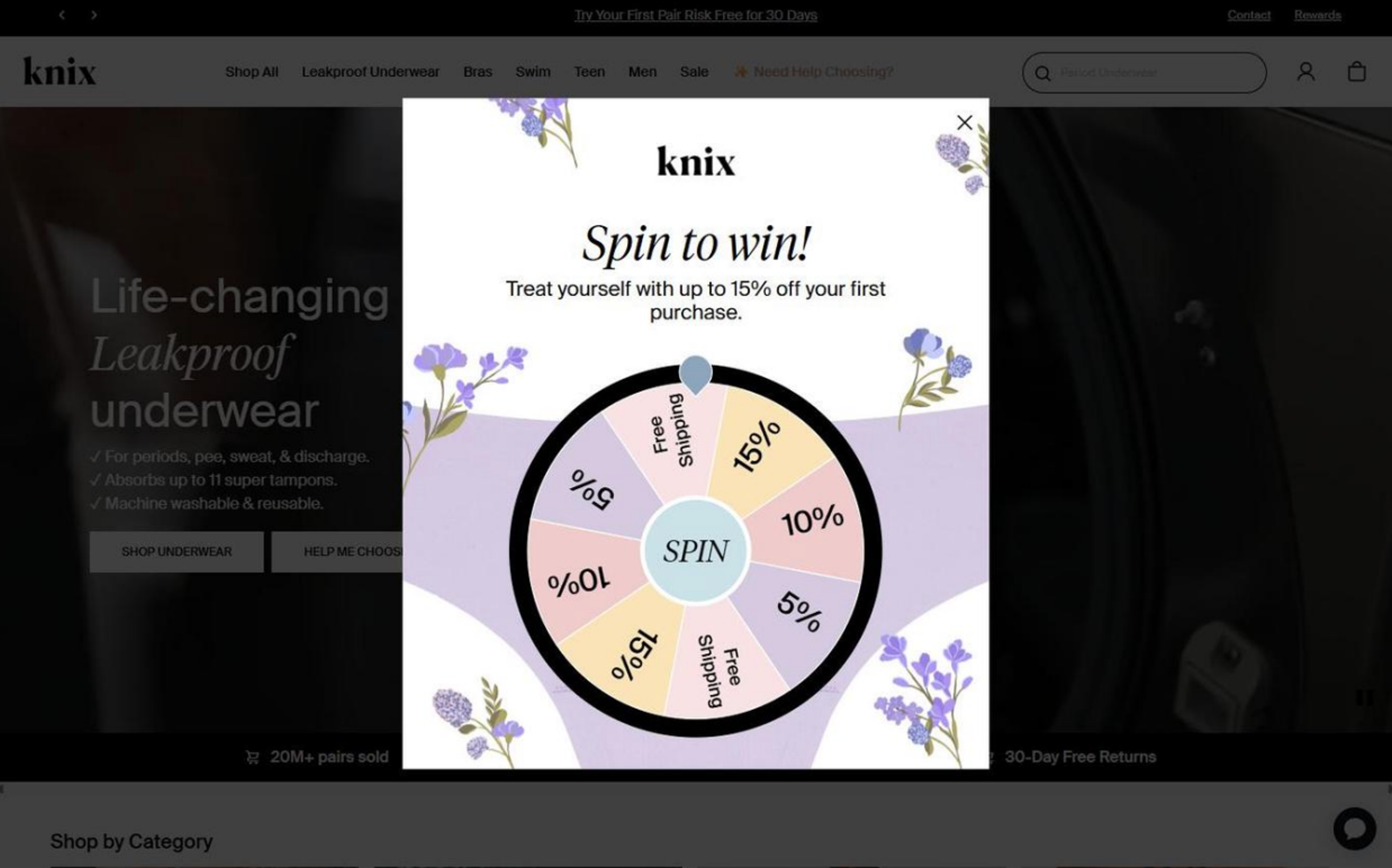
The mechanic is more psychological than promotional. Even a visitor who lands on "Free Shipping" has made a micro-commitment. She's participated. The cost of leaving without buying just went up.
Want to run a similar campaign? Check out these lucky wheel popup ideas.
Dismiss the popup and the homepage hero does the next job: justify the category. "Life-changing Leakproof underwear" leads, followed by three proof points that do what no lifestyle claim can: "Absorbs up to 11 super tampons." That number stops a skeptic.
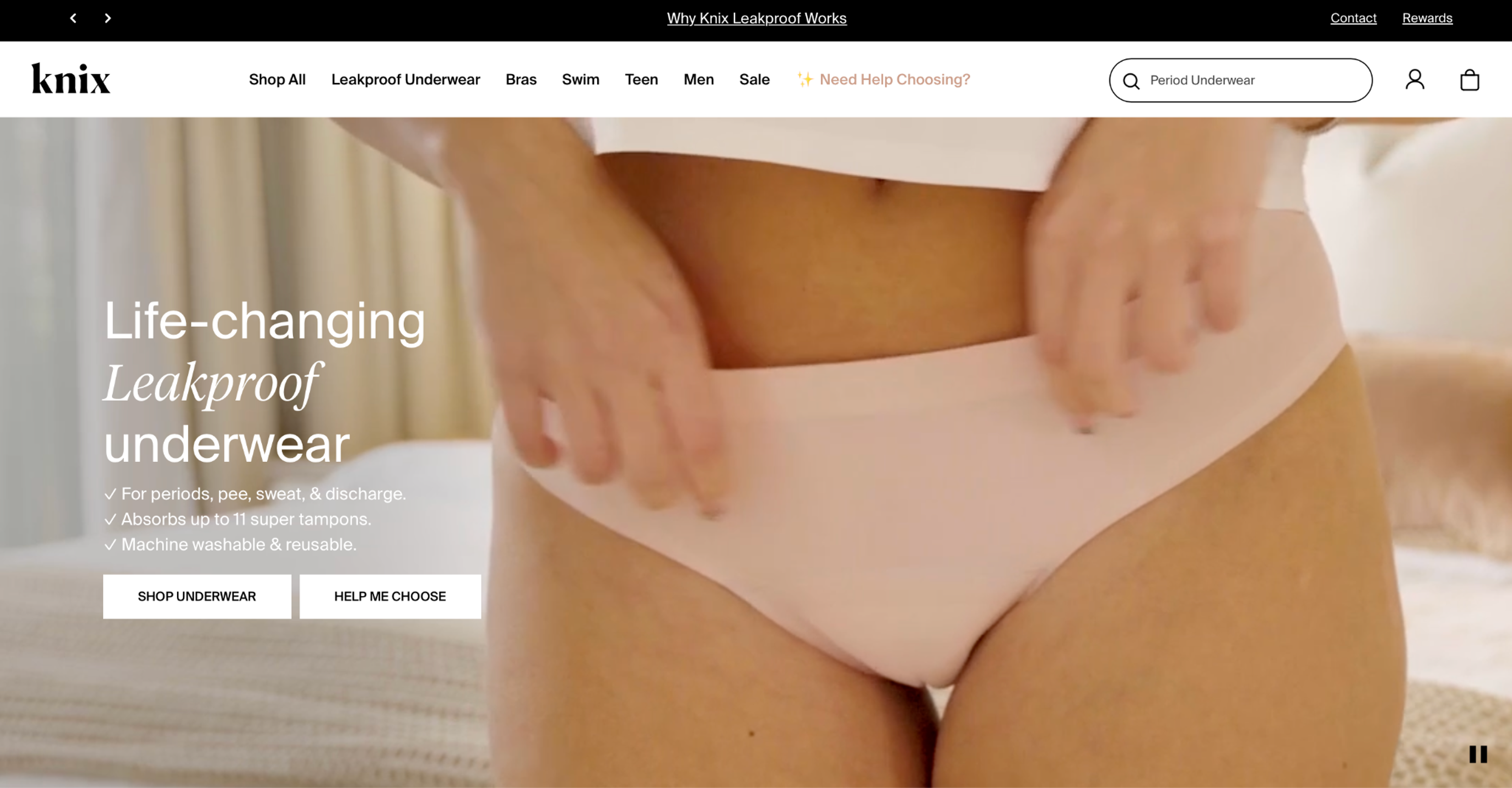
Below the headline, two CTAs sit side by side:
Both paths lead to purchase. One just takes slightly longer.
Before a single product appears,a full-width social proof bar runs across the page: 20M+ pairs sold, Patented LeakSeal™ Technology, Inclusive Sizing XS–4XL, 30-Day Free Returns.

Below the headline, two CTAs sit side by side:
Both paths lead to purchase. One just takes slightly longer.
Before a single product appears,a full-width social proof bar runs across the page: 20M+ pairs sold, Patented LeakSeal™ Technology, Inclusive Sizing XS–4XL, 30-Day Free Returns.

Five hooks, five different purchase motivations, one element. Deal-seekers, skeptics, and risk-averse first-timers all get addressed before they've scrolled an inch.
But that's only what a first-time visitor sees. Return to the site as an existing customer and the homepage changes entirely.
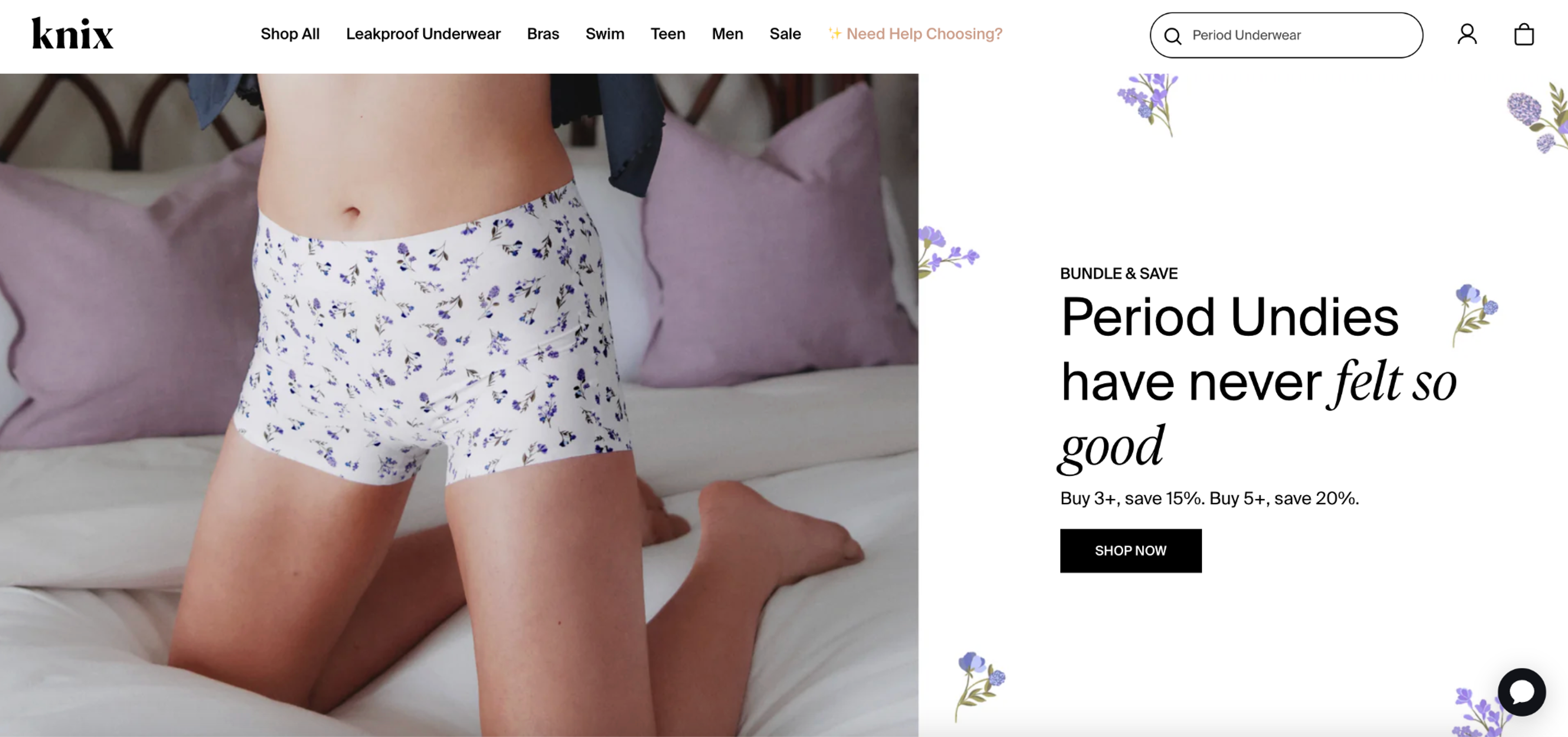
Where a new visitor gets a benefit-led hero designed to justify the category, a returning visitor is greeted with a bundle promotion front and center, the assumption being that the product no longer needs explaining. The trust barrier has already been cleared. The next job is increasing order value.
It's a small detail that reveals a lot about how deliberately the site is architected. Most ecommerce homepages show every visitor the same page. Knix uses the visit history to infer where the customer is in her relationship with the brand and serves a different conversion goal accordingly.
The product page opens with trust before price. Star rating and review count appear above the product name, above the price. The first thing the visitor reads is social proof: 6,708 people already bought this. The price comes second.
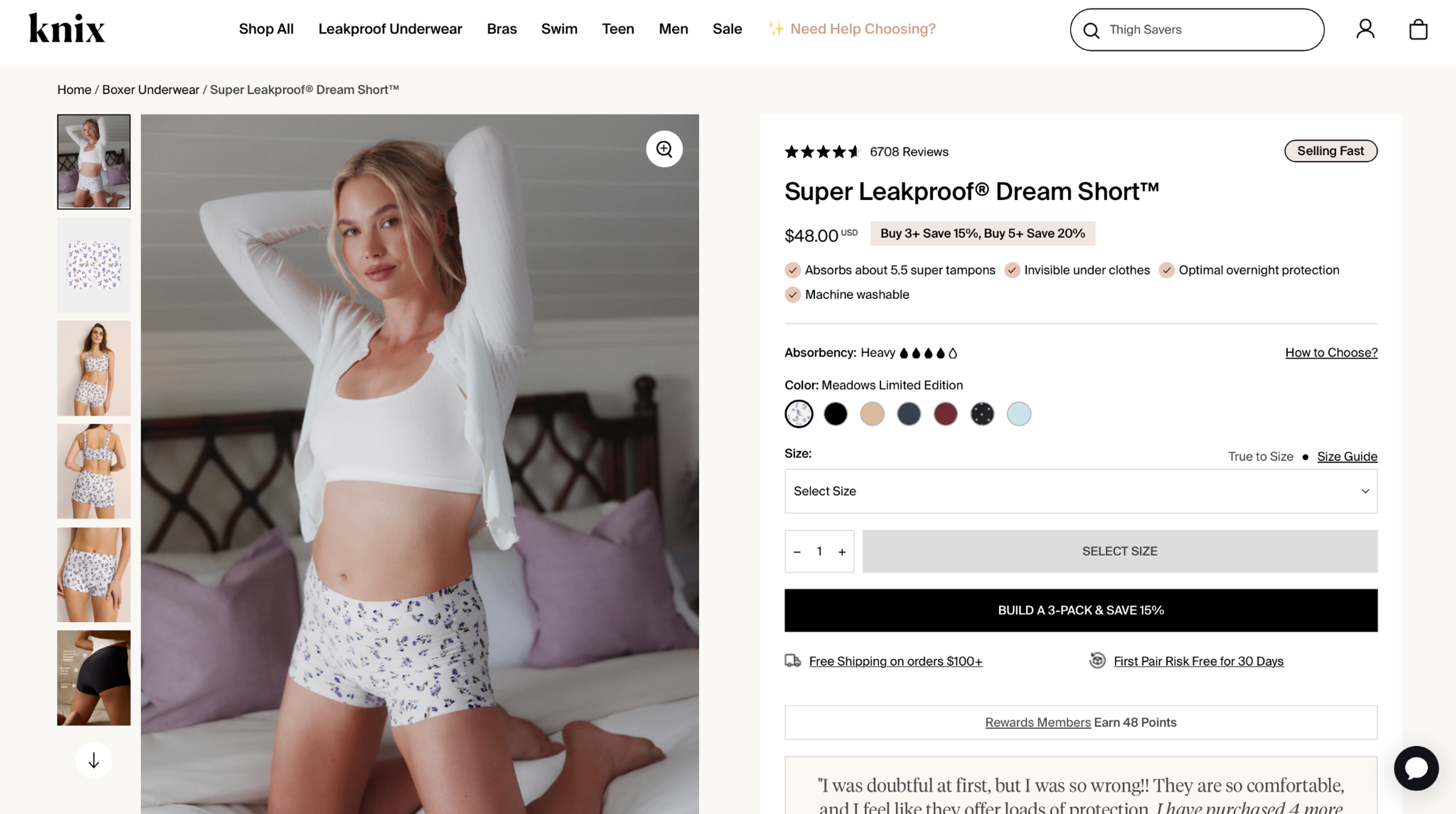
A "Selling Fast" badge sits in the upper corner, the only scarcity signal on the page, used once and nowhere else.
The CTA architecture is where ecommerce conversion optimization gets precise.
The primary button reads "SELECT SIZE", visually grayed out until a size is chosen. The visitor cannot add to cart without making an active decision first.
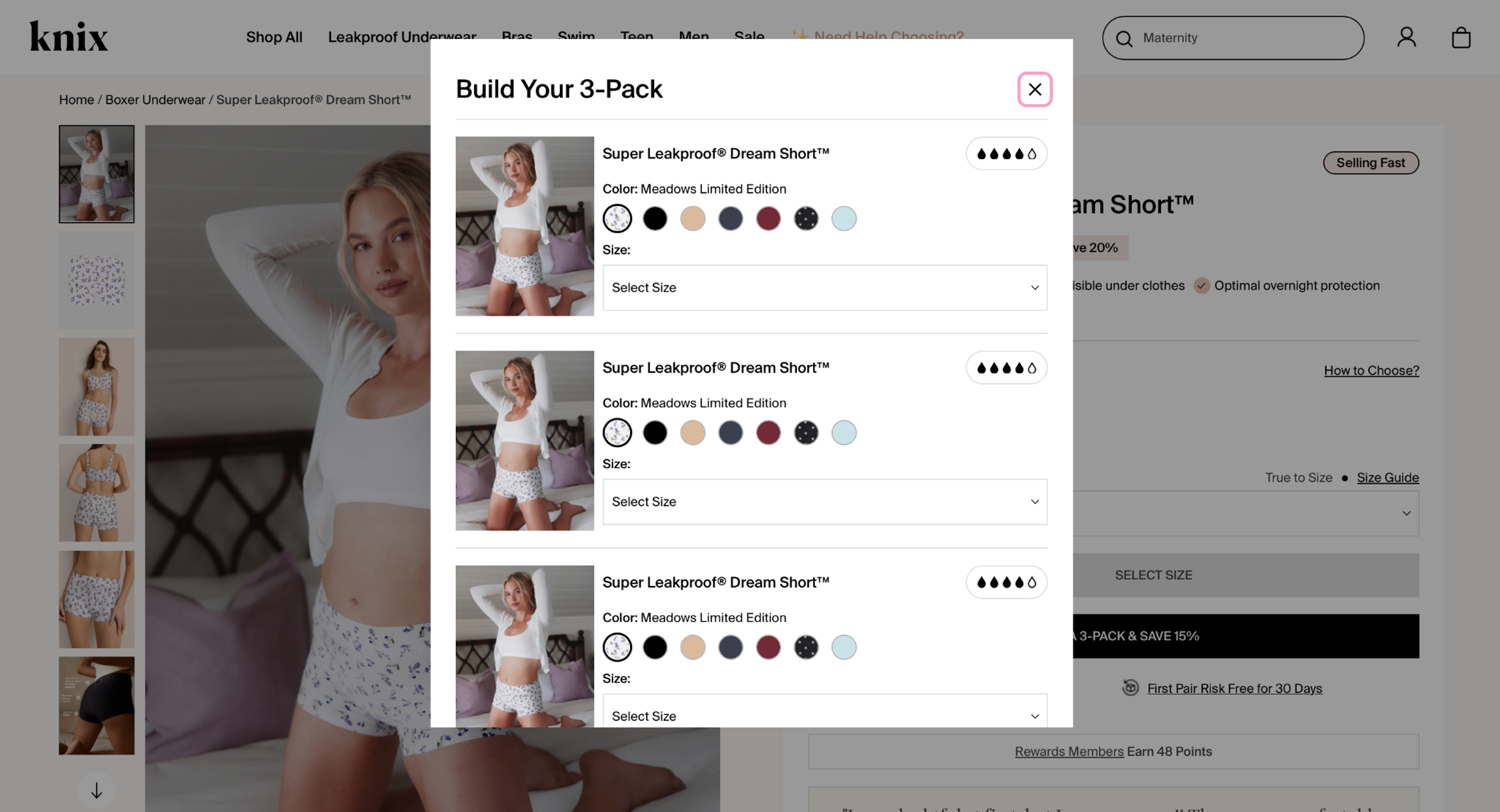
Directly below it, a full-width black button reads "BUILD A 3-PACK & SAVE 15%", anchoring the bundle as the default frame before the single-unit purchase even registers as an option.
Rewards are redeemable for real branded products, a lingerie wash bag, a tote, full underwear and swimwear pieces, rather than generic cash discounts. Every redemption reinforces brand loyalty instead of simply subsidizing the next purchase.
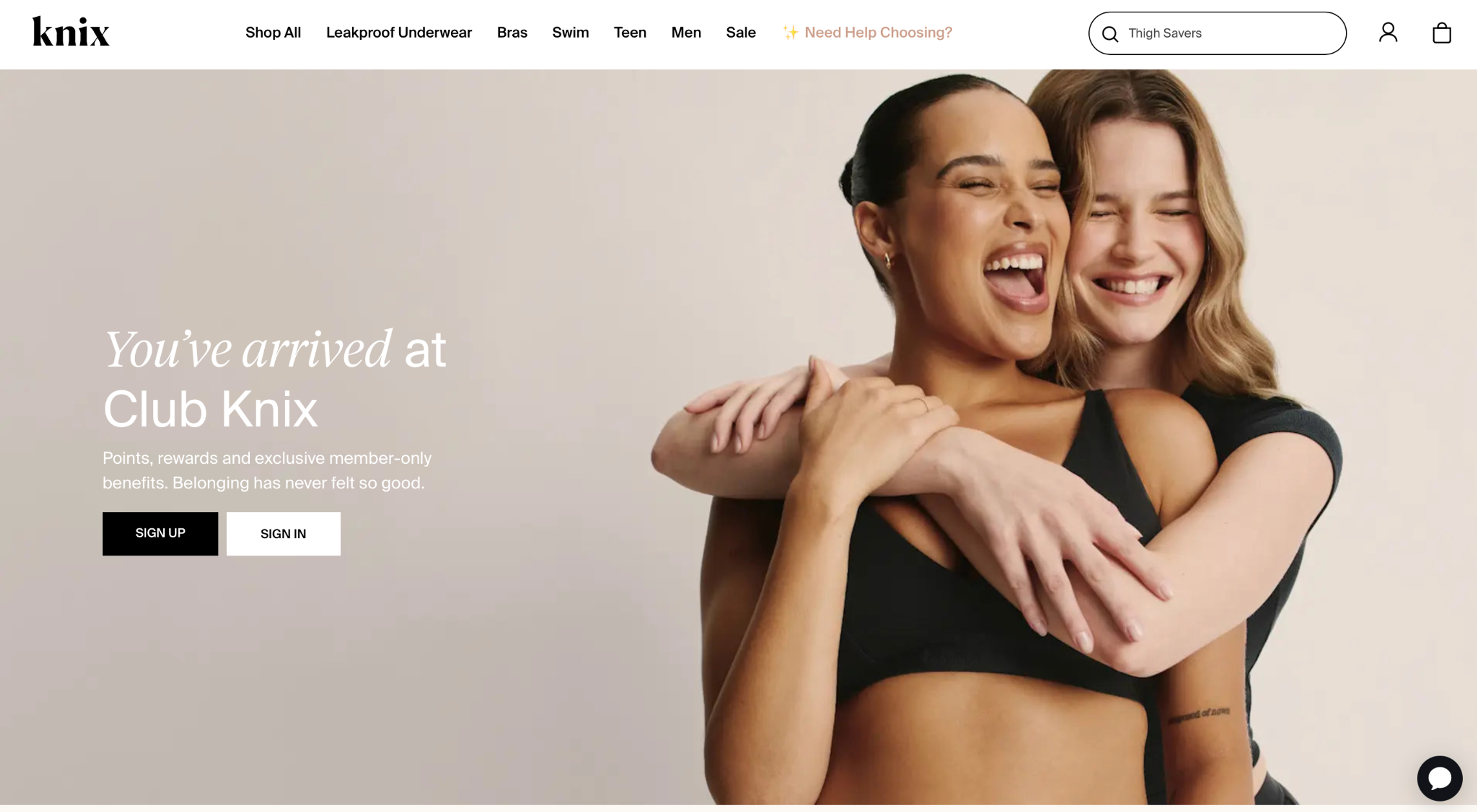
Rewards are redeemable for real branded products, a lingerie wash bag, a tote, full underwear and swimwear pieces, rather than generic cash discounts. Every redemption reinforces brand loyalty instead of simply subsidizing the next purchase.
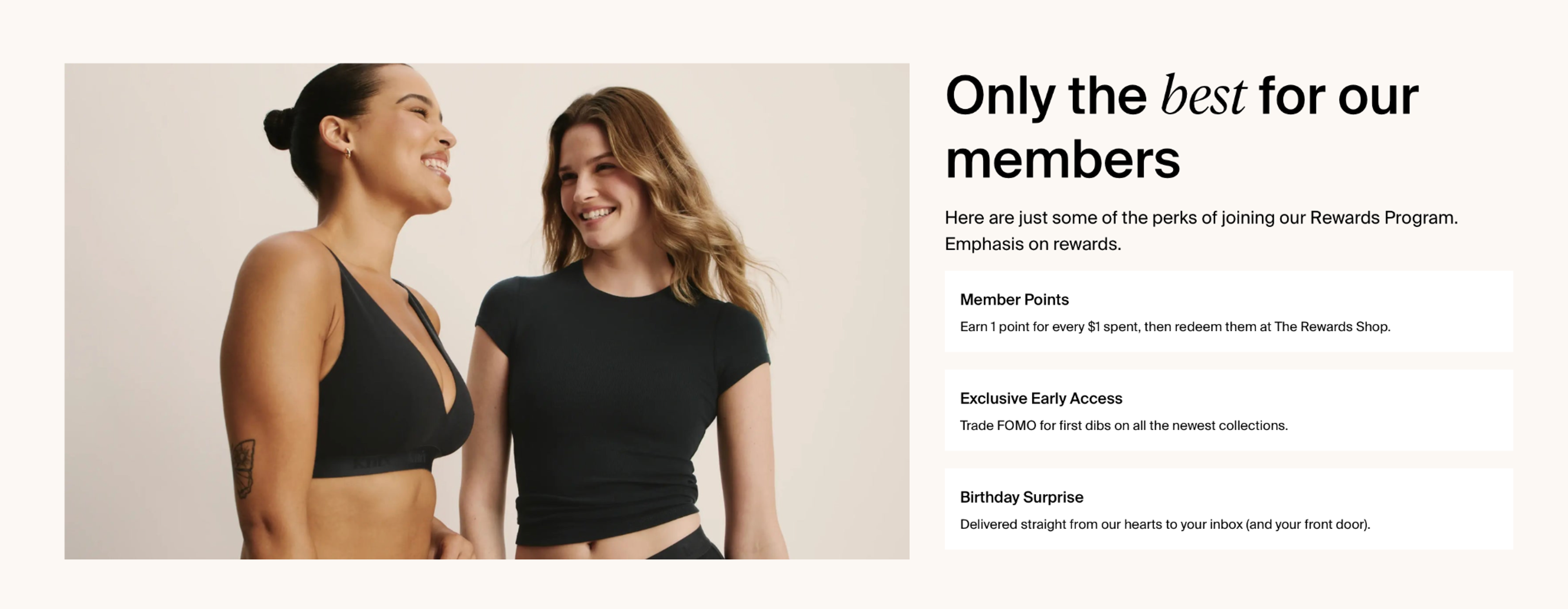
The full loop runs like this:
Each stage feeds the next. Most direct-to-consumer brands optimize for the first purchase. Knix built a site that optimizes for the moment the customer becomes a believer, because that's the moment everything else follows.
Knix's growth is built on a single insight that sounds obvious until you look at how rarely anyone acts on it: the most powerful marketing asset in a category defined by period stigma is the willingness to talk about it plainly.
Brands can replicate the spin-to-win popup and the UGC video ads. What they can't replicate is a decade of authentic marketing built on fitting every product on every size with the founder still in the room. What they can't buy is the credibility that comes from funding a conversation about periods with no requirement to mention your brand name.
For any brand trying to break into a crowded category, the question at the heart of the Knix marketing strategy is worth sitting with: what is the conversation your customer is having privately that nobody in your category is willing to have publicly? The brand that answers that first — and means it — tends to win the longest.


How Tarte turns founder storytelling, creator trips, TikTok virality, and smart on-site funnels into a repeatable beauty marketing growth engine.
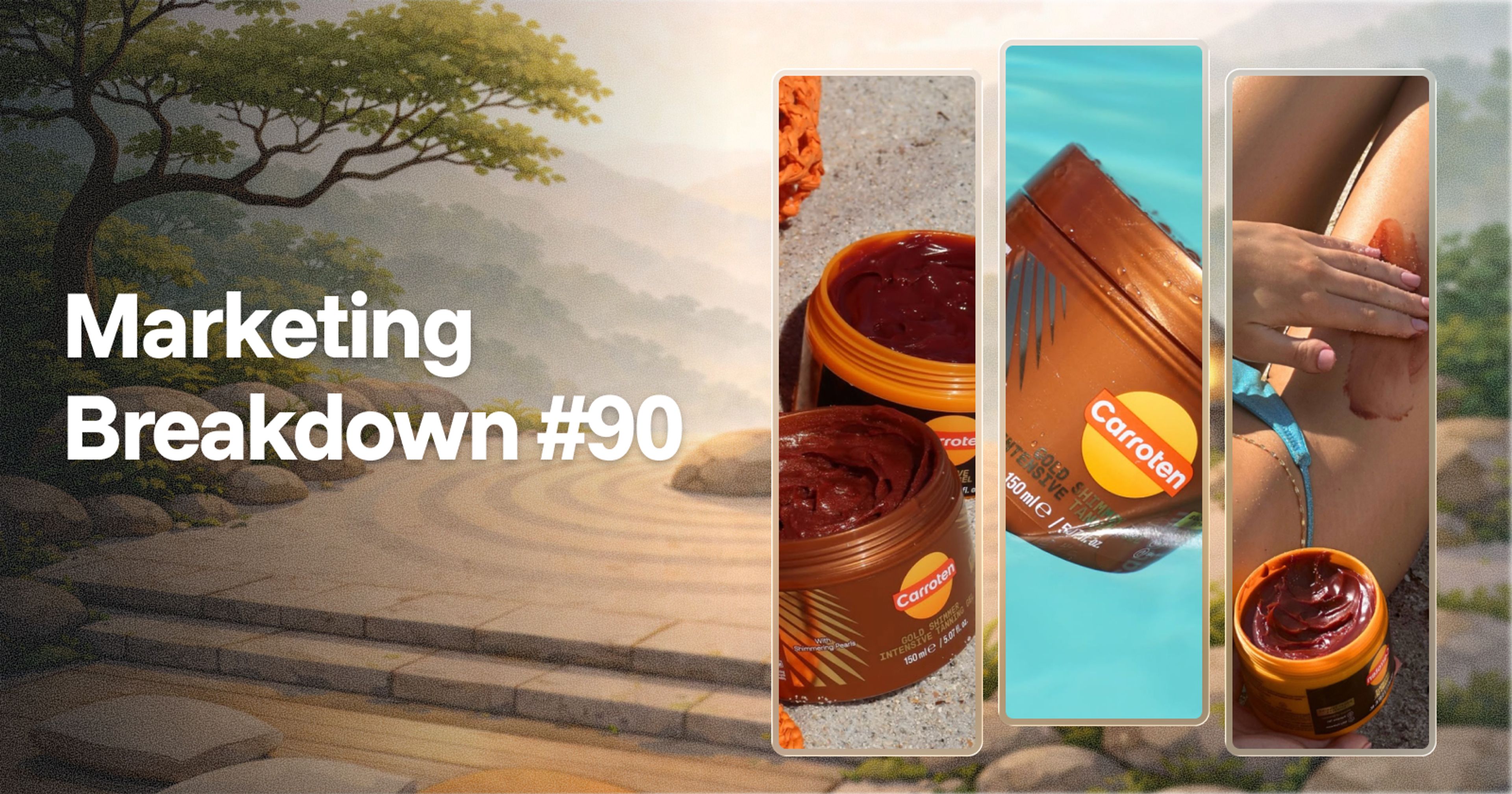
How Carroten went from unknown to every US Target shelf in under a year — using TikTok virality, creator-led commerce, and heritage brand positioning.
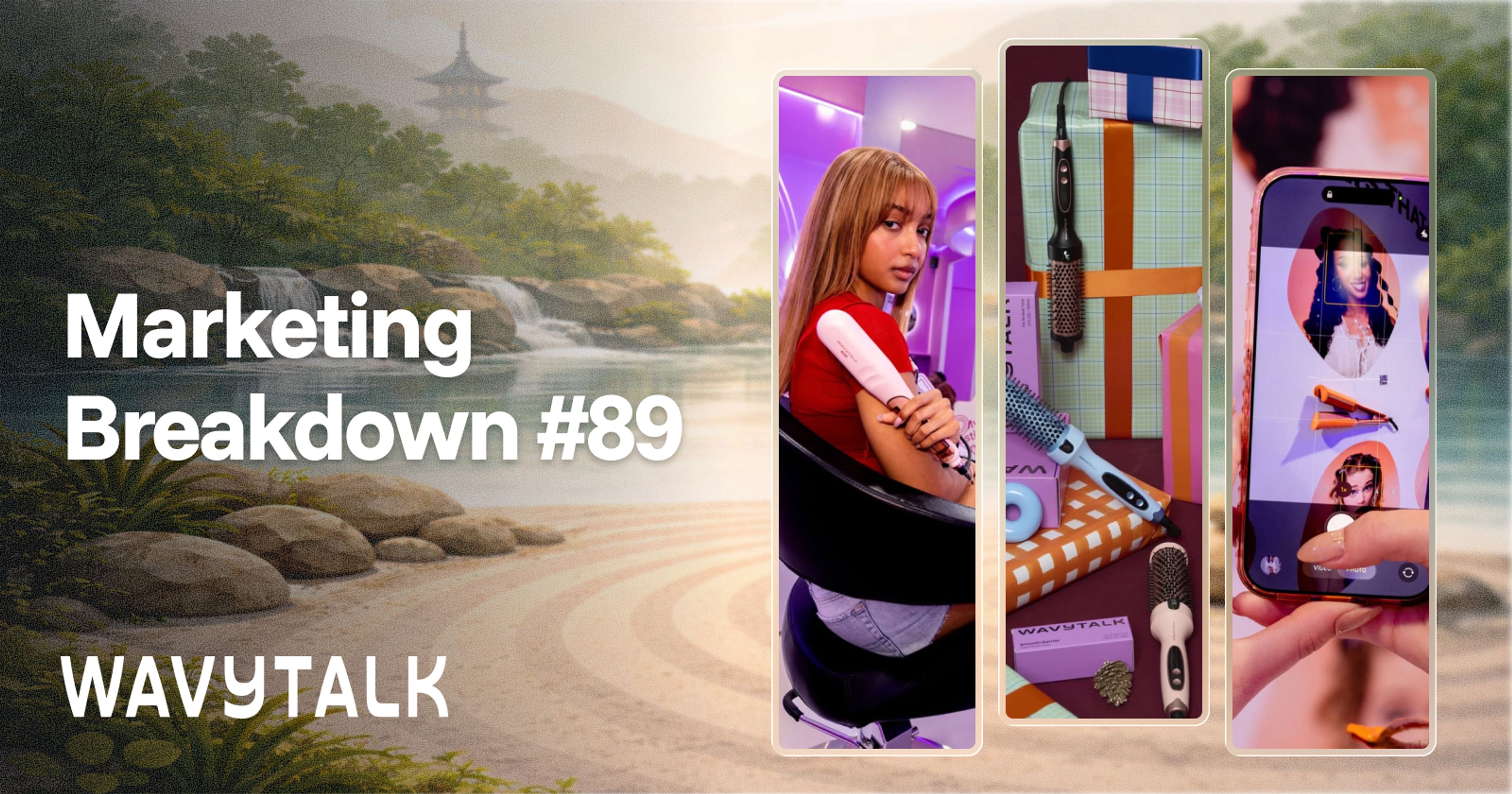
A deep dive into WavyTalk’s marketing strategy, from TikTok Shop and creator-led launches to UGC, cultural moments, and high-converting DTC tactics.