


Tarte Cosmetics Marketing Breakdown: How a 25-Year-Old Beauty Brand Keeps Making Products Feel Viral
How Tarte turns founder storytelling, creator trips, TikTok virality, and smart on-site funnels into a repeatable beauty marketing growth engine.
Salt & Stone marketing strategy: how a $20 deodorant became a $165M brand through scent, TikTok, and a powerful DTC-first approach.
In short
Salt & Stone scaled a $20 deodorant into a $165M global brand by prioritizing scent innovation, building a DTC-first foundation, leveraging organic creator-driven growth, and expanding into retail from a position of proven demand.
Fifteen private equity firms competed to acquire Salt & Stone. Advent International, the group behind Olaplex, won the deal.
The prize was a brand that sells one deodorant every five seconds, holds the top deodorant spot at both Sephora and Amazon simultaneously, and crossed $165 million in revenue in 2025 with double-digit growth across every channel.
The product at the center of all of this costs $20.
That number deserves to sit for a moment. Not $80. Not a prestige fragrance. A $20 aluminum-free deodorant, launched in 2017 by a former professional snowboarder out of a Los Angeles studio apartment, built into one of the fastest-growing premium body care brands in the world without a single outside dollar raised in its early years
So what does Salt & Stone know that most beauty brands don't? Let's break down the Salt & Stone marketing strategy.
Nima Jalali spent his twenties as a professional snowboarder. A knee injury ended that career and sent him into Erewhon, looking for body care that was clean, effective, and didn't smell like a health food store.
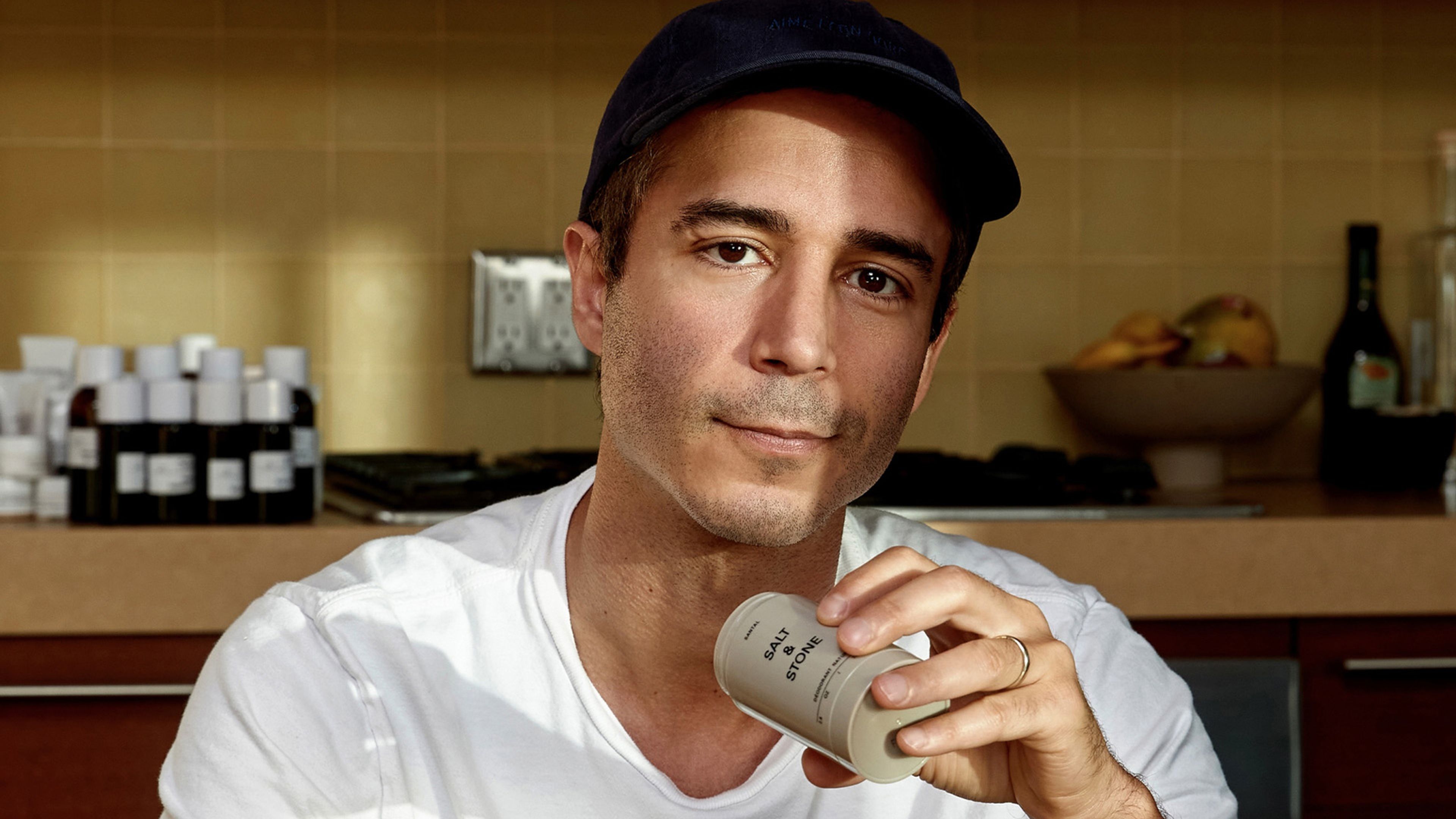
He couldn't find it. So he built it. Before Salt & Stone, he had already founded and sold a snowboarding apparel brand, HOWL Supply, which gave him a working map of what not to do.
What makes Jalali's story interesting isn't the origin. Plenty of brands have "founder couldn't find what they wanted" as a backstory. What's interesting is what he chose to do with it.
He deliberately kept himself off the brand. No founder-face campaigns, no personal Instagram leverage, no "built by Nima" positioning.
His reasoning: "I don't believe in making a celebrity out of a non-celebrity. I want to create a brand that's a legacy brand, and that's not going to come and go because of one person."
The brand had to stand on its own, which forced every dollar and decision into the product and its identity rather than into a personality.
Scent is not the thing that makes the deodorant smell good. Scent is the thing that makes a $20 deodorant compete with a $340 fragrance.
TikTok users have compared the Santal & Vetiver formula to Le Labo's Santal 33 unprompted.
That comparison doesn't happen by accident. Salt & Stone reportedly worked with DSM-Firmenich, a fragrance house behind some of the most recognized compositions in luxury perfumery, to develop its core scent collection. Jalali has said that fine-tuning each scent across formats can take years.
The five scent families — Santal & Vetiver, Bergamot & Hinoki, Saffron & Cedar, Black Rose & Oud, and Neroli & Basil — are not just product names. They are the architecture of the entire business.
Every SKU Salt & Stone makes lives inside one of these families:
A customer who discovers Bergamot & Hinoki in the body wash has a clear path to a full Bergamot & Hinoki routine. That path is high-margin, emotionally sticky, and almost impossible for a competitor to intercept once it's established.
Salt & Stone didn't chase virality on TikTok, TikTok creators found them.
A single video by creator, Alexa Collins, praising the deodorant reportedly accumulated 13.8 million views the kind of number a brand can't manufacture, only earn.
The reason it could go viral is simple: the product overdelivered enough that a real person felt compelled to tell 13 million strangers about a deodorant.
When that moment hit, Salt & Stone's products sold out. The team had to rebuild demand planning from scratch to stay ahead of the algorithm.
What followed was a deliberate expansion of Salt & Stone's influencer marketing program, but without abandoning the organic tone that started it. The brand now works with a network of paid partners who produce content in the #saltandstonepartner format:
…because that's the format that already proved it converts:
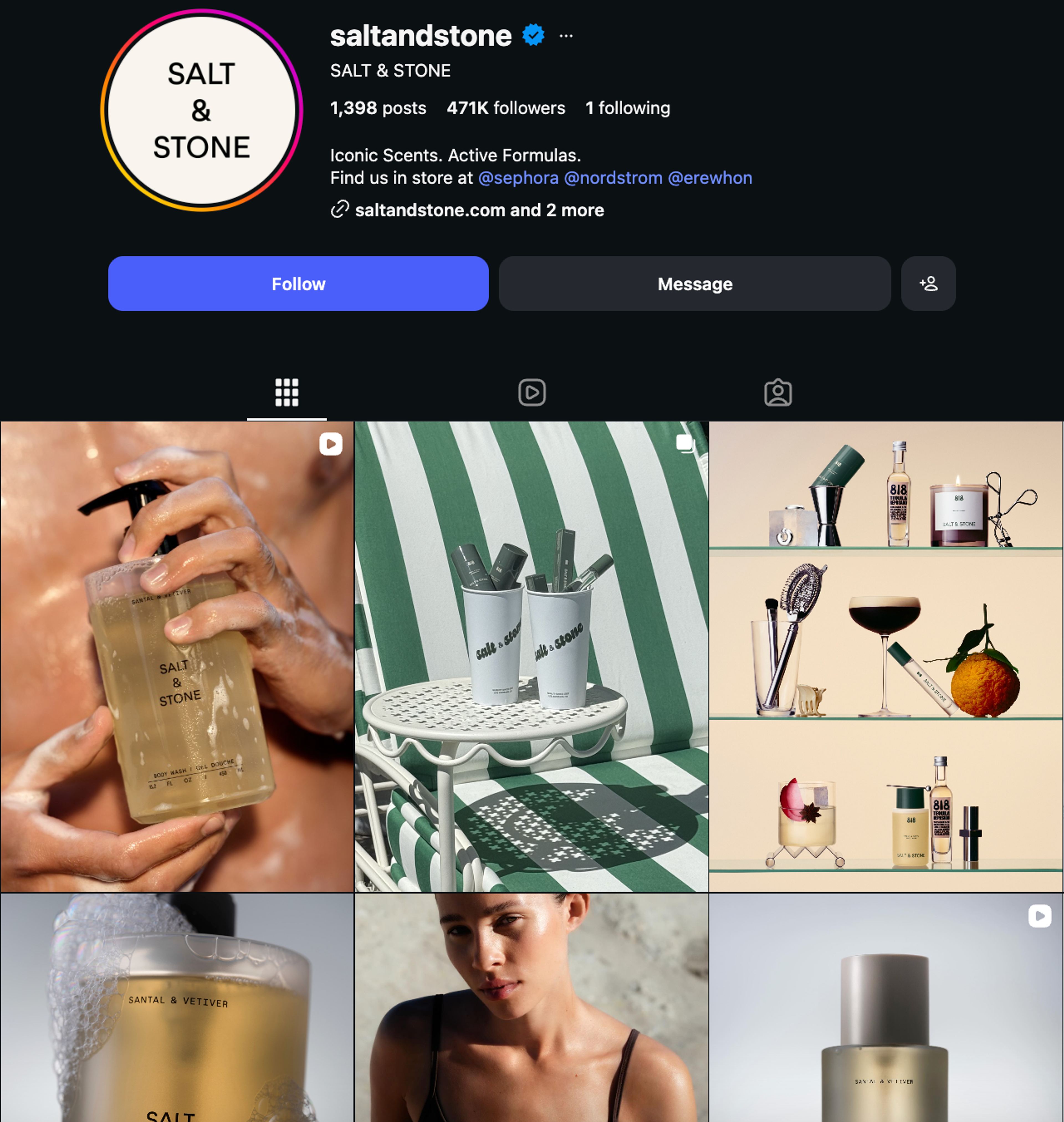
The brand's Instagram, now at over 470K followers, follows the same logic:
This is arguably the most counterintuitive decision Jalali made: when Salt & Stone was ready for Sephora, he didn't pitch Sephora. He waited for Sephora to call.
The logic was partly protective, a rejection early in the brand's life closes doors that are very hard to reopen.
But it was also strategic. By spending those early years building a best-in-class digital presence (website, ads, email), the brand created leverage. When the conversation with Sephora finally happened, Salt & Stone could walk in with proven DTC conversion rates, a loyal customer base, and sell-through data that made the case for them.
The retail footprint that followed reflects that same discipline, accounts chosen for cultural signal as much as volume:
The UK Sephora launch in late 2023 became the clearest proof of concept: Salt & Stone entered as a challenger and quickly became the retailer's number-one deodorant and second-biggest body brand in that market.
DTC still accounts for 40% of sales even after all that retail expansion, a figure the brand treats as evidence of community health, not a channel that wholesale is slowly replacing.
Most beauty brand collaborations follow the same playbook: find a celebrity, put their name on a shade or scent, sell out the first drop, move on.
Salt & Stone's version looks completely different. Its partners have been Grammy Award-winning musician Leon Bridges, streetwear label Stüssy, recreation brand Outdoor Voices, designer collective Brain Dead, and Erewhon as an in-gym amenity partner.
None of these are beauty brands. That's the entire point.
The most recent example illustrates the strategy at its sharpest. In early 2026, Salt & Stone launched the limited-edition Amber & Agave collection with Kendall Jenner's 818 Tequila, timed to Coachella.
The fragrance accord was built directly from 818 Añejo's flavor profile: vetiver and tequila top notes, dark plum and agave at the heart, vanilla and amber at the base. The candle sold out immediately.
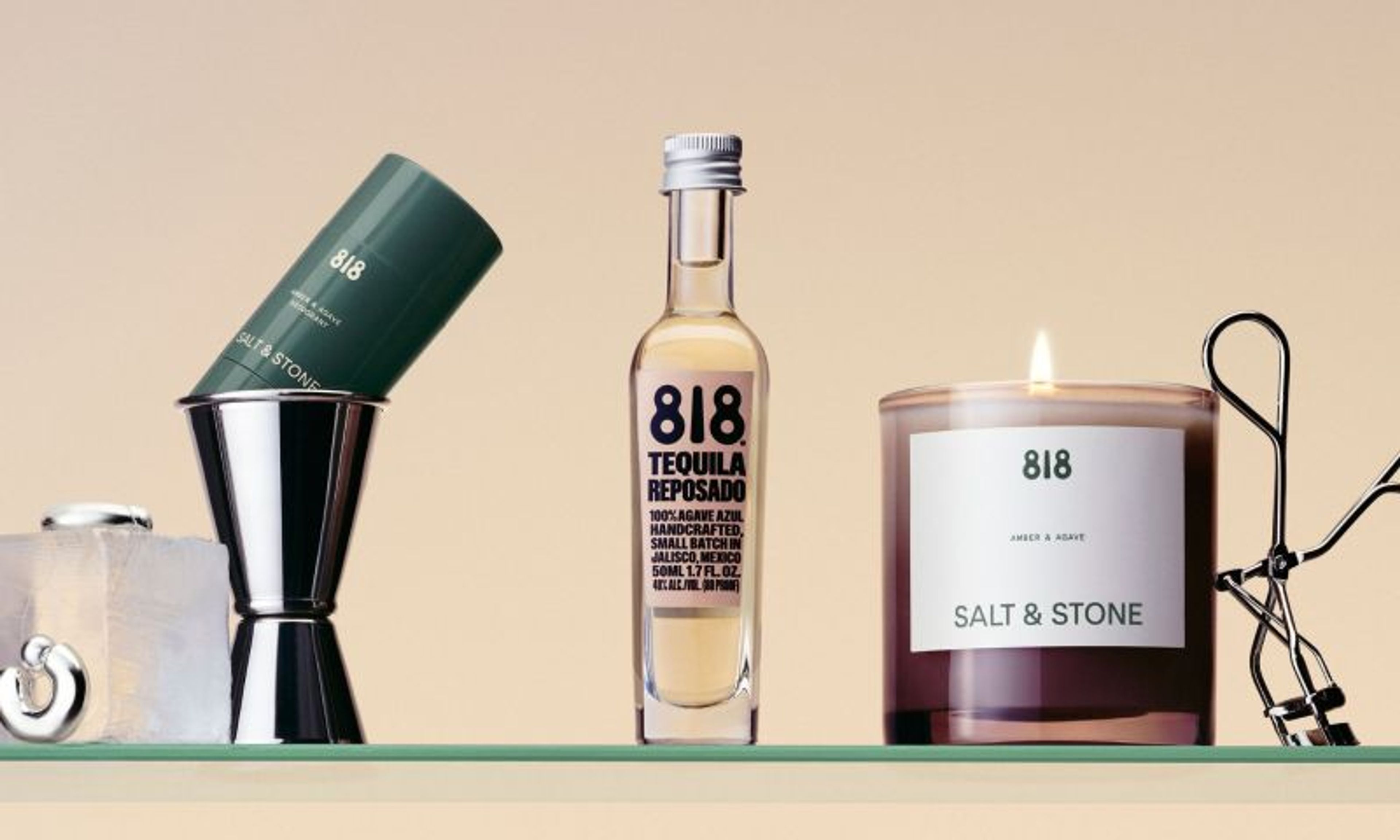
The collection launched on saltandstone.com before hitting Sephora, rewarding the DTC community with first access and generating a press wave that money couldn't have bought.
Jalali's framing on the approach: "Our goal with collaborations is for them to feel fun and push us creatively." Revenue is a byproduct, not the brief.
Every Meta ad Salt & Stone is currently running leads with the same hook: someone asking, "What are you wearing?"
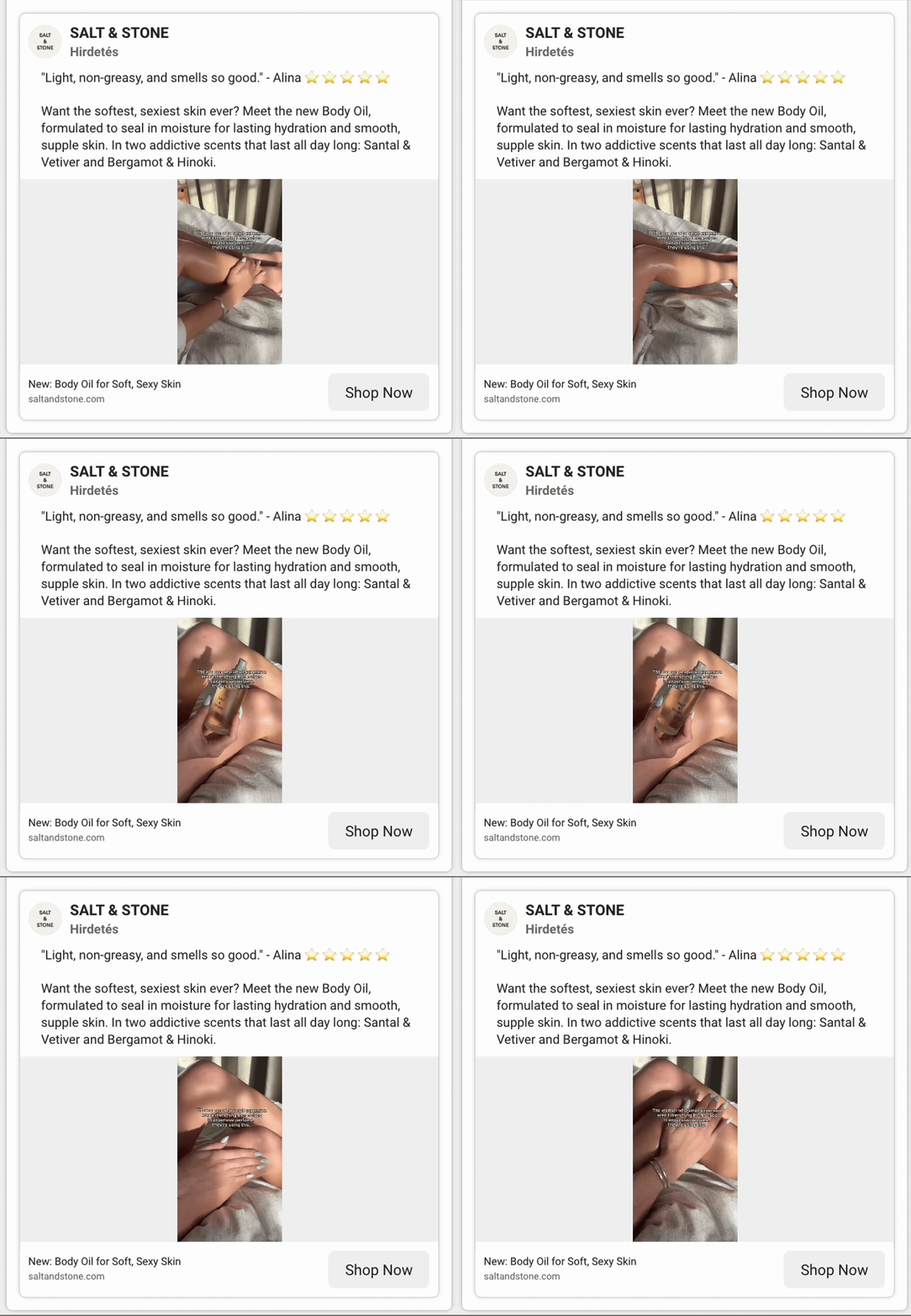
This is a tested, winning angle. The real purchase trigger isn't clean ingredients or 48-hour protection, it's the fantasy of smelling expensive enough that strangers stop you.
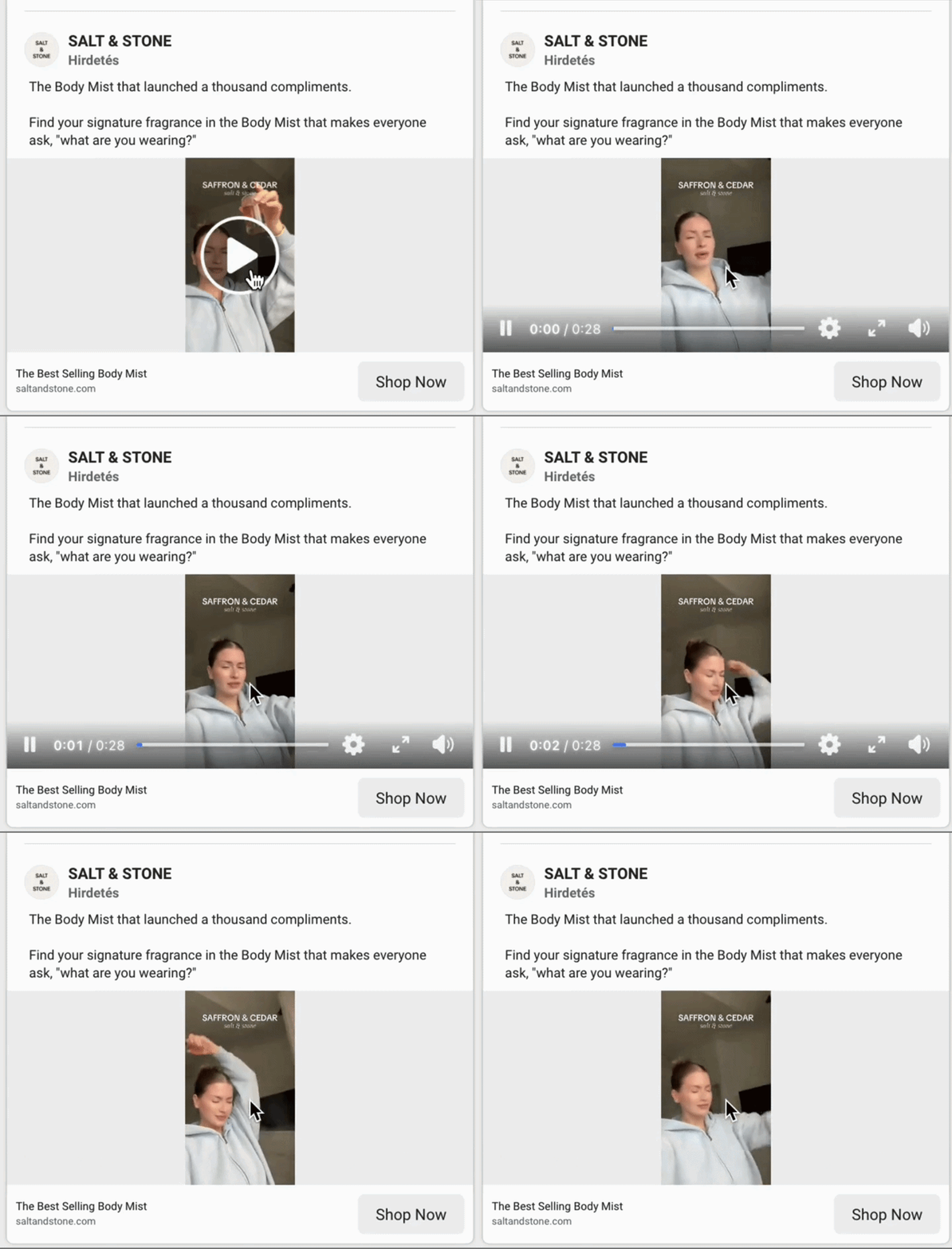
The creative format reinforces it. Every ad uses vertical phone-shot video or a simple product image with a customer quote overlaid: UGC aesthetic, not brand production. The format signals authenticity, which makes the emotional claim land harder than a polished campaign ever could.
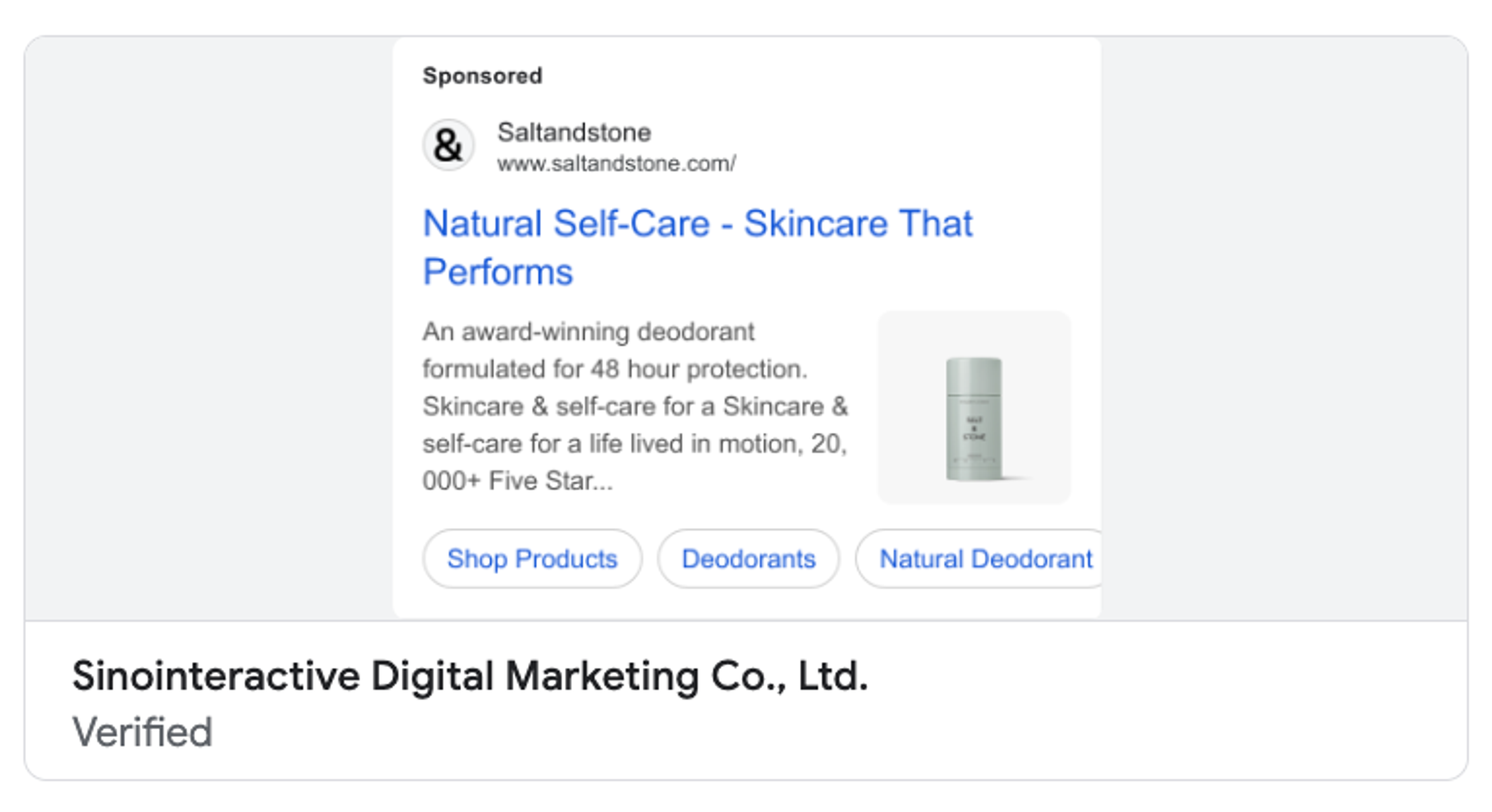
On Google, Salt & Stone runs a split strategy. Search ads lead with credibility — "award-winning" and "48-hour protection" — to capture high-intent buyers already looking for a clean deodorant.
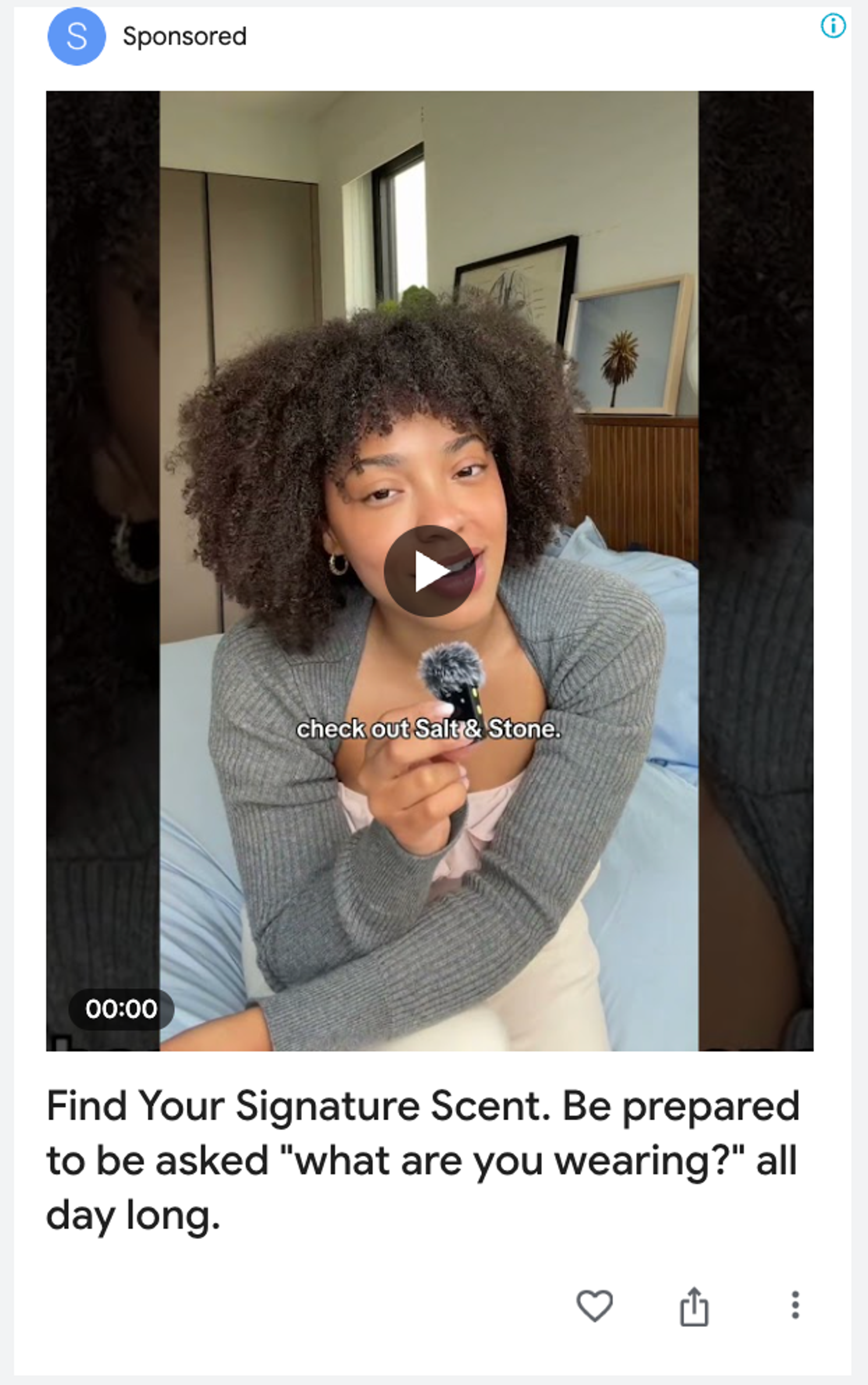
Display and video ads take a different angle: real creators on camera, holding the product, with captions like "you have to try it out" and "it smells so good." The creative looks indistinguishable from organic TikTok content, which is the point.
Salt & Stone has one problem with every fragrance brand selling online shares: you cannot smell the internet.
A visitor landing from a Meta ad knows the product looks premium and the reviews are real, but they have no idea whether Santal & Vetiver or Bergamot & Hinoki is right for them.
Most brands solve this with better copy. Salt & Stone solved it with infrastructure.
At the very top of the site, a rotating announcement bar cycles through three messages: free shipping on orders over $50, a free mini deodorant on orders over $65, and sitting between two purchase incentives “New: Take the scent quiz".

That third slot is the telling one. Most brands use announcement bars exclusively for transactional triggers: thresholds, promos, countdown timers.
Salt & Stone gives one of its three rotations to a visitor who isn't ready to buy yet, handing them a lower-commitment entry point before they've seen a single product.
The bar is running two parallel jobs:
The popup flow is where the real sophistication shows. It opens not with a discount, but with a question: are you shopping for yourself or for someone else?
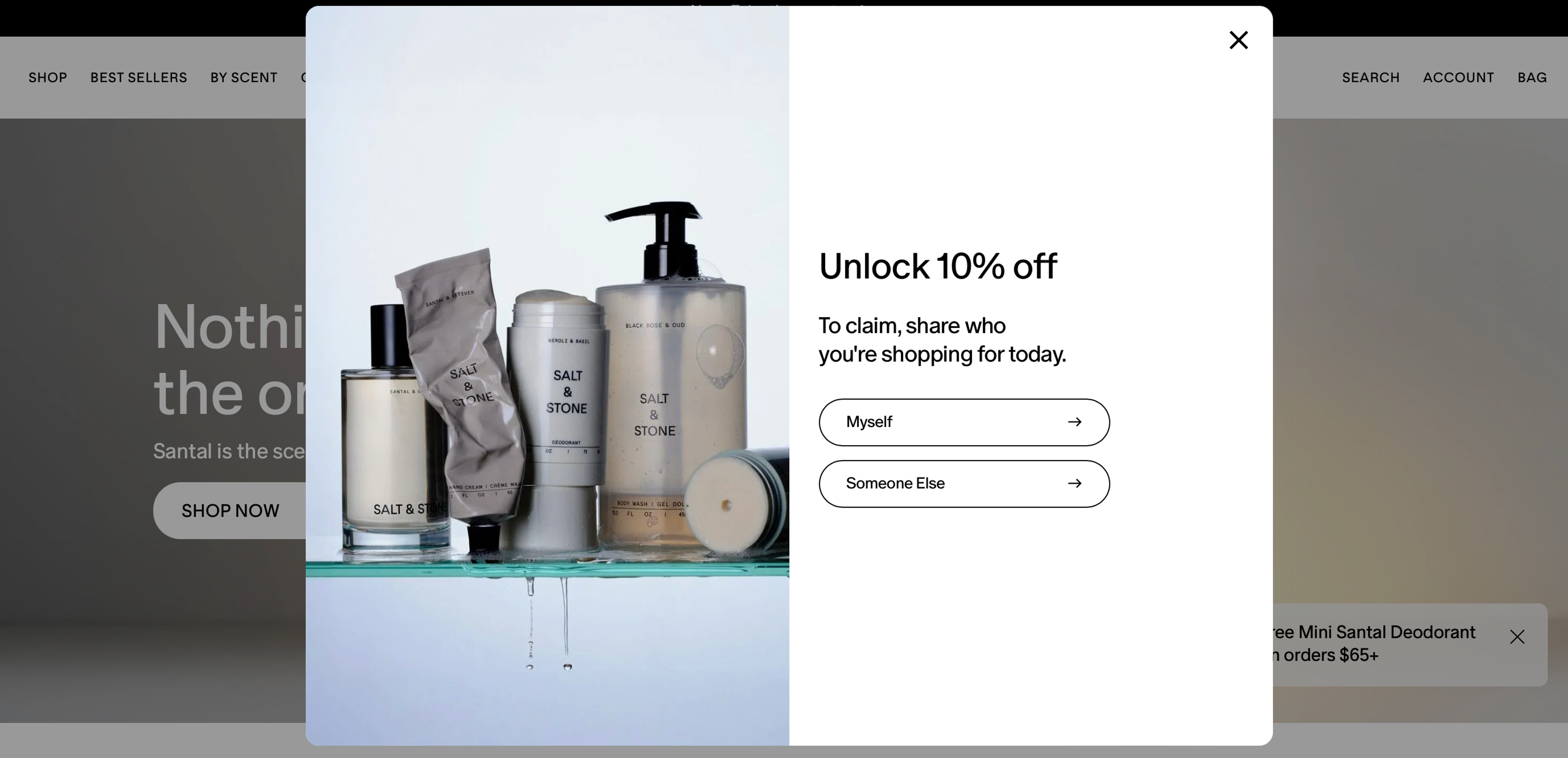
That single fork immediately segments the visitor before a single contact detail has been collected, gifting intent gets a different follow-up path than personal use, and the brand knows which retention sequence to trigger from the first interaction.
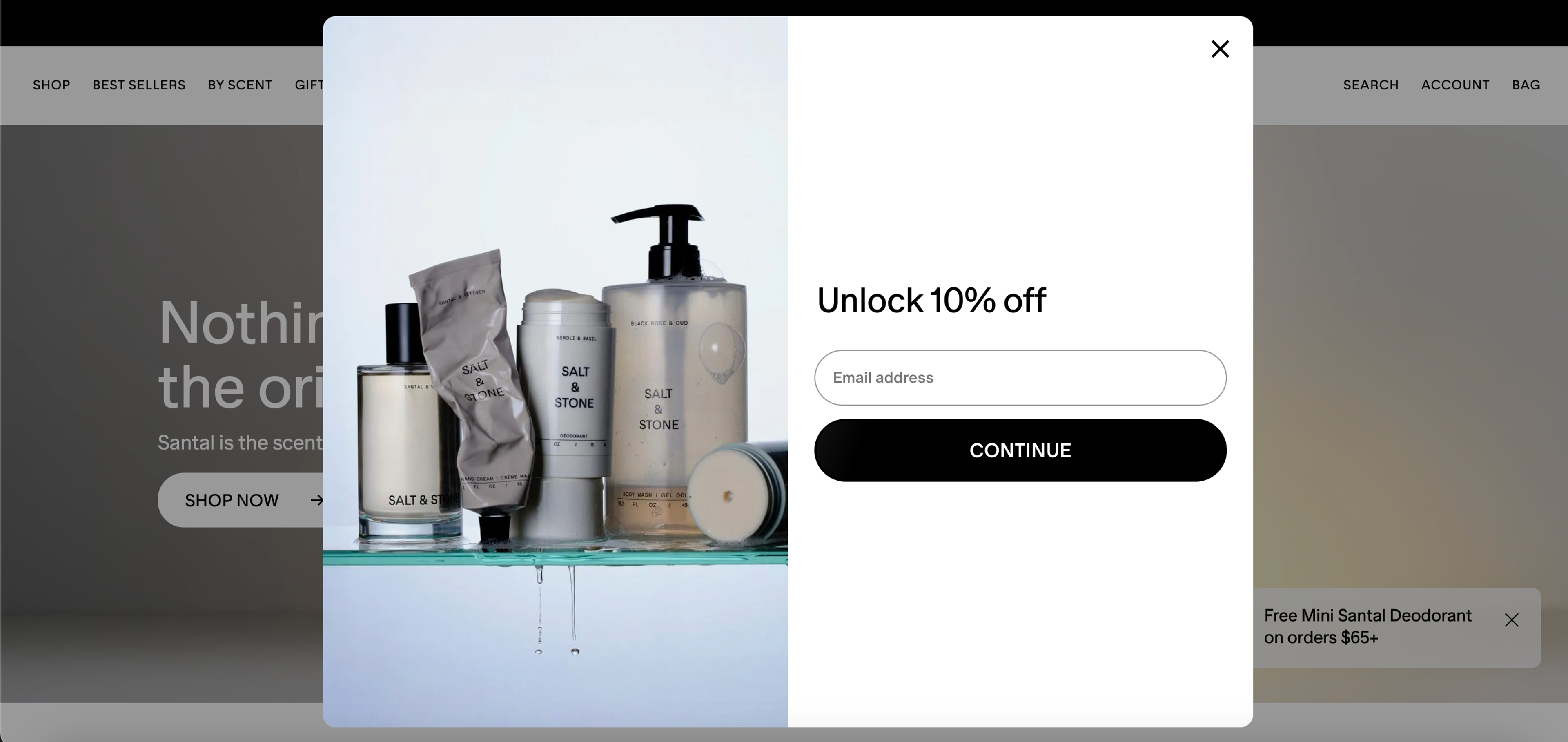
From there, the flow runs three steps in sequence. Step one asks for an email with a single field and an "Unlock 10% off" headline: minimal friction, clear reward.
The moment the visitor submits their email, step two appears: a mobile number field, same offer framing, now explicitly bundling email and SMS capture together.
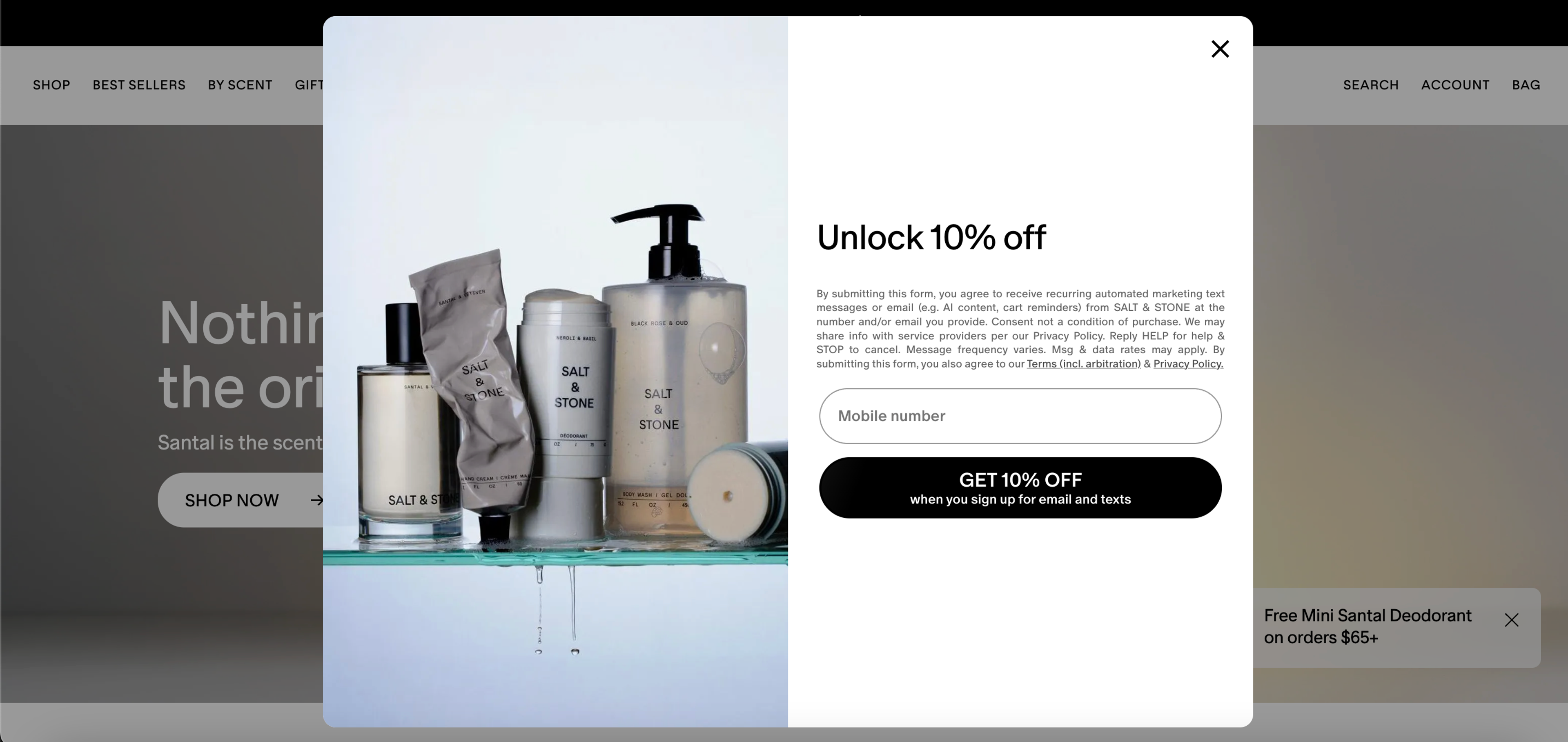
The customer has already committed once: asking for a phone number at this point converts at a far higher rate than asking cold. Step three is an SMS double opt-in, which holds the discount until the customer confirms on their phone.
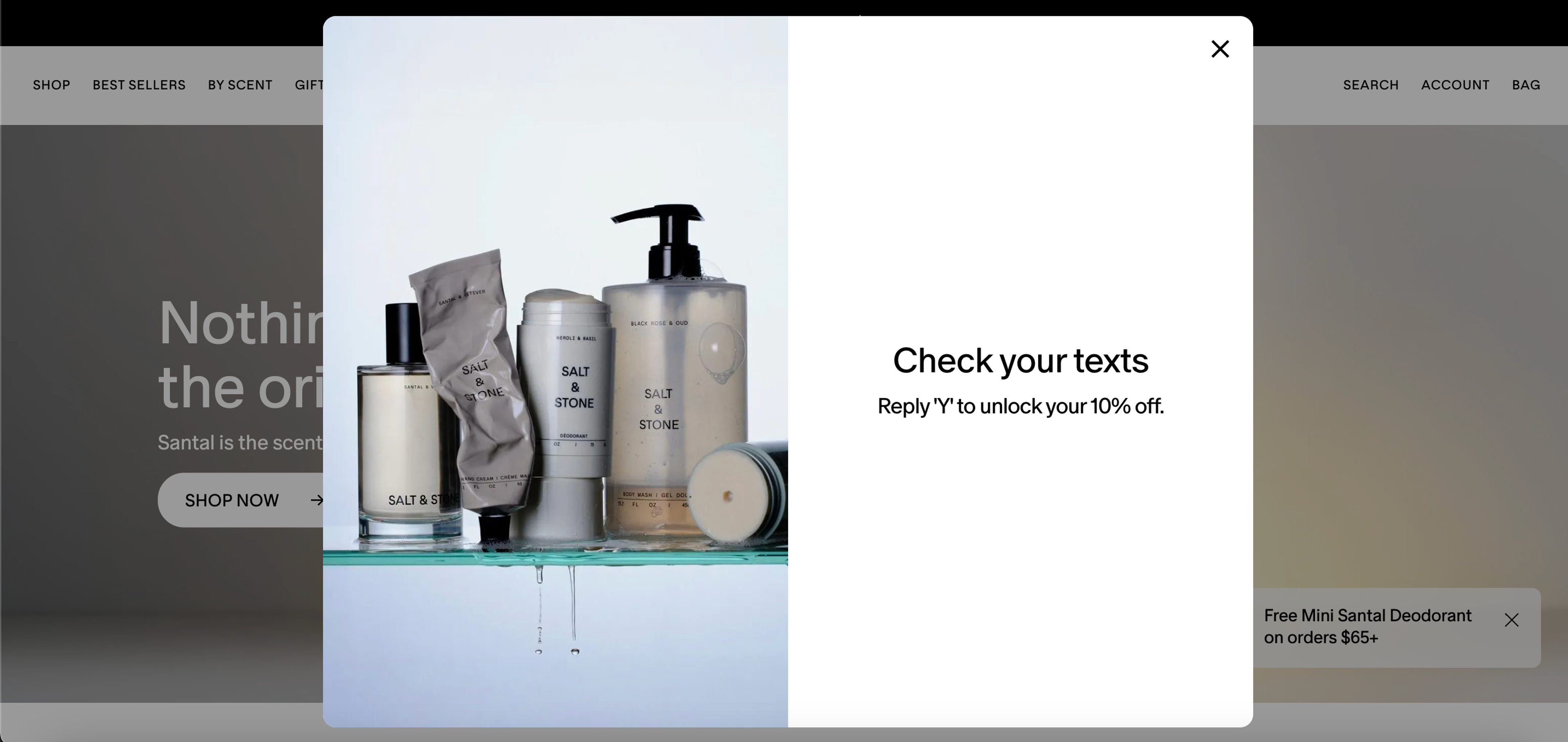
The result is not just an email subscriber. It is a dual-channel contact the brand can reach by both email and text, with confirmed opt-in on both and a declared intent signal (shopping for self vs. gift) that shapes every communication that follows.
There is one detail on Salt & Stone's product pages that stops a CRO expert cold: almost everything is sold out, and the pages still convert.
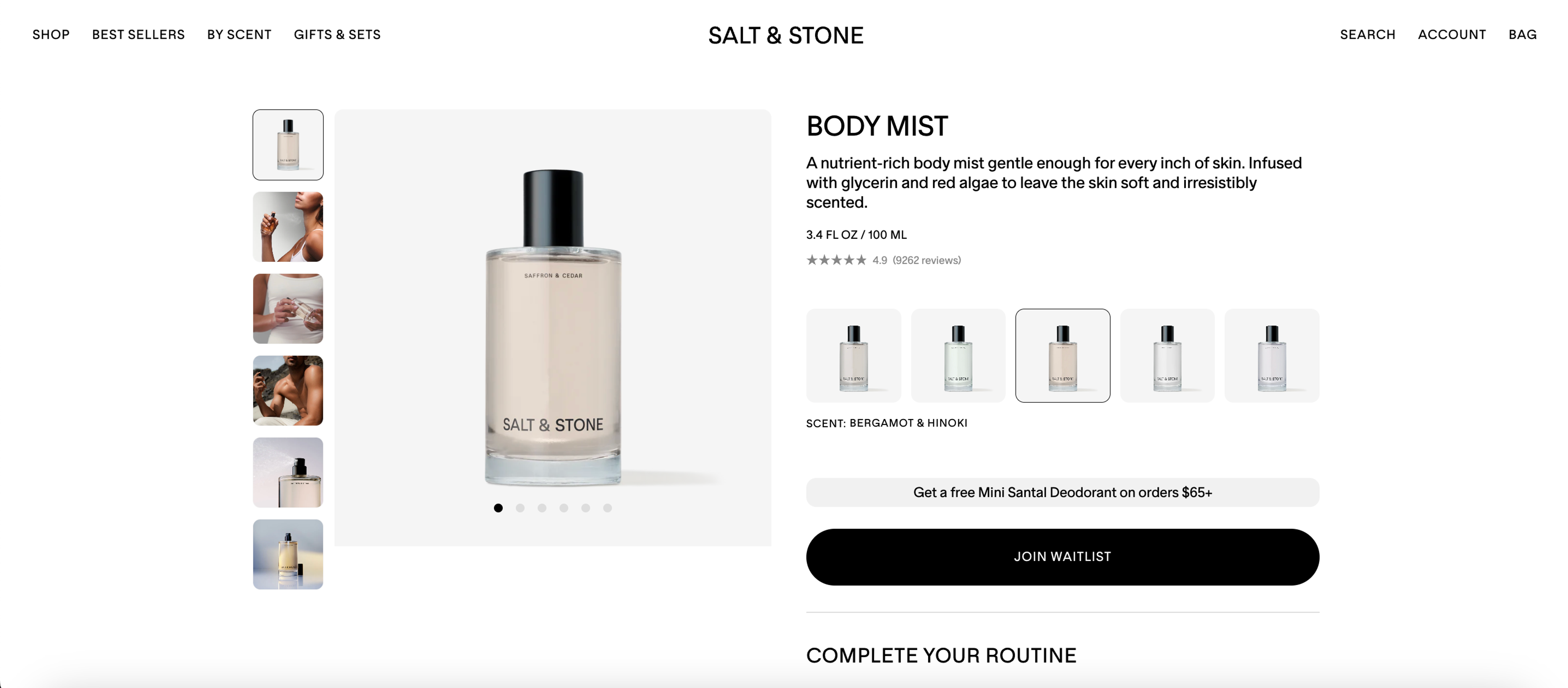
The trick is the button. When a product is unavailable, most brands swap the "Add to Bag" CTA for a greyed-out "Out of Stock" label, or remove the button entirely.
Salt & Stone keeps the full-weight black CTA — same size, same position, same visual authority and simply changes the label to "Join Waitlist." The page looks identical to a live product page.
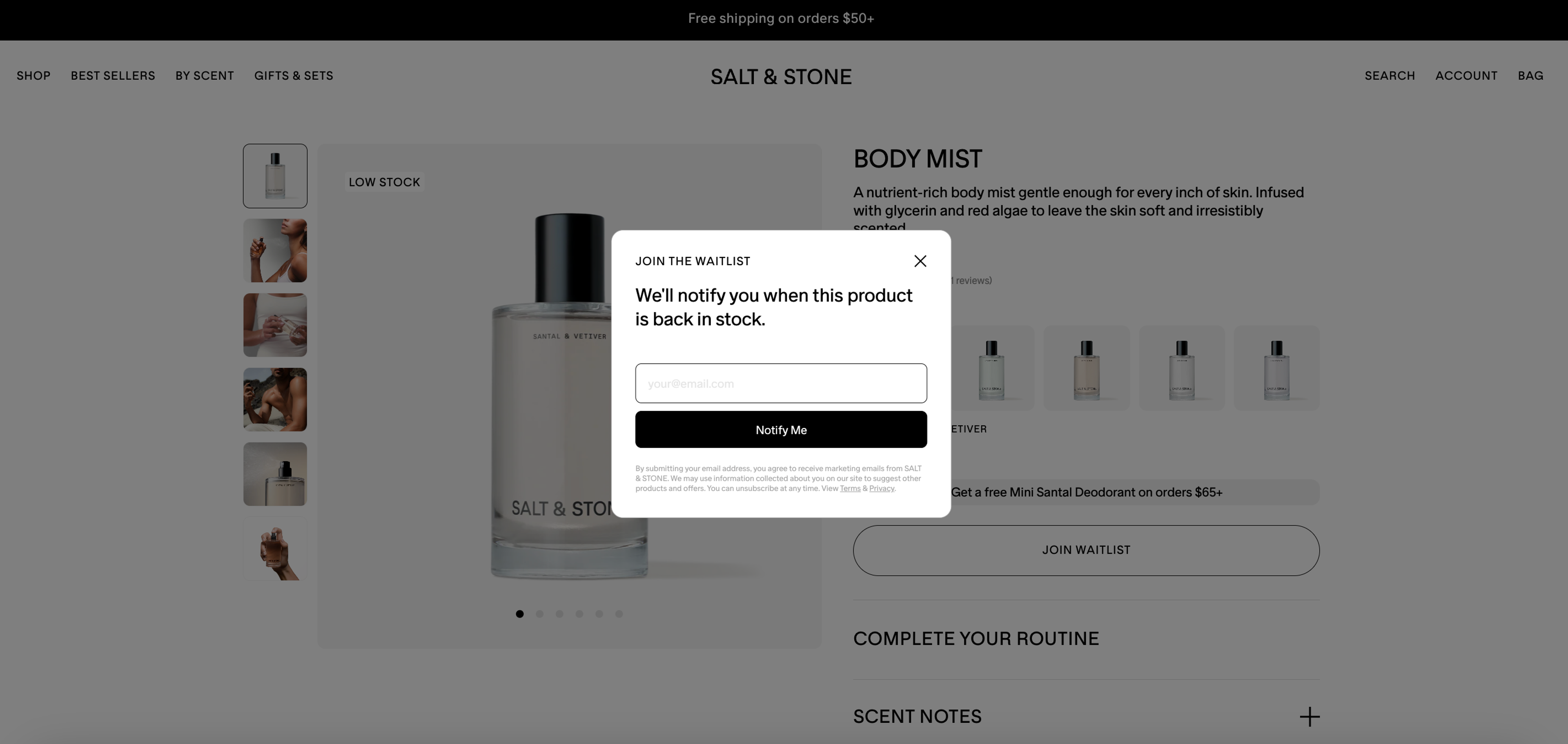
A visitor who arrived ready to buy leaves as a confirmed email subscriber and retargeting asset. A dead end becomes a list-building machine, and every restock email that follows goes to someone who already wanted to buy.
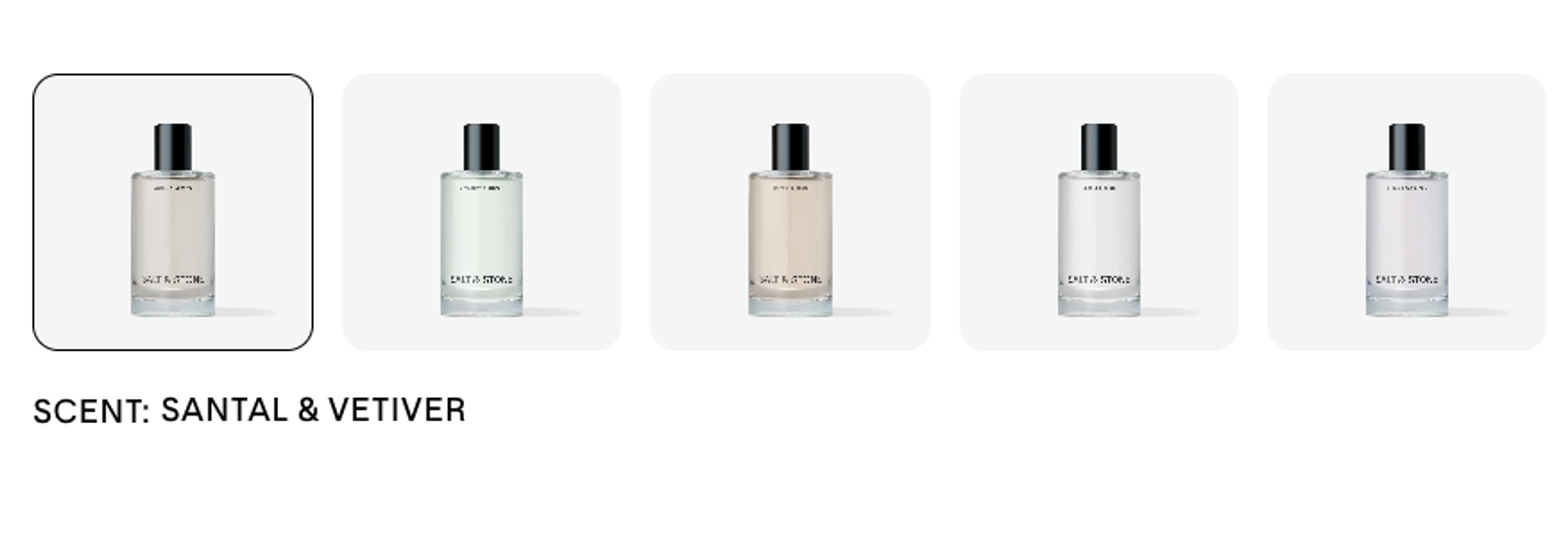
The scent selector is visual, not textual. Each variant is a bottle swatch that updates the entire photo gallery when selected, so choosing Bergamot & Hinoki doesn't just change the label, it changes the room.
Warm amber tones become cooler, greener imagery. This matters because scent is a visual and emotional decision before it is a rational one, and letting the gallery do the translation work means a visitor can feel the difference between five fragrance families without reading a single word of description.
The gallery itself follows a deliberate sequence. The first image is the product. Every image after that is skin, someone applying the mist to their arm, a close-up of moisturized skin catching light, the bottle pressed against a body.
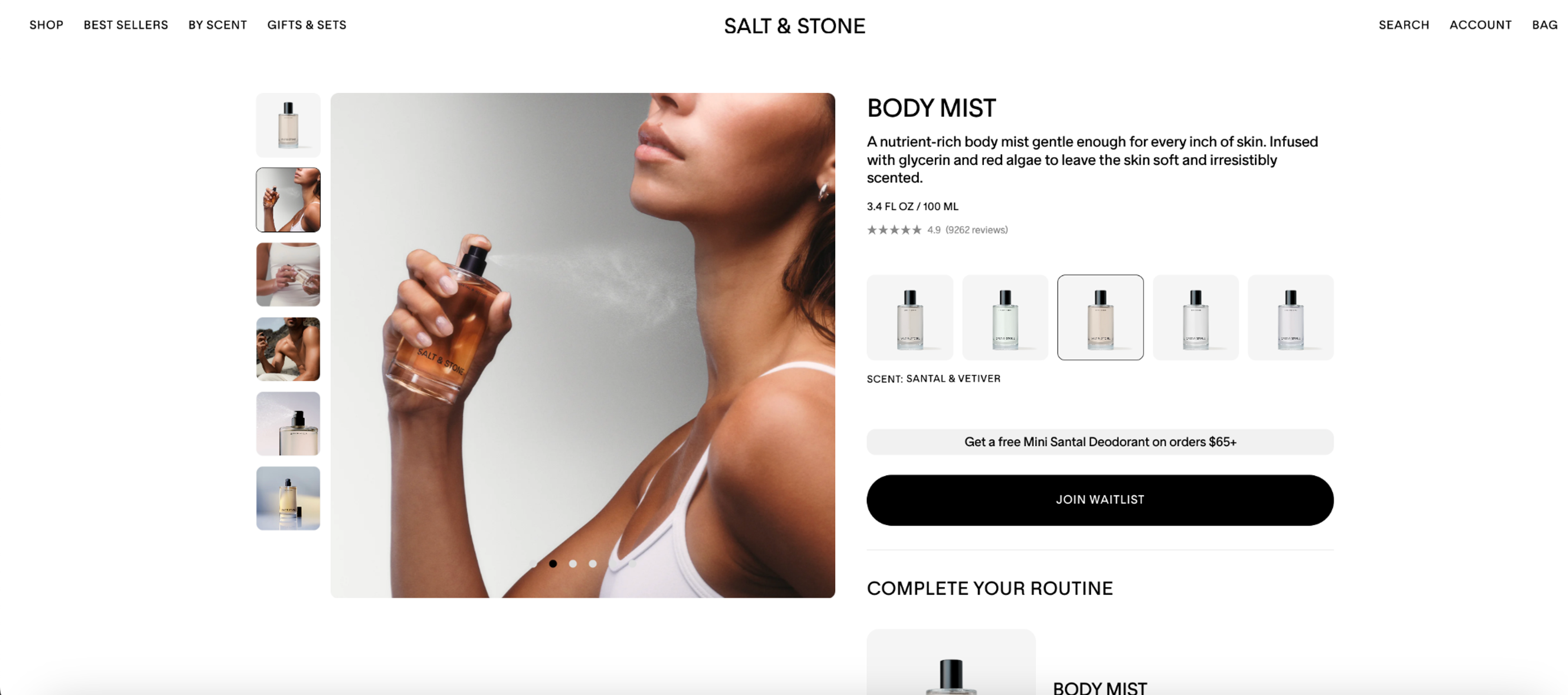
For a product that promises to leave skin irresistibly scented, the conversion argument is not what the bottle looks like. It is what you look and feel like after. The gallery shows the outcome before it lingers on the object, which is the correct order for a sensory purchase.
The counterintuitive thing about the Salt & Stone marketing strategy is that its most important decisions were all subtractions. Jalali subtracted himself from the brand's identity. He subtracted retail from the early roadmap. He subtracted the temptation to launch fast, spending years on formula and fragrance before going wide.
What those subtractions created is a brand with almost no weak points. The scent differentiation is years deep. The DTC community is real. The retail relationships were entered on Salt & Stone's terms. The paid creative triggers the right emotion — not "this is clean" but "people will ask what you're wearing."
The lesson is the sequencing. A DTC beauty brand strategy first, because it proves the product before retail amplifies it. Fragrance investment first, because a product people want to tell strangers about is the only marketing that compounds. Community first, because it makes every other channel work harder.
Fifteen PE firms competed to buy a $20 deodorant. What they were actually buying is a brand that makes people feel like they've discovered something — and keeps making them feel that way every morning in the shower.

How Tarte turns founder storytelling, creator trips, TikTok virality, and smart on-site funnels into a repeatable beauty marketing growth engine.
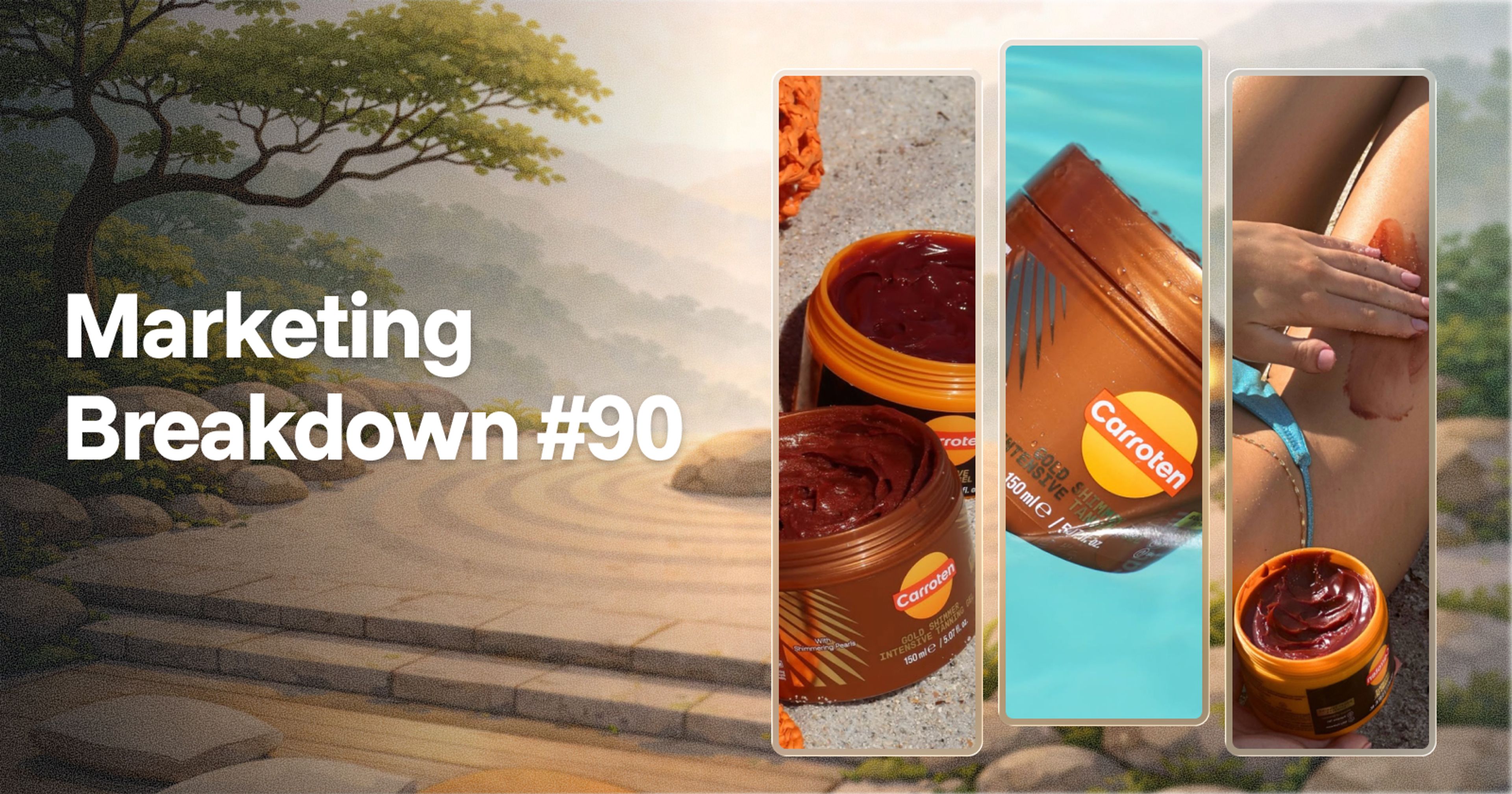
How Carroten went from unknown to every US Target shelf in under a year — using TikTok virality, creator-led commerce, and heritage brand positioning.

A deep dive into WavyTalk’s marketing strategy, from TikTok Shop and creator-led launches to UGC, cultural moments, and high-converting DTC tactics.