


Tarte Cosmetics Marketing Breakdown: How a 25-Year-Old Beauty Brand Keeps Making Products Feel Viral
How Tarte turns founder storytelling, creator trips, TikTok virality, and smart on-site funnels into a repeatable beauty marketing growth engine.
Phlur marketing turns emotion into growth, using storytelling, TikTok virality, and creator trust to sell fragrance without scent and build a powerful community-driven brand.
In short
Phlur marketing proves that emotional storytelling can sell even what people can’t experience online. By naming fragrances after feelings instead of notes, the brand turns each product into a relatable story that spreads organically—especially on TikTok. Founder-led influence, community-driven content, and creator alignment fuel demand, while paid media simply amplifies what already works. The result is a system where emotion drives discovery, trust drives conversion, and every launch becomes a viral moment.
The fine fragrance category spent decades locked behind glass counters and gated by celebrity campaigns. Phlur broke both barriers at once. Founded as a digitally native brand and relaunched in 2022 under creative director Chriselle Lim, the brand proved that a scent you can’t smell can still sell out within five hours—if the story behind it is emotional enough to go viral.
What makes Phlur's marketing worth studying is not one tactic but an entire operating system built on memory, identity, and community. Lim brought a rare combination of influencer reach and brand-building instinct that would define Phlur's marketing strategy in a category that rarely saw either.
Under her creative direction, Phlur's relaunch became one of beauty's most remarkable comeback stories, with sales doubling year-on-year between 2024 and 2025 and the brand projected to generate over $150 million in retail sales in 2025 before being acquired by private equity firm TSG Consumer Partners in July 2025.
So what drives Phlur's marketing success? Let's break it down!
Phlur's most important marketing decision was made before a single bottle went on sale: to name fragrances after feelings, not notes.
Missing Person, the scent that made the brand, was not described as "warm musks and white woods." It was described as the smell of someone you love and miss.
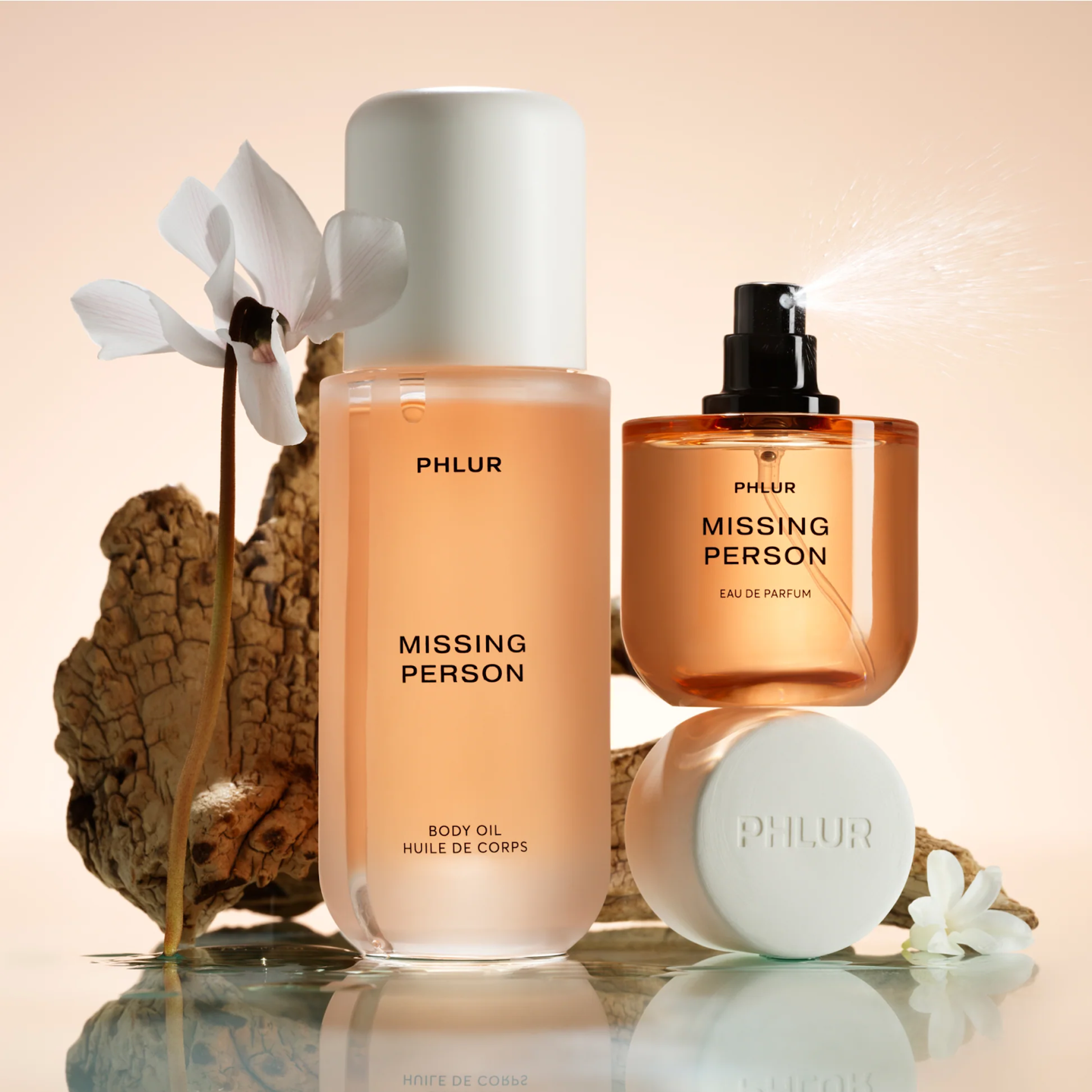
That single emotional proposition was the entire brief, and it did something no traditional fragrance ad could replicate: it gave strangers permission to project their own grief, longing, and memory onto a product they had never smelled.
In March 2022, content creator Rachel Rigler posted a TikTok review of Missing Person that would become one of the most consequential moments in fragrance marketing history. "It smells like a person you love and miss," she said.
Her boyfriend's follow-up video—"That's bizarre. It smells like you, fresh out of the shower, in a robe"—generated its own wave of engagement.
Makeup artist Mikayla Nogueira, with 13.4 million followers at the time, then responded: "This perfume smells like being in love? I immediately bought it when you said that." Within five hours, Missing Person sold out entirely and accumulated a waitlist exceeding 200,000.
The product story was the ad. No beauty counter, no celebrity campaign, no prescriptive marketing, just a name and a feeling that the internet instantly recognized as true.
Why this works
Fragrance is uniquely vulnerable to the olfactory imagination. By naming a product after a universal emotional experience rather than its chemical composition, Phlur turned the product description into a collaborative act.
Every person who read "Missing Person" brought their own story, and TikTok gave them a stage to share it. The brand did not create the viral moment, it created the conditions for the community to create it. This is UGC marketing at its most powerful: the brand provides the spark, and the community delivers the content.
Phlur's social media marketing strategy is deliberately not about fragrance—it’s about feelings, memories and identity. Fragrance happens to be how those things are stored and retrieved.
The naming convention is the foundation of Phlur's marketing strategy: Father Figure, Vanilla Skin, Cherry Stem, Soft Spot, Golden Rule.
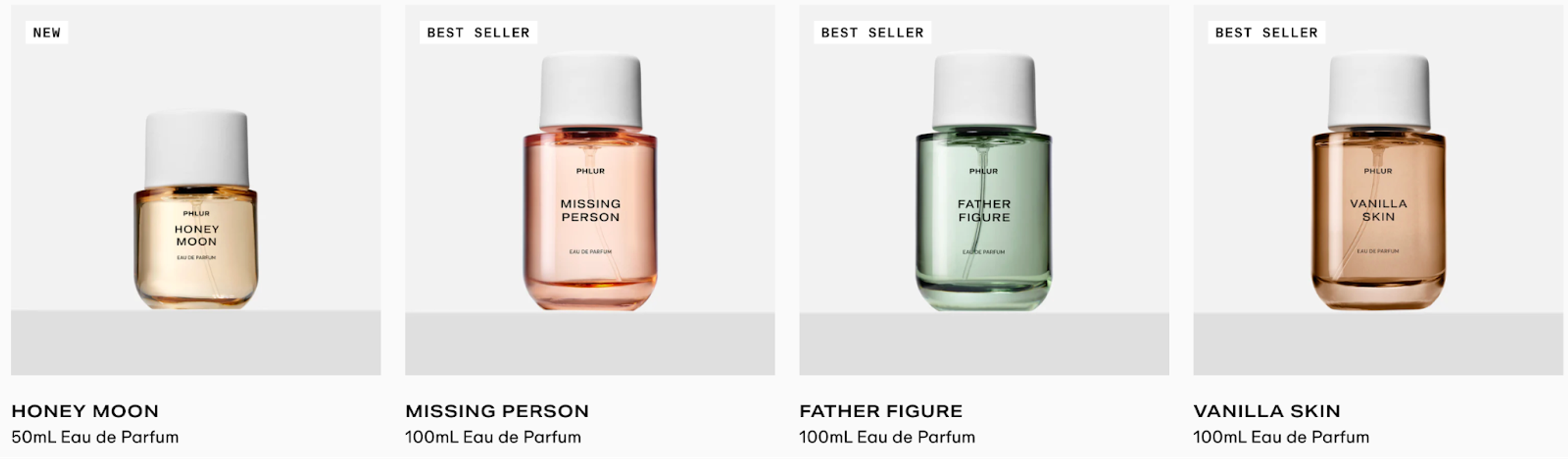
Each name is a mood, a relationship, a sensation that an audience already has a personal file on. This emotional-first strategy produces content that performs because it doesn’t feel like content.
Users don’t share Phlur videos because they were pushed by an algorithm, they share them because the fragrance reminded them of something specific.
The #PerfumeTok community had accumulated six billion views as of early 2024, and Phlur's fragrances became the category's recurring reference point—not because of spend, but because the emotional naming gave creators an endless supply of personal stories to attach to the product.
Chriselle Lim extended this into her own Instagram broadcast channel, "DMs from Chris," which had 7,000 members as of late 2023.
The channel operates less like a marketing channel and more like a private diary, where:
…all coexist.
The tightness of that community translates directly into launch demand. Subscribers arrive at product drops already invested in the founder's story, not just the product.
Why this works
The fragrance category's central problem is that it’s impossible to experience a scented product online. Emotional naming solves that problem by replacing sensory experience with emotional recognition.
A shopper who sees "Missing Person" and feels a pull of grief or tenderness has already formed a relationship with the product, and that relationship is more durable than any note pyramid could create.
Phlur's 2022 relaunch landed at precisely the moment that #PerfumeTok was shifting from a niche community to a mainstream discovery engine.
That timing was not entirely luck. Lim's background as an influencer gave her an intuitive understanding of how content-first categories work, and she built Phlur's TikTok strategy around that logic from the start.
The brand sells products that are, by definition, impossible to demo on screen. Rather than treating that as a limitation, Phlur's TikTok strategy turned it into a creative constraint that generated better content than most visual-first beauty categories.
The gap between "I can’t smell this" and "I desperately want to" created a specific kind of TikTok tension that audiences found irresistible to watch and resolve.
The Discovery Set exists precisely to close that gap: convert the curious browser, drawn through organic TikTok content, into a first purchase at low commitment.
Each product drop was treated as a launch event with its own story, not a SKU addition.
Why this works
TikTok's discovery engine rewards content that provokes a visceral reaction, and Phlur's fragrances are specifically designed to do just that.
By building products whose stories are inherently shareable and by releasing them as emotional events rather than product updates, the brand has turned its entire catalog into recurring content fuel. Each new scent is a new story, and each story generates a new community of advocates.
Chriselle Lim is not just Phlur's creative director—she’s also the brand's most important distribution channel. Her influencer background gave Phlur's marketing something no advertising budget can buy: a community that trusts the person behind the product.
When Lim shares a fragrance, her audience doesn’t receive it as a brand announcement. They experience it as a personal recommendation from someone whose taste they’ve followed for years.
But the influencer strategy extends well beyond Lim herself. As a creator-led brand, Phlur's approach to creator partnerships mirrors the product philosophy.
The brand finds creators whose audiences already share the emotional vocabulary of the fragrance name, rather than simply reaching the broadest possible demographic.
The result is that Phlur fragrance content tends to feel native to the creator's established identity, not sponsored.
Why this works
Influencer marketing fails when the creator's identity doesn’t match the product's identity. Phlur avoids this by building products whose emotional stories are naturally aligned with lifestyle content: fragrance about feelings is inherently influencer-native content.
The creator doesn’t need to change their voice or put on an act to talk about Phlur; they just need to share which feeling the scent evokes for them.
Phlur's paid advertising strategy is deliberately subordinate to its organic engine. CEO Elizabeth Ashmun has described the brand's approach as striking "a balance between paid and organic marketing efforts," with paid partnerships initiated on a sporadic basis to immerse customers in brand storytelling.
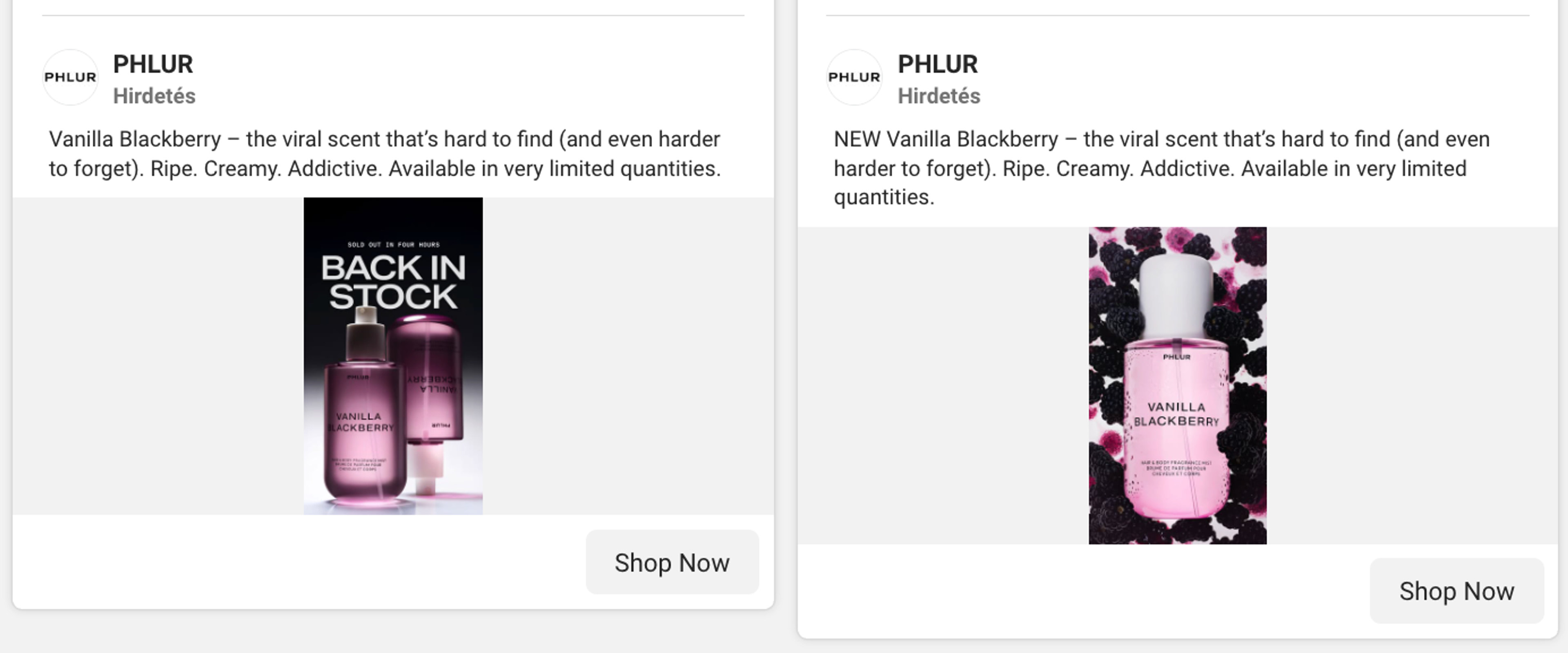
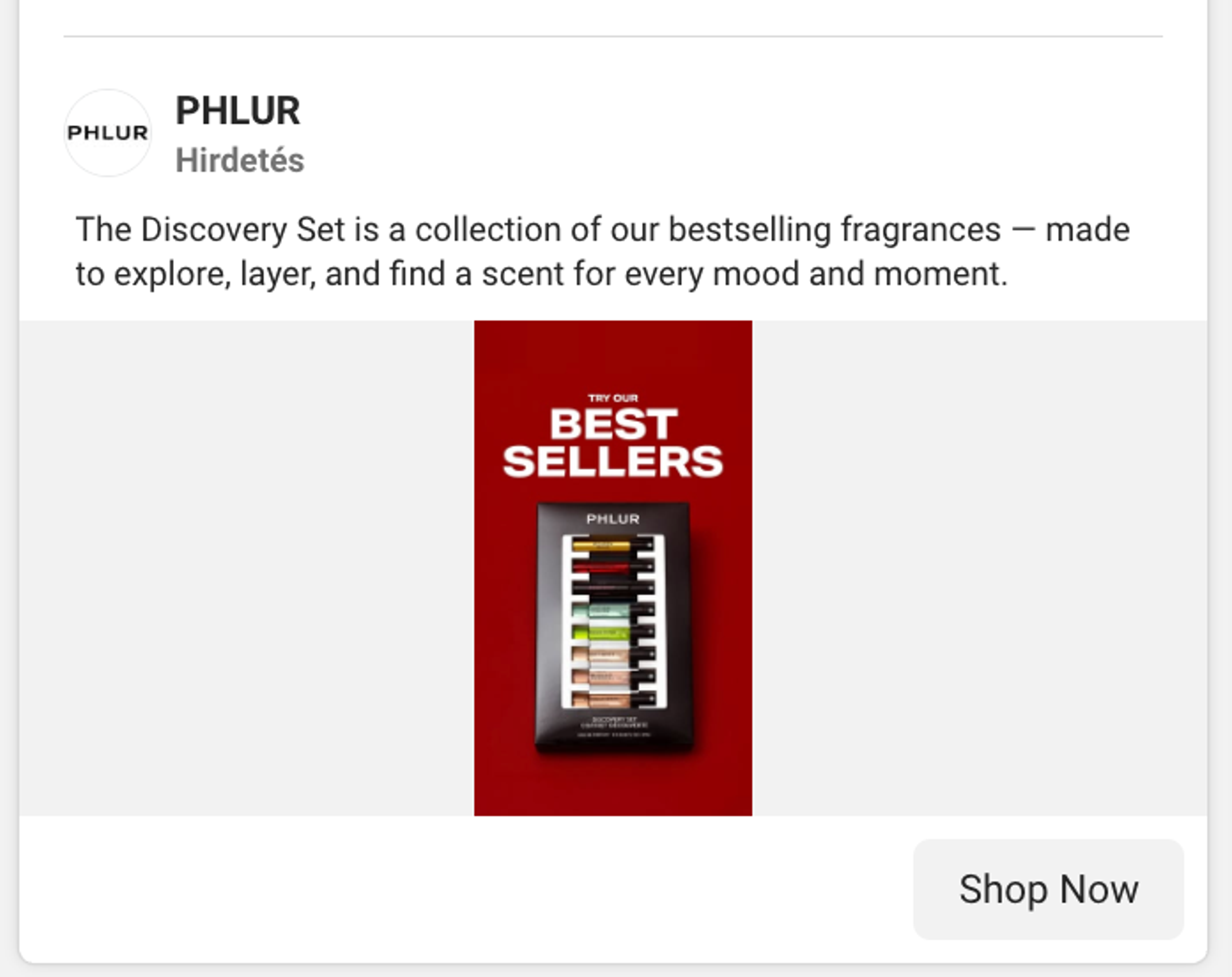
This is a deliberate inversion of the typical DTC marketing strategy, which leans heavily on paid social from day one. A review of Phlur's Meta Ads Library reveals approximately 250 active creatives running simultaneously across Facebook, Instagram, Messenger, and Audience Network.
The ad strategy operates with three parallel objectives.
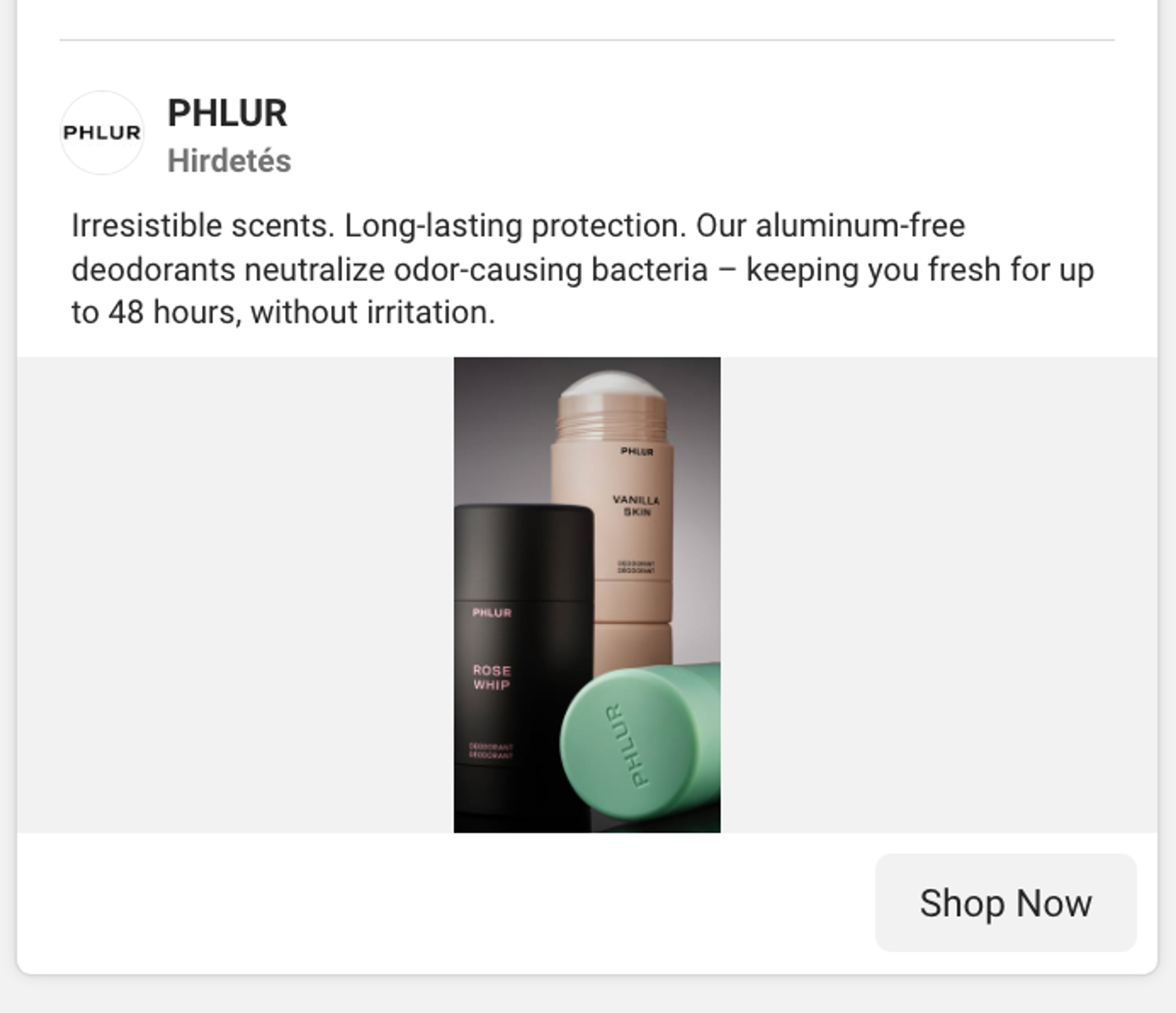
Why this works
The volume of active ads is substantial, but the creative strategy keeps it feeling native. Every ad theme—scarcity marketing, discovery, mood, category extension—directly echoes the organic content the community already generates.
Paid spend amplifies what has already proven itself organically rather than manufacturing demand from scratch. The result is that paid and organic reinforce each other rather than pulling in different directions, a compounding effect that most brands with comparable ad budgets never achieve.
Phlur's brand strategy for retail is sequenced in a way that maximizes trust at each stage. The brand launched entirely DTC, built its community and waitlist culture in that channel, and then used that demonstrated demand to enter prestige retail on favorable terms.
By the time Phlur landed at Sephora—the most trust-intensive retail partner in the beauty category—the product already had documented viral proof of concept. Each retail addition was then used as content.
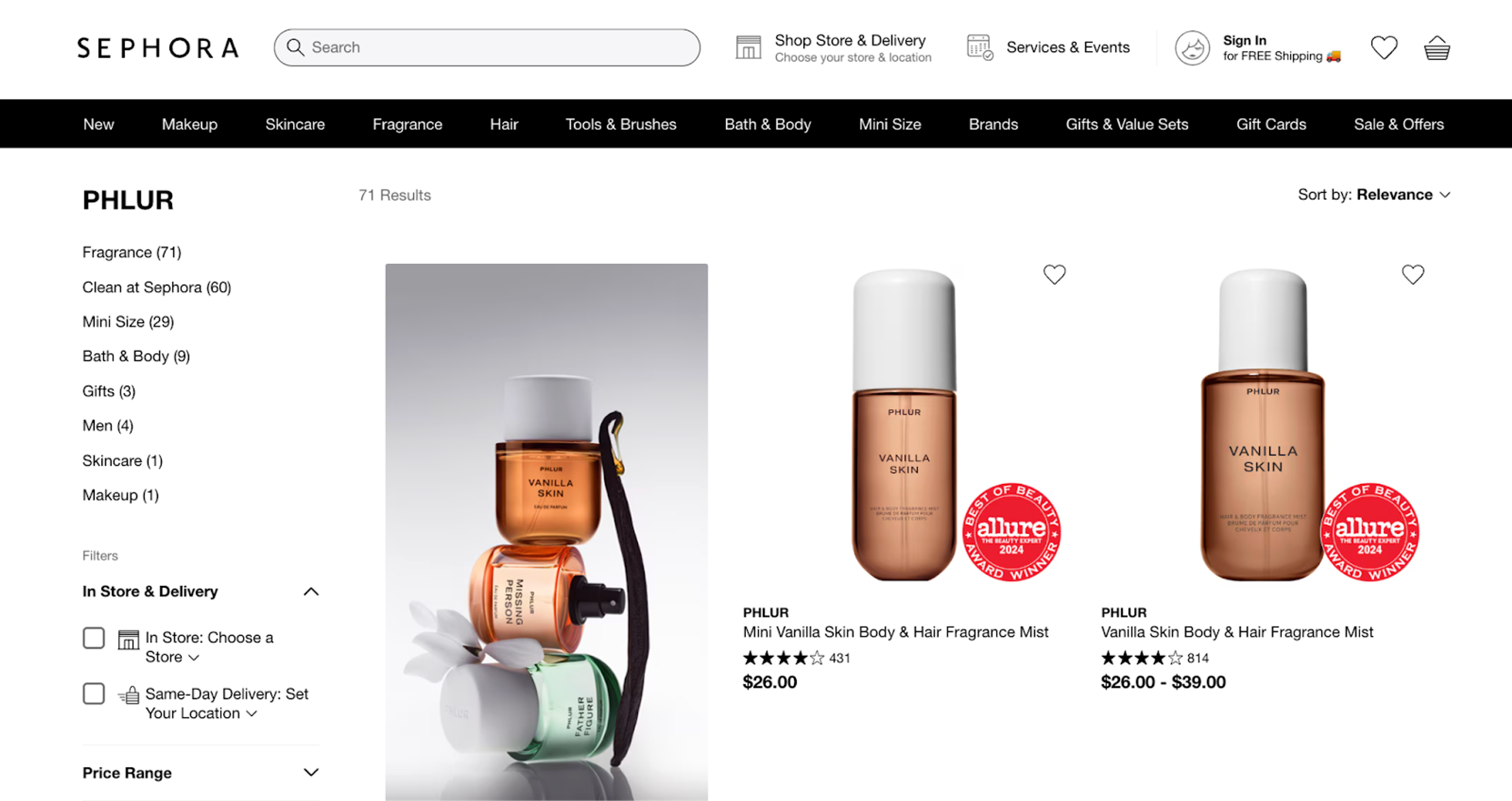
Sephora placement became a milestone post. The UK expansion into SpaceNK and Selfridges was amplified through Lim's channels as a story of international growth.
A pop-up store in London's Covent Garden in 2025 served as both a retail moment and an in-person brand experience for a community that had followed the brand entirely through screens.
With 1,500 projected offline distribution points in 2025 and consistent expansion into new markets, the retail footprint became a recurring proof point that the brand's DTC success was translating well to the physical world.
Why this works
Prestige retail acts as a quality endorsement that DTC brands can’t self-certify. Sephora's curation signals to skeptical shoppers that the product has passed a quality threshold they trust, which is especially important in fragrance, where clean formulation claims are difficult for consumers to verify independently. Each new retailer removes a different friction point and makes the brand available to a new audience who would never have found it on TikTok.
Before you see the hero image, before the website popup fires, your eye catches a thin bar running across the very top of the page.
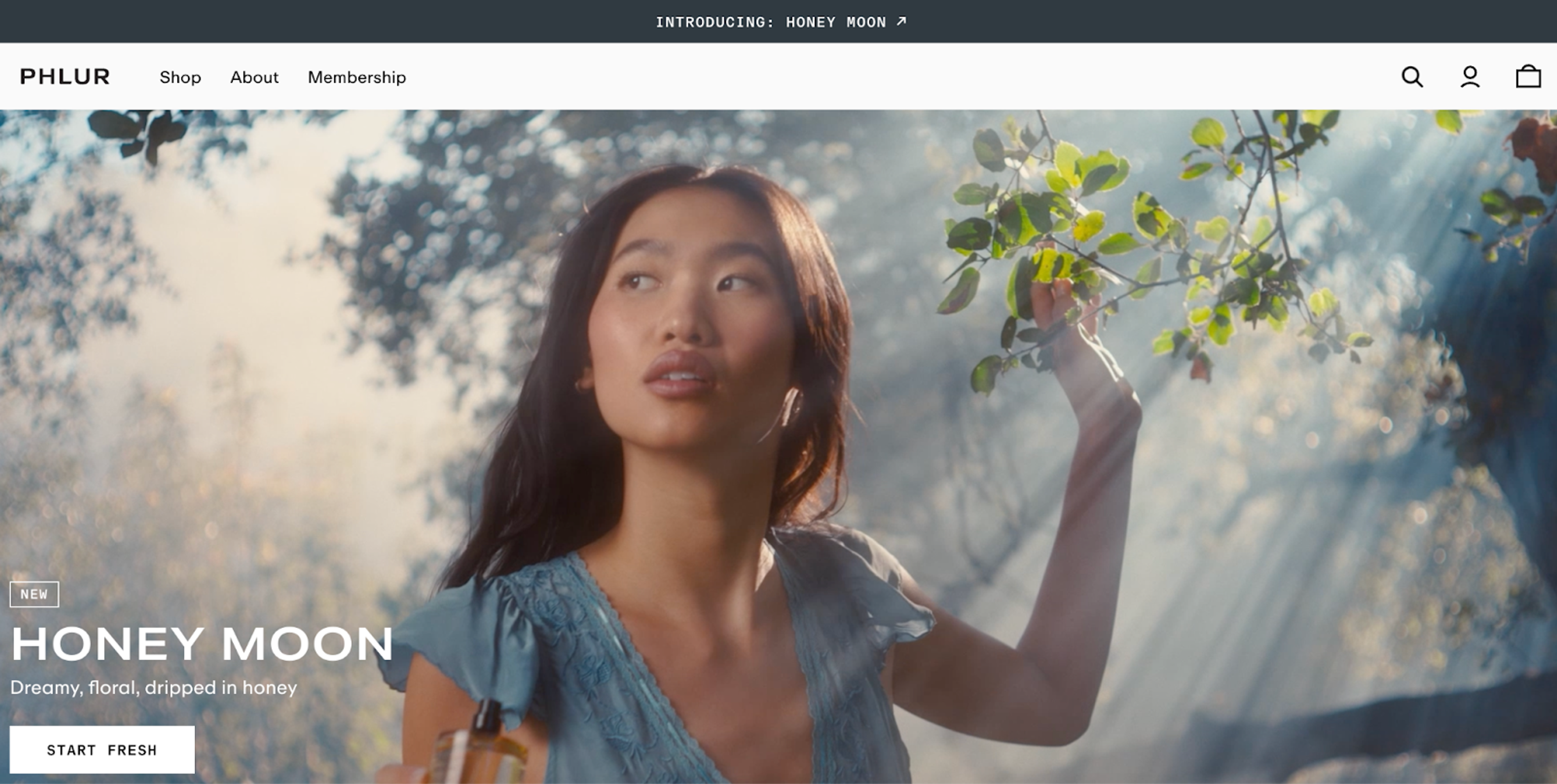
It rotates between two messages: one announcing a new launch, one saying a bestseller is back in stock. Both are clickable.
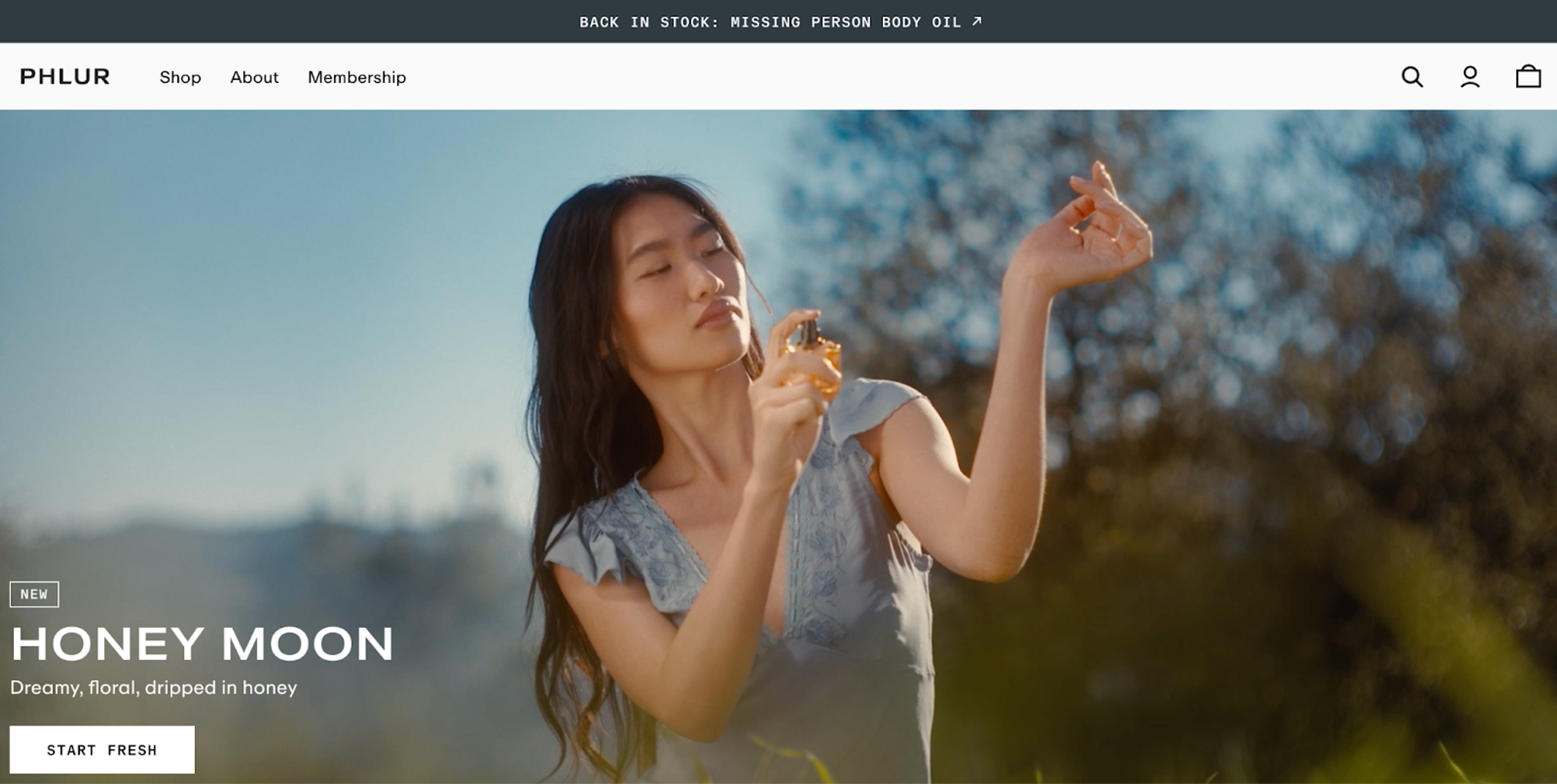
It sounds simple, but the effect is immediate. Within a fraction of a second, you have either a reason to explore something new or a reason to hurry before something runs out.
Scroll past the hero and Phlur does something most fragrance brands don’t: it immediately tells you what to buy.
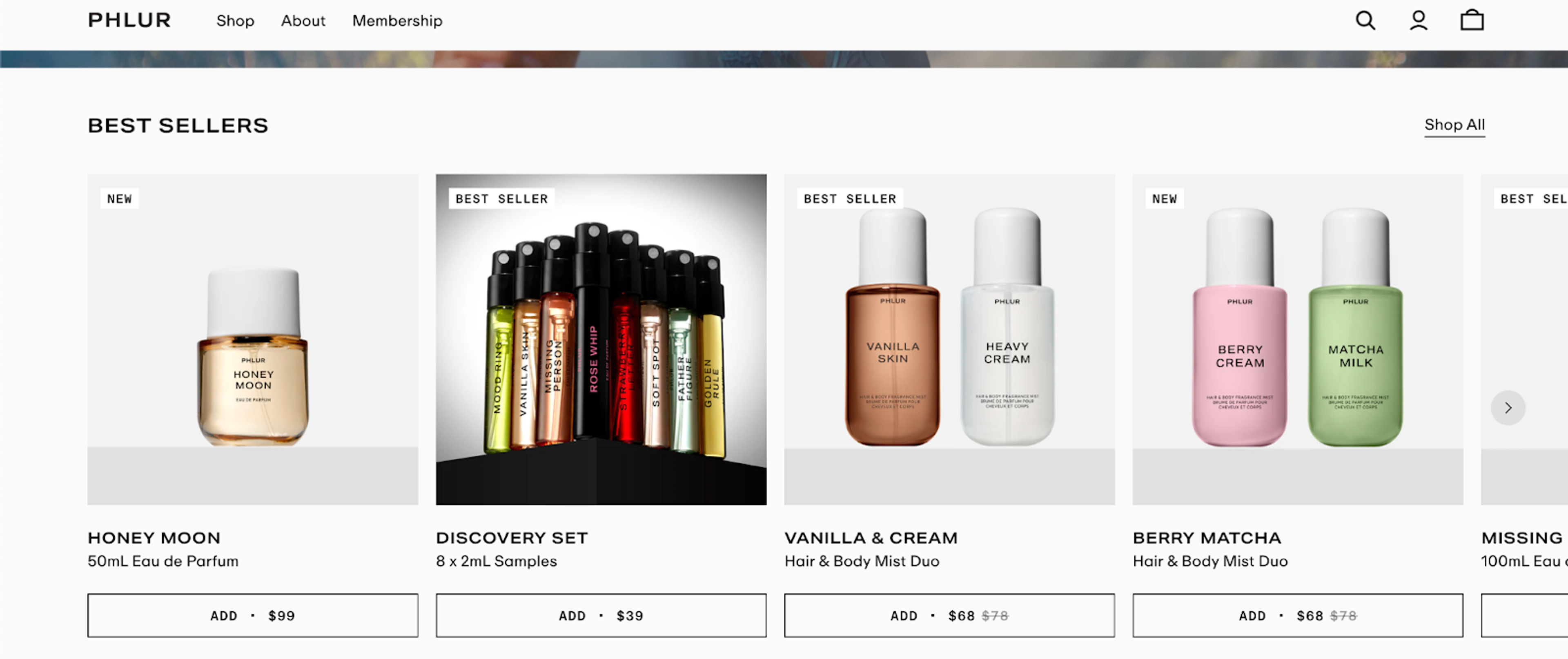
Every product in the Best Sellers row carries a label—either BEST SELLER or NEW—so you never have to guess which products matter.
Bundle savings are shown right there in the grid: a Duo that normally costs $78 is listed at $68, with the original price crossed off. Before visiting a single product page, the value is already in front of you.
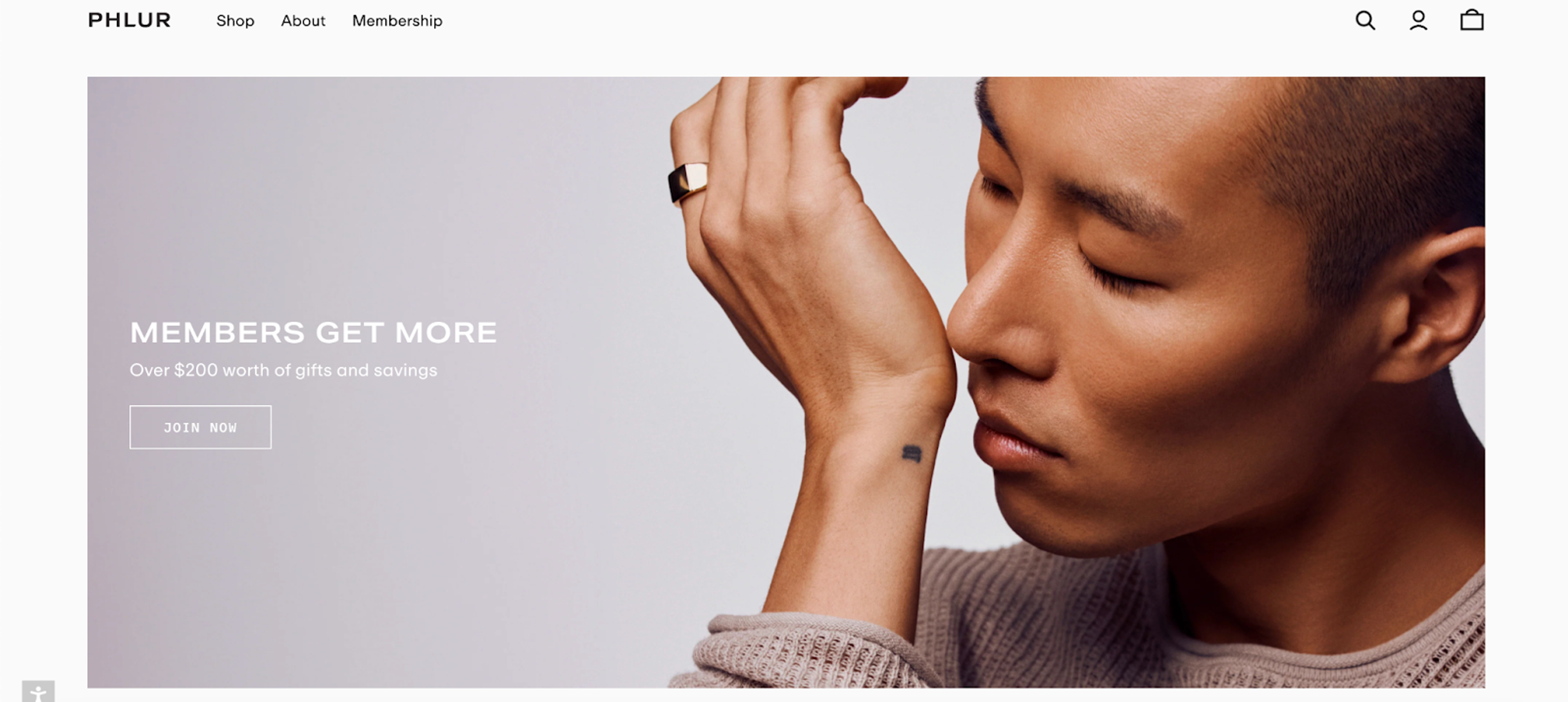
Midway down the page, a large full-width section asks you to join the membership program. It’s placed right after the product grid—when you’re already warm from browsing—and frames the $50/year cost against ‘over $200 worth of gifts and savings.’
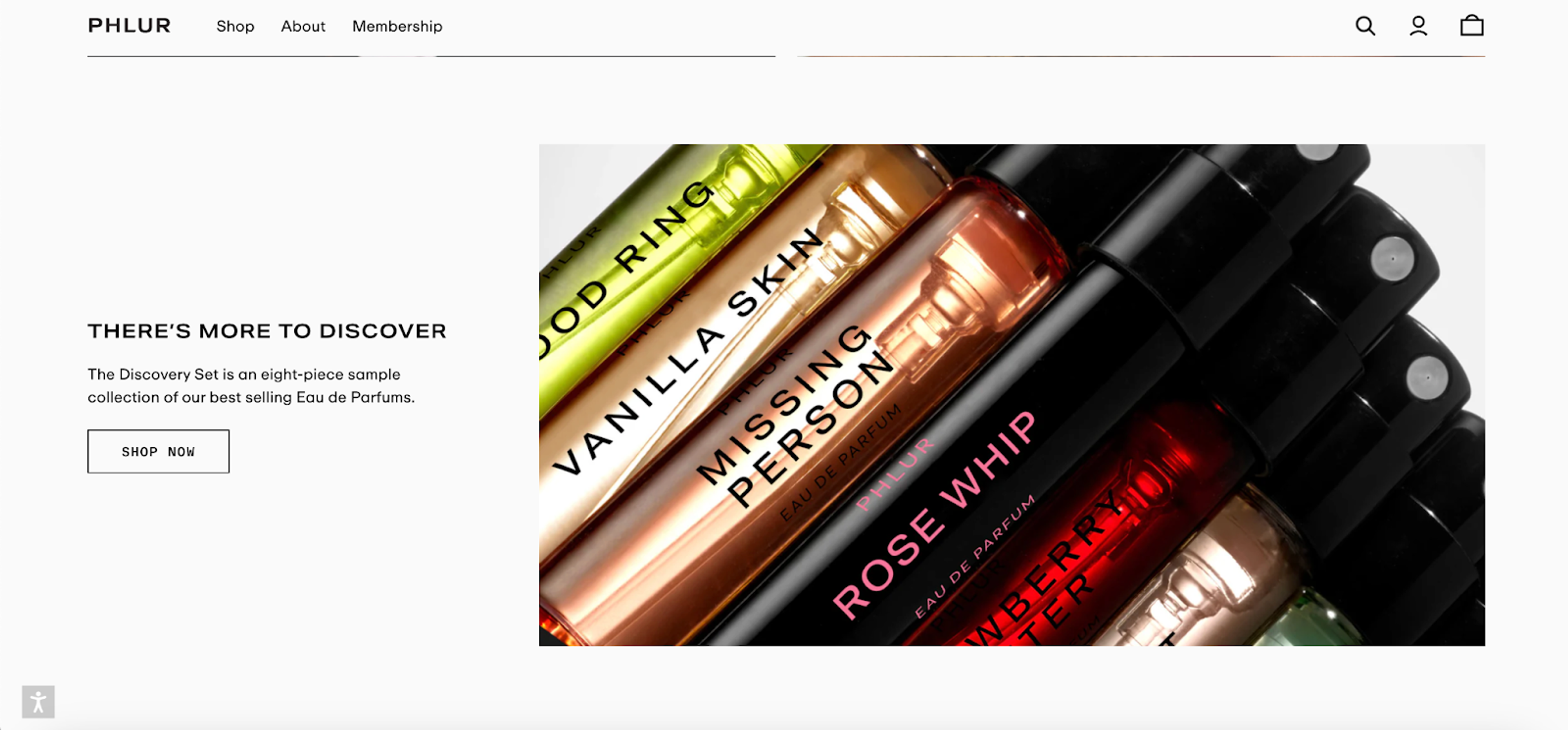
Near the bottom, the Discovery Set gets its own feature block. Eight samples for $39, described as a way to explore the full range before committing to a full bottle. It’s the perfect offer for a first-time visitor who’s curious but not yet ready to spend $99.
When you land on a product page, the first thing you see next to the product name is a star rating and tally of reviews.
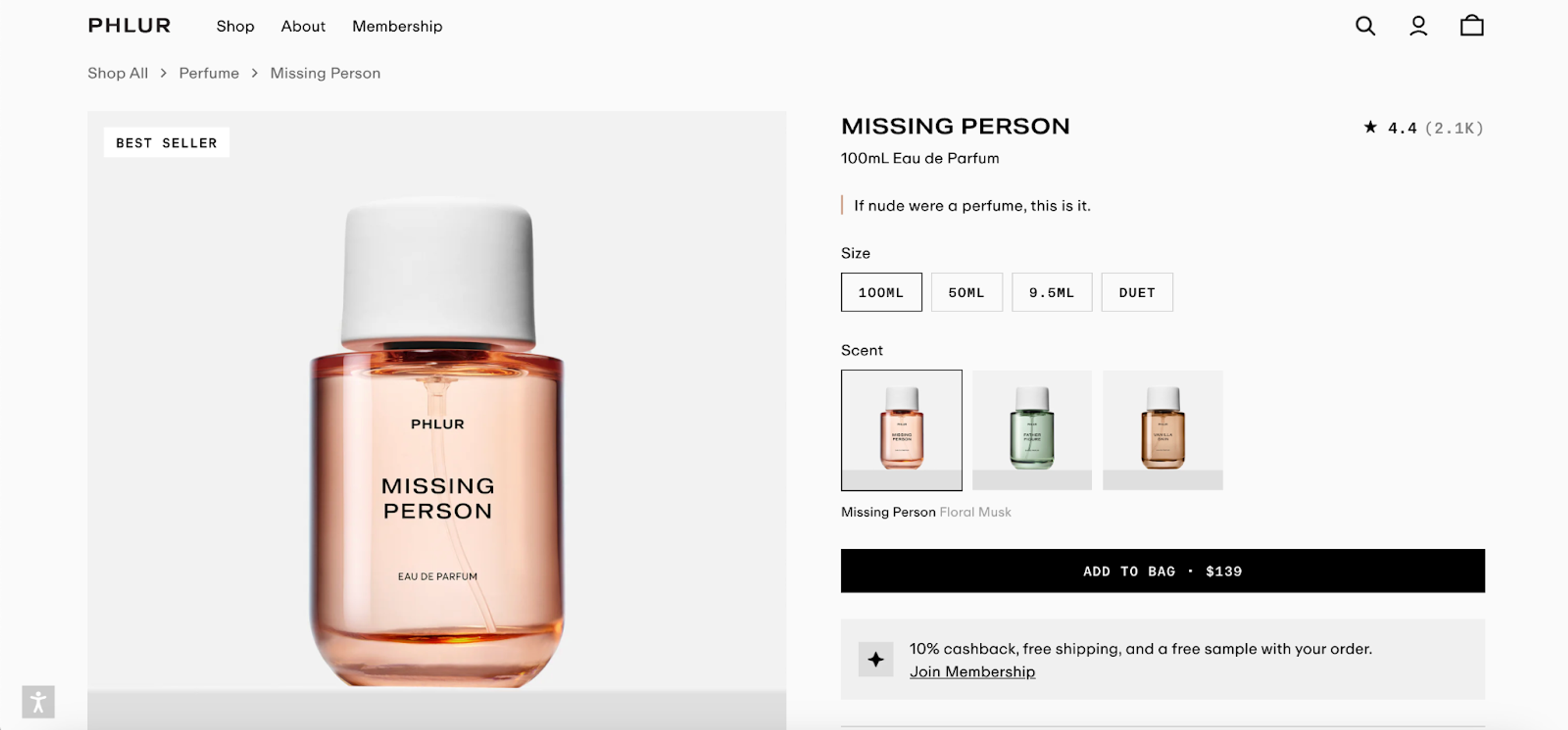
Below the name, a single line of copy: ‘If nude were a perfume, this is it.’ No note pyramids, no ingredient lists. Just a feeling. You’re offered four sizes before you reach the Add to Bag button, from a 9.5ml travel size all the way up to a 100ml full bottle.
This makes the product accessible at almost any price point and nudges higher spenders toward the larger size in the same motion.
Below the button a small block tells you that members get 10% cashback, free shipping, and a free sample on this very order, with a direct link to join. It’s a gentle push toward membership at the exact moment you’re closest to buying.
A carousel of other fragrances invites you to explore alternatives without leaving the page.
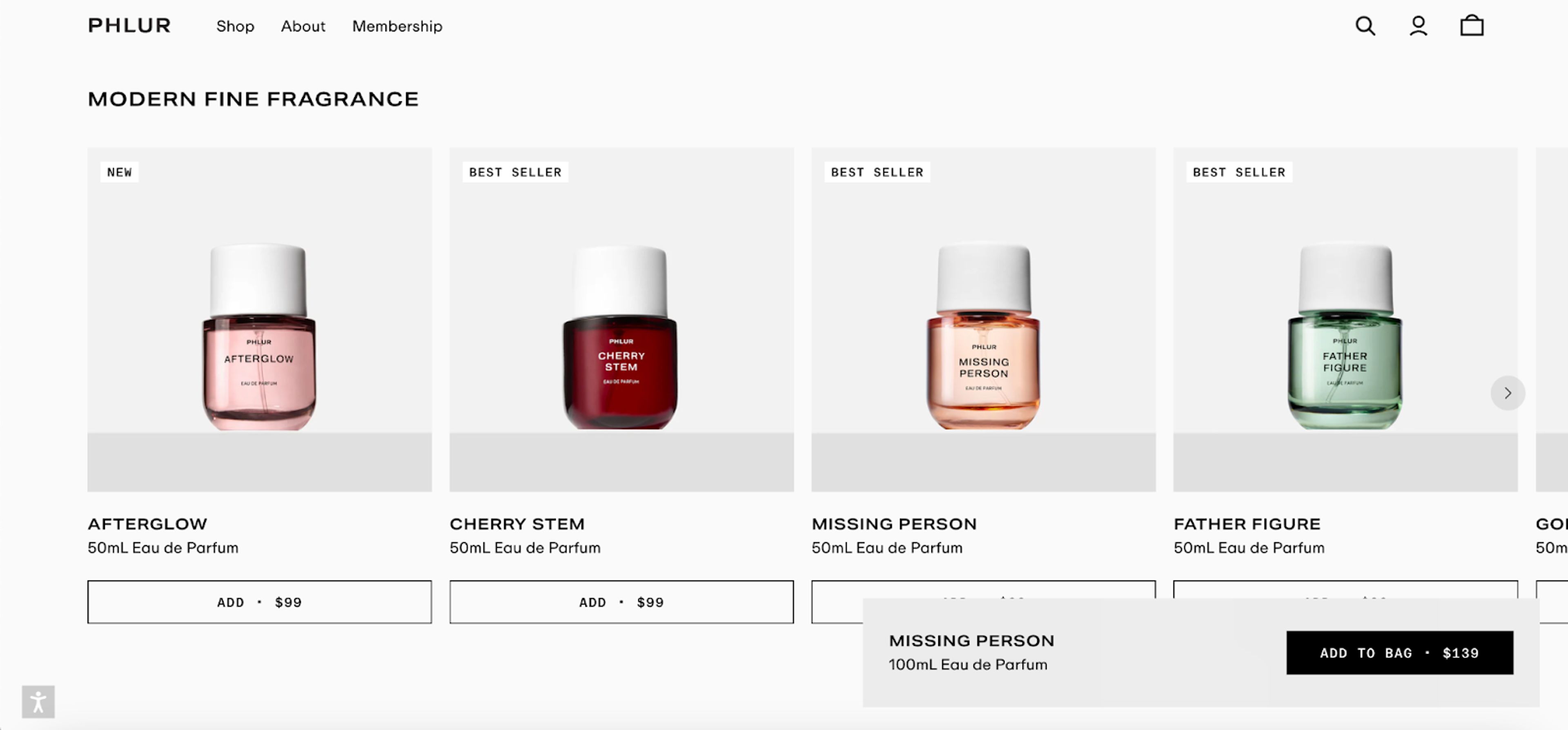
As you scroll through the description and scent notes, the add-to-cart bar follows you at the bottom of the screen so the path back to purchase is never more than one tap away.
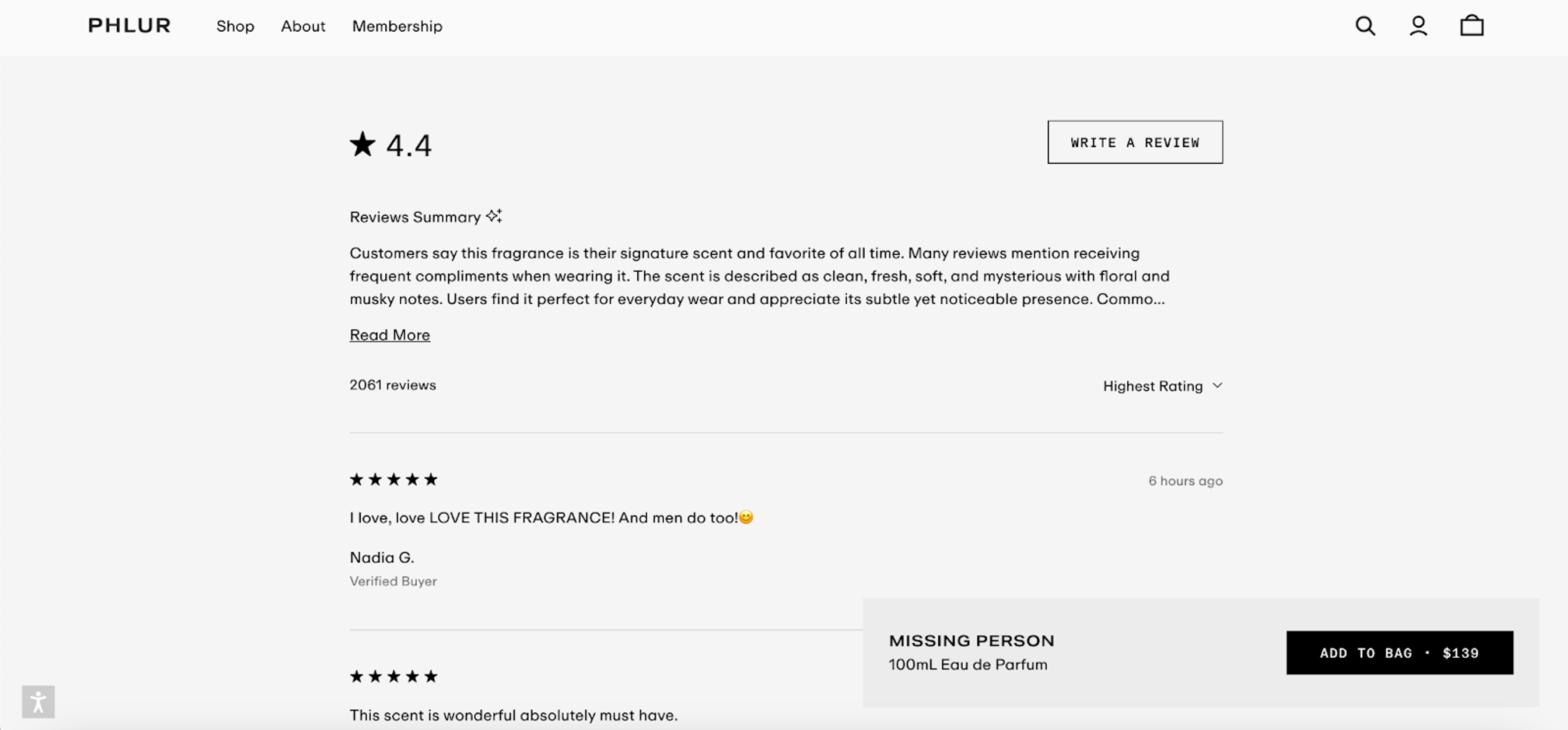
The reviews section at the bottom opens with an AI-written summary of what 2,000+ customers say about the scent, so you get the key themes in two sentences before reading individual reviews.
Why this works
What makes Phlur’s conversion architecture effective is that each layer catches a different visitor. The announcement bar works on the brand-aware browser who came back to check on something. The homepage sections work on the explorer who needs direction.
The product page closes the skeptic who needed proof. And the membership turns all of them into repeat customers with compelling reasons to return. No single tactic is doing the bulk of the work; each one hands off to the next.
Phlur's marketing strategy is driven by a system built around emotion, community, and conversion.
Instead of selling fragrance through notes and ingredients, Phlur sells feelings people instantly recognize. This makes the product understandable—and shareable—even without smelling it. That emotional hook fuels organic content, especially on TikTok, where users turn each scent into their own story.
From there, distribution happens naturally. Influencers don’t “promote” the product, they relate to it, making content feel native and trustworthy. Paid media simply amplifies what is already working.
Finally, the website converts that demand with a clear, layered journey that guides visitors from curiosity to purchase.
The real takeaway: in today’s ecommerce landscape, the brands that win are the ones that don’t just explain their product, they make people feel something worth sharing.

How Tarte turns founder storytelling, creator trips, TikTok virality, and smart on-site funnels into a repeatable beauty marketing growth engine.
How Carroten went from unknown to every US Target shelf in under a year — using TikTok virality, creator-led commerce, and heritage brand positioning.
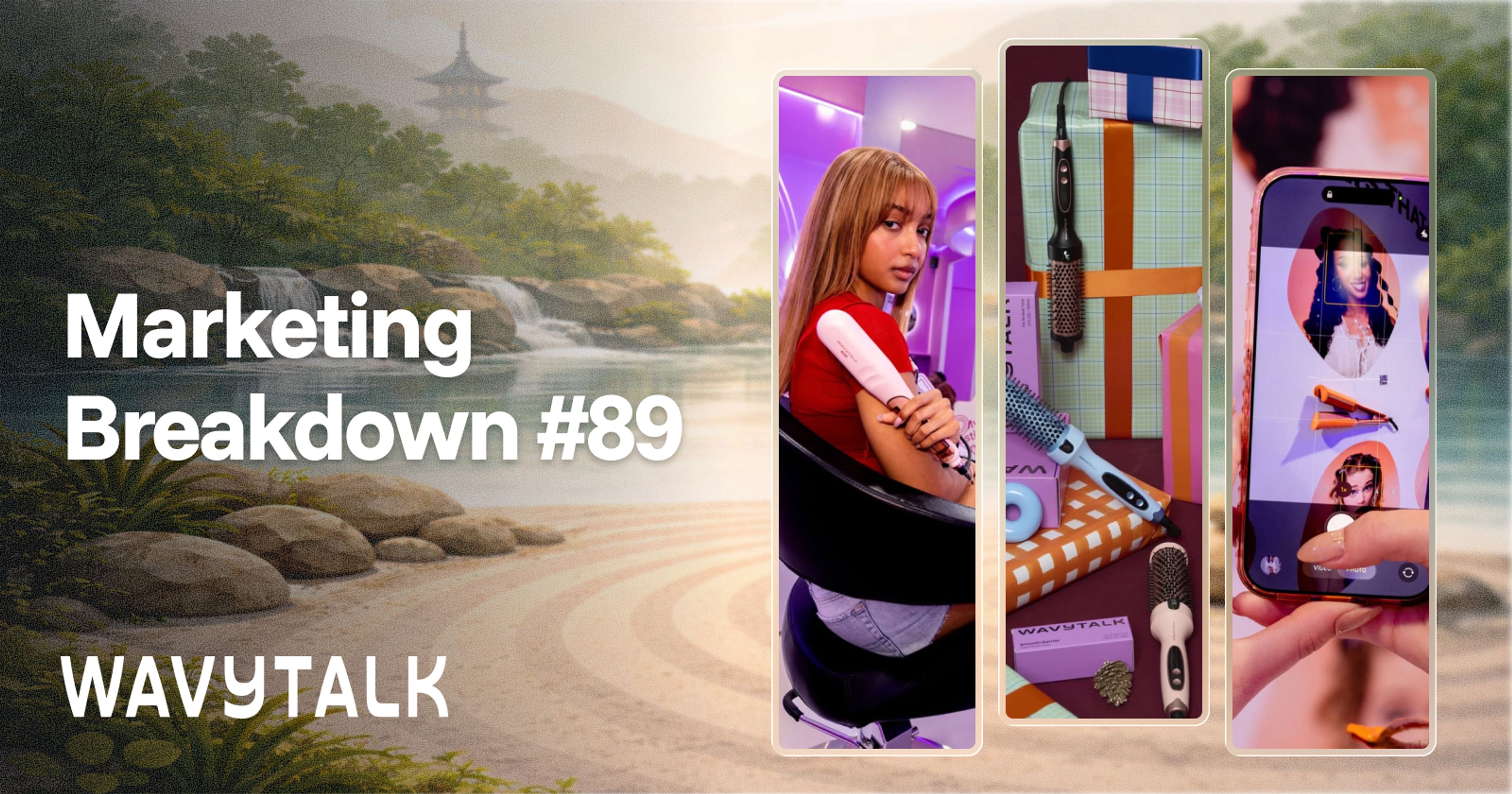
A deep dive into WavyTalk’s marketing strategy, from TikTok Shop and creator-led launches to UGC, cultural moments, and high-converting DTC tactics.