


Tarte Cosmetics Marketing Breakdown: How a 25-Year-Old Beauty Brand Keeps Making Products Feel Viral
How Tarte turns founder storytelling, creator trips, TikTok virality, and smart on-site funnels into a repeatable beauty marketing growth engine.
Discover Feastables’ marketing strategy and how MrBeast turned viral content into a scalable chocolate brand using gamification, retail distribution, and high-converting ecommerce.
In short
Feastables turned attention into a scalable brand by combining creator-driven content, gamified product experiences, and mass retail distribution. Instead of relying on ads, MrBeast built a system where content drives demand, customers become promoters, and the website converts that momentum into revenue. The key lesson: don’t just sell a product, build an experience around it, and align your distribution with how people actually buy.
Getting attention is the hardest part of building a consumer brand. Most companies spend years—and millions in ads—just trying to get people to notice them.
Feastables skipped that step.
When MrBeast (Jimmy Donaldson) launched the chocolate brand in 2022, he already had one of the largest audiences on the internet. His videos regularly reach tens of millions of viewers, which meant the brand started with built-in distribution instead of needing to rely on paid traffic.
That advantage was immediately evident. Within the first 72 hours, Feastables sold more than 1 million chocolate bars.
But the brand’s growth isn’t just about influencer hype. Feastables is steadily turning creator attention into a real consumer packaged goods (CPG) business: a creator-led brand marketing model that combines viral content, community engagement, and large-scale retail distribution.
Here’s a closer look at the Feastables marketing strategy.
Most brands treat a product launch as a press event. MrBeast treated it like his most-watched video ever, because it literally was.
The Feastables launch video racked up tens of millions of views, but instead of just building awareness, every element of the video was engineered to drive direct purchases.
The "Mystery Ticket" mechanic was the masterstroke. Only 10 golden tickets existed, each granting the winner a chance to appear in a Willy Wonka-style MrBeast video.
This created three powerful psychological triggers simultaneously:
Takeaway: Instead of asking "how do we announce this product?" ask "how do we make this launch something people will tell their friends about?" The best launch ideas build virality directly into the mechanics of the launch itself.
Feastables’ social media strategy goes far beyond posting product photos. Instead, the brand uses these platforms as a distribution engine for content and community engagement.
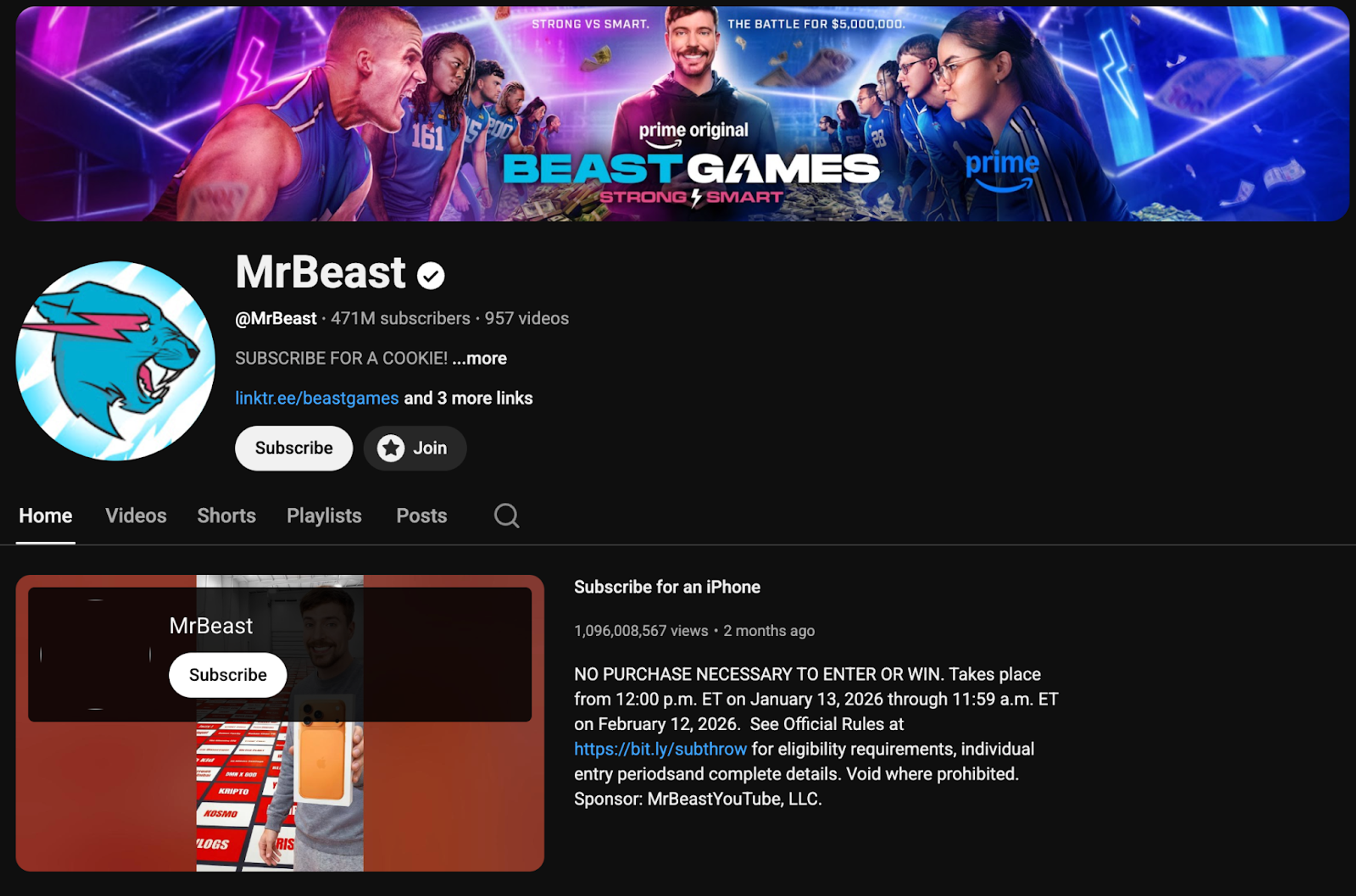
At the center of this strategy is MrBeast’s massive online presence on different social media platforms. His YouTube channel regularly generates tens of millions of views per video, giving Feastables instant exposure to a global audience.
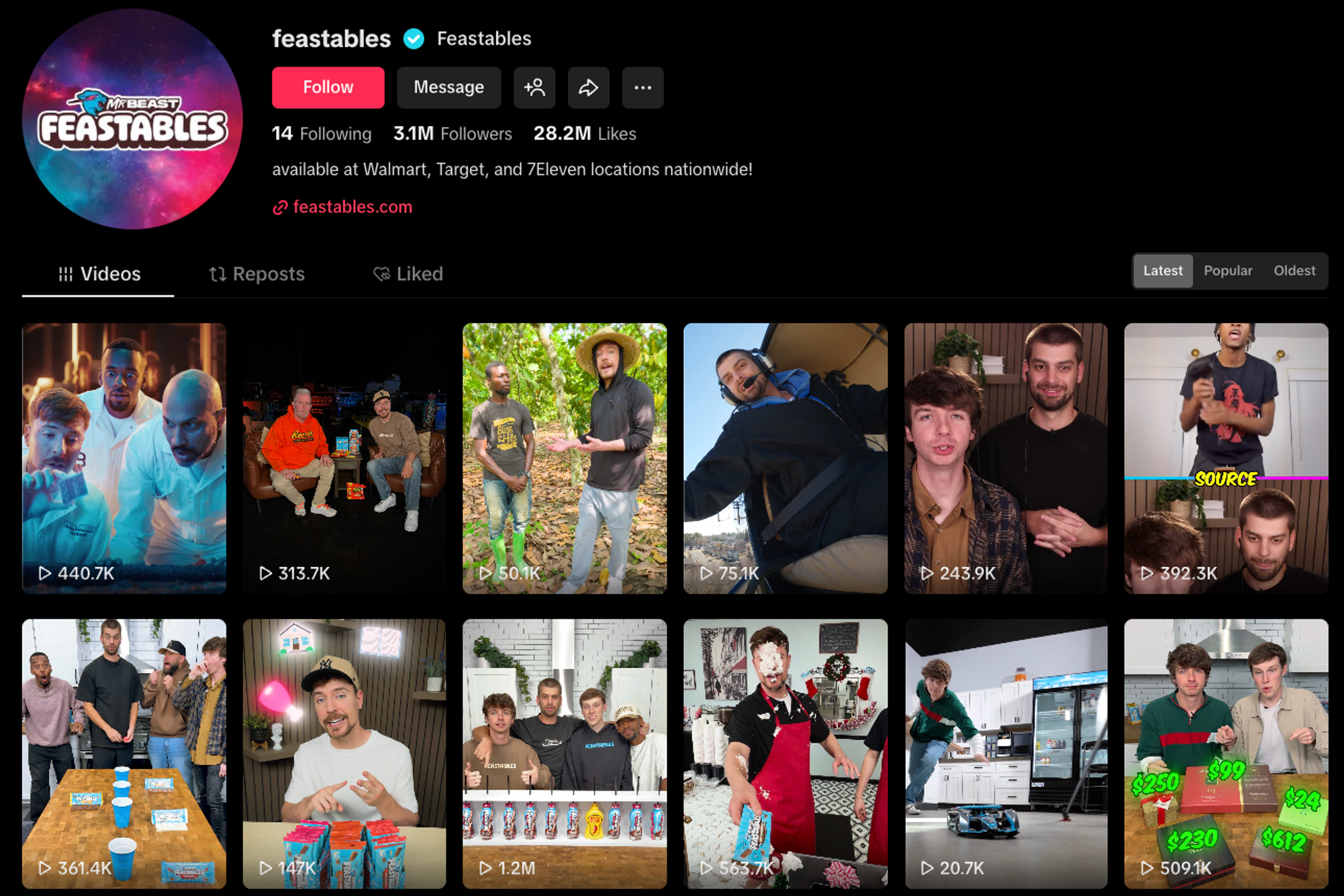
But the brand doesn’t rely on MrBeast’s main channel alone. Feastables maintains an active presence on platforms like TikTok, Instagram, and X, where it shares product drops, challenges, giveaways, and fan content.
Takeaway: Treat social media as a distribution channel for stories and experiences, not just a place to promote products. The more your audience participates, the faster your brand grows.
At the heart of Feastables' marketing strategy is what could be called 'participatory commerce'—a model where purchasing isn't the end of the experience, it's the beginning.
Every bar comes with a QR code on the packaging that directs buyers to exclusive online content, contests, and sweepstakes.
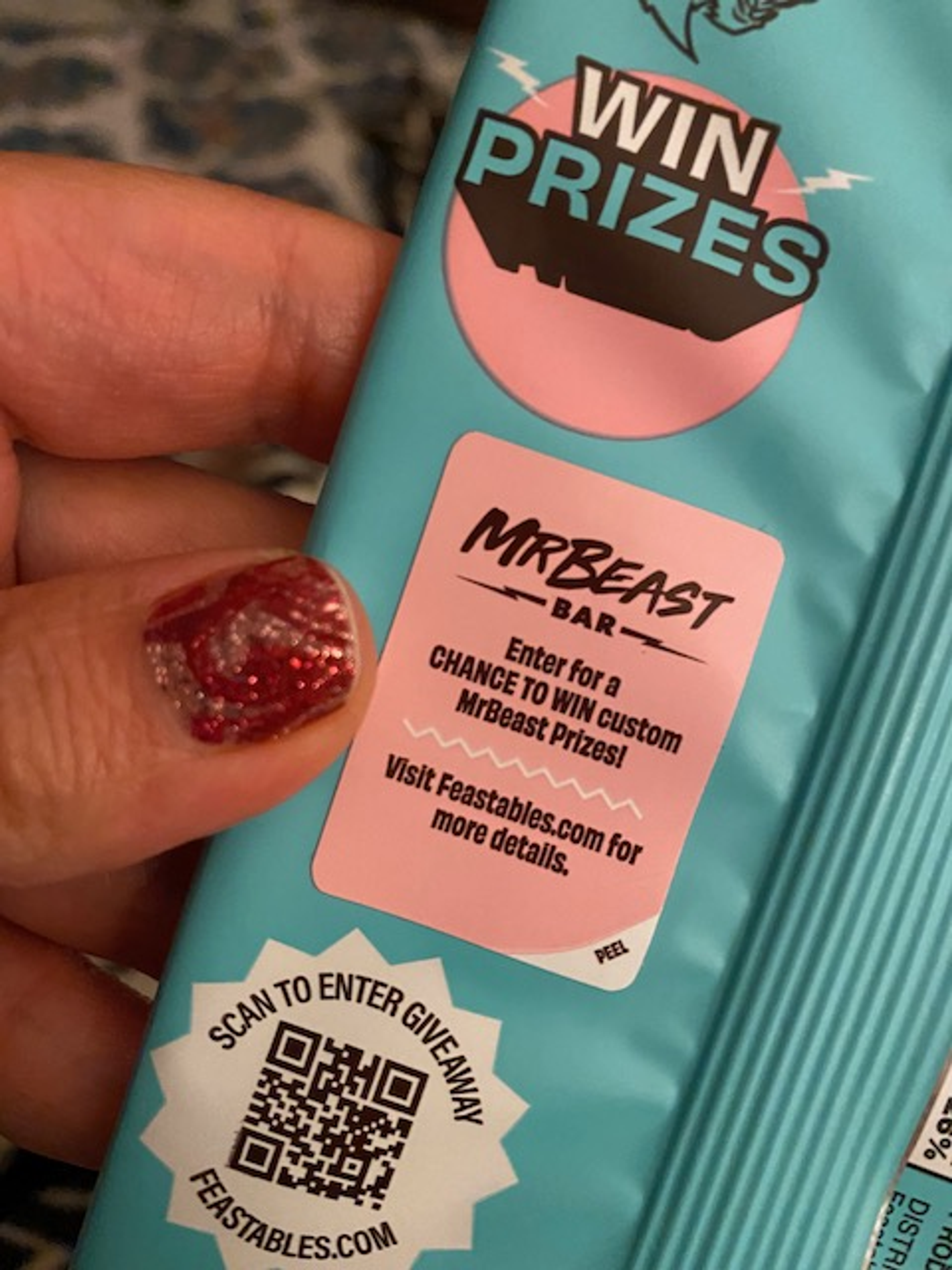
This transforms $3 milk chocolate bars into an ongoing brand relationship.
The Beast Games Sweepstakes is a prime example: a $4.2 million partnership with MoneyLion ran from March to April, turning Feastables buyers into contestants.
The prize pool was enormous, but the real return was staggering amounts of user-generated content flooding TikTok and YouTube from fans filming their "entry" purchases.
This strategy converts passive consumers into active participants. Rather than pushing ads onto reluctant audiences, Feastables creates games where fans voluntarily promote the product while competing for prizes.
User-generated content reaches audiences far beyond MrBeast's 471 million subscribers. Each fan video functions as an authentic testimonial, exponentially more persuasive than corporate advertising.
Takeaway: Build loyalty loops into your product experience. A QR code, a sweepstakes, a community challenge…these aren't gimmicks, they're retention mechanics that keep your brand top of mind long after purchase.
One of Feastables’ smartest moves was choosing Walmart as a core distribution partner early on.
Most DTC brands spend years building online channels before moving into wholesale. Feastables’ retail expansion and in-store marketing strategy went the opposite direction. And for chocolate, it made perfect sense.
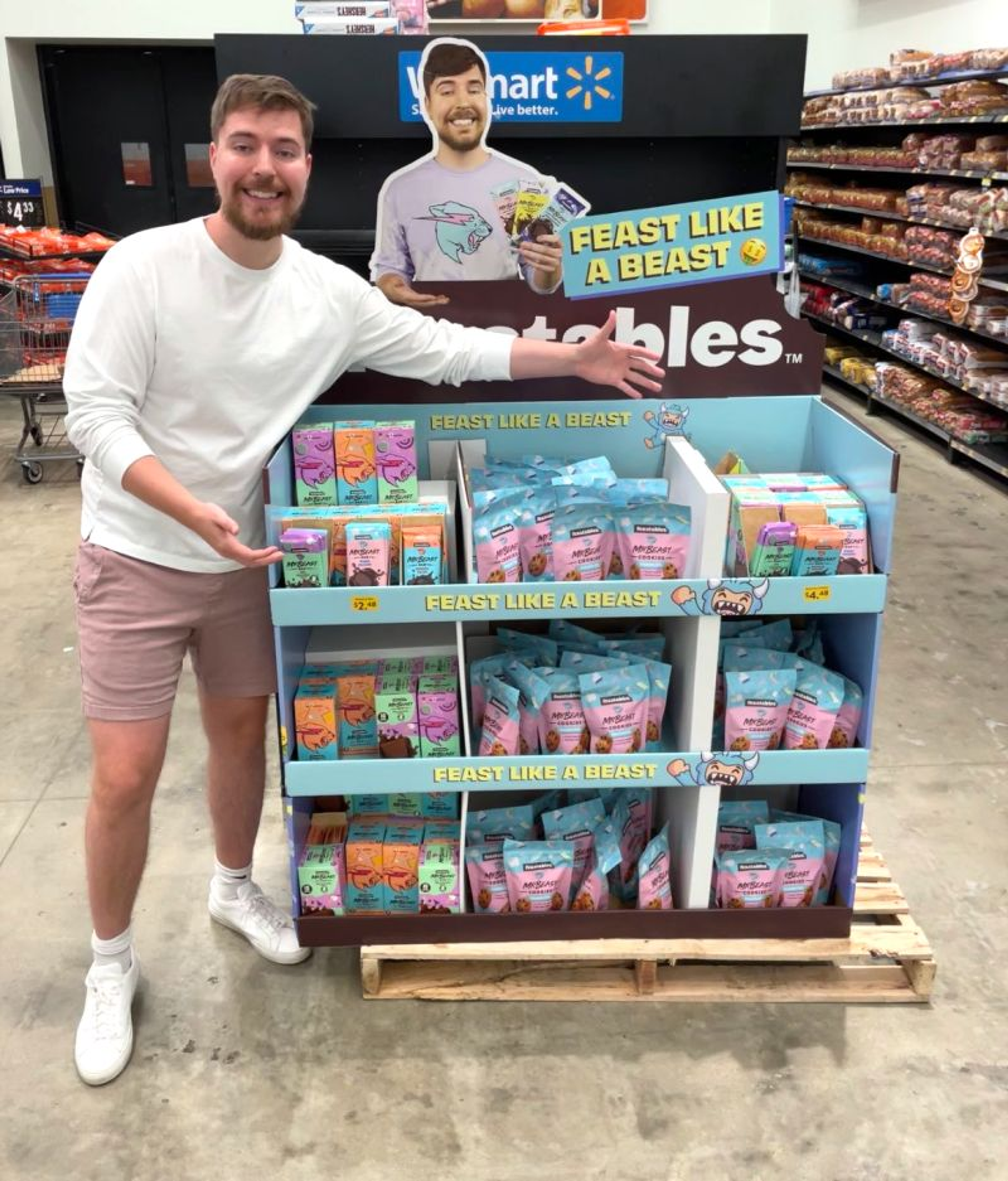
Chocolate is largely an impulse purchase. Consumers rarely search for it online.
By securing shelf space at Walmart, Target, and 7-Eleven across 30,000+ stores in the U.S., Canada, and Mexico, Feastables placed the product directly where impulse buying happens.
At the same time, MrBeast’s digital presence drives traffic to those shelves.
The growth loop looks like this:
This hybrid model—creator marketing combined with large-scale retail distribution—redefines what an influencer brand strategy can look like for modern consumer brands. MrBeast keeps a majority stake, aligning incentives, while experienced CPG operators handle manufacturing and retail logistics.
Takeaway: Match your distribution strategy to your product category. Impulse goods need physical presence. Considered purchases can thrive DTC. Don't default to one model; choose the one that fits how your customers actually buy.
The early Feastables brand was built on MrBeast's personality:
That worked brilliantly for launch.
But by 2024, Feastables’ brand strategy took a pivot that set it up for the next decade: building a purpose that extends beyond its founder.
Feastables' new core mission, eradicating child labor in the cocoa industry, is both authentic and urgent. The brand uses Fairtrade-certified cocoa and has been vocal about the systemic problem of child labor in chocolate production.
This creates several compounding advantages:
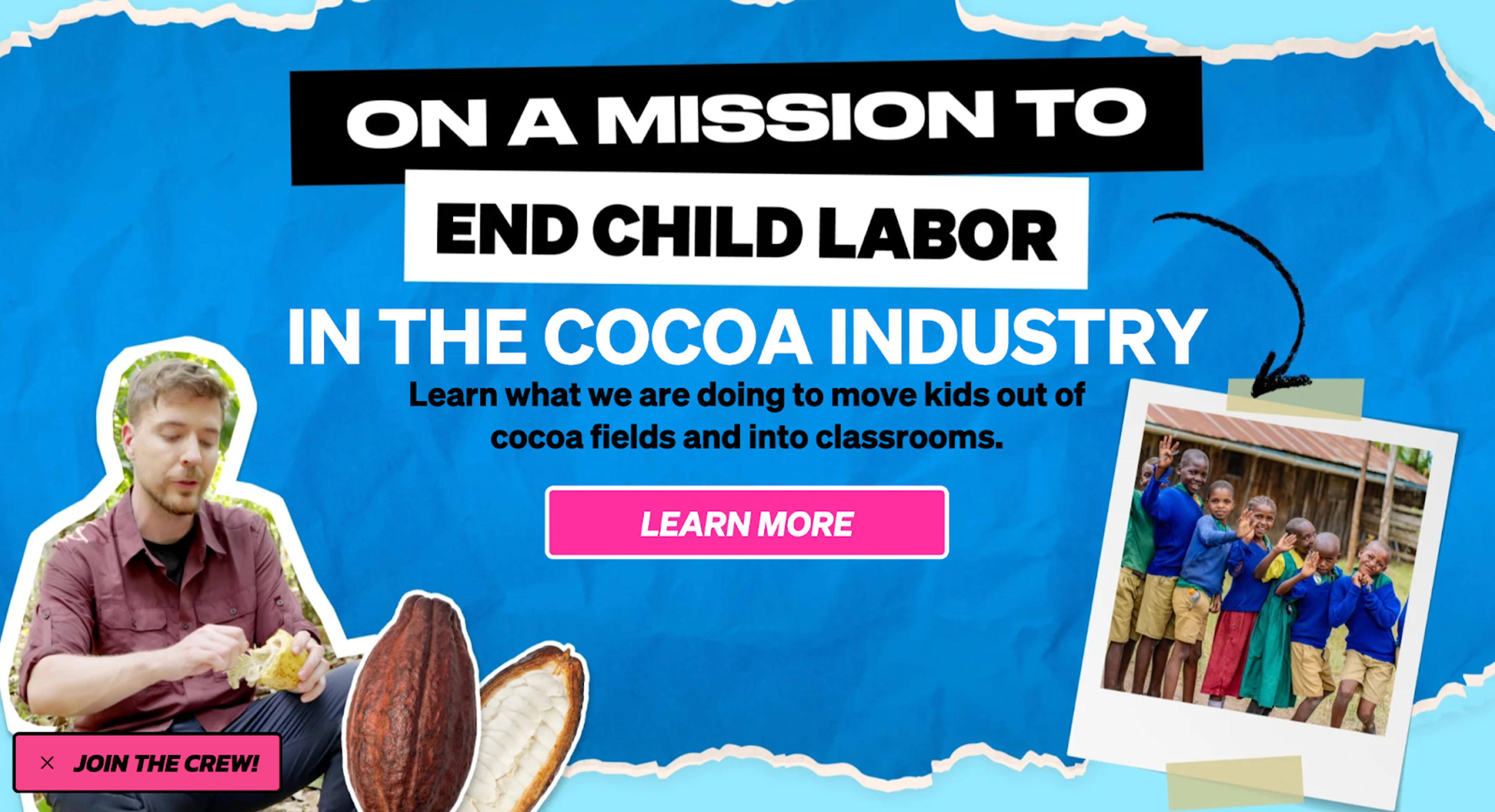
The kosher certification rollout in Spring 2025 further broadens the addressable market and signals that Feastables is building for long-term, mainstream appeal, not just creator economy hype.
Takeaway: The brands that outlast their founders are the ones that attach themselves to a cause bigger than the product. Find the mission that's authentic to your brand's origin, then make it central to everything you do.
Feastables has built a partnerships and collaborations marketing playbook around limited-edition releases, using IP partnerships to tap into existing fandoms and create retail urgency.
The most recent example is the Super Mario Galaxy Movie collaboration, which introduced three themed products:
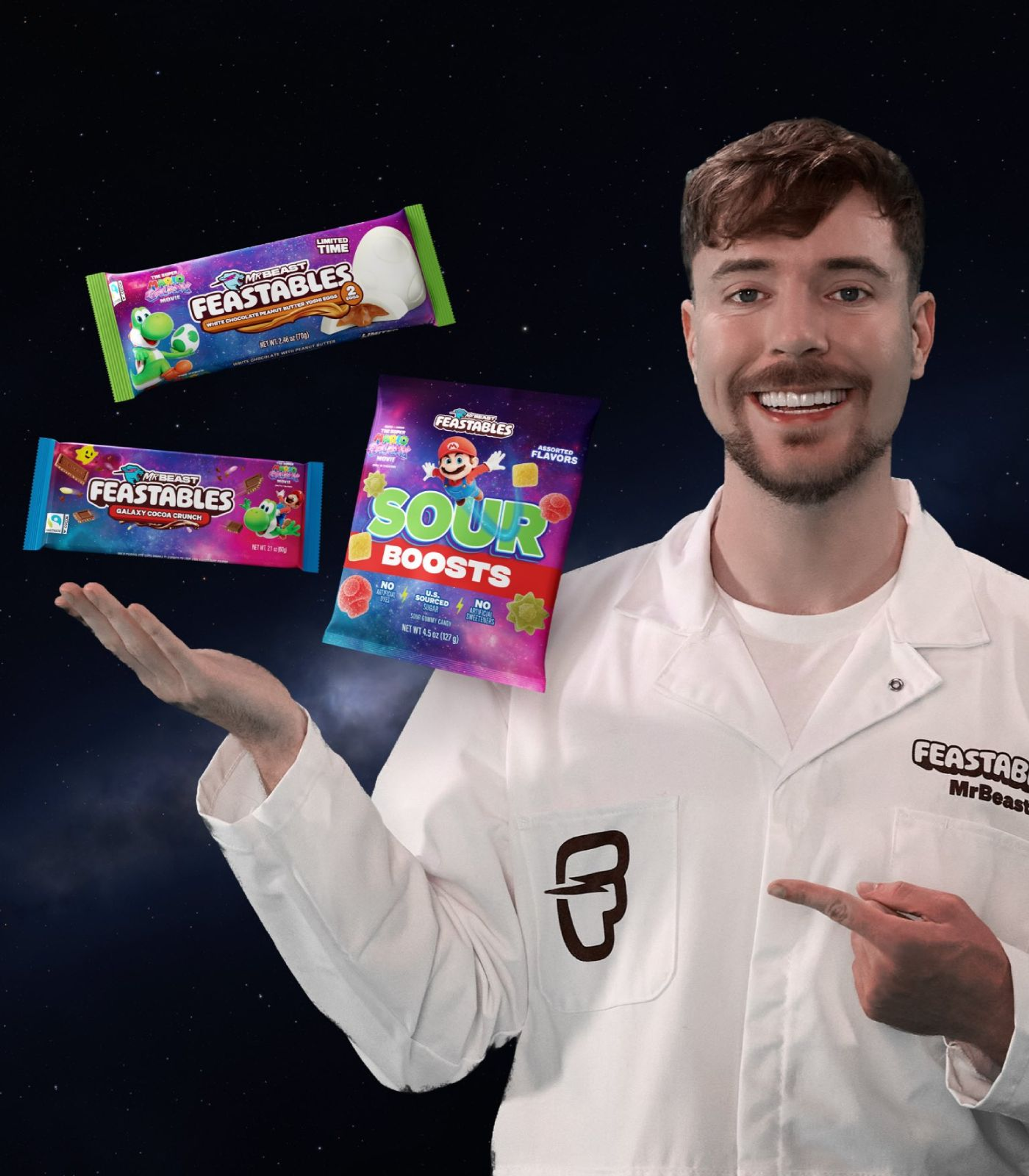
These were timed to coincide with the film's theatrical release and distributed at major US retailers, creating a halo of movie marketing that directly translated to retail demand.
MrBeast also launched a space-themed promotional video, blending entertainment content with product marketing in his signature style.
Takeaway: Collaborations shouldn't just be about borrowed brand equity. The best ones create a genuine overlap between two audiences that would otherwise never meet and give both sides a reason to share.
The Feastables website, built on Shopify, is a highly effective conversion engine that mirrors the brand’s playful identity while guiding visitors smoothly toward purchase.
Feastables.com doesn’t resemble a typical ecommerce store, and that’s intentional. The bold blue, orange, and pink colors, animated elements, and interactive effects make the experience feel like an extension of MrBeast’s content.
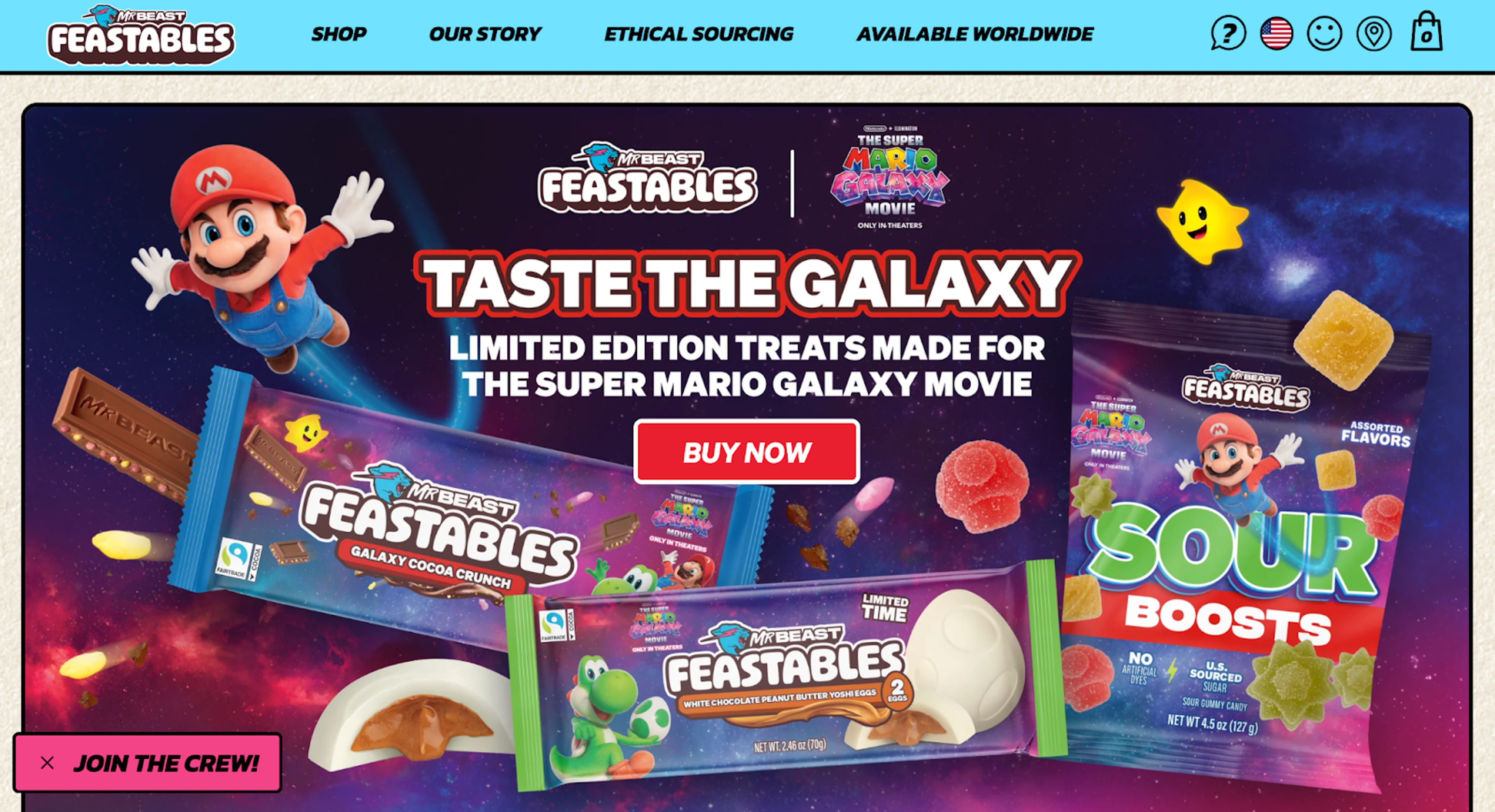
That visual alignment matters. When fans arrive from YouTube or social media, the storefront feels instantly familiar, reducing friction and keeping them engaged.
As soon as you enter the site, you’re greeted by a multi-step popup.
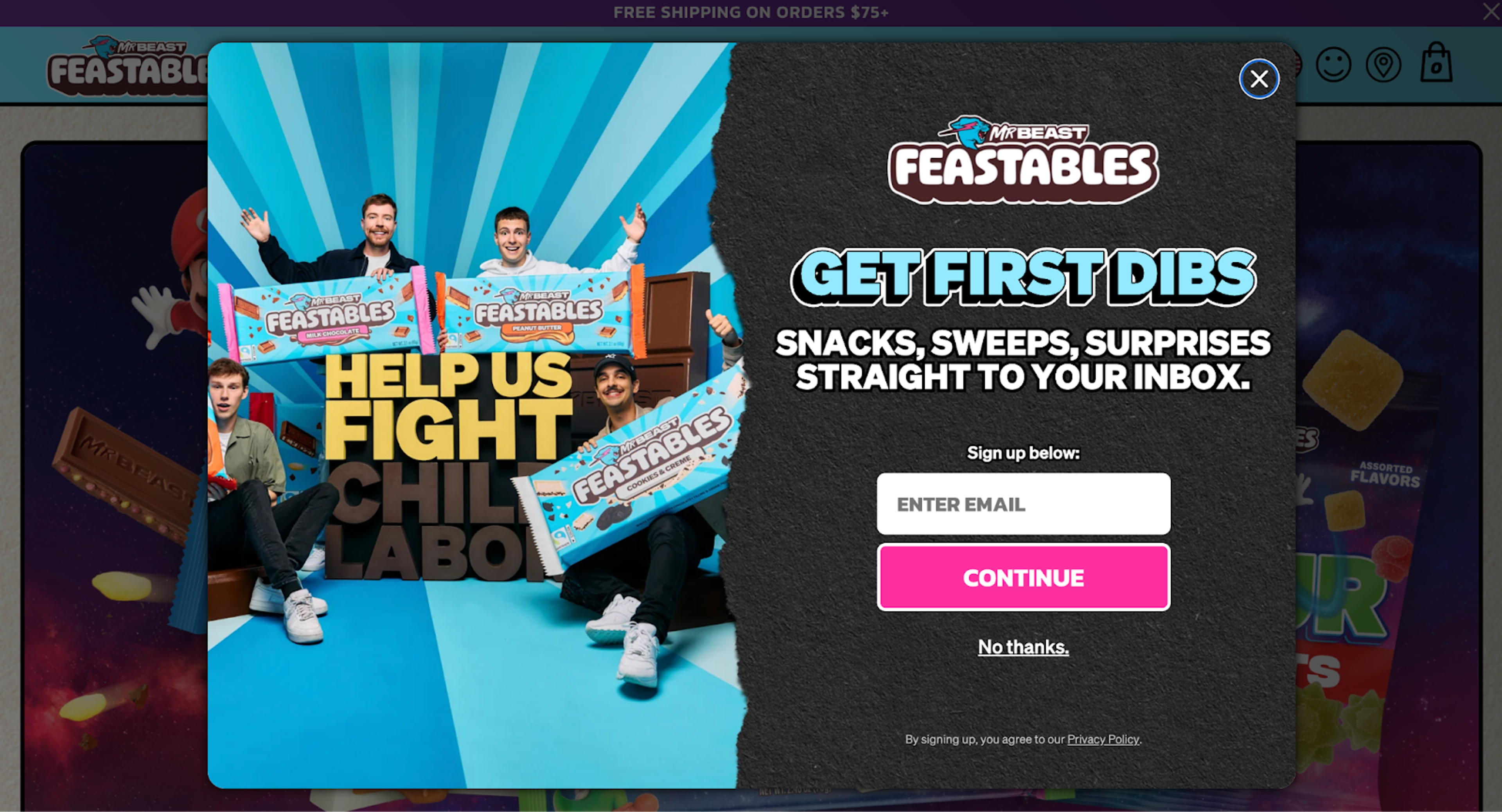
The first step asks for your email, while the second asks for your phone number.
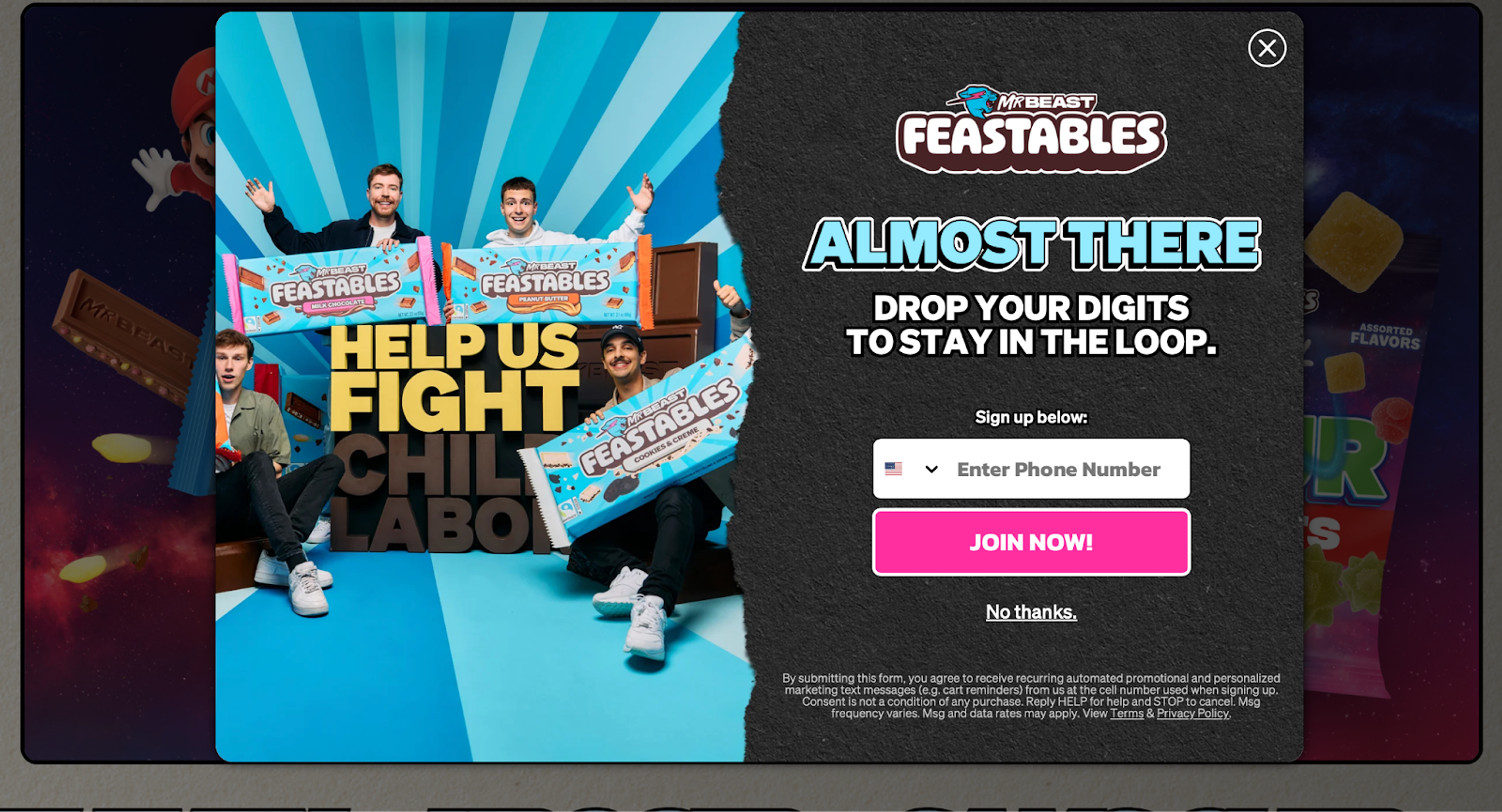
By capturing the email first, the brand secures the most important contact point with minimal friction.
Once that commitment is made, the second step introduces the phone number request, increasing the likelihood of collecting both email and SMS subscribers.
On the homepage, the “Shop Our World’s Best Chocolate” section acts as the main entry point to explore the product lineup.
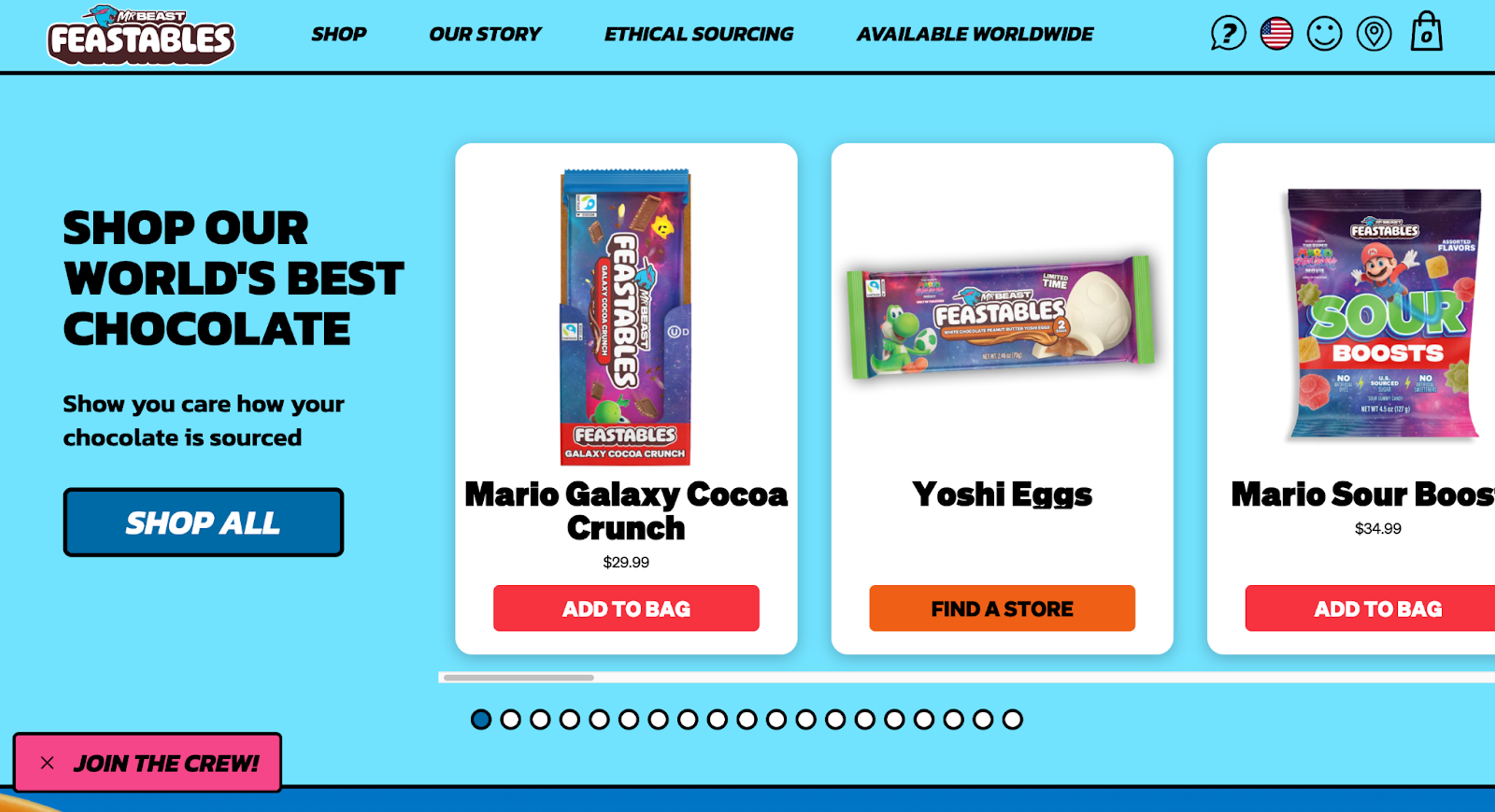
The headline is bold and slightly provocative. Claiming to sell the world’s best chocolate immediately grabs attention and reinforces the brand’s confident, challenger-style positioning.
The product pages follow the same philosophy: they don’t feel like typical ecommerce pages.
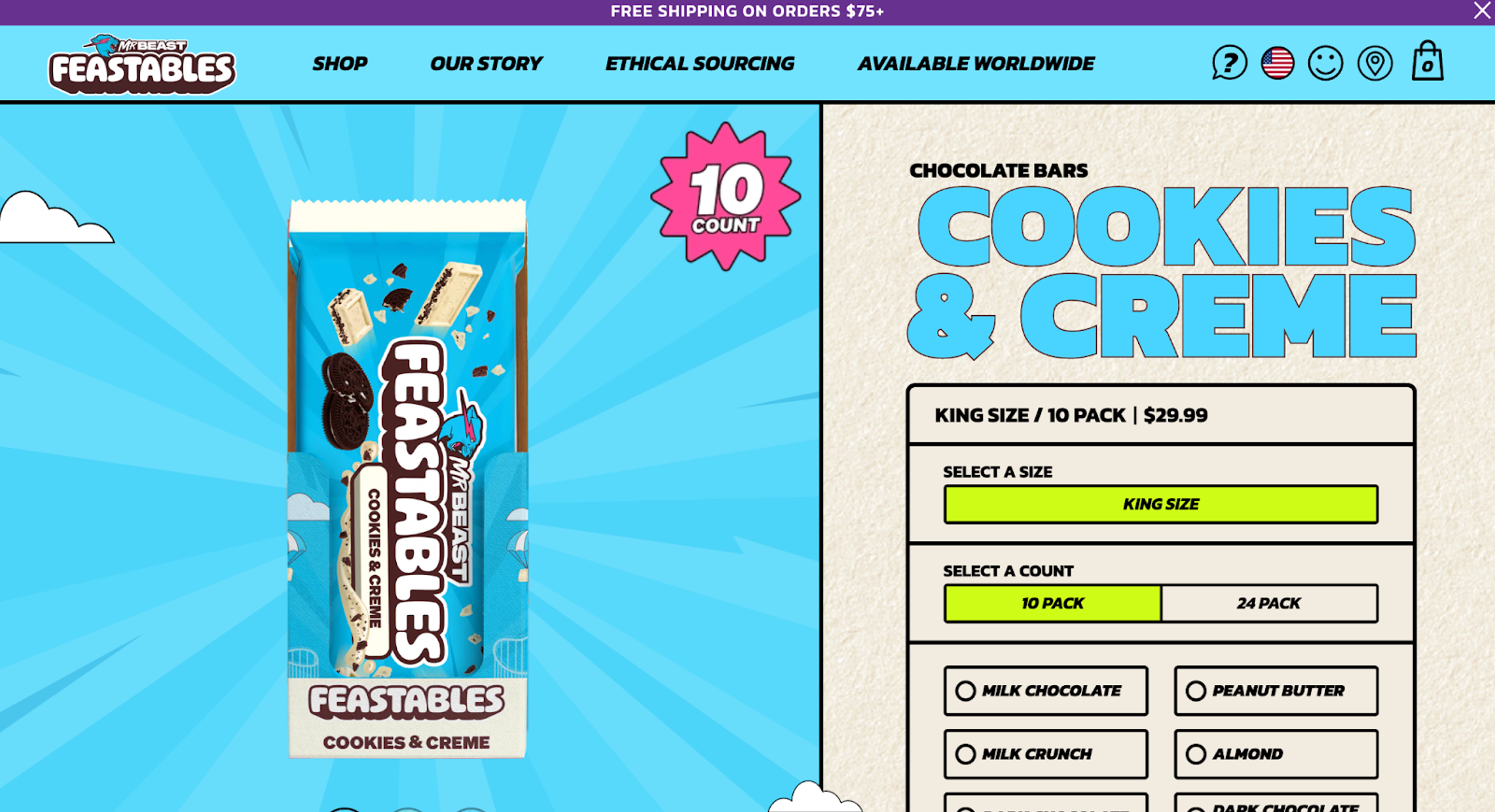
The design is colorful, animated, and highly visual, clearly reflecting MrBeast’s style. Around the “Add to bag” button, you’ll also see the message: “Show you care how your chocolate is sourced.”
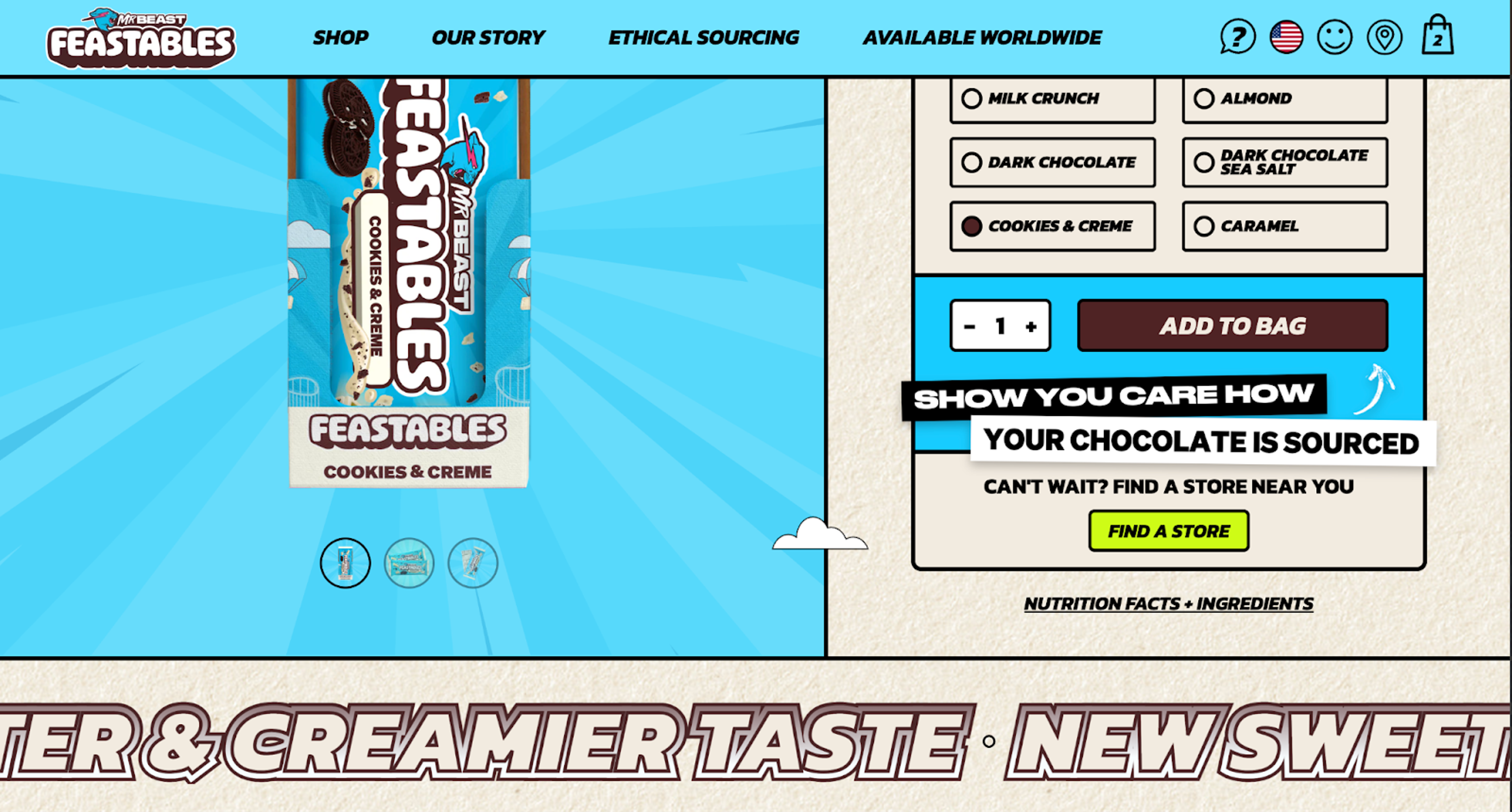
This line subtly reinforces the brand’s ethical sourcing mission while encouraging purchase.
Another interesting detail is the heavy use of video content.
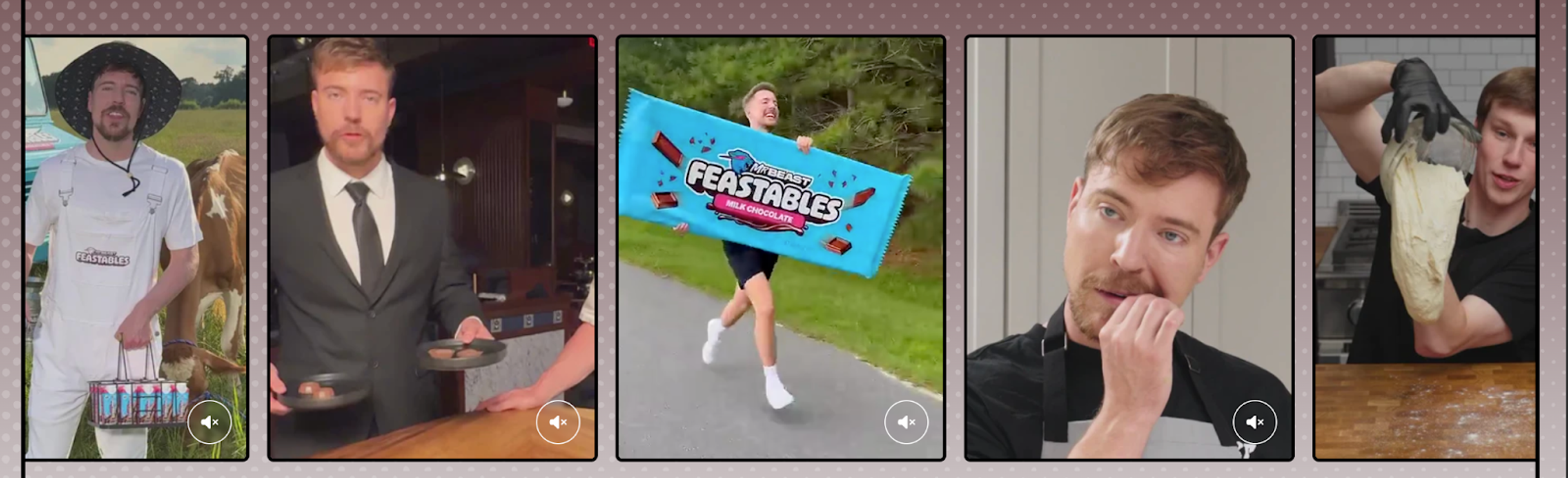
Instead of relying only on product photos, the pages include multiple videos that showcase the product in action, often tied to MrBeast content.
The conversion experience continues once a product is added to the cart.
Instead of redirecting to a traditional cart page, a cart drawer slides open. On the left side, the site recommends one of the newest products, encouraging shoppers to add another item.
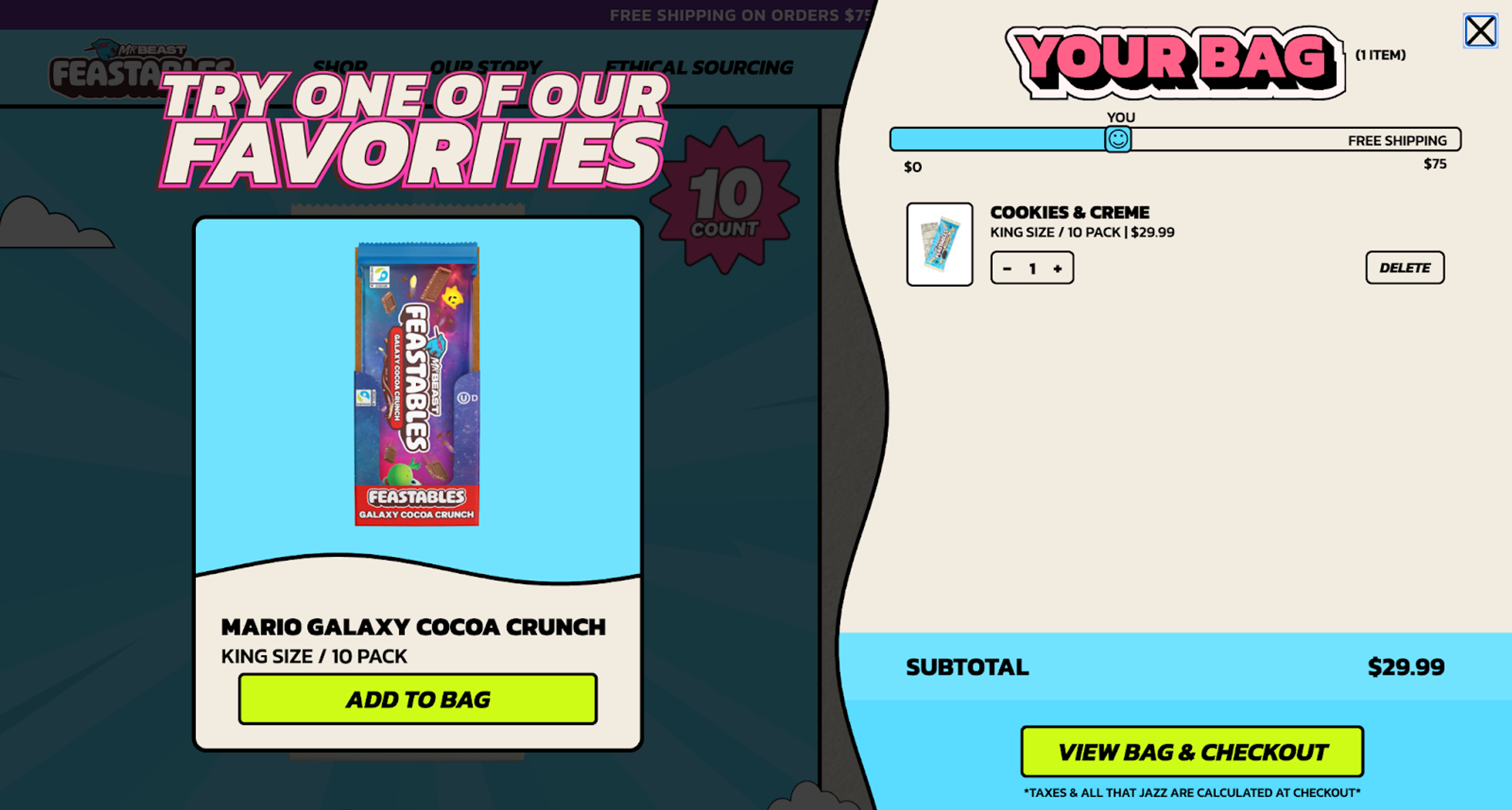
At the same time, a progress bar shows how close the customer is to unlocking free shipping. This small visual cue nudges users to increase their order value.
Together, these elements turn a simple cart interaction into a subtle upsell and AOV optimization system.
Takeaway: Your website shouldn’t just sell products, it should extend your brand experience. Feastables shows how strong visual identity, engaging product pages, and smart CRO elements like email capture, upsells, and free-shipping progress bars can turn traffic into more conversions and larger orders.
The success of Feastables marketing strategy shows how modern brands can turn attention into scalable consumer businesses. By combining creator-driven content, participatory marketing, retail distribution, and a strong ecommerce experience, MrBeast built more than just a chocolate brand. He built a marketing engine.
Studying how MrBeast markets Feastables reveals that none of it is accidental. Every element—the QR codes, the sweepstakes, the Fairtrade mission, the retail push—is deliberately designed to deepen the relationship between the brand and its audience. It's a masterclass in turning a personal audience into a loyal customer base.
The key lesson for marketers is simple:

How Tarte turns founder storytelling, creator trips, TikTok virality, and smart on-site funnels into a repeatable beauty marketing growth engine.
How Carroten went from unknown to every US Target shelf in under a year — using TikTok virality, creator-led commerce, and heritage brand positioning.
A deep dive into WavyTalk’s marketing strategy, from TikTok Shop and creator-led launches to UGC, cultural moments, and high-converting DTC tactics.