


Modal vs Popup vs Overlay: What's the Difference?
What separates a modal, a popup and an overlay, how to make a modal accessible, and which one an online store should use when.
Two ways to build a Klaviyo popup: Klaviyo's own forms or OptiMonk. How to add exit intent, target Klaviyo segments and send signups to a list.
In short
A Klaviyo popup is a signup popup that adds each new email or phone number to a Klaviyo list. It turns browsing visitors into subscribers your Klaviyo flows can reach. Build it in Klaviyo's form editor, or describe it to the OptiMonk agent and connect it to Klaviyo.
Klaviyo can only email the people it knows. Every welcome series, every back-in-stock alert and every campaign you plan goes to addresses someone gave you first.
Most of those addresses come from one short moment on your store: a visitor sees an offer, decides it's worth an email, and types it in. Miss that moment and the visitor leaves as a stranger.
Klaviyo gives you its own form for that moment, and many stores still connect a separate popup tool to it. Both work. Which one fits depends on how much you want from the popup itself.
To create a Klaviyo popup, either build a sign-up form in Klaviyo (Website > Sign-up forms > Create form, choose the Popup type, set the targeting, publish), or build the popup in a dedicated popup tool and connect it to Klaviyo, so every signup joins the Klaviyo list you pick.
Klaviyo's sign-up forms come in five types: Popup, Flyout, Full page, Embed and Banner (Klaviyo's getting started guide explains each). "Klaviyo popup" also often means a popup from another tool that writes its signups into a Klaviyo list.
Either way, Klaviyo sends the emails and text messages; the popup gets the subscriber onto the right list. More on collecting emails and phone numbers in our lead capture guide.
Klaviyo's own path takes five steps, based on Klaviyo's help center.
If a popup built from Klaviyo's form library is all you need, Klaviyo's form does the job, and web forms are part of its free plan.
OptiMonk is an agentic popup builder for online stores: the AI agent designs the popup, builds a mobile version and sets the targeting, and the integration sends every signup to Klaviyo.
Write what you want, for example: "A welcome popup for new visitors with 15% off the first order in exchange for an email."
The agent asks a few questions about your store, the offer and the moment. It reads your colors, fonts and logo from your site, and in about a minute it draws four concepts.
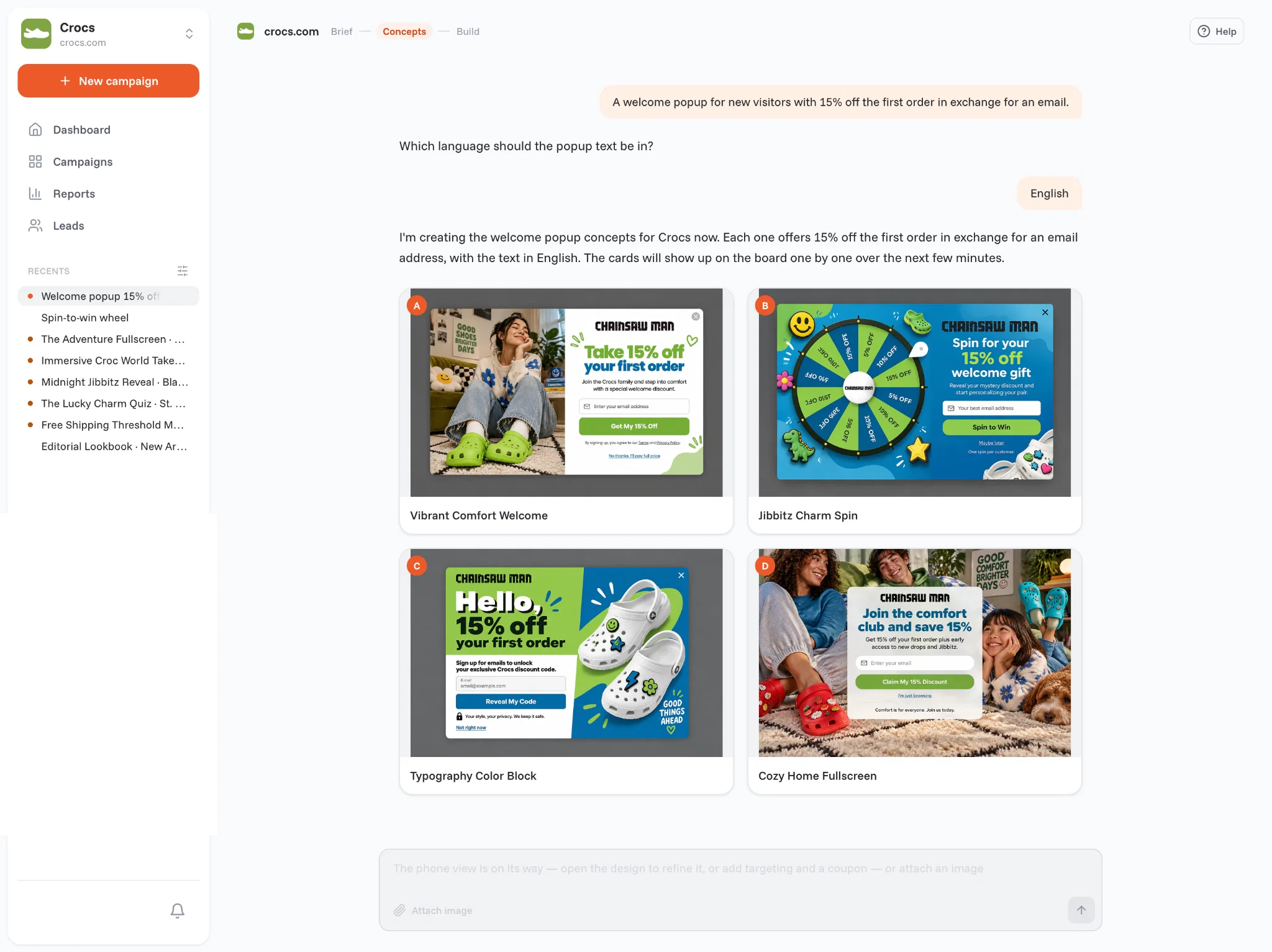
Every popup gets its own mobile version. Want a change? Ask the agent in plain words, for example "Make the button blue."
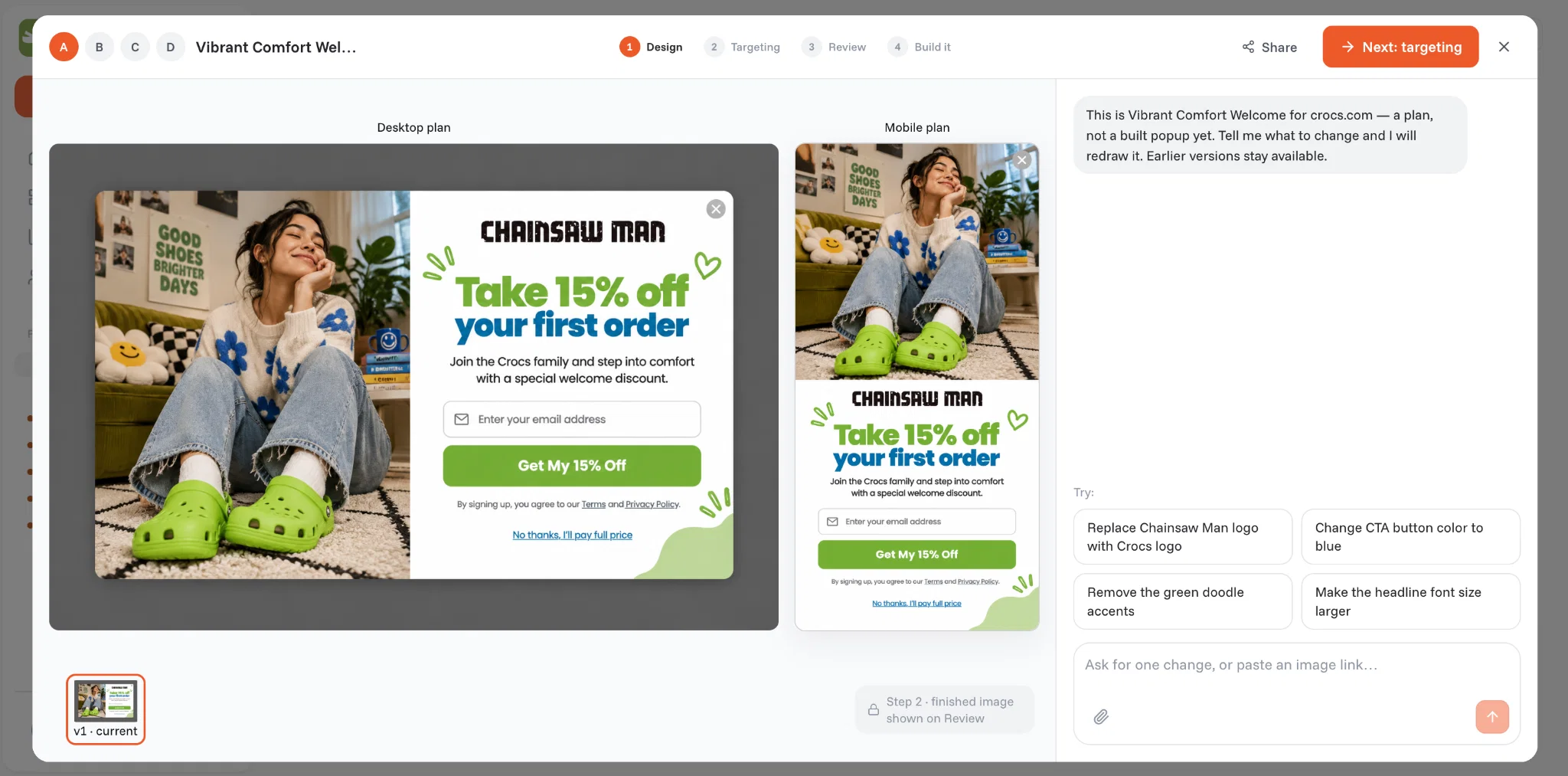
The agent proposes the targeting with the design; you adjust it in the Targeting step.
The Klaviyo rule needs the integration and Klaviyo's onsite tracking code, which is added automatically on Shopify, WooCommerce and Magento. Anonymous visitors (cleared cookies, a new device, a private window) don't match.
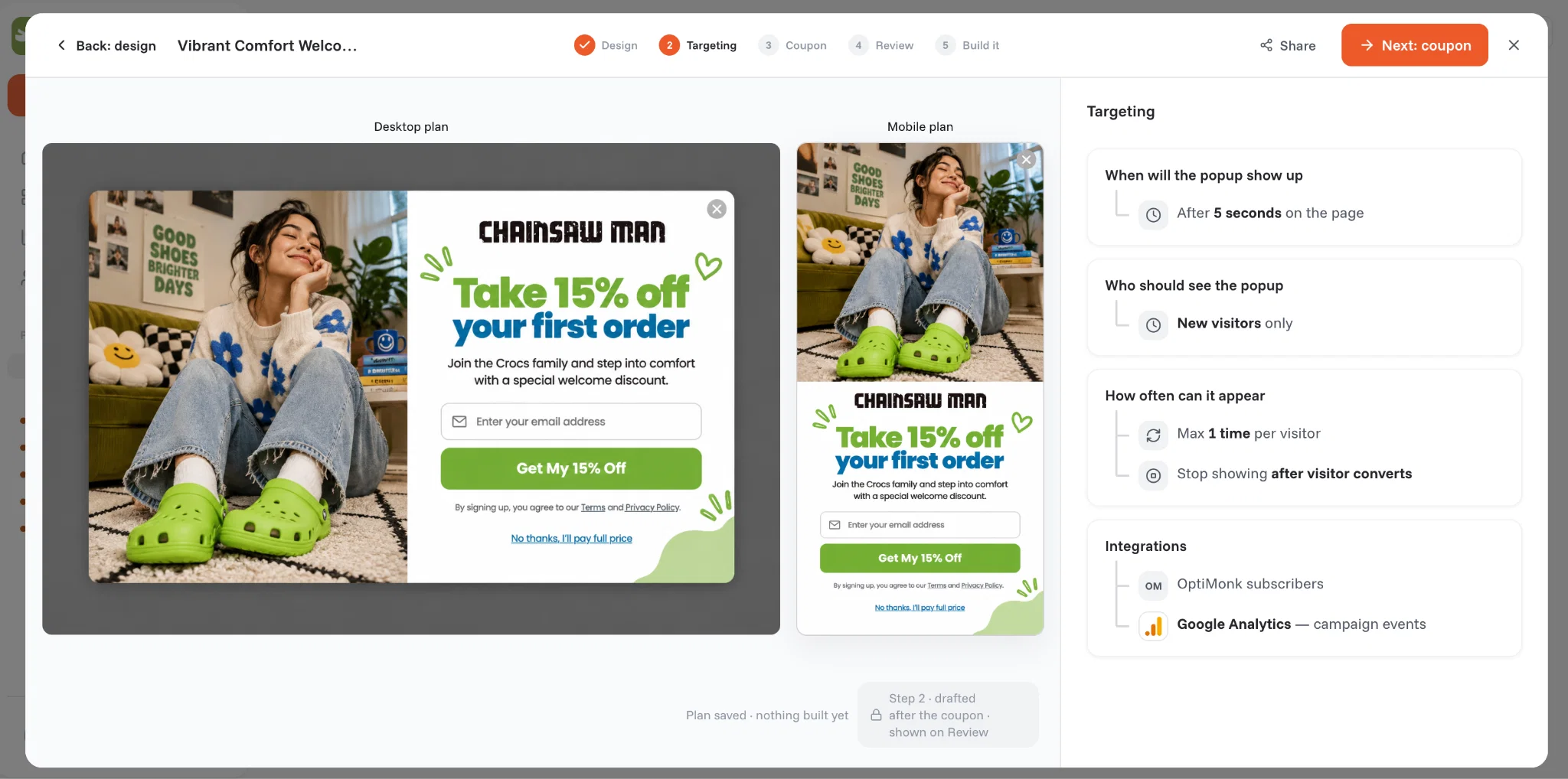
Check the popup on desktop and on mobile, together with its second step, the message visitors see after they sign up. Want to change either step? Ask the agent. When everything looks right, click Build it.
Connecting Klaviyo takes a few clicks in the campaign's Integrations tab:
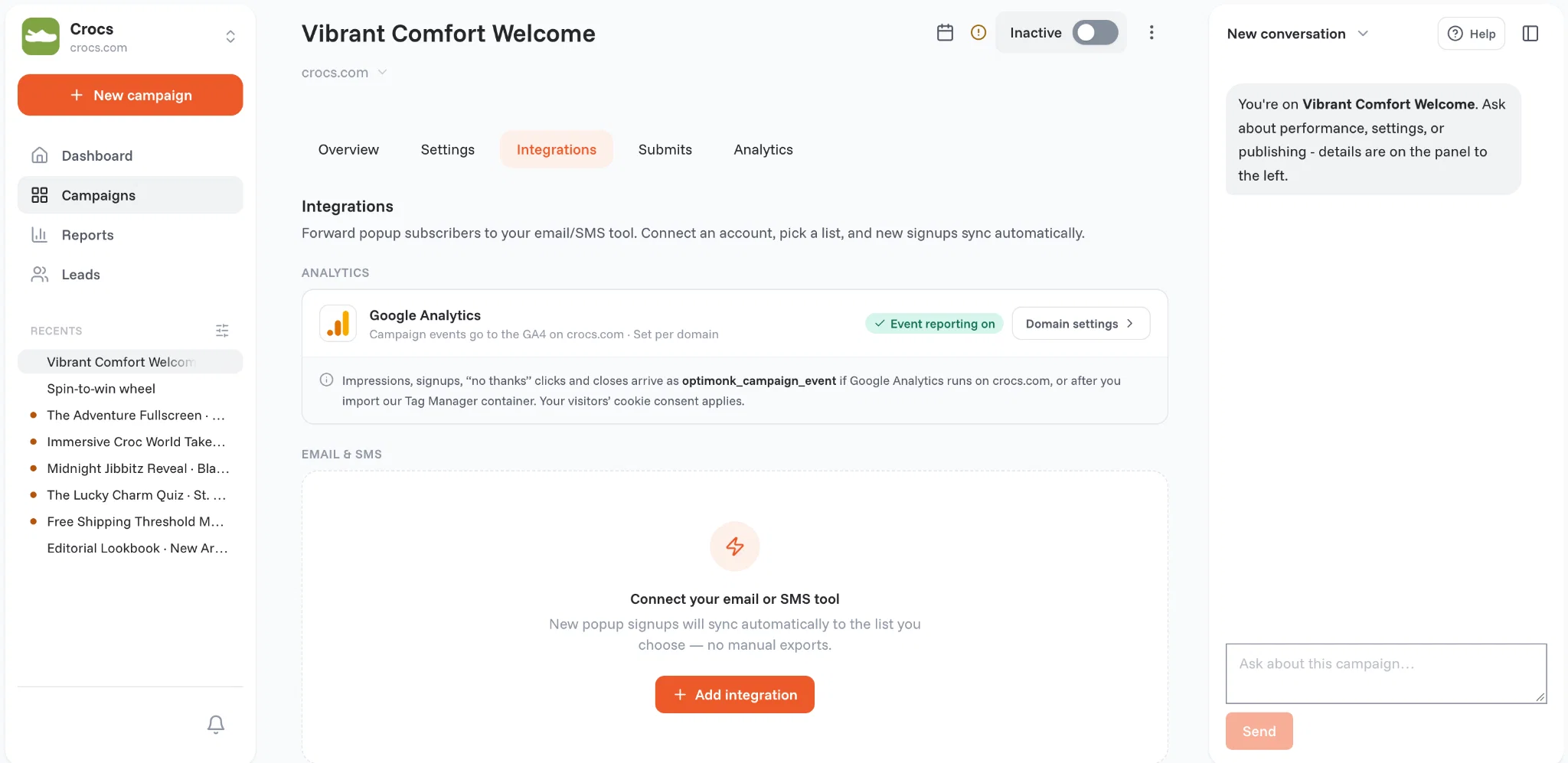
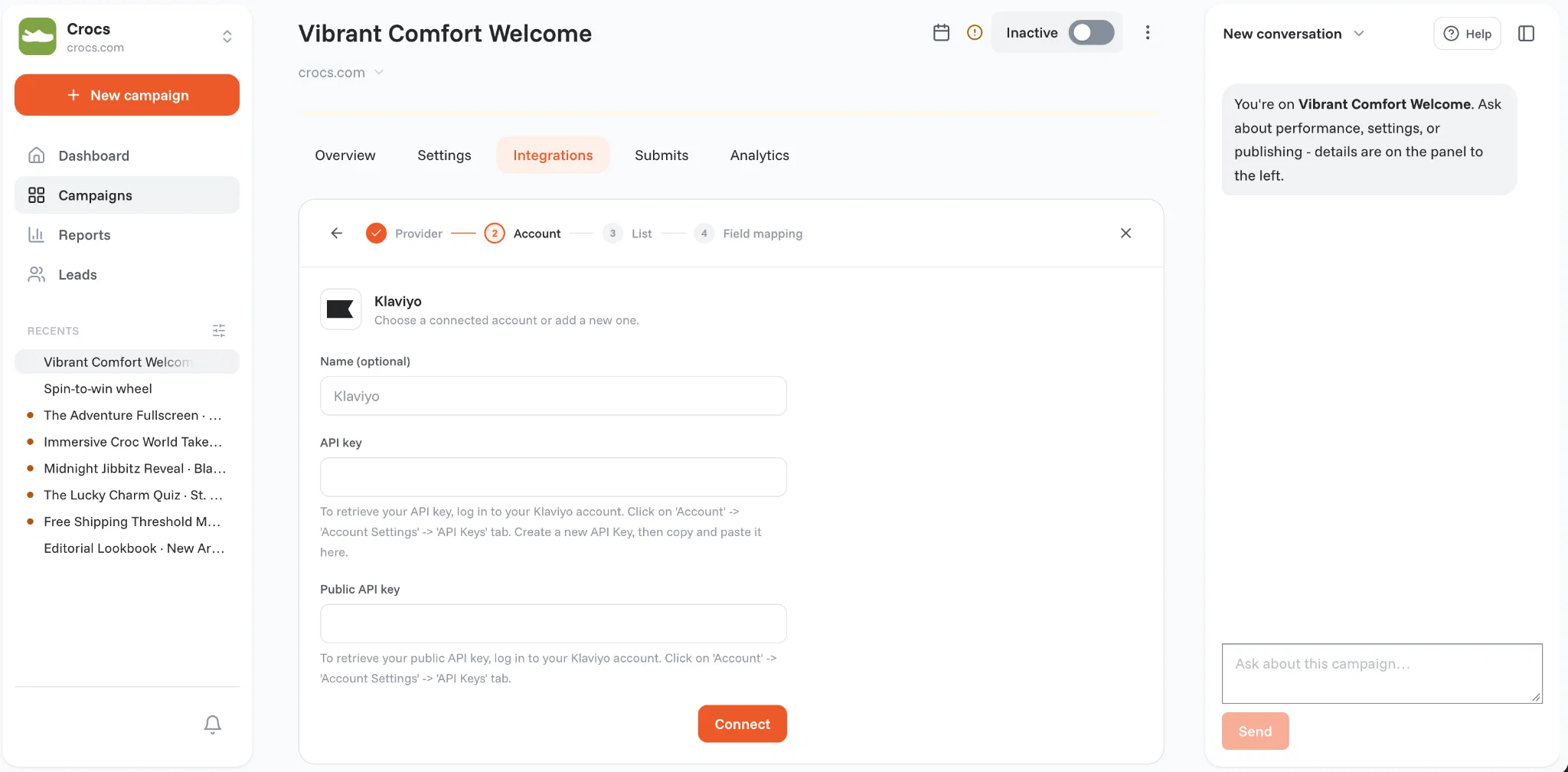
If the popup asks for an email and a phone number, the List step can send each group (both, email only, phone only) to its own list, where multi-list is enabled for your account.
Details: our step-by-step setup guide and the Klaviyo integration page.
Your first offer is a guess. Run a variant A/B test: 15% off against free shipping, or email only against email and SMS on two steps.
A holdout test adds a Control (no popup) group, so you see whether the popup brings extra orders at all.
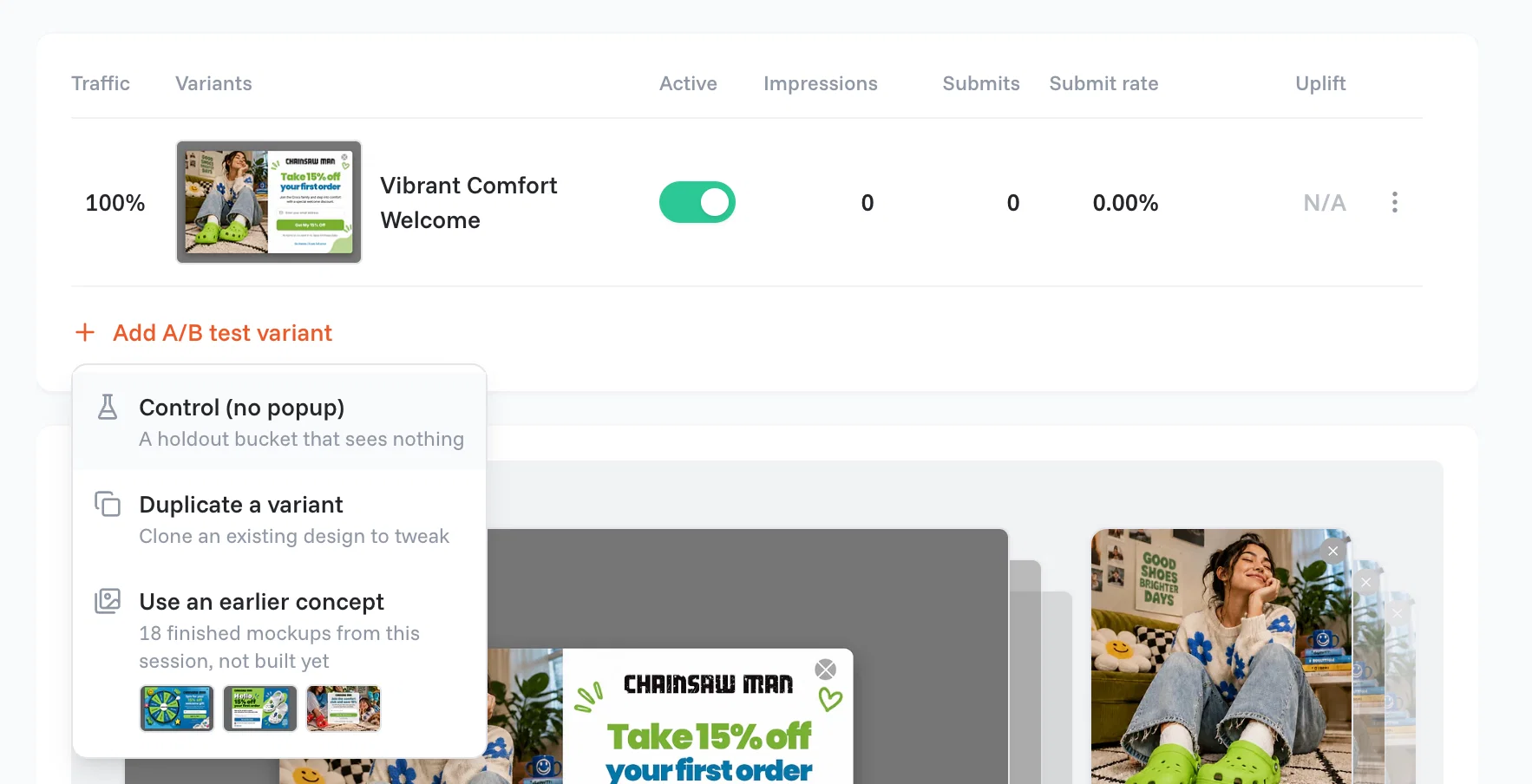
OptiMonk declares a winner by default at a 95% chance to win, after 200 conversions and 3 days.
In Klaviyo, set Timing to "When visitor is exiting the page". In OptiMonk, pick exit intent as the trigger.
Klaviyo's version fires when the cursor leaves the visible page on desktop, or on a quick upward scroll on mobile. Add a scroll rule and switch on "Only display if all selected conditions are met" to show it only to visitors who scrolled first (Klaviyo's targeting guide).
In OptiMonk, exit intent works on desktop, and mobile triggers catch leaving signals on phones. Pair it with subscriber recognition or "Don't display to existing Klaviyo profiles", so the offer reaches only people not on your list.
The Thursday Boots example below shows one. For the general tactic, see how to build an exit-intent popup.
Use Klaviyo's forms when a popup from its form library is enough. Add OptiMonk when you want the popup designed for your brand, a separate mobile version, more triggers and tests; the signup still lands in your Klaviyo list.
| Klaviyo sign-up forms | OptiMonk + Klaviyo | |
|---|---|---|
| Who designs it | You, from a form library design or a blank form | The agent draws 4 on-brand concepts from one sentence |
| Mobile | One form, blocks shown or hidden per device | A separate mobile version for every popup |
| Formats | Popup, flyout, full page, embed, banner | Popups only: card, fullscreen, lucky wheel, scratch card |
| Games | Spin-to-win block | Lucky wheel and scratch card |
| When it shows | Immediately, exit intent, time delay, scroll, number of pages, custom trigger | Exit intent (desktop and mobile), time delay, scroll depth, on click, inactivity, JavaScript event, visited pages, time on page or site |
| Who sees it | Klaviyo profiles, lists and segments, URL, UTM, location, cart contents (Shopify) | Klaviyo lists and segments, subscribers, returning visitors, traffic source, country, cookies, cart value and contents |
| Testing | A/B test of form variations | A/B test plus a Control (no popup) holdout, auto-declared winner |
| Where signups go | Klaviyo list | The Klaviyo list you pick, each field mapped to a Klaviyo field |
OptiMonk only makes popups, games included (lucky wheel and scratch card popups). Flyouts, embeds and banners stay in Klaviyo, and the two can run side by side: a Klaviyo embed in your footer, an OptiMonk popup on exit intent. Still comparing tools? See Klaviyo vs Privy vs OptiMonk.
The OptiMonk agent designed each of these for a real brand; each shows a different Klaviyo setup. More in the list-building collection and these email popup examples.
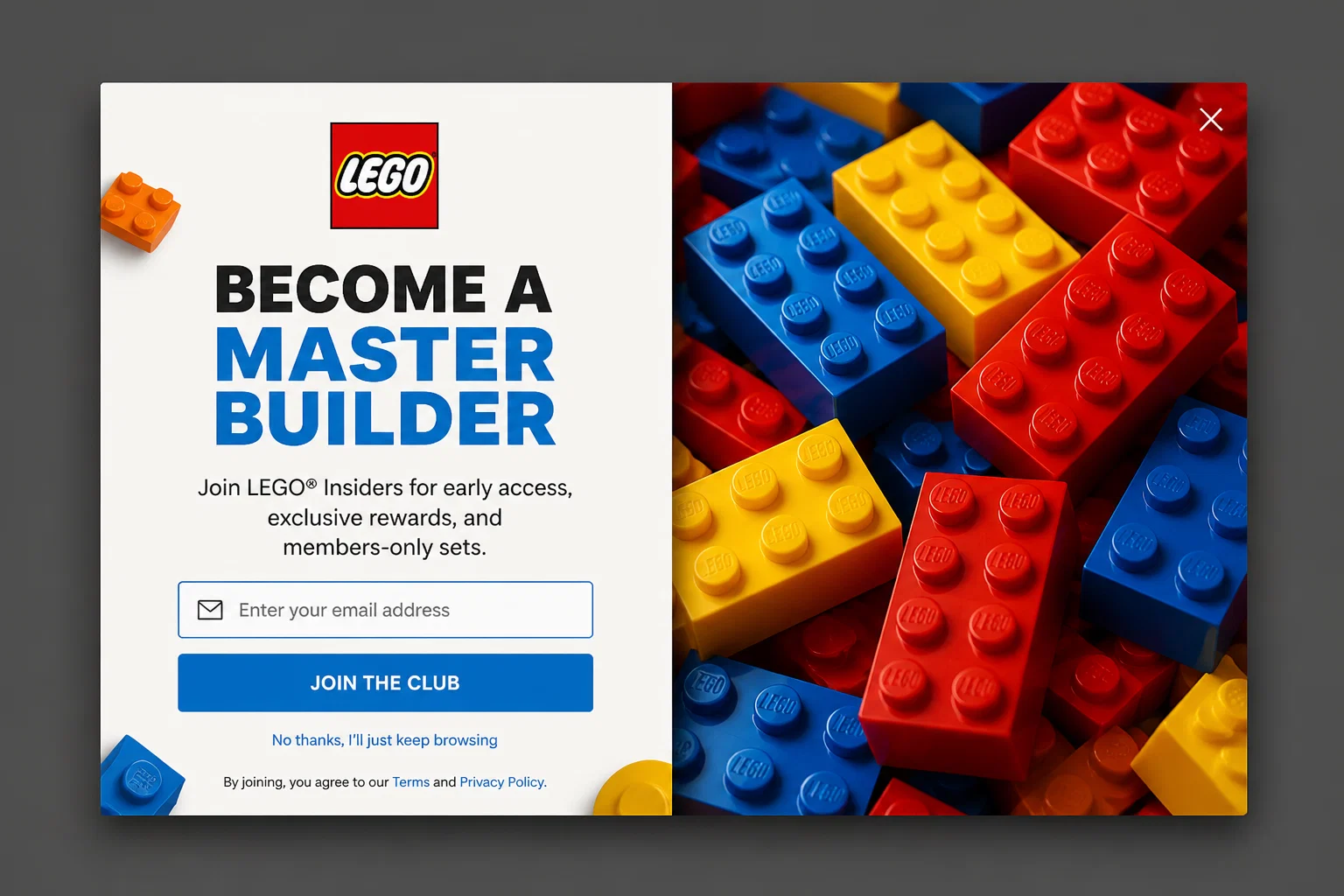
A club invitation instead of a discount: early access and members-only sets for an email. Hide it from existing Klaviyo profiles, send signups to a members list, and let Klaviyo's welcome flow take it from there. More welcome popups.
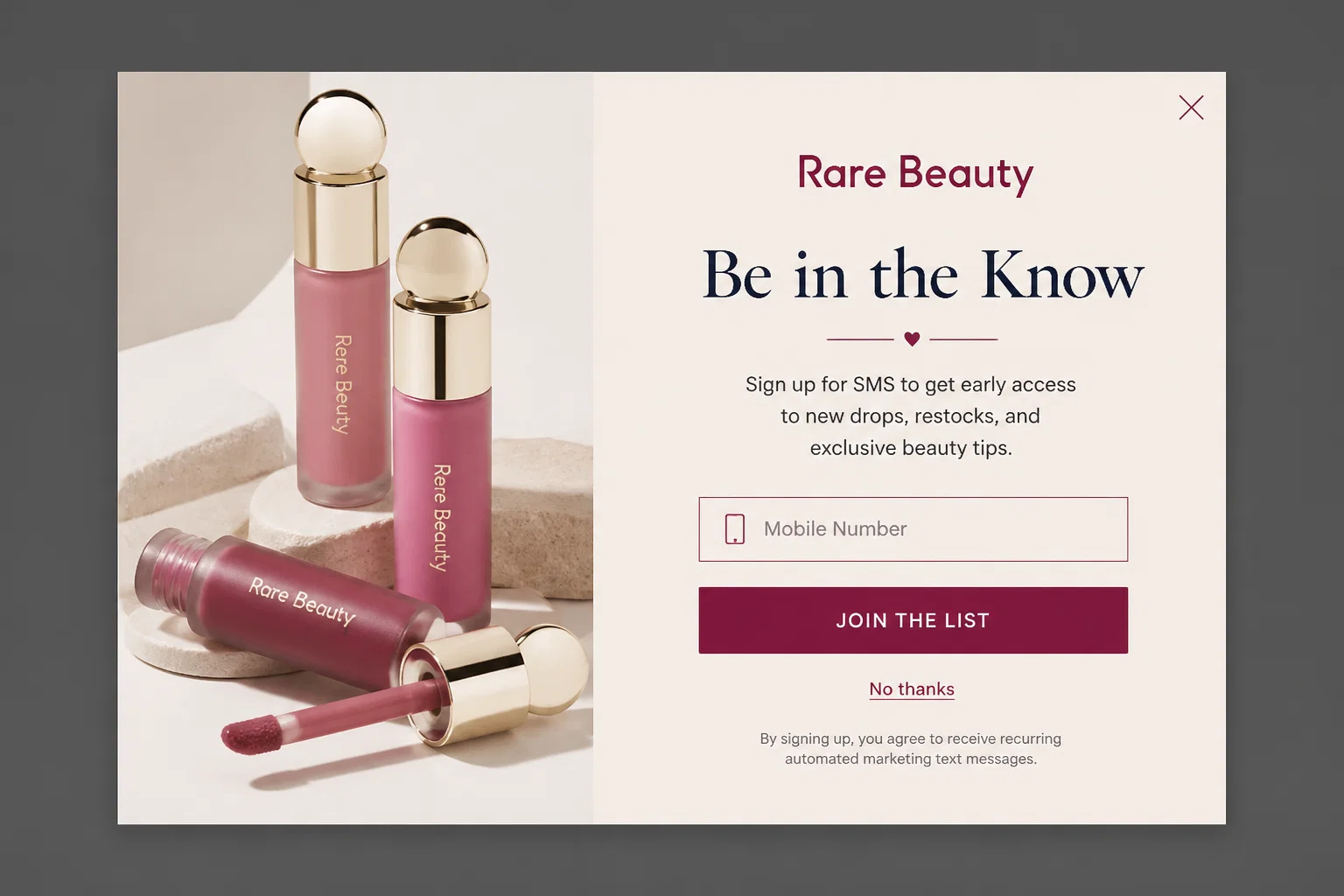
This one asks for a phone number. Show it to a Klaviyo segment of email subscribers who haven't joined SMS; the number joins their profile, and Klaviyo tracks SMS consent separately. More SMS popup examples.
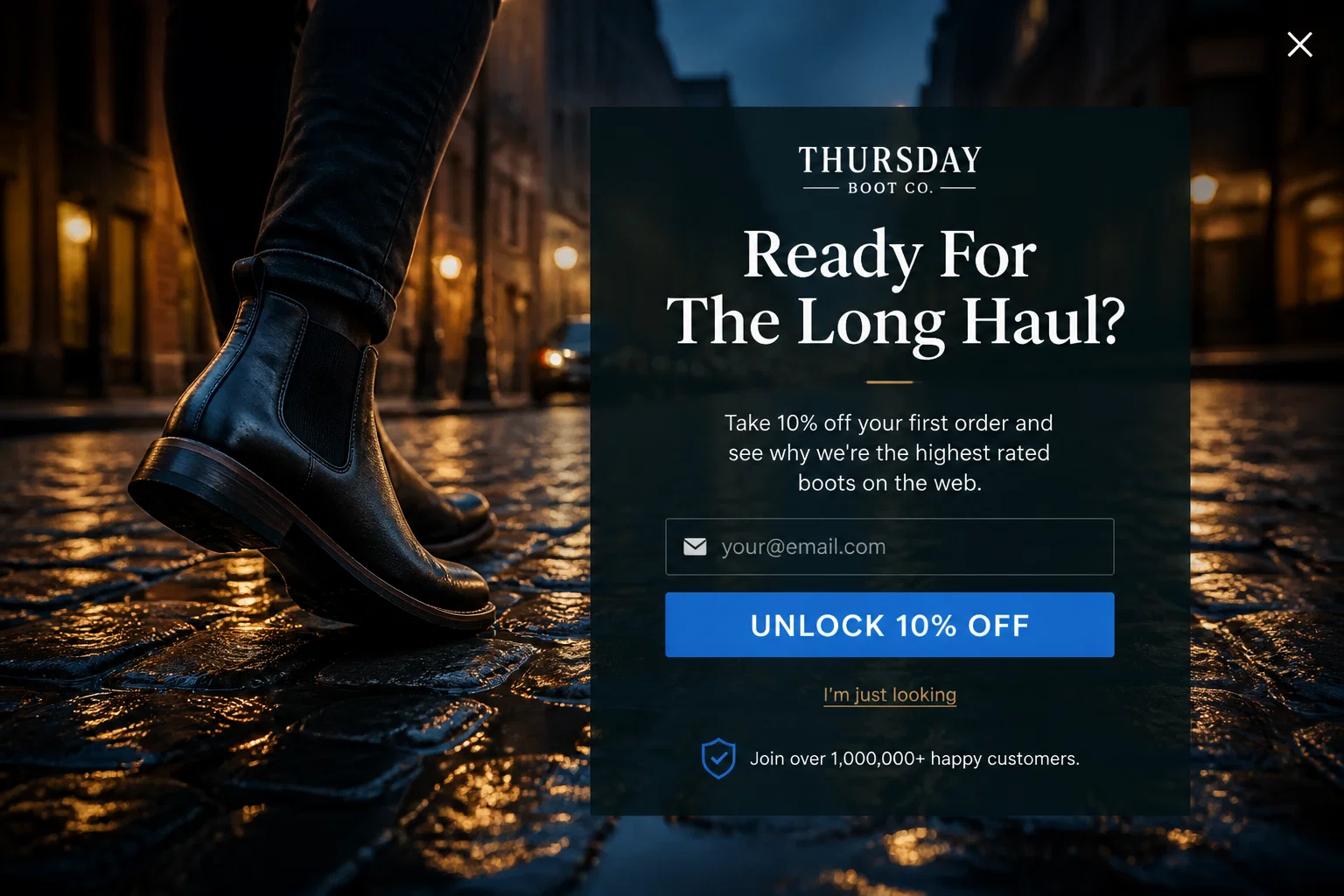
A fullscreen last offer, 10% off the first order, with a polite "I'm just looking" way out. Trigger it on exit intent, for non-subscribers only.
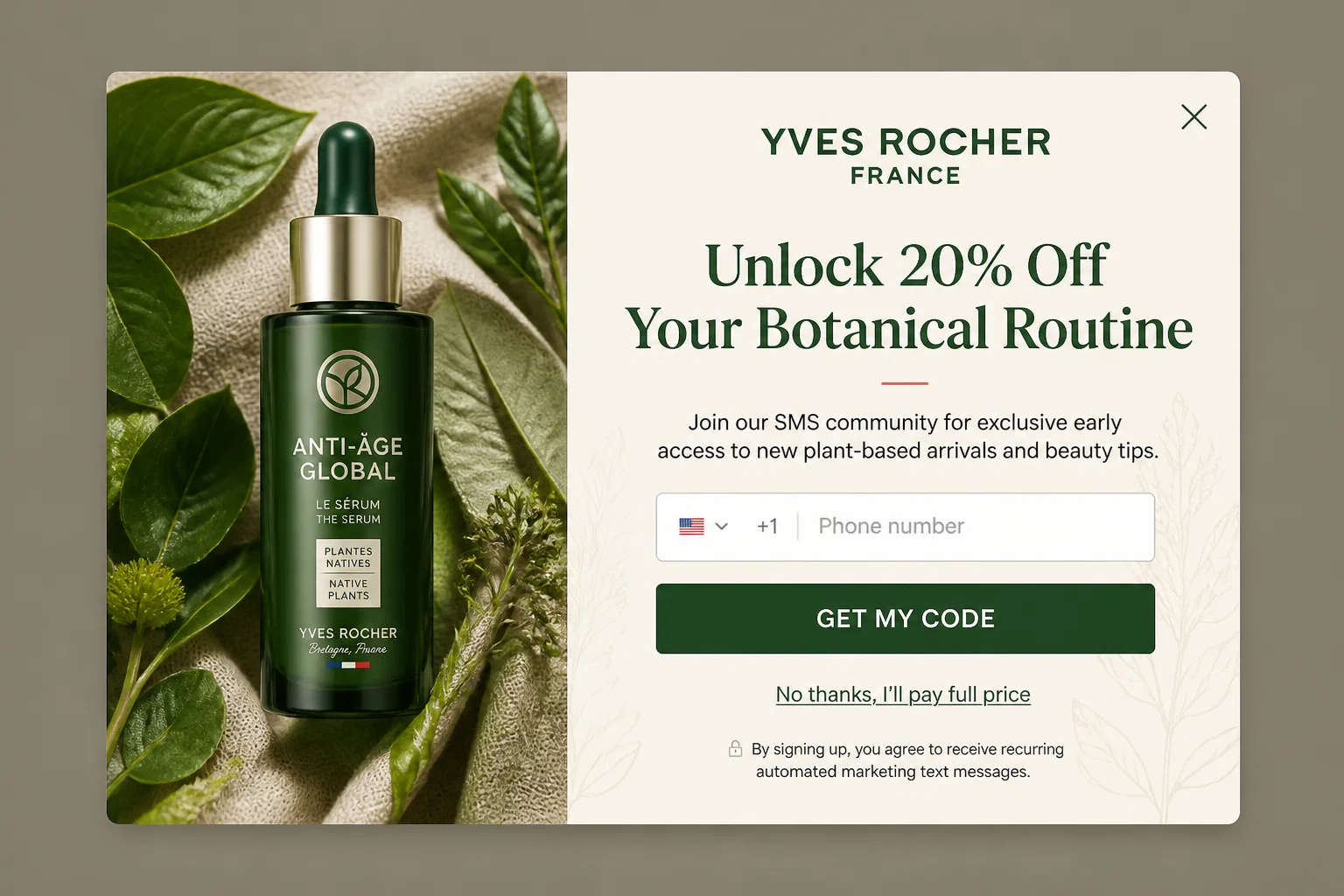
A phone-only popup with a reason to sign up: 20% off for joining the SMS list. Send the numbers to their own Klaviyo list and add a static field with the campaign name, so Klaviyo knows where these subscribers came from.
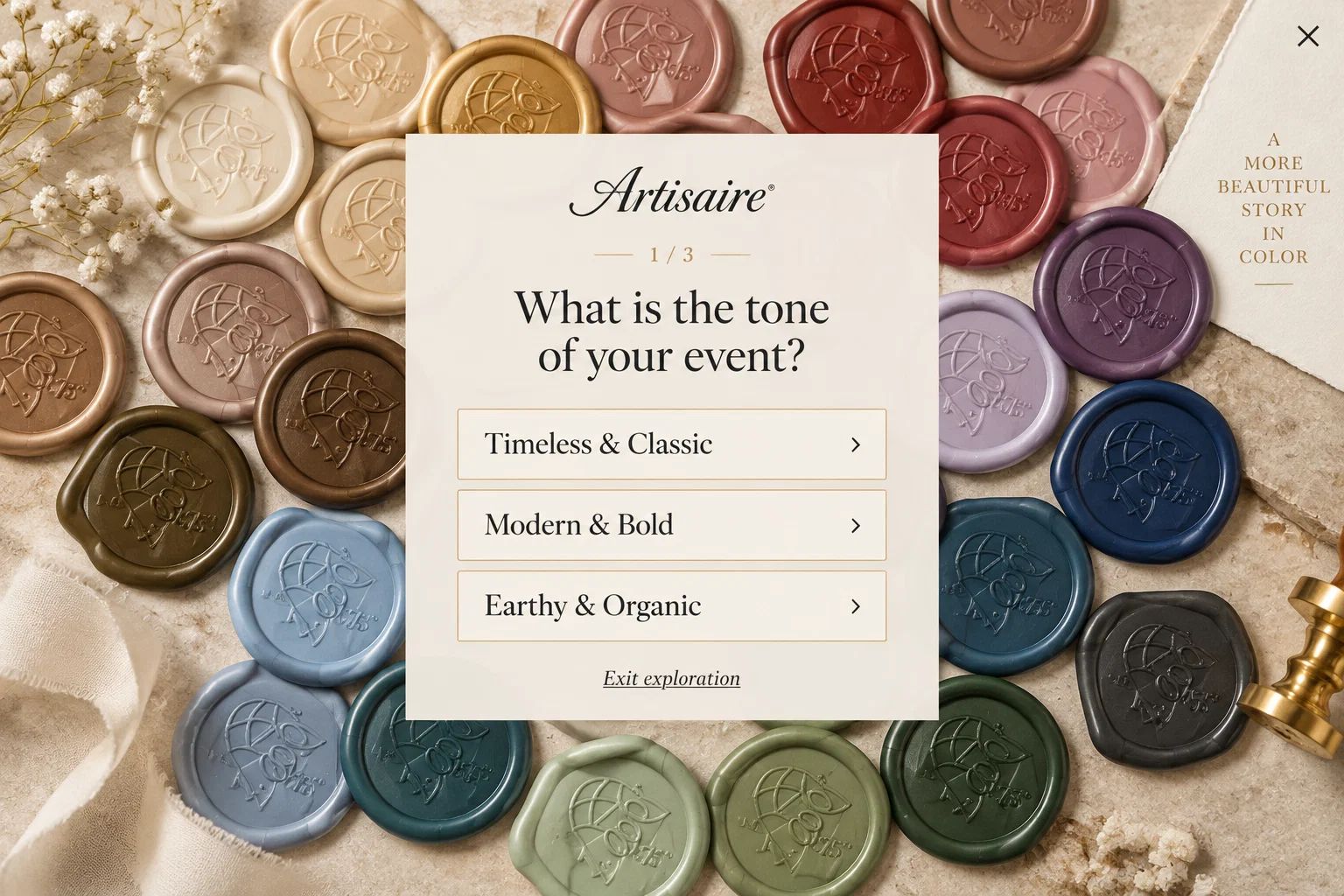
A three-step quiz that starts with the tone of the shopper's event. Add an email field on a later step and map the answer to a Klaviyo profile field, so Klaviyo can send classic, bold and earthy palettes to different segments.
Yes. Popup is one of Klaviyo's sign-up form types, next to flyout, full page, embed and banner, and web forms are part of Klaviyo's free plan. See Klaviyo's getting started guide.
Yes. In Klaviyo, set Timing to "When visitor is exiting the page". In OptiMonk, choose exit intent, which works on desktop and, through mobile triggers, on phones.
In Klaviyo, choose "Don't show to existing Klaviyo profiles" under Audience. In OptiMonk, use the Klaviyo lists and segments rule (setup guide). In both, a visitor who cleared cookies or switched devices counts as new, and on EU, EEA, UK and Swiss Shopify stores Klaviyo needs consent for some targeting.
No. The popup collects the subscriber; Klaviyo sends the emails and texts, from campaigns to an abandoned cart flow in Klaviyo.
Yes, if the flow is triggered by the list the popup sends to. Klaviyo itself recommends using the sign-up form's list as the welcome flow's trigger, and the integration adds every OptiMonk signup to the list you picked.
Yes. Your Klaviyo list's own opt-in setting decides whether new subscribers from the popup have to confirm their address; the integration has no separate switch for it. More on double opt-in.
Tell the agent who should see the popup, when, and which Klaviyo list each signup should join. Then review both versions and switch it on.
Free to start. No credit card.

What separates a modal, a popup and an overlay, how to make a modal accessible, and which one an online store should use when.

50 CTA button texts for online stores and popups, grouped by the shopper's moment, plus what makes a button worth clicking.
40 website welcome message examples for online stores, grouped by situation and industry, ready to copy into a welcome popup.