

14 Effective Thanksgiving Marketing Ideas to Boost Your Sales in 2026
Discover creative Thanksgiving marketing ideas to engage customers, build buzz, and drive sales before Black Friday and Cyber Monday.
Discover the top AI chatbots for Shopify in 2026. Compare features, benefits, and common mistakes to improve customer experience.
In short
Discover the top 7 AI chatbots for Shopify in 2026, designed to enhance customer experience and boost sales. These AI-driven tools provide real-time support, personalized recommendations, and seamless integration with Shopify, making them essential for ecommerce success. Explore features, use cases, and pricing to find the perfect AI chatbot for your store.
If you’re an ecommerce site owner looking for the best AI chatbot for Shopify, you’re not alone in this.

A quick Google search will reveal so many options; unfortunately, the majority of them are over-engineered, and you would have subscribed to them before you find out that they are often a mile wide and an inch deep.
Many tools look impressive at first but quickly become expensive and overly complex as your store grows.
You will have to contend with rising ad costs, shorter attention spans, and shoppers expecting instant answers. All these create a high-pressure environment for merchants; meanwhile, customers want instant support, and brands that fail to respond quickly risk losing sales.
That’s where the right AI chatbot for Shopify makes a measurable difference. They allow your store to provide real-time answers, recommend products based on shopper behavior, and proactively engage visitors, all without increasing your team’s workload.
When AI-driven intelligence is combined with automation, merchants can enhance product discovery, reduce cart abandonment, and deliver a more personalized shopping experience.
In this article, we’ll walk you through the 7 best AI chatbots for Shopify in the market today. Let’s dive in.
While traditional chatbots help automate basic customer interactions, Shopify AI chatbots go further by understanding intent, learning from data, and driving revenue-focused conversations. AI chatbots use natural language processing to understand context and answer complex questions, enabling them to manage more advanced and personalized interactions.
| Feature | Traditional chatbots | Shopify AI chatbots |
|---|---|---|
| How they work | Usually follow pre-set rules and conversation flows | Use AI to understand what customers mean and respond more naturally |
| What they can answer | Mainly handle questions they were prepared for | Can handle prepared questions and many new or more complex ones |
| Personalization | Usually gives the same or limited variations of answers | Can adjust answers and product suggestions based on customer behavior and data |
| Main purpose | Often used for basic customer assistance and FAQs | Often used for support, product recommendations, and sales assistance |
| Do they improve over time? | Usually need manual updates to improve | Can improve using data, training, and conversation history |
| How they engage customers | Usually wait for customers to start the chat | Can respond to customers and may also trigger chats based on behavior |
| Business impact | Helps reduce support workload and improve response speed | Helps support customers and is often used to improve conversions and revenue |
If your goal is conversion rate optimization, not just answering FAQs, integrating AI into your workflows is essential.
With 80% of customer interactions in retail expected to be handled by conversational AI by the end of 2025, AI chatbots have become widely adopted to improve support efficiency and engagement.
When selecting the best AI chatbot, easy setup is crucial—most apps can be installed in under 10 minutes, making them ideal for small teams or solo operators. Additionally, you can customize the chatbot's personality and business rules to match your brand's tone and operational guidelines.
Unfortunately, some of these chatbots can best be described as software bloat that overpromised but underdelivered. For this roundup, we are focusing on the best AI chatbots with features that are proven to work for Shopify stores.
The most effective AI chatbot for Shopify balances automation with seamless human intervention when situations require a personal touch.
Here are seven of the most effective tools in 2026, highlighting what they do best, practical use cases, why merchants love them, and their pricing. All of these AI chatbots are available on the Shopify App Store, making it easy for store owners to find, install, and benefit from these solutions.

If you’re looking for one of the best AI chatbots specifically tailored for Shopify stores, Zipchat is designed for merchants who want real-time, on-site customer conversations. Its chat widget is embedded directly on your store’s website, enabling seamless, real-time interactions with customers. Its AI answers FAQs, delivers personalized product recommendations, and proactively engages shoppers on key pages like product detail pages (PDPs) and checkout.
A Shopify fashion store uses Zipchat to greet first-time visitors, recommend items based on browsing behavior, and capture email leads during the shopping session. The AI can suggest upsells or related products before the visitor leaves the page, turning casual browsers into buyers.


Pricing starts at $49/month with a 30-day money-back guarantee. Zipchat offers a basic plan designed for small businesses or solo operators, which includes essential chatbot features.

Tidio combines live chat and AI automation, making it a popular Shopify AI chatbot for growing brands. It features the Lyro AI agent, which acts as a support bot to handle routine customer inquiries and automate support workflows. Tidio balances automated responses with human support and integrates quickly with Shopify stores.
A home goods Shopify store sets up Tidio to answer repeat questions automatically while allowing live agents to handle custom order requests. Customers get instant responses, freeing staff to focus on higher-value interactions.
Pricing starts from $24.17/month. Tidio also offers a pro plan, which provides advanced features such as higher usage limits, enhanced AI capabilities, and additional integrations.

Oscar Chat is built for Shopify merchants who want to combine support and sales in a single tool instead of stitching together separate apps. It brings AI chat, live chat, popups, lead forms, and communication buttons into one widget, helping stores support customers faster while turning more site visitors into leads and sales.
A Shopify pet supplies store uses Oscar Chat to let the AI bot handle order-tracking and product questions automatically, while custom bulk-order requests get passed straight to a live agent. At the same time, a popup offers a discount to visitors who show buying intent but haven't checked out yet.
Pricing starts with a free Lite plan. Paid plans begin at $39/month (Basic), with a 7-day free trial of the Pro plan for every new account.
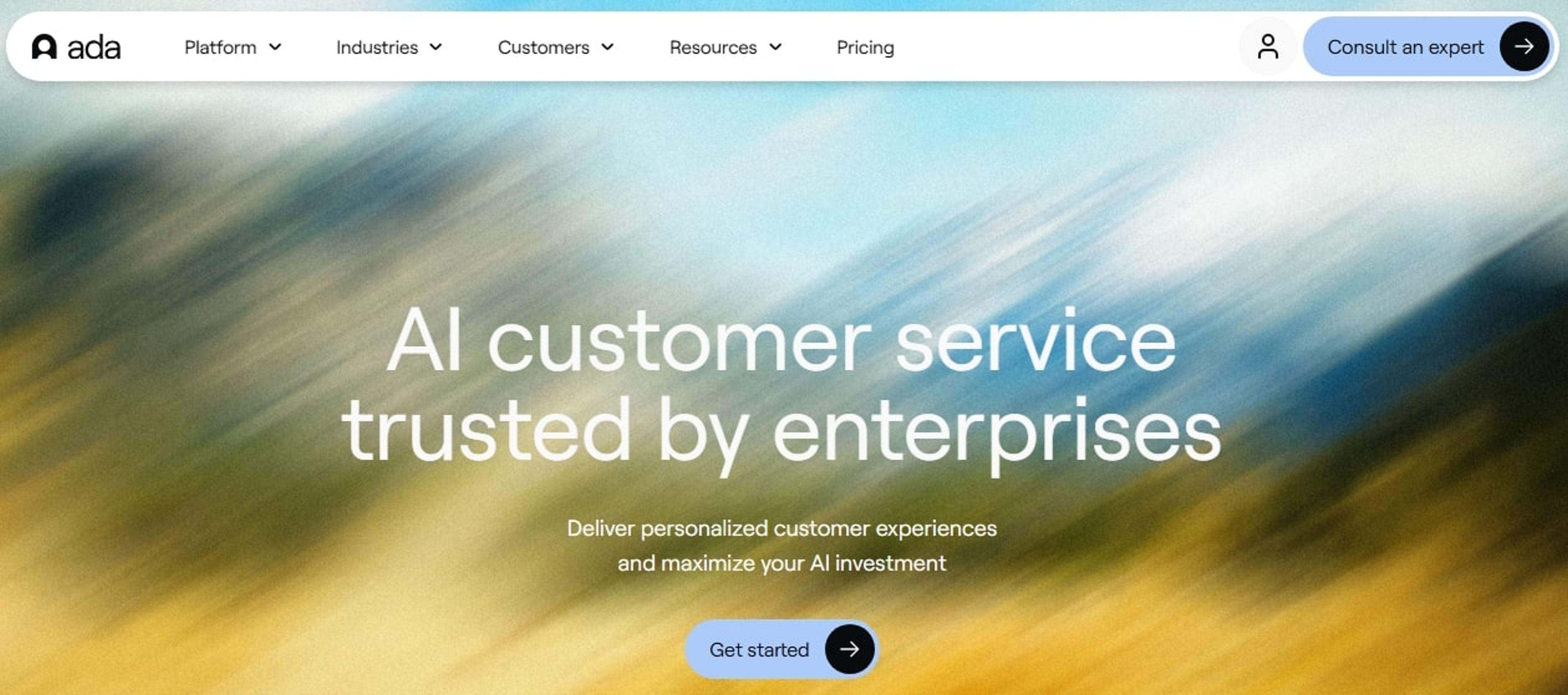
Ada is an AI-first chatbot built for enterprise-level Shopify stores that need advanced automation and multi-channel support. Operating as a single AI agent across multiple channels, Ada provides consistent support and helps scale support while maintaining personalized conversations.
A Shopify fashion retailer with international customers uses Ada to handle customer questions in multiple languages. The bot automatically provides order updates, product recommendations, and policy answers, reducing reliance on human agents.
Custom/quote-based pricing.
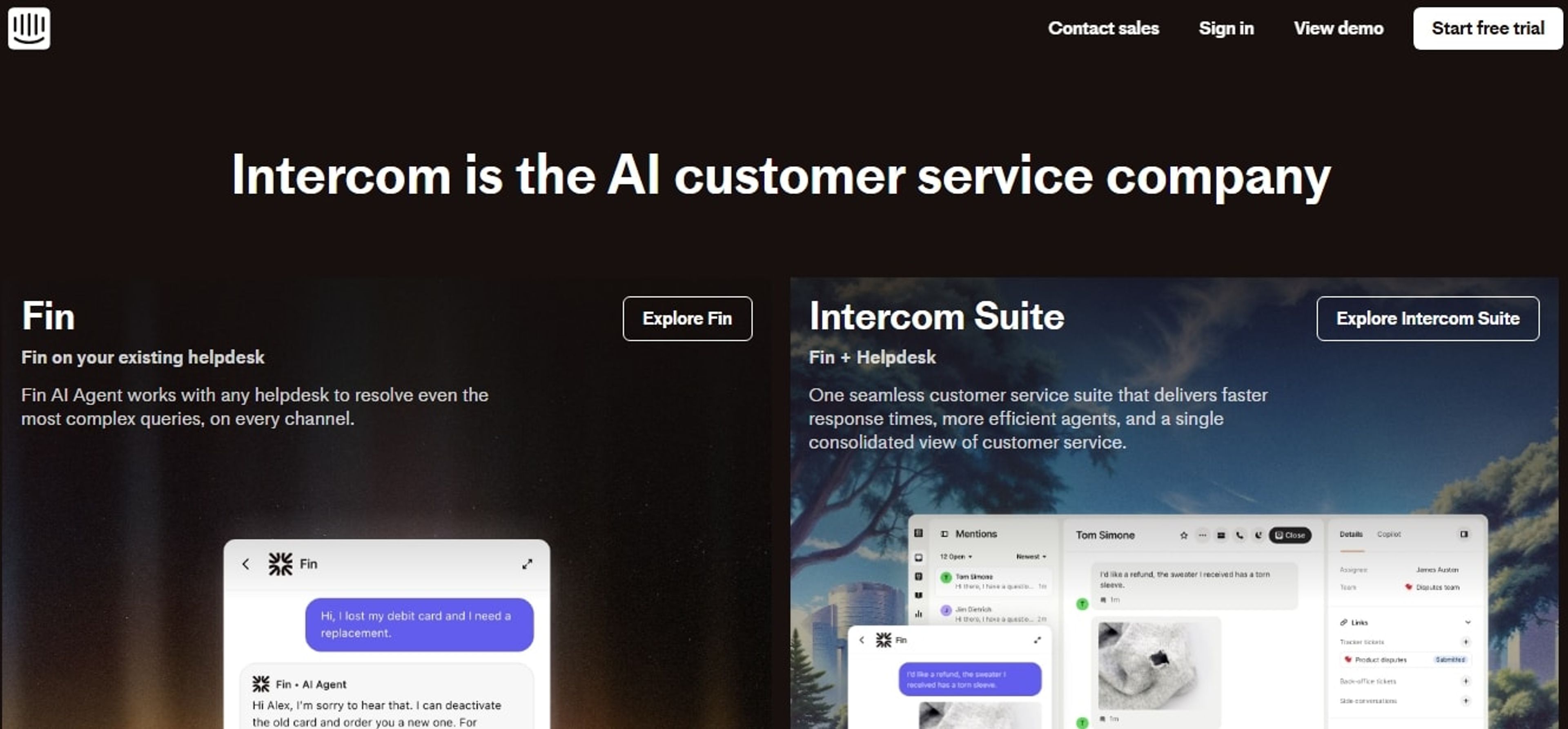
Intercom focuses on customer engagement and success, blending live chat with AI-powered responses. Its AI is strong at nurturing leads and qualifying them before passing them to human agents, and it includes sales automation features to nurture leads and drive conversions.
A Shopify cosmetics store uses Intercom to ask visitors about their skin type and recommend products accordingly. The AI captures leads and follows up with targeted email campaigns while escalating tricky queries to human agents.
Custom/quote-based pricing.

ZenoChat, powered by TextCortex, helps Shopify stores combine AI conversation with content suggestions, leveraging the store's product catalog to provide accurate product recommendations.
A Shopify furniture store uses ZenoChat to help visitors navigate different styles and room layouts. The bot provides interactive prompts and suggests products aligned with the shopper’s taste.
A free plan is available, and premium pricing starts at $23.99/month.
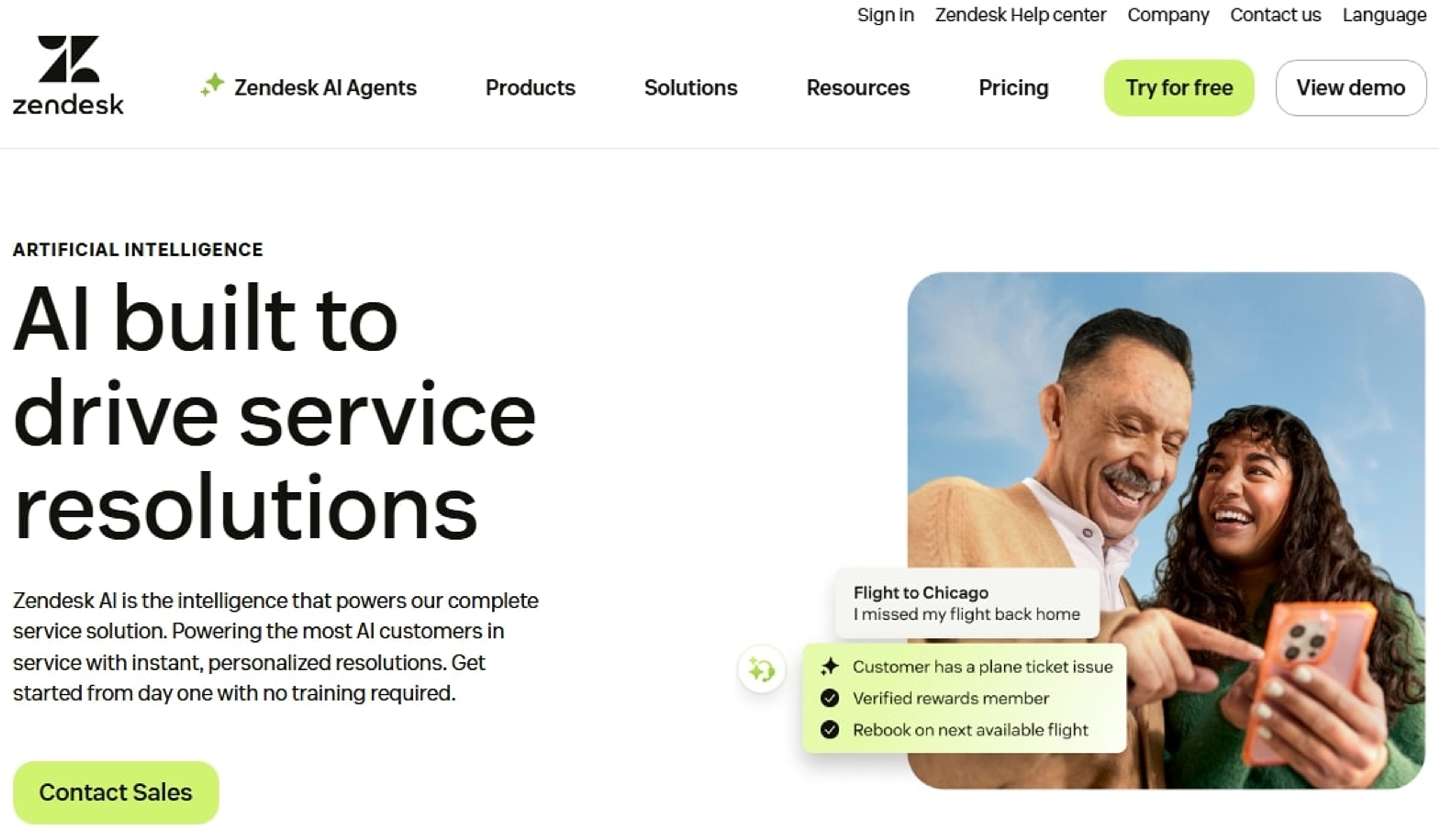
Zendesk combines AI chat with its robust support ticketing system, helping Shopify merchants provide seamless customer service across multiple channels. It integrates seamlessly with existing helpdesk systems, ensuring smooth transitions for complex queries and allowing support teams to handle escalations without switching platforms.
A Shopify electronics store uses Zendesk to automatically answer shipping questions and escalate warranty claims to agents. The AI ensures customers receive immediate guidance while maintaining a full support history.
Pricing starts from $19/month.
Choosing the right AI-powered chatbot depends on your store’s goals, audience, and size. Not every chatbot fits every Shopify store. For example, small ecommerce stores with limited order volumes or small teams may benefit from cost-effective, automated support solutions, while medium Shopify stores (typically handling 100-5,000 monthly orders) often require automation tools like live chat and AI agents to manage higher support volumes. The key is to choose one that matches how you sell products, support customers, and improve customer satisfaction over time.
It’s important to ensure that your AI chatbot integrates smoothly with existing helpdesk systems to provide a seamless transition for complex queries. Additionally, budget considerations are crucial when selecting an AI chatbot, as some options may have hidden costs based on usage or features.
A good chatbot can also help increase average purchase value by offering helpful product suggestions and timely support.
Here's what to keep in mind:
Hybrid bots like Intercom and Zipchat provide automated answers while escalating complex queries to humans.
Pick a bot that offers seamless Shopify integration with other apps in your tech stack, like email, CRM, or loyalty tools.
Look for product recommendations, lead capture, multilingual support, and real-time engagement triggers.
Pro tip: Start small with high-impact workflows like cart abandonment or product discovery, then scale as performance improves.
To make comparison easier, here’s a quick side-by-side overview:
| Tool | Best For | Skill Level | Primary Use Case | Pricing (Starting) | Free Plan/ Trial | User Ratings |
|---|---|---|---|---|---|---|
| Zipchat | Ecommerce conversions + upsell | Mid | Chat-based selling & support | ~$49/mo | Free Trial Available | ⭐ 4.8+ |
| Tidio | Small–mid Shopify stores | Beginner | Live chat + AI chatbot automation & support | Free tier; paid from ~$29/mo | Free forever plan + free trial on paid plans | ⭐ 4.7+ |
| Oscar Chat | Ecommerce & SMB engagement | Beginner–Mid | AI chat + live chat + popups in one widget | Free plan available; paid from $39/mo | Free plan available | Not yet rated |
| Ada | Enterprise support | Advanced | AI automation for complex workflows | Custom / quote-based | Demo / trial usually offered | ⭐ 3.5–4.0 |
| Intercom | Growth-focused teams | Mid–Advanced | Customer engagement & support | Starts ~$29/mo+ with seat/usage-based pricing | Free trial / demo | ⭐ 4.0+ |
| ZenoChat | Simple AI chat use | Beginner | Simple AI chat & shopping guide | ~$15/mo | Free plan (limited) | ⭐ 4.3+ |
| Zendesk | Enterprise support hubs | Mid–Advanced | Tickets & AI assist | Pricing typically ~$19+/agent/mo | Free plan (limited) | ⭐ 4.2+ |
If you’re researching a Shopify AI chatbot comparison 2026, focus on matching features to business goals — not just pricing.
Many online stores rush to deploy AI chatbots without a clear strategy, which can quietly undermine performance.
Let’s break down the most common mistakes and how to steer clear of them.
Pro tip: Begin with a small workflow, test, analyze, and expand gradually.
AI chatbots are no longer optional. They’ve become essential for Shopify stores seeking faster and personalized support, higher conversions, and better engagement. From Zipchat’s proactive product recommendations to Zendesk’s enterprise support, these tools allow brands to automate repetitive tasks while maintaining a human touch.
The key is selecting the right bot for your online store, automating high-impact workflows first, and continuously refining based on performance data. Chatbots aren’t meant to replace humans; rather, they’re designed to work smarter, letting your team focus on complex or high-value tasks while customers receive immediate help.
With careful setup, AI chatbots can reduce cart abandonment, enhance product discovery, and guide shoppers to conversion, all while collecting valuable insights for your marketing strategy.

No. AI chatbots handle repetitive tasks like FAQs, lead capture, and product recommendations. The service team handles complex inquiries or sensitive issues that the AI chatbot cannot resolve.
Yes. Bots like Zipchat and Tidio guide shoppers to the right products, provide accurate responses, reduce abandoned carts, and provide timely engagement that encourages conversions.
Track metrics such as chat-to-sale conversion, resolution time, engagement rate, and lead capture. Continuous monitoring helps refine workflows for better results.
An AI chatbot helps stores respond to customers instantly, 24/7, while increasing conversions and improving personalization. Merchants that implement the best AI chatbot solutions often see higher sales, lower support costs, and a smoother shopping experience because automated customer support handles repetitive questions and guides visitors toward confident purchase decisions.
Free AI chatbots for Shopify work well for basic tasks like automated replies and simple live chat. However, paid tools offer advanced features such as AI-powered product recommendations, cart recovery, and detailed analytics. For businesses aiming for serious revenue growth, it’s important to have a business plan for implementing AI chatbots to ensure strategic integration with your operations. The best AI chatbot is typically a paid solution, as it offers the advanced features and scalability needed to drive measurable results..
Most modern AI chatbots load asynchronously, so they don’t block your store’s main content. Reputable Shopify chatbot apps are optimized for performance and usually have minimal impact on page speed.
Akinwale Ojo is the Content Strategist at Zipchat, where he develops and executes data-driven content strategies that elevate brand positioning and strengthen SEO performance. With over six years of experience in technical content writing and copywriting, Akinwale specializes in helping B2B, B2C, and SaaS and technology-driven businesses grow through strategically crafted content. His work focuses on improving organic search performance, turning complex product insights into compelling narratives. He creates high-impact, search-optimized articles, product narratives, and comparison content that improve SERP visibility, support lead-generation initiatives, and consistently generate top-ranking blog posts.

Discover creative Thanksgiving marketing ideas to engage customers, build buzz, and drive sales before Black Friday and Cyber Monday.
Learn 5 ways ecommerce brands can turn new subscribers into recurring revenue using welcome flows, personalization, loyalty programs, re-engagement, and referrals.
In this article, we’ve compiled a list of the 25 top ecommerce apps that will help you streamline your operations, boost sales, and grow your online business.