





Tarte Cosmetics Marketing Breakdown: How a 25-Year-Old Beauty Brand Keeps Making Products Feel Viral
How Tarte turns founder storytelling, creator trips, TikTok virality, and smart on-site funnels into a repeatable beauty marketing growth engine.
Discover how Halfdays blended mission, community, and smart merchandising to boost conversions and build a loyal women’s outdoor apparel audience.
In short
Halfdays revolutionized women's outdoor apparel by adopting a community-first marketing strategy, achieving exponential growth and an 86% revenue increase. By focusing on empowering women, building authentic communities, and optimizing conversion, they transformed the market with stylish, high-performance gear. Their strategic omnichannel DTC marketing approach and lifestyle-driven campaigns have solidified their brand as a leader in women's outdoor apparel.
In just five years, Halfdays has grown from a startup addressing a gap in women's ski wear to an eight-figure revenue brand with a fiercely loyal community.
The numbers tell a remarkable story: after their first ski season, the waitlist for Halfdays' ski pants reached 10,000 people. The brand grew 10x from their first to second season, and between 2023 and 2024, achieved an impressive 86% year-over-year revenue increase with triple-digit growth in wholesale channels.
Founded by Ariana Ferwerda and Olympic freestyle skier Kiley McKinnon, Halfdays positioned itself between technical outdoor brands that ignored women's needs and luxury fashion labels with $4,000 price tags.
But what makes the brand truly exceptional isn't just their product; it's Halfdays’s marketing strategy, conversion optimization approach, and the way they’ve leveraged untapped SEO potential, turning first-time buyers into brand evangelists.
Let’s break it down!
Everything Halfdays does ladders up to their mission: "Bringing more women to the outdoors by making it more approachable and more fun."
With this guiding principle, Halfdays has set out to disrupt the traditional outdoor apparel market by creating a space where women’s needs, desires, and experiences are at the center.
In a male-dominated industry, Halfdays not only offers high-performance gear but also ensures that women no longer have to choose between functionality and style.
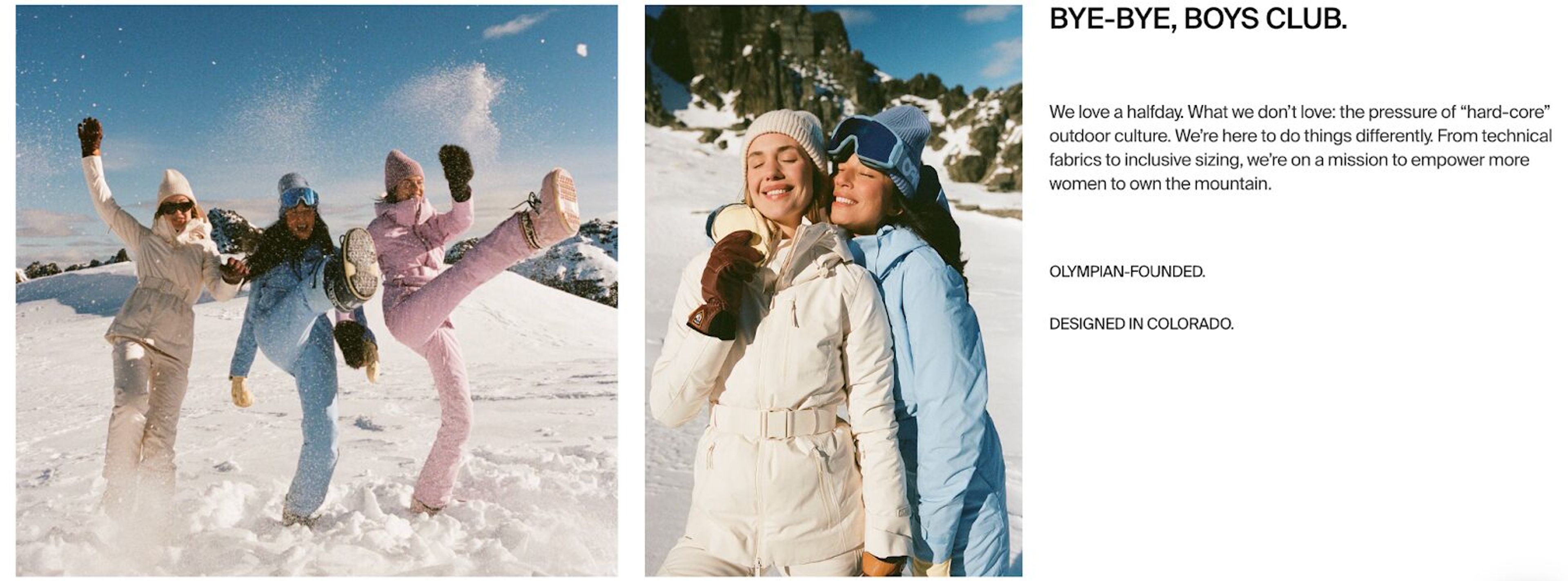
They’ve built a brand that empowers women to feel confident in their outdoor adventures, blending sleek designs with the technical performance needed for the most demanding runs.
By intentionally avoiding technical jargon and offering inclusive sizing, Halfdays directly addresses the real barriers women face in outdoor sports.
The brand breaks away from the "hardcore" outdoor culture that often alienates women and instead creates a more welcoming, approachable, and fun experience for all.
Halfdays doesn’t just design for women; they design with them, leveraging the expertise of founder and Olympic skier Kiley McKinnon to ensure that every product is tailored to fit both the unique needs of women and their sense of style.
Rejecting the outdated “shrink-and-pink” approach, Halfdays delivers products that perform as beautifully as they look.
Halfdays’s brand strategy is built for women who want more than just a token product for their gender. They target females who want gear that supports their performance while also making them feel stylish and confident, both on and off the mountain.
Halfdays' marketing strategy breaks away from traditional direct-to-consumer models in several crucial ways. The brand has successfully built its growth engine around authentic community engagement and strategic omnichannel expansion.
At the core of Halfdays' success is a community-driven approach that fosters genuine, long-lasting relationships with customers.
The brand does a number of things right, including:
Together, these community-building efforts reflect Halfdays’ social media strategy and influencer partnerships philosophy: prioritizing authenticity and genuine connection over follower counts
This community-first ethos is central to the brand’s mission. Through research, Halfdays identified a key barrier for women in the outdoor space: the intimidating gear, culture, and jargon that historically excluded them from fully engaging.
Halfdays has dismantled this barrier by creating a welcoming, inclusive space for women who want to enjoy outdoor adventures without feeling out of place.
The brand’s user-generated content strategy—leveraging authentic content over mega-influencer partnerships—has cultivated genuine belonging, resulting in remarkable repeat-purchase behavior. Customers eagerly return each season to buy the latest Halfdays colors, creating a sense of excitement around new drops.
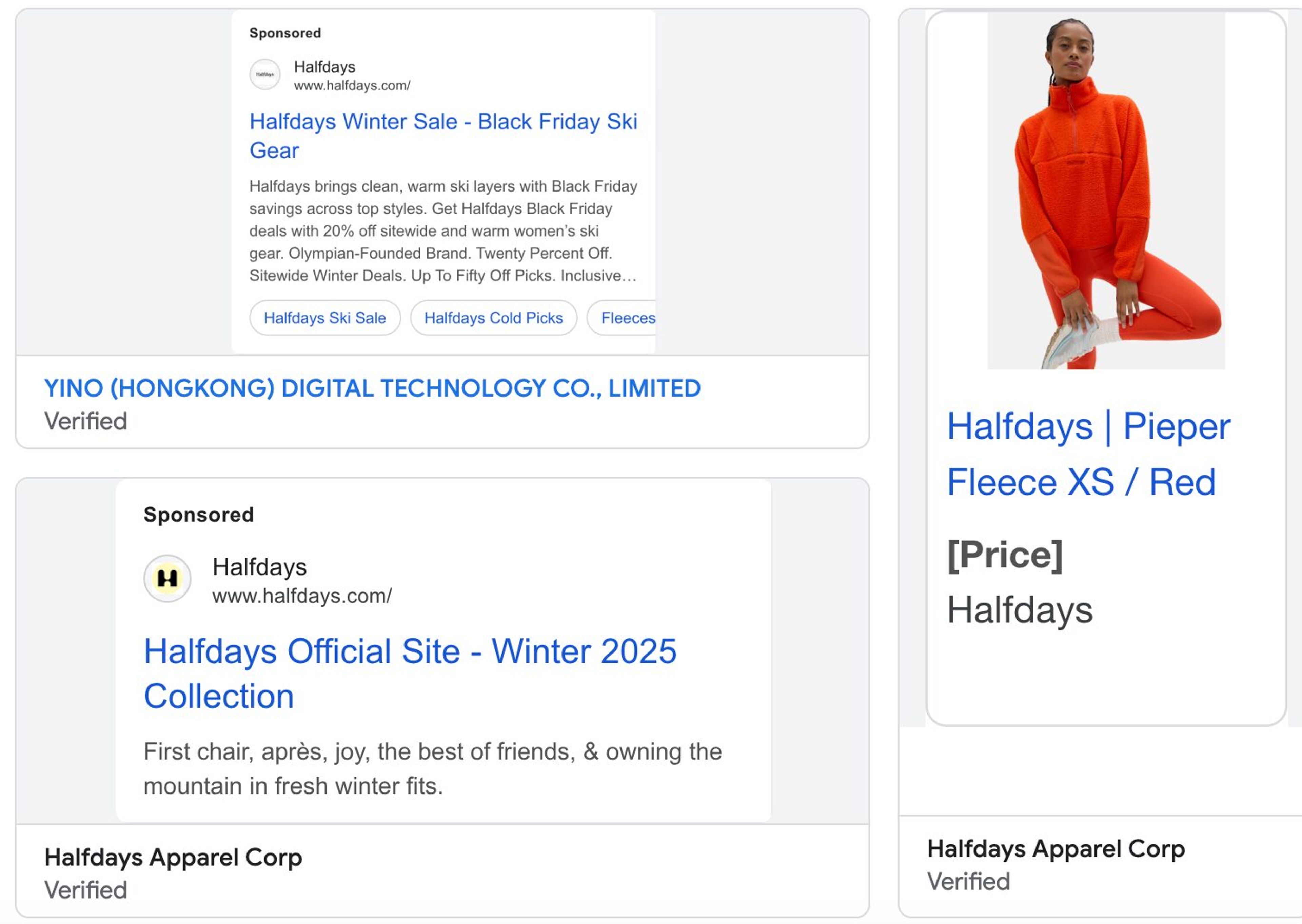
Halfdays' paid ads focus on connecting with women through lifestyle-driven, inclusive messaging.
They use engaging CTAs like “Your girls trip is calling. Forget the rest” to create excitement and align with their mission of making outdoor sports fun and approachable.
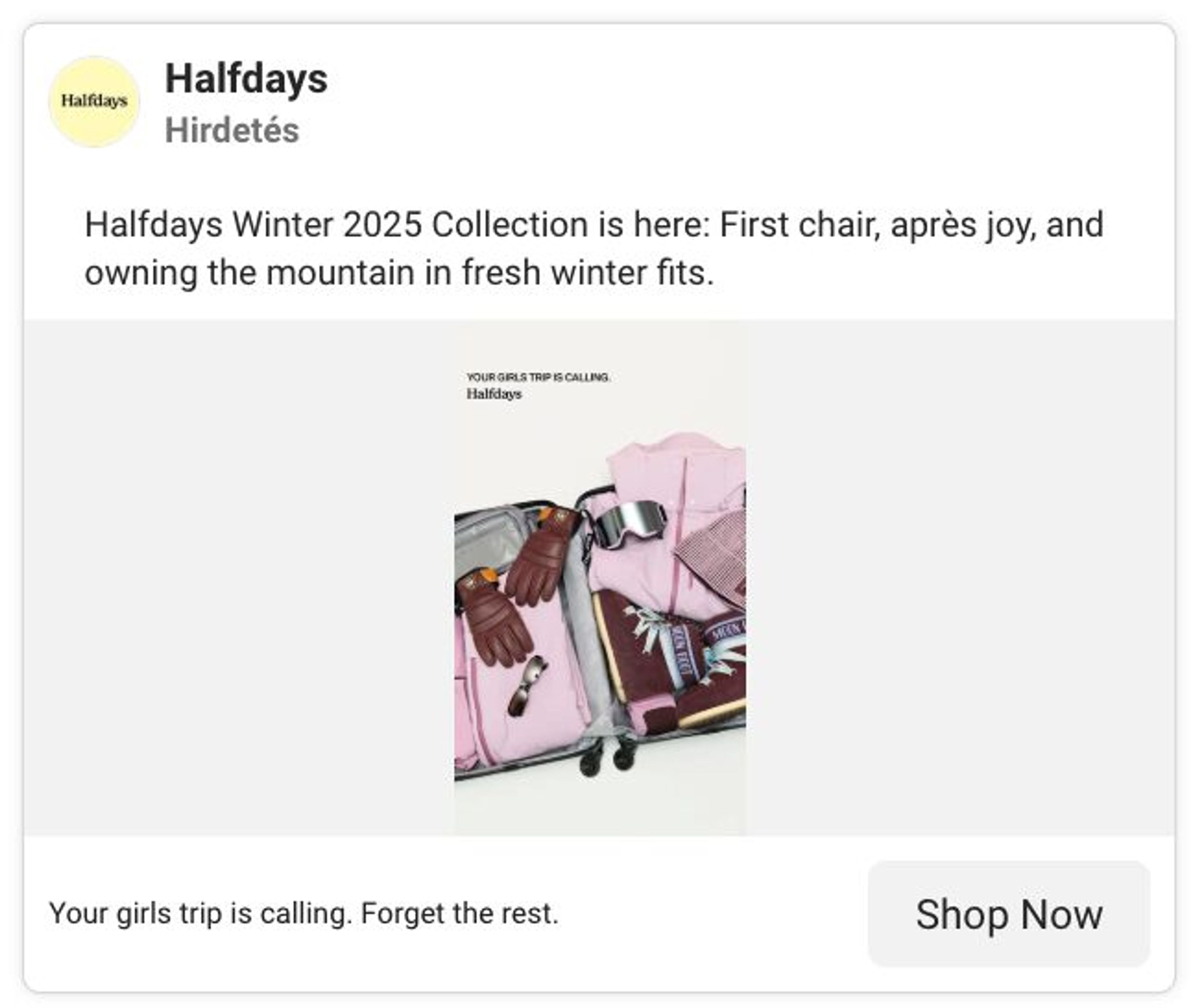
The visuals highlight both performance and style, showing products in real-world, aspirational settings. By positioning their gear as part of an inclusive outdoor lifestyle, Halfdays encourages women to feel confident and empowered. This lifestyle brand marketing approach makes Halfdays feel less like an apparel company and more like a movement.
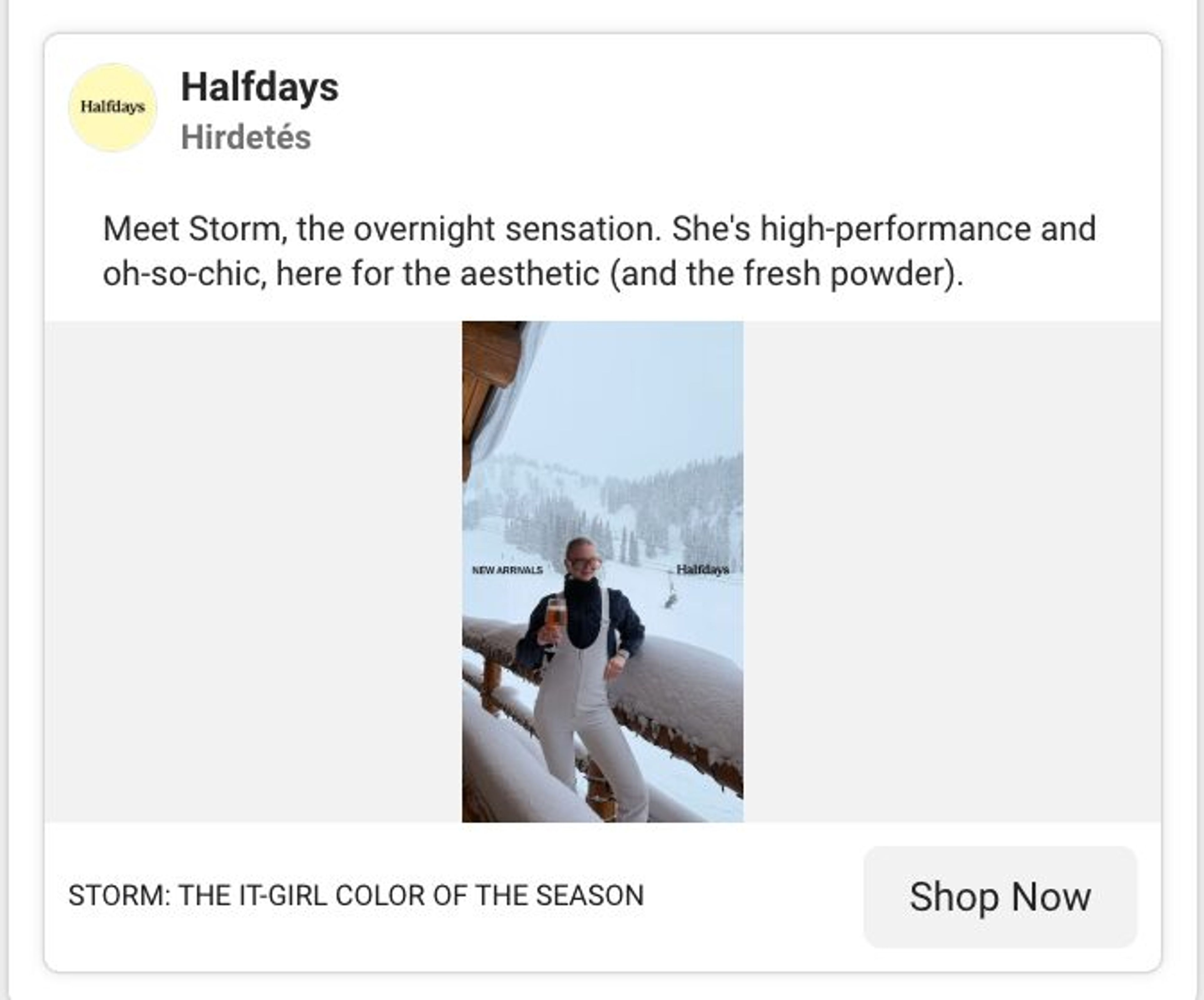
Seasonal promotions like Winter 2025 Collection and playful messaging such as “Meet Storm, the overnight sensation” build excitement while creating urgency around sales.
Halfdays’ paid ads strategy includes a strong focus on Google Ads, where they target specific keywords related to women’s outdoor apparel, skiing gear, and seasonal promotions.
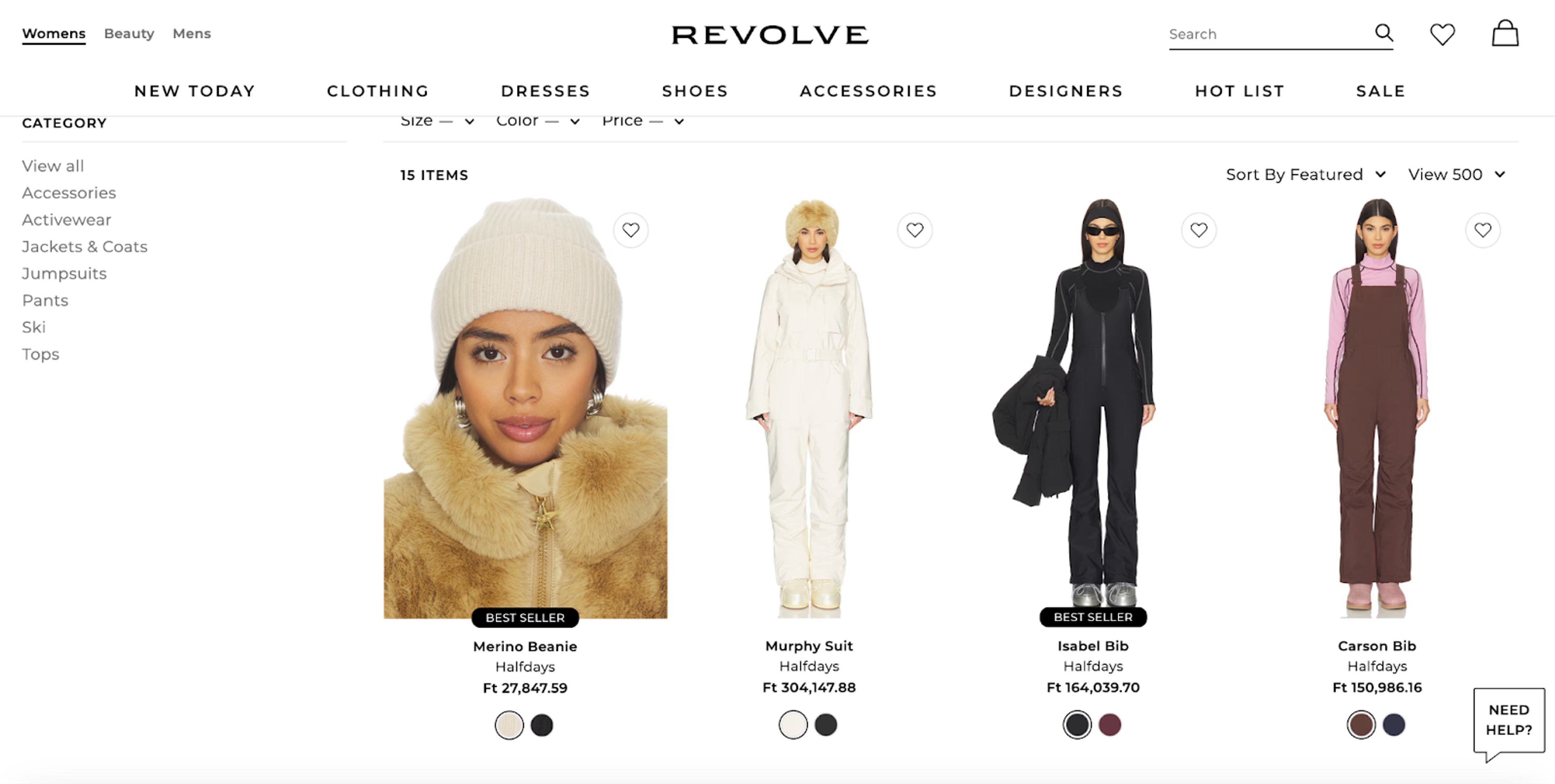
Halfdays continues to evolve its DTC marketing strategy, but they’ve expanded strategically into wholesale partnerships to enhance brand visibility.
Products are now available at key retailers like:
This thoughtful mix of partnerships aligns with their hybrid positioning of combining performance with style.
Their physical retail strategy further amplifies this expansion. The flagship Denver store, located near iconic slopes, is more than just a sales channel—it’s an experiential space.
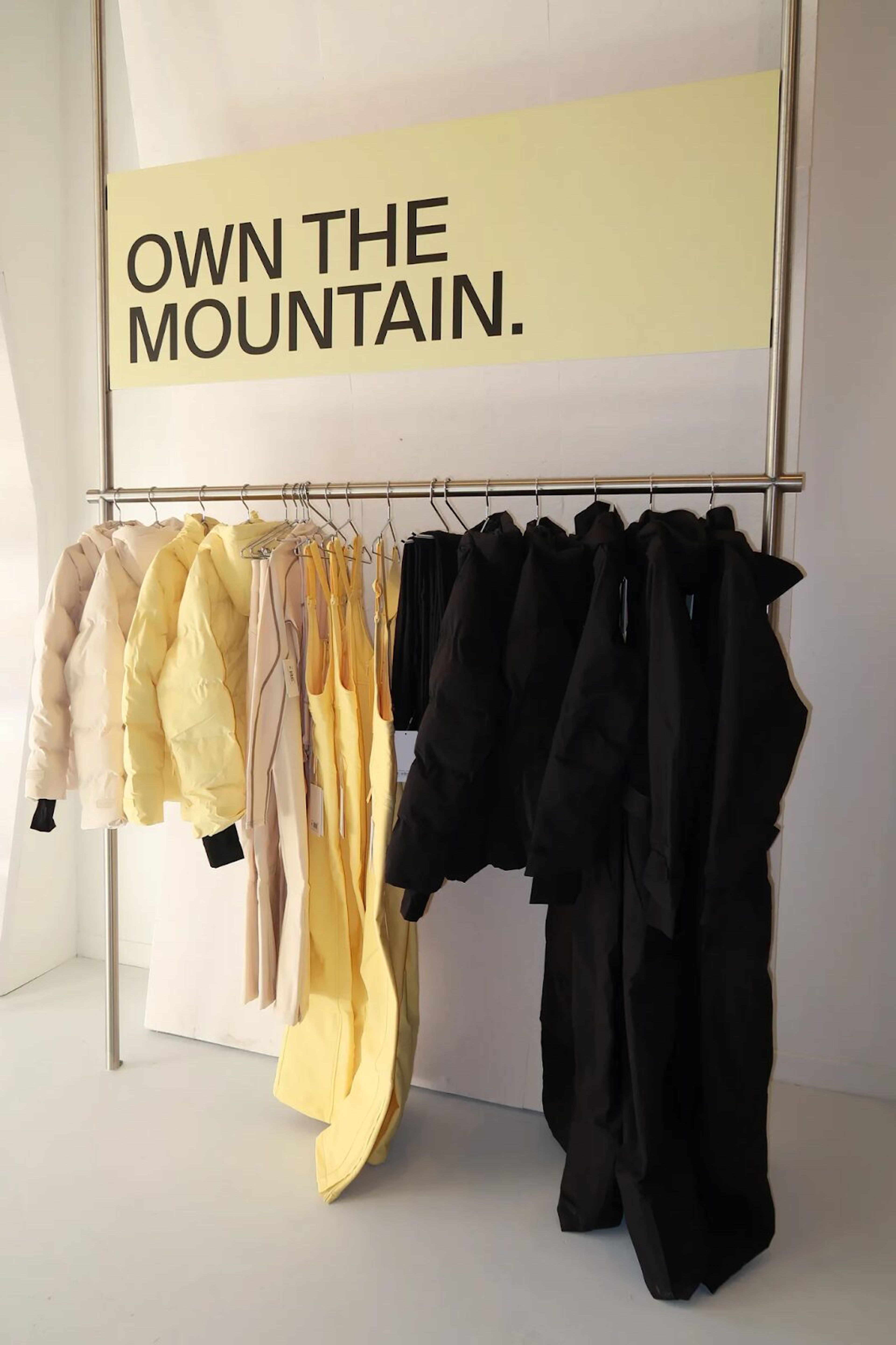
Positioned in a vibrant outdoor community, it lets customers engage with the brand in person while reinforcing Halfdays’ mountain heritage.
The bright yellow storefront stands out from traditional outdoor brands, clearly reflecting their "bye-bye, boys club" ethos and making a bold statement in a space that’s often male-dominated.
The Halfdays homepage is a strong example of how to balance brand storytelling, merchandising, and conversion optimization without overwhelming the user.
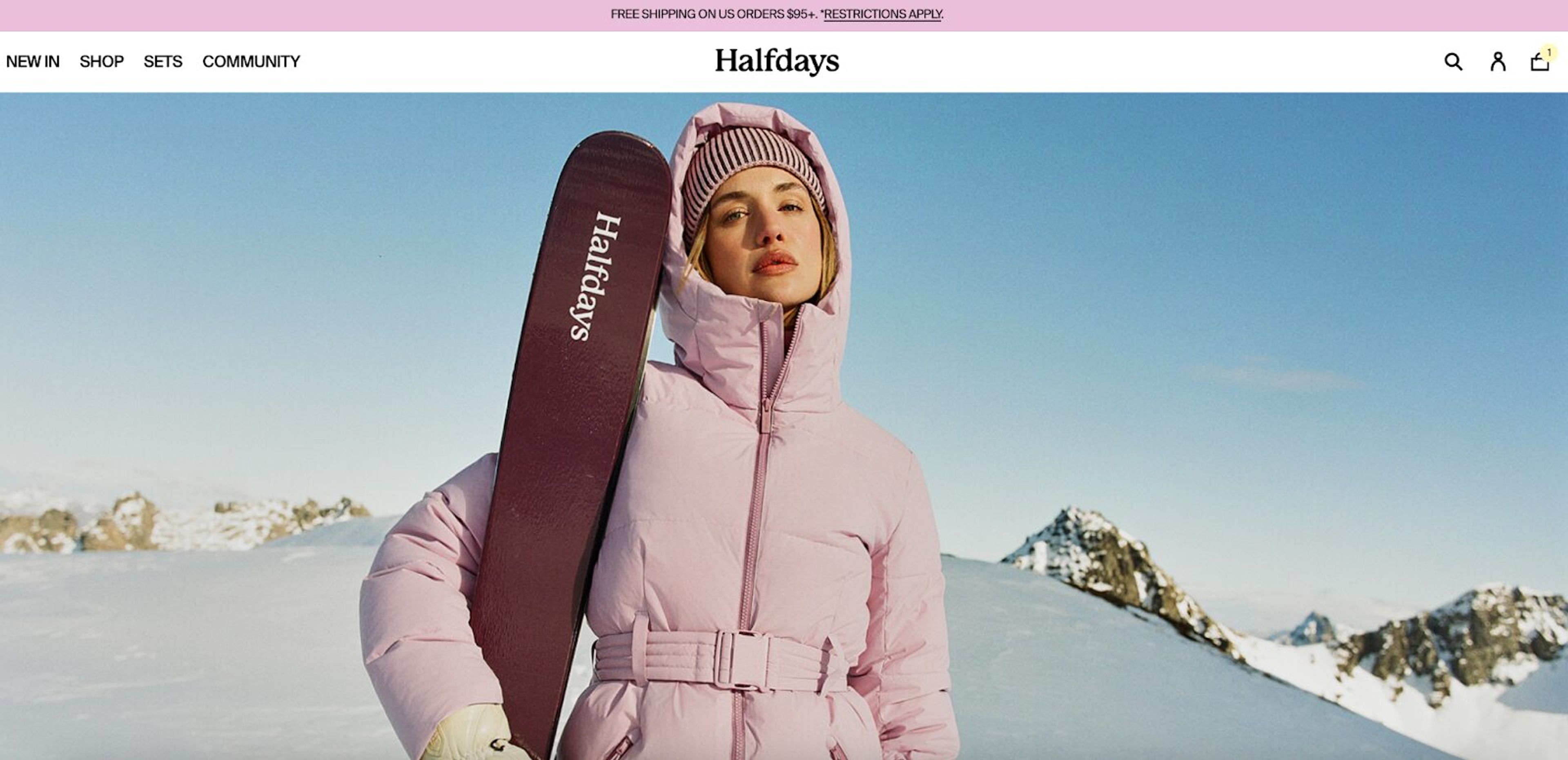
One of the most effective conversion levers is the dual announcement bar strategy above the fold. The free shipping message immediately removes a common checkout objection, while the secondary banner directs attention to a specific, curated product set.

This pairing works well because it combines value reassurance with focused product discovery, rather than presenting an open-ended catalog.

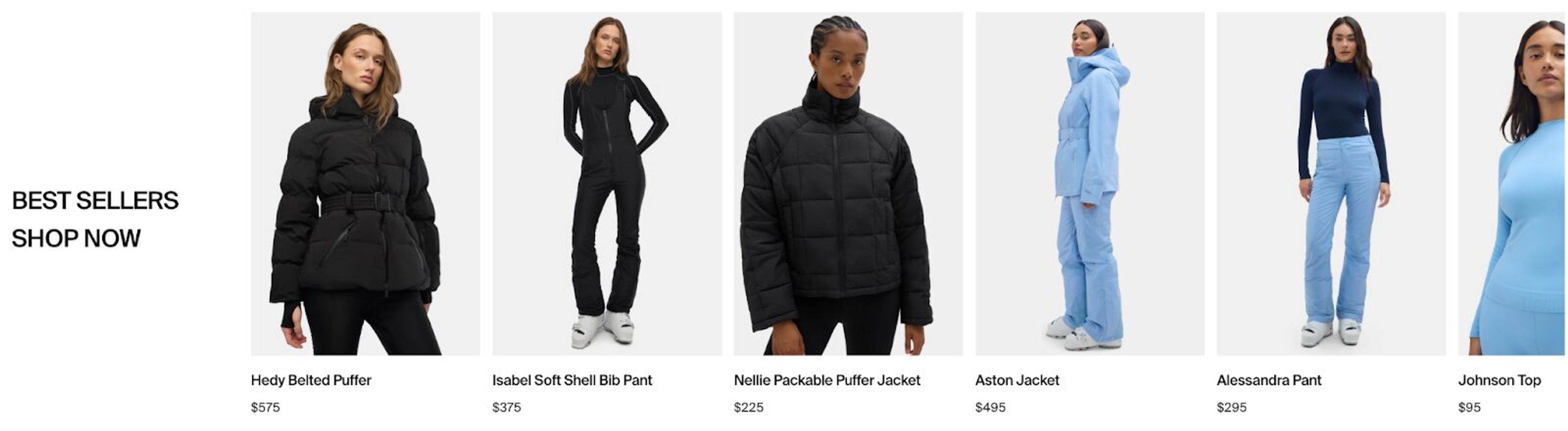
Navigation is structured around how customers think, not how products are internally categorized. Activity-based shopping, curated sets, and best-seller highlights allow users to move around the site based on intent, experience level, and lifestyle. This reduces cognitive load and shortens the path to purchase.
The multi-step, full-screen popup is a strong example of how Halfdays approaches conversion as a relationship rather than a single transactional moment.
Instead of relying on a generic percentage discount, the brand uses a guided, conversational flow that balances value exchange, thoughtful data collection, and a consistent brand experience.
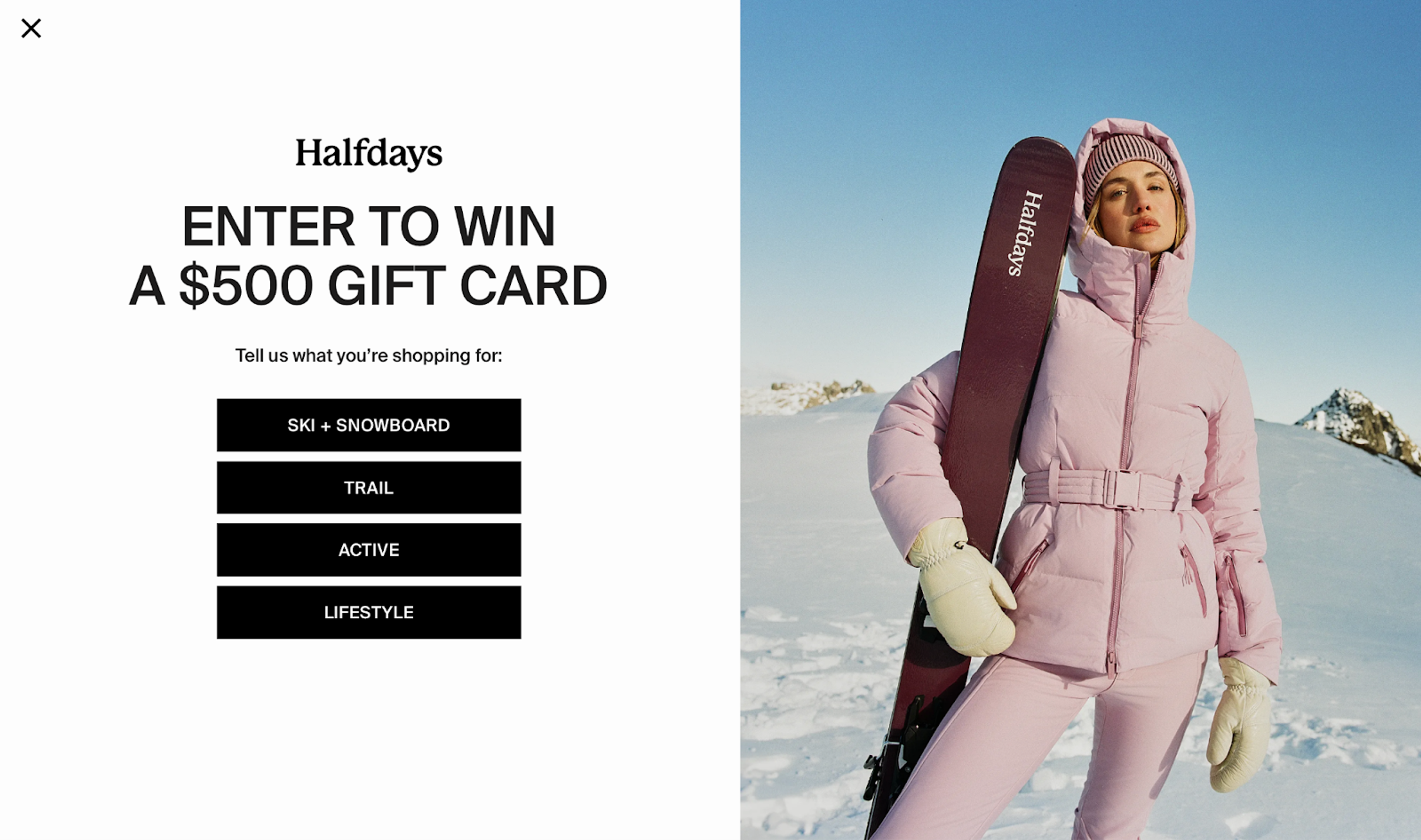
The $500 gift card incentive immediately creates excitement and high perceived value, while avoiding the brand erosion that often comes with constant discounting.
This approach protects Halfdays’ premium positioning and trains customers to engage with the brand for more than just short-term price incentives.
The first question—“What are you shopping for?”—is not simply a UX detail, but a strategic segmentation move.
By capturing intent at the very beginning, Halfdays can personalize future email and SMS campaigns, tailor product recommendations, and align messaging with the customer’s actual use case from day one.

Rather than asking for all information upfront, the popup uses progressive profiling to reduce friction. Email capture comes first, followed by higher-commitment fields like phone number and birthday later in the flow.

This sequencing increases completion rates by building momentum and trust before requesting more sensitive information.
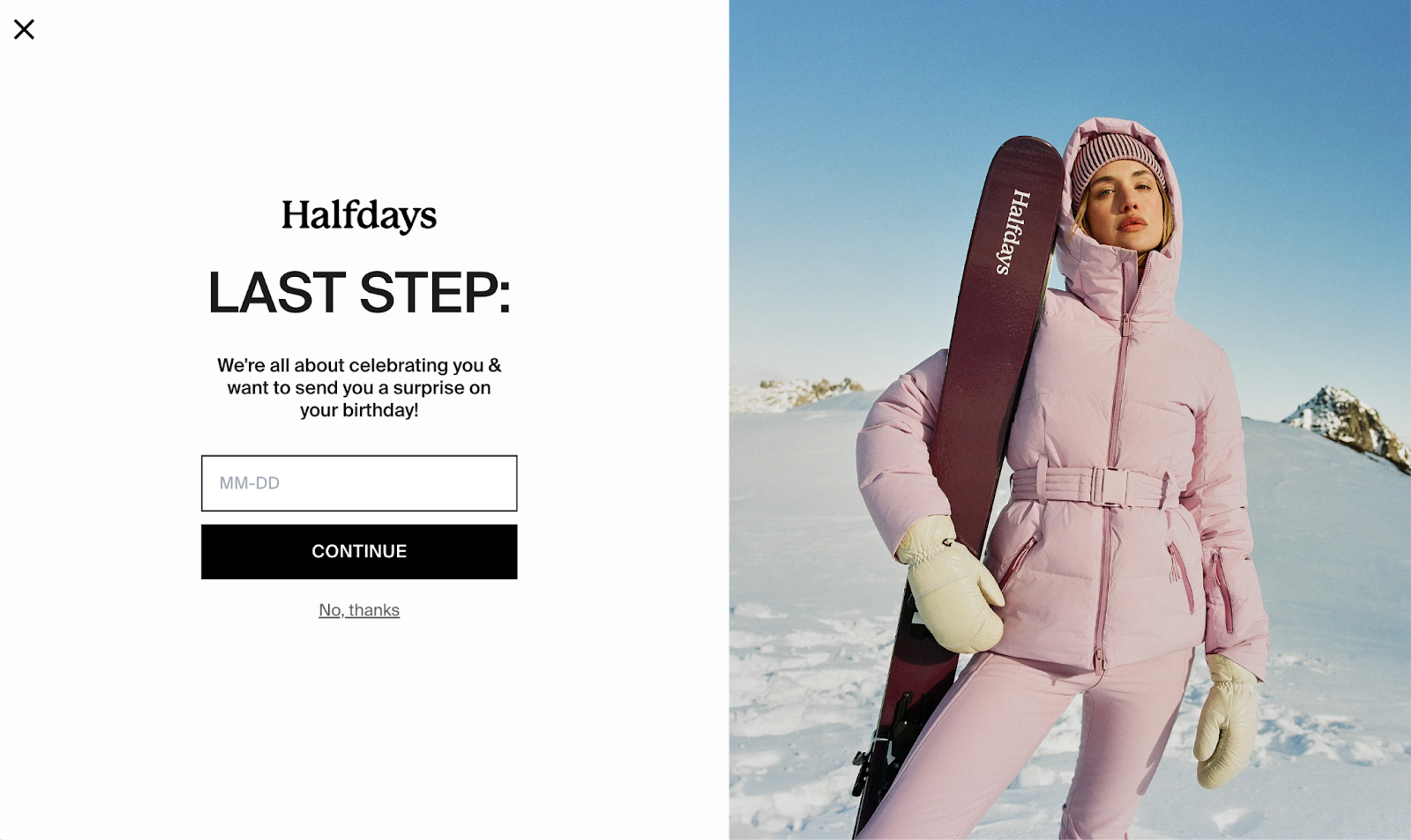
Asking for a birthday is a subtle yet powerful lifecycle marketing tactic. It enables automated birthday campaigns, creates emotionally resonant touchpoints, and allows Halfdays to engage customers in non-promotional moments that strengthen long-term brand affinity.
Want to test a similar popup for your brand? Start with our popup ideas.
The Hedy Belted Puffer product page is a strong example of how Halfdays blends performance credibility with fashion-forward merchandising while removing friction from the buying decision.
By labeling colorways as “Core” versus “Limited,” Halfdays creates instant clarity while subtly introducing urgency.
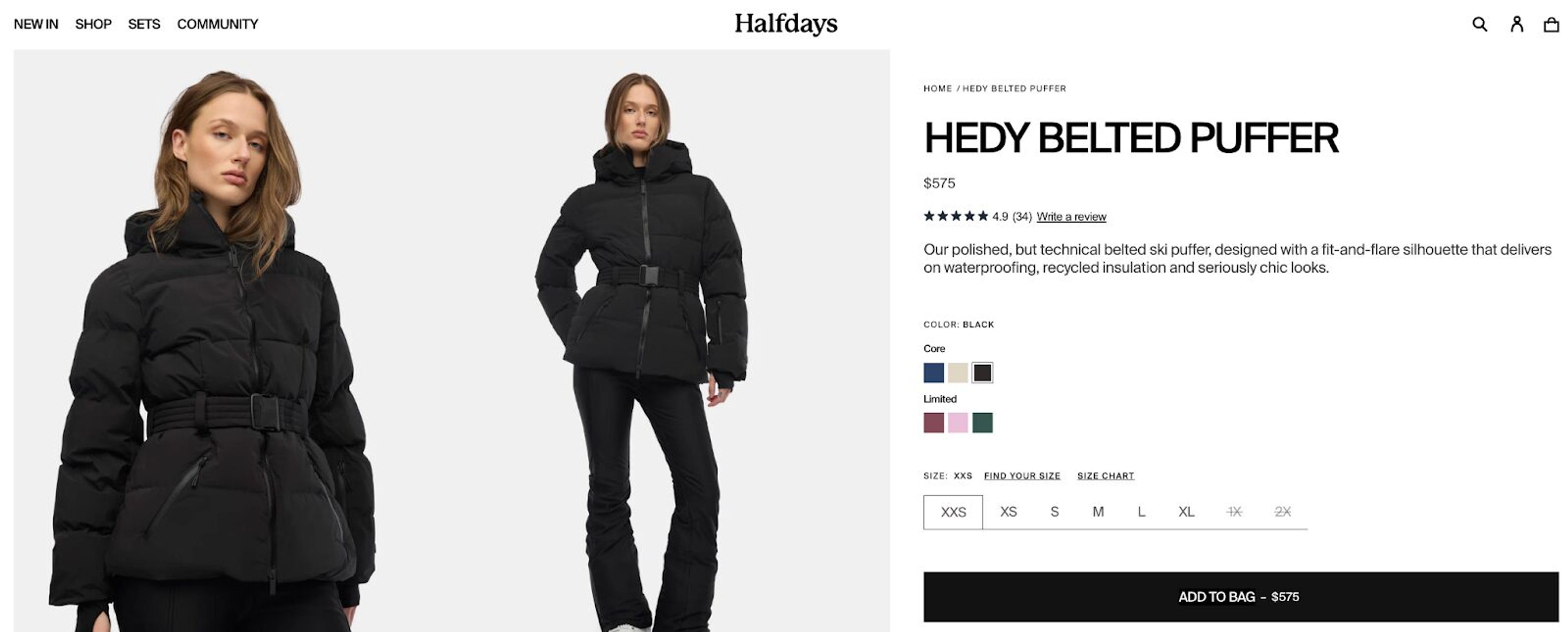
Core colors reassure customers looking for timeless, reliable options, while Limited colors activate scarcity psychology and encourage faster purchase decisions. This structure helps shoppers self-select while naturally driving FOMO for exclusive drops.
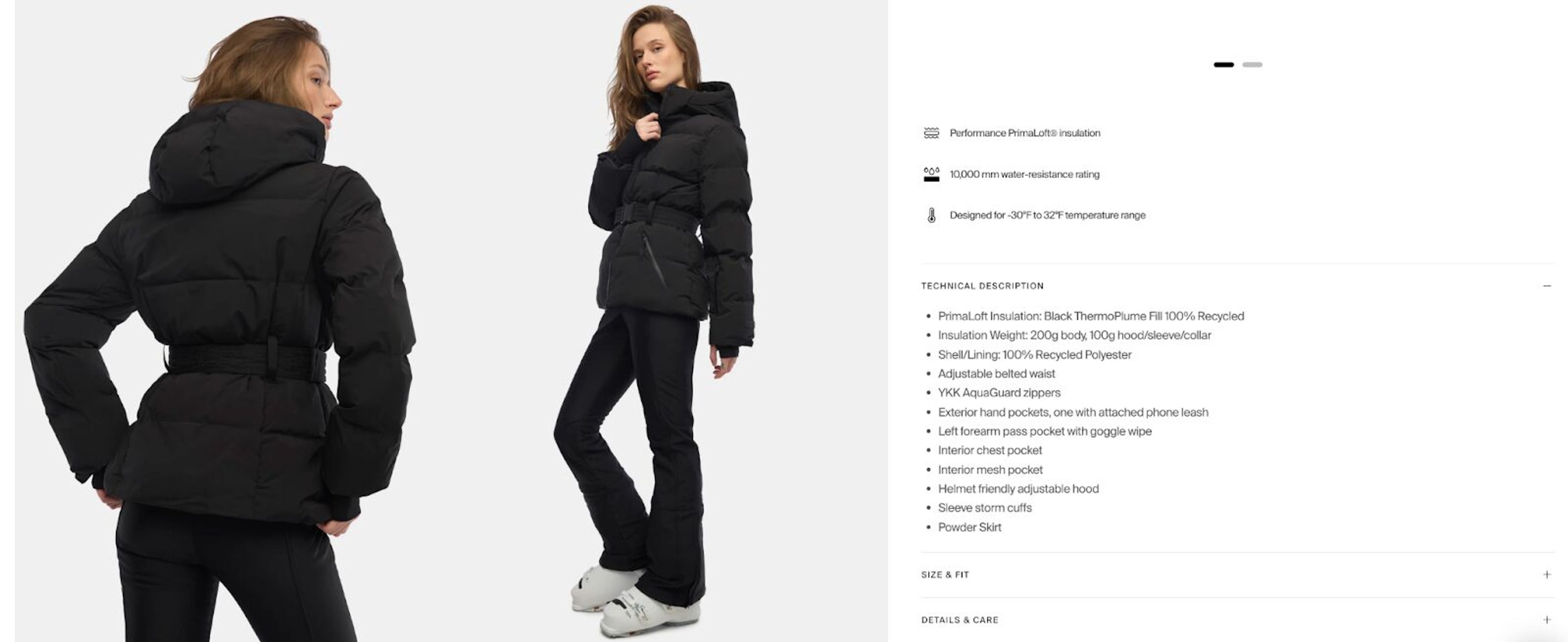
Above the fold, visual feature icons immediately communicate the product’s most important technical information. Key specs such as PrimaLoft® insulation, a 10,000 mm water-resistance rating, and temperature range are placed directly beneath the Add to Bag button.
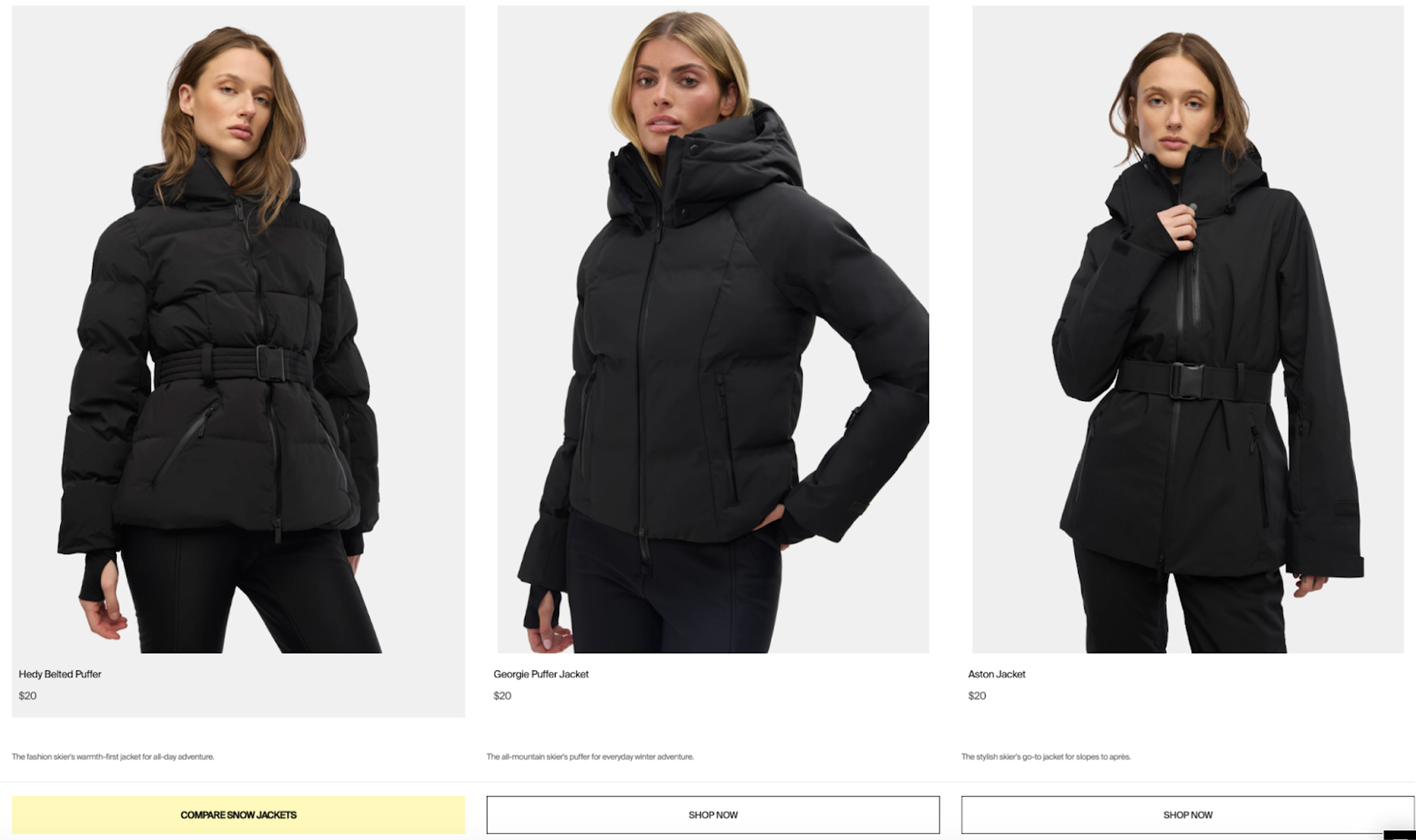
Midway down the page, Halfdays introduces an inline product comparison tool that allows shoppers to evaluate multiple jackets side by side.
Instead of forcing users to interpret dense technical specs, each product is framed with a clear positioning statement, such as “the fashion skier’s warmth-first jacket” or “the all-mountain skier’s puffer.”
Post-product content is equally intentional. The “More in Black” cross-sell section encourages outfit-building by showcasing complementary items in the same color family.

Finally, customer reviews play a critical role in reinforcing confidence and reducing last-mile friction. The presence of a dedicated reviews section creates strong social proof and provides validation from real customers, helping new shoppers feel reassured about fit, warmth, and overall performance.

The cart experience is optimized to increase average order value and reduce checkout friction.
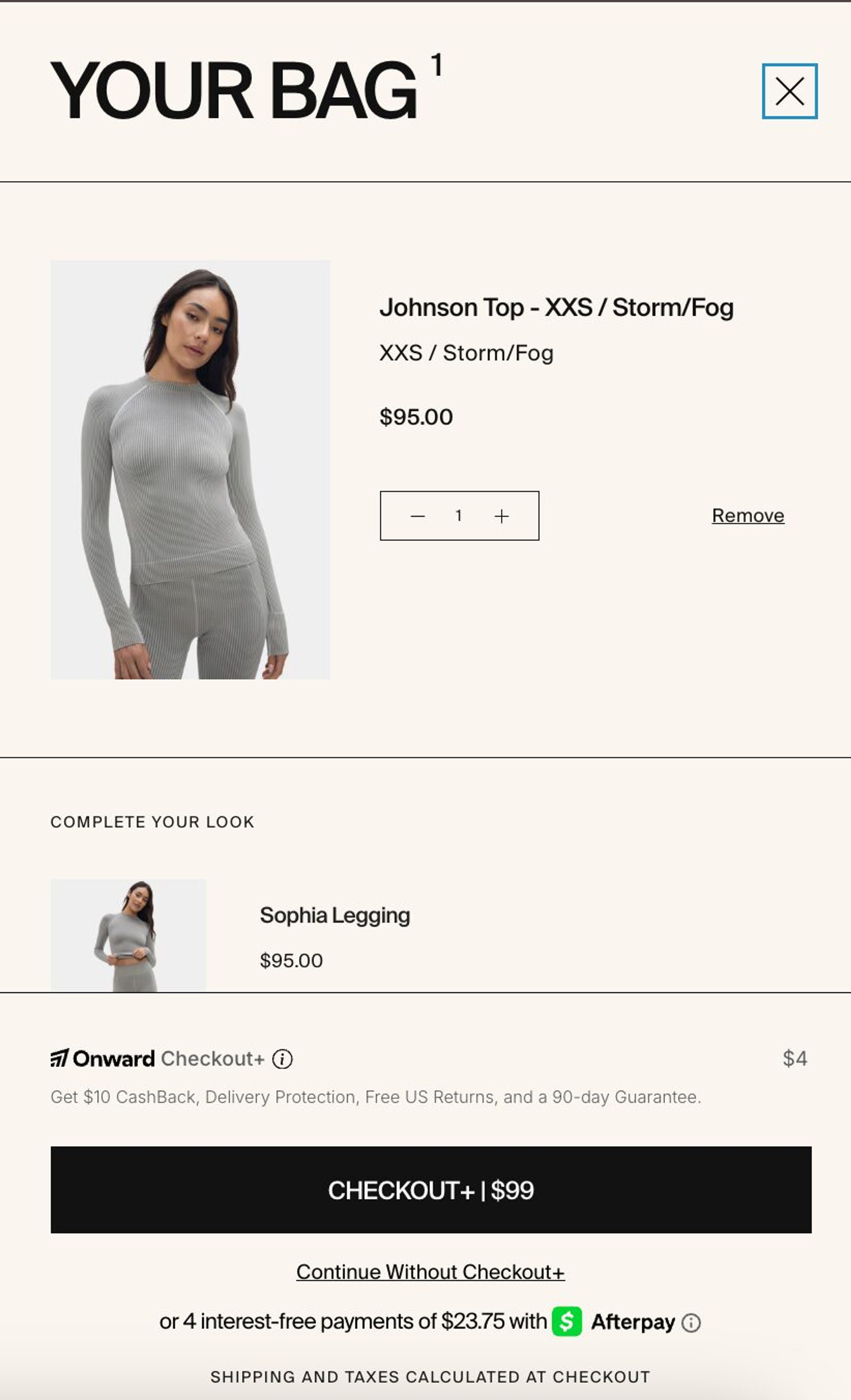
The “Complete your look” cross-sell is contextually relevant and visually aligned with the primary item, encouraging incremental add-ons without disrupting purchase intent.
Halfdays is clearly showing up where real shopping intent lives.
Searches around women’s ski pants, ski clothing, and base layers consistently lead people to Halfdays pages, alongside strong branded searches.
This mix matters. It shows that customers don’t just discover the brand through marketing, they actively look for it once they know it.
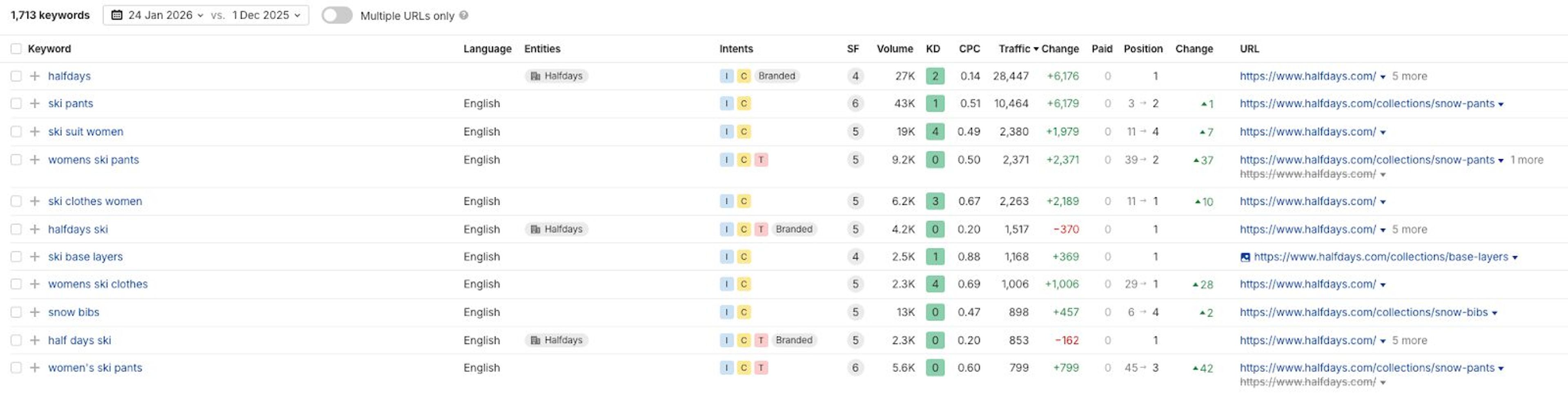
The visibility across both generic and brand-related searches reflects how well the site is structured and how clearly products are presented.

Category pages match what people actually type into search, while product pages explain warmth, fit, and performance in a way that feels helpful and easy to understand.
That clarity builds trust early and makes it easier for shoppers to move from research to purchase. What stands out most is the momentum. Key product-related searches are climbing quickly, suggesting that as more people discover Halfdays, they come back intentionally.
Email plays a critical role in how Halfdays turns first-time buyers into repeat customers and brand loyalists. Their email strategy goes far beyond promotions and product drops—it’s designed to support the full customer lifecycle.
One key pillar is cart abandonment email flows. When shoppers leave without completing checkout, Halfdays follows up with timely, well-designed reminders that help users jump back in where they left off.
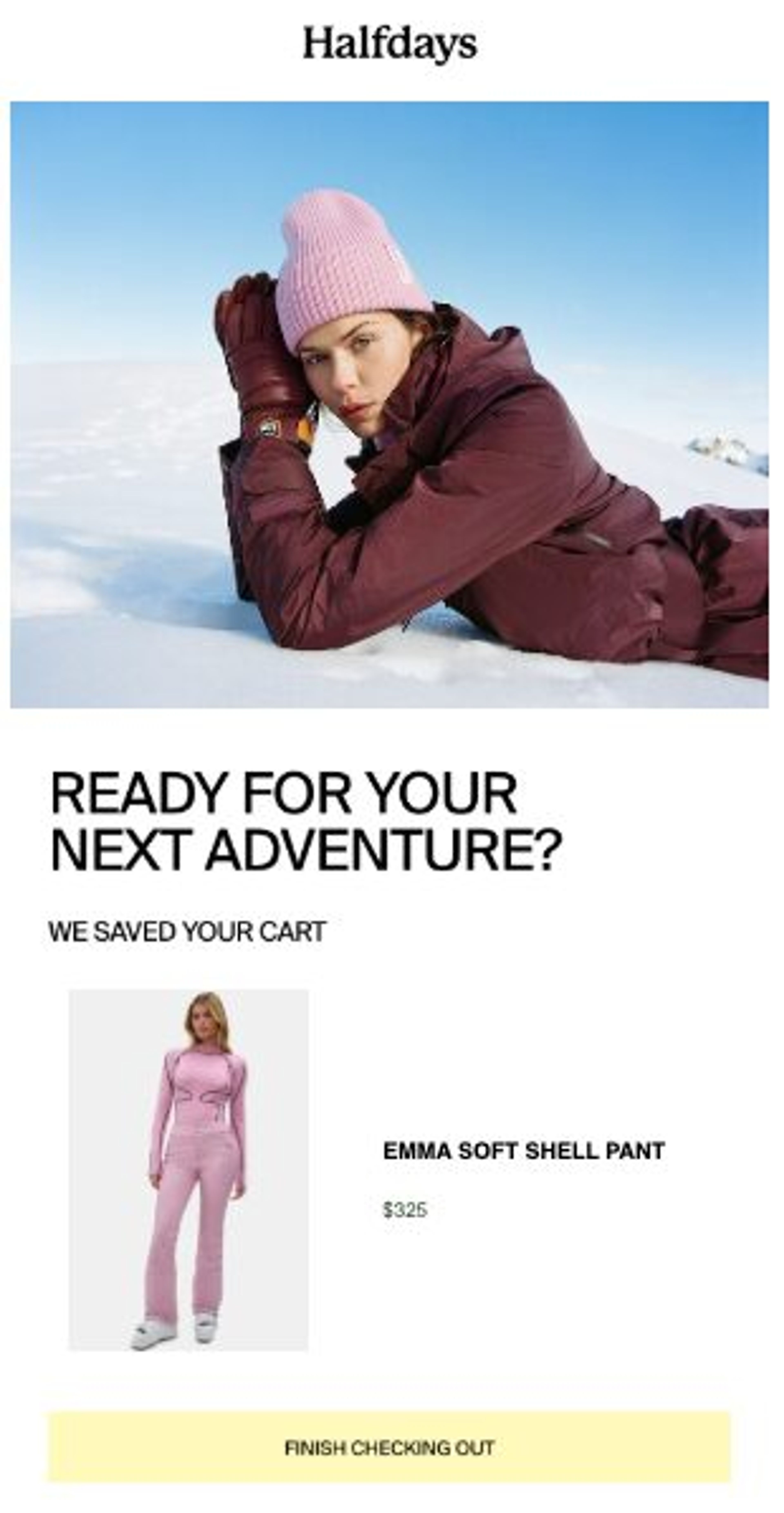
Beyond recovery, personalization drives everything. Intent signals from popups, browsing behavior, and past purchases shape what customers receive next. This allows Halfdays to send product recommendations, seasonal reminders, and styling guidance that feels helpful rather than salesy.
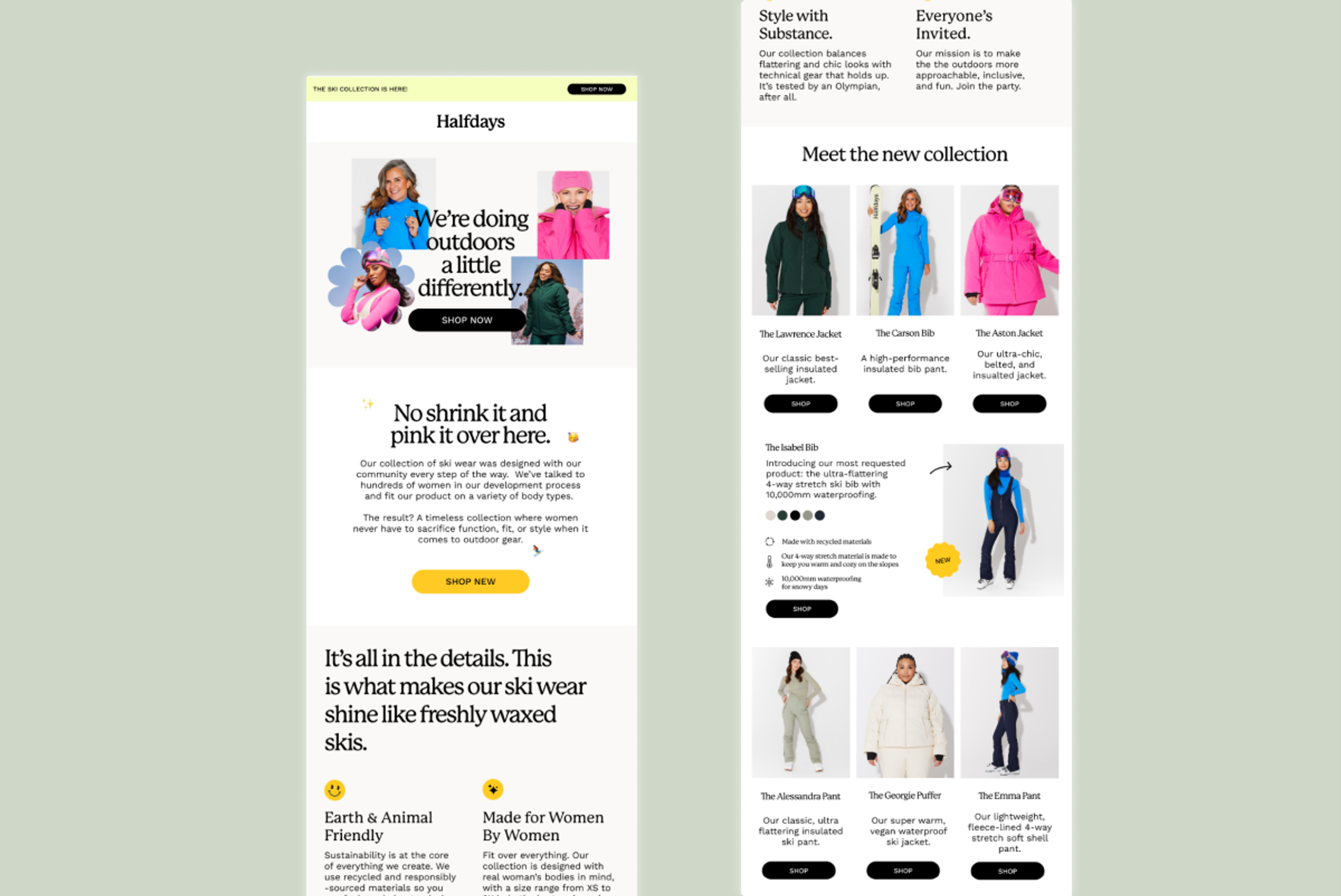
Post-purchase flows are equally intentional. Emails extend the experience beyond the transaction by offering fit guidance, layering tips, and care instructions, building confidence in the purchase while subtly introducing complementary products.
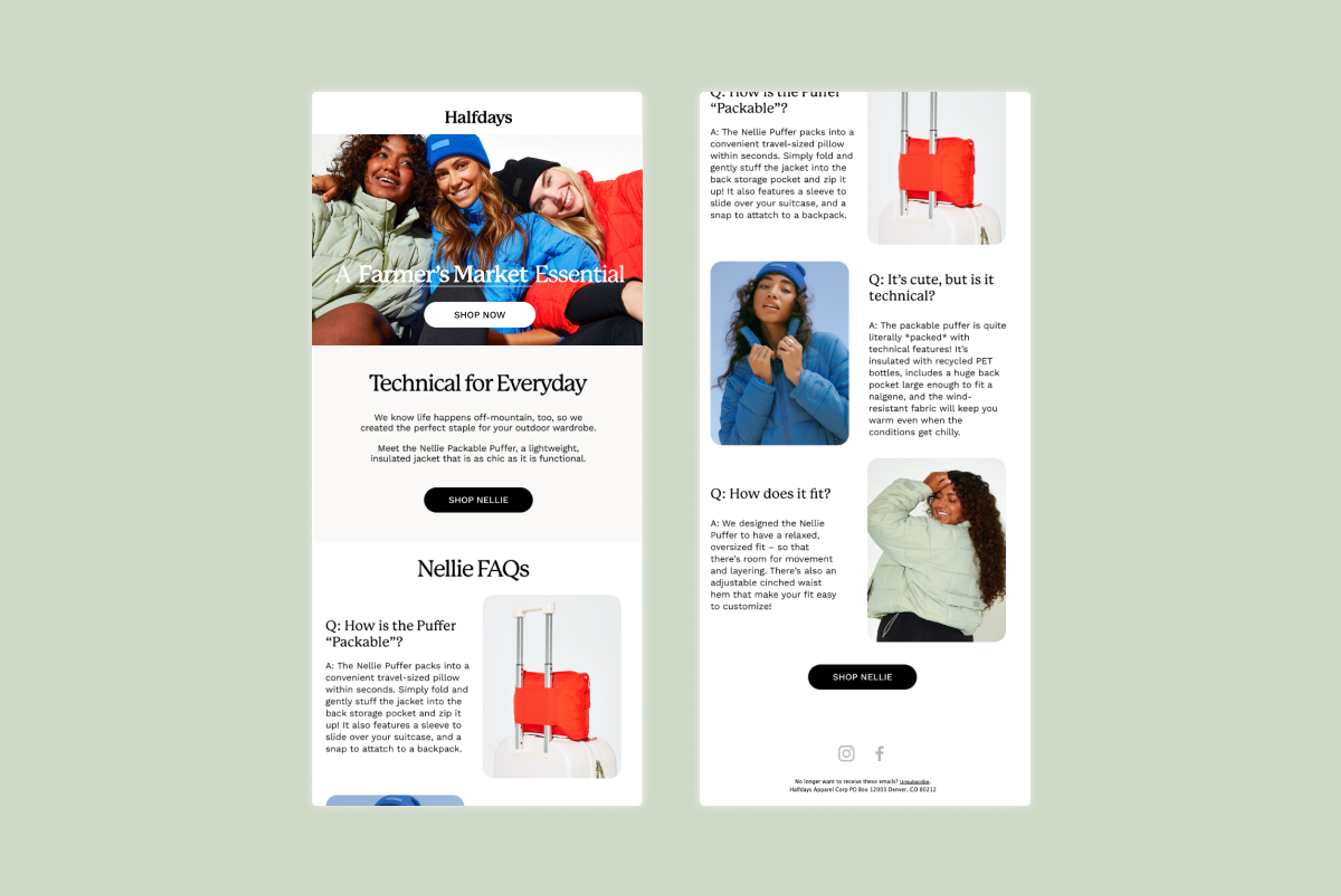
Lifecycle touchpoints like birthday emails, early access to drops, and community event invitations further deepen the relationship. These moments create emotional engagement without training customers to wait for discounts, reinforcing Halfdays’ premium positioning.
Halfdays proves that real growth doesn’t come from chasing tactics in isolation, it comes from alignment.
Halfdays’ marketing strategy and brand positioning work together as a flywheel—anchoring everything in a clear mission, building a genuine community, and supporting it with thoughtful merchandising, conversion design, and organic discoverability, so that marketing, product, and experience reinforce each other.
What makes the Halfdays business model and growth strategy particularly hard to replicate is how each layer — DTC, wholesale, and community — feeds the others, so the longer it runs, the stronger the advantage becomes.
Halfdays didn’t win by shouting louder than competitors; they won by understanding their audience better, removing friction at every step, and turning customers into participants in the brand.
The result is not just strong revenue growth, but long-term loyalty that compounds season after season.
Looking for more marketing breakdowns? Check out these articles:

How Tarte turns founder storytelling, creator trips, TikTok virality, and smart on-site funnels into a repeatable beauty marketing growth engine.
How Carroten went from unknown to every US Target shelf in under a year — using TikTok virality, creator-led commerce, and heritage brand positioning.
A deep dive into WavyTalk’s marketing strategy, from TikTok Shop and creator-led launches to UGC, cultural moments, and high-converting DTC tactics.