


14 Effective Thanksgiving Marketing Ideas to Boost Your Sales in 2026
Discover creative Thanksgiving marketing ideas to engage customers, build buzz, and drive sales before Black Friday and Cyber Monday.
Having trouble making people trust your online store? Let's talk about easy ways to build trust in your ecommerce business.
In short
Build trust in ecommerce by prioritizing security, transparency, and customer support. Key strategies include using secure payment methods, showcasing reviews, and maintaining a user-friendly website. Embrace emerging trends like AR and AI for personalized experiences. Trust is essential for customer loyalty and success in the competitive ecommerce landscape of 2026.
Trust has always been one of the most valuable assets in ecommerce. The moment a shopper lands on a new online store, they subconsciously assess whether it feels safe, credible, and worth purchasing from, especially when it involves sensitive data like credit card information or personal details.
As customers become more selective, trust isn’t optional anymore. It directly shapes whether someone completes a purchase, comes back again, or recommends your store to others.
In this article, we’ll cover:
Let’s dive in!
Customer trust is the confidence shoppers place in an online business when browsing, interacting, or making a purchase.
It’s built through consistent, positive experiences that show your brand is reliable, transparent, and genuinely committed to customer satisfaction.
A store with a smooth shopping experience, accurate information, visible social proof, and a history of happy customers will naturally feel safer and therefore more trustworthy to prospective customers and new visitors.
Here’s why trust is essential for ecommerce brands:
When shoppers trust your ecommerce store, they’re far more likely to come back. Over time, online trust transforms casual buyers into repeat customers and ultimately brand advocates who stick with you.
Uncertainty about product quality, delivery, or data security creates friction for online retailers. A trustworthy brand removes doubt, builds confidence, and makes it easier for customers to complete a purchase.
People love sharing good experiences. When customers feel confident buying from you, it naturally boosts ecommerce trust, encouraging them to recommend your online store to friends and online communities, which expands your reach and enhances your reputation without any additional marketing effort.
Customers tend to worry most about these three issues when shopping online.
Customers want to be confident that their personal and financial information is well-protected during online transactions. Utilizing tools like a PHP security scanner helps identify vulnerabilities early, preventing potential data breaches, which is an increasingly critical concern as such incidents become more frequent.
Clearly communicating your security measures, including the use of SSL certificates and secure payment gateways compliant with PCI standards, reassures visitors that their payment information is safe.
These steps play a vital role in building ecommerce trust and fostering positive customer interactions.
Online buyers expect honest communication on an ecommerce site, including:
Any hint of counterfeit products, misleading promises, or vague policies can quickly erode trust.
Customers need to feel supported if something goes wrong. Fast, helpful service, whether via email, chat, or phone, signals that your business is legitimate and cares about customer satisfaction by providing exceptional customer service.
This level of responsiveness plays a vital role in building trust in e-commerce.
A visible, easy-to-find contact page also boosts confidence.
Building trust in ecommerce websites involves several different tactics, from displaying customer reviews and social proof to using payment security seals.
Below are seven practical strategies you can implement today.
Shoppers want visible proof that your store is legitimate and safe:
These signals reassure users that their transaction is protected.
Also, be sure to add widely accepted payment methods such as Visa, Paypal, and Mastercard. Check out how Asos displays their accepted payment methods below.

Reviews are powerful social proof. When shoppers see positive testimonials from real people, their perceived risk decreases immediately.
Showcase reviews on key pages—homepage, product page, and near the “Add to Cart” button.
Here's an example of how Varnish & Vine displays customer testimonials on their homepage.
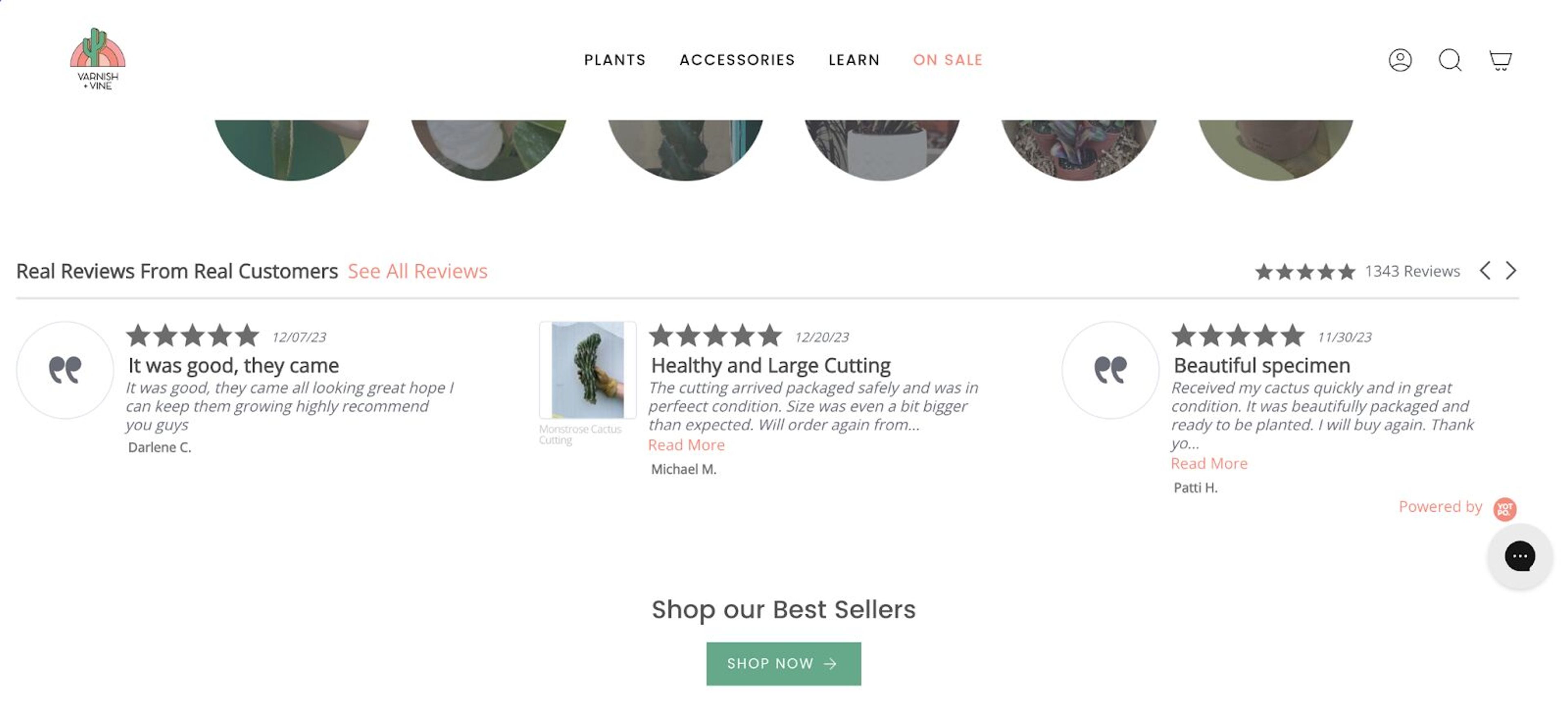
Customers feel more secure when social proof is prominently displayed on product pages.
Learn how to get more 5-star reviews from customers.
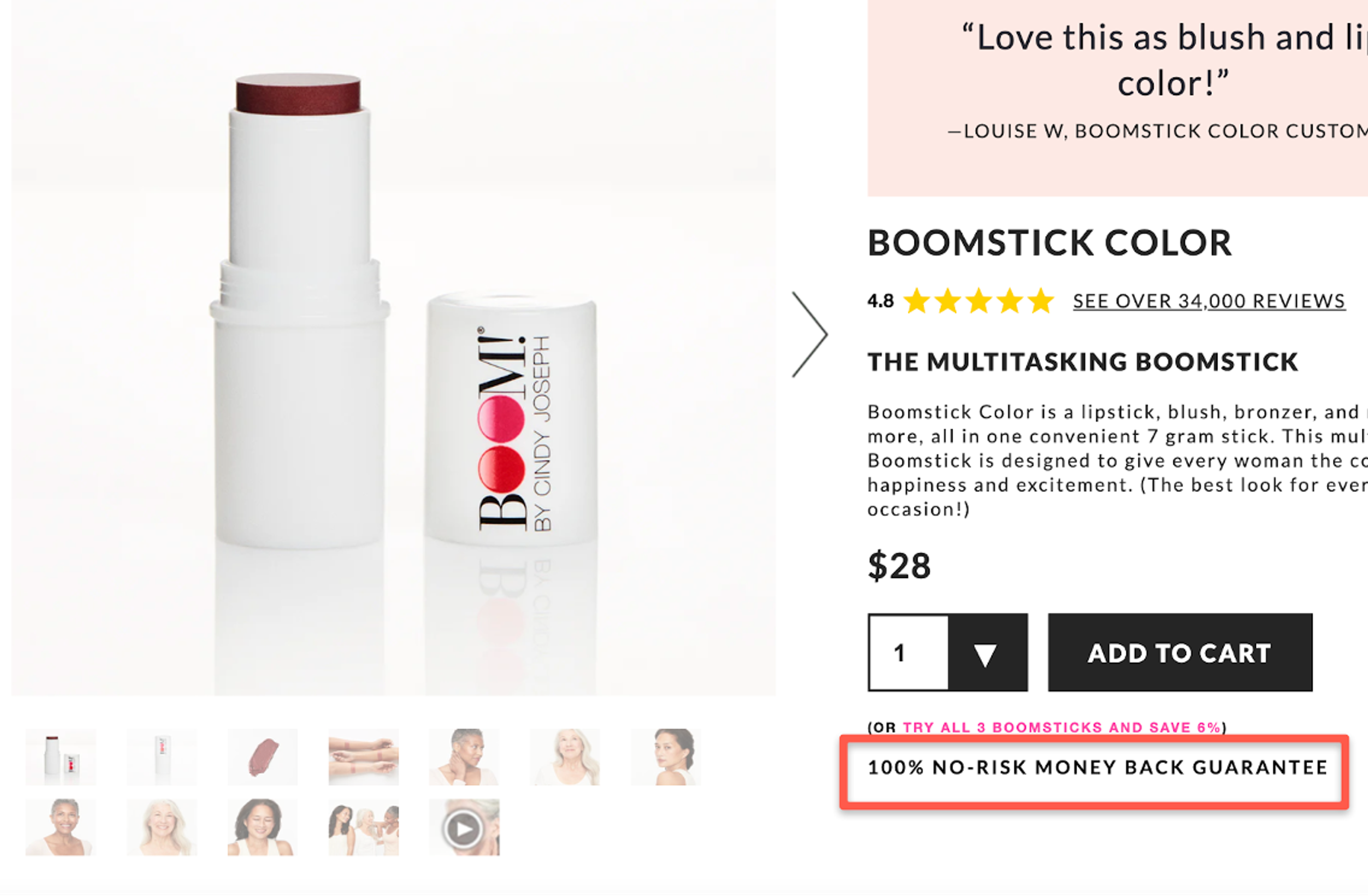
Trust badges, security seals, “money-back guarantee” labels, or warranty icons help customers feel safe completing purchases.
These micro-signals reinforce that your store is legitimate and accountable.
Here's an example from BOOM, where they highlight their money-back guarantee on their product page.
Users judge credibility in seconds. Slow-load pages, outdated designs, or broken layouts raise red flags.
A trustworthy ecommerce website is:
A clearly active online presence across social channels also helps validate your legitimacy.
Customers view reliable customer service as one of the clearest signals that an online store is legitimate. Tools like live chat or chatbots help visitors quickly find answers and reduce frustration.
Respond to questions promptly, whether via email, chat, or social media, to create positive experiences that fuel word of mouth.
For instance, Bloom & Wild showcases trust by offering several easy-to-access contact options.
Providing clear, detailed, and accurate product descriptions is essential for building trust. If customers feel a product was misrepresented even slightly, it becomes nearly impossible to earn long-term loyalty.
Accurate information helps set the right expectations so shoppers know exactly what they’re buying. Make sure your product pages include:
One of the fastest ways to learn how to build trust is by studying brands that already do it well. Case studies, success stories, and creative forms of social proof show what works in real ecommerce environments and why.
By analyzing these examples, you can uncover practical ideas and proven tactics to strengthen trust in your own store, helping customers feel secure and confident when shopping, such as:
Here’s an example of how Solagarden showcases customer reviews:
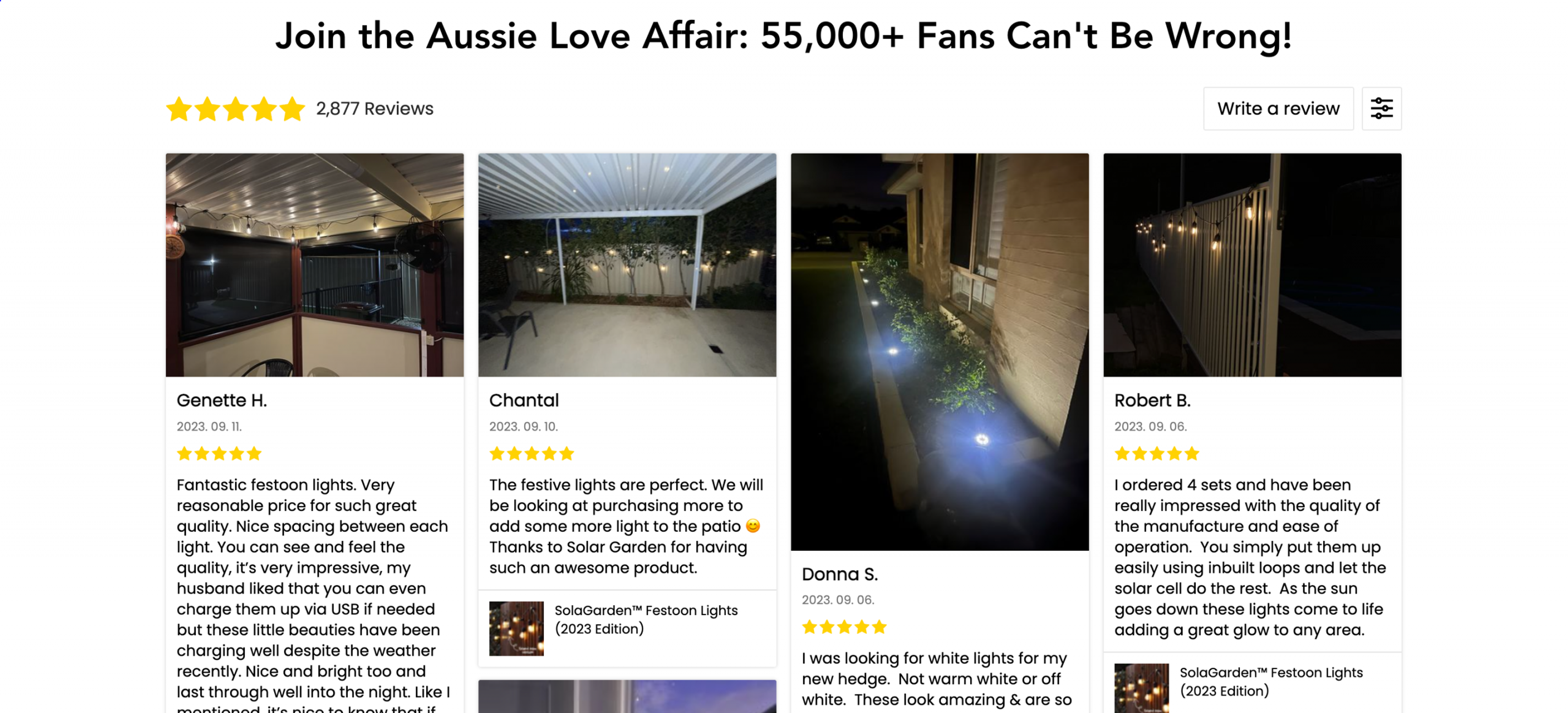
As we look ahead, several key trends will shape how ecommerce brands build trust. Privacy protection will stay at the forefront, as consumers increasingly scrutinize how their data is collected and used. Strong measures like data-loss prevention tools and transparent data practices will be essential for maintaining credibility.
Augmented reality (AR) will also play a growing role by helping shoppers visualize products in real-world contexts, reducing uncertainty and improving buying confidence during online shopping.
At the same time, fraud prevention technologies and security systems will need to evolve to keep pace with new cyber threats. Alongside this, modern experience-driven tools will strengthen trust even further, including:
Brands that embrace these trends will meet rising consumer expectations and move toward a more secure, transparent, and customer-centric ecommerce environment, ultimately fostering greater customer loyalty.
Trust is one of the strongest drivers of loyalty in online shopping. With countless marketplaces and endless options, trust determines which brands customers choose—and which they keep returning to. In an era marked by cybersecurity threats and data breaches, maintaining trust is essential for long-term success, not just a competitive advantage.
Ecommerce brands can build transparency by clearly communicating every part of the shopping experience, including:
The more clarity customers get upfront, the more confidently they purchase.
AI builds trust by making the shopping experience more relevant and intuitive. It can:
This level of customization helps shoppers feel understood and supported, which ultimately strengthens trust and drives loyalty.
We've given you all the tools you need to stop losing potential customers due to a lack of trust. Build strong brand recognition to increase the likelihood that your target audience will trust your store, prominently display trust seals, and provide accurate, transparent information about your products and services.
These essential steps are fundamental to running a successful ecommerce business, so if you haven't implemented them yet, now is the time.
Begin earning the trust of your potential customers today!


Discover creative Thanksgiving marketing ideas to engage customers, build buzz, and drive sales before Black Friday and Cyber Monday.

Learn 5 ways ecommerce brands can turn new subscribers into recurring revenue using welcome flows, personalization, loyalty programs, re-engagement, and referrals.

In this article, we’ve compiled a list of the 25 top ecommerce apps that will help you streamline your operations, boost sales, and grow your online business.