


Black Friday Marketing Strategy: 30 Ideas for 2026
In this article, we'll share 30 actionable Black Friday marketing ideas for ecommerce businesses to make 2026 your most successful yet.
Website headlines that convert: 20+ proven examples and easy formulas to boost clicks, engage visitors, and increase conversions.
In short
Discover the secrets to crafting high-converting website headlines with over 20 examples and proven formulas. Learn how to create headlines that capture attention, communicate value, and drive action in just 0.05 seconds. Master the art of headline writing to boost conversions, engage your audience, and stand out in a crowded digital space.
You’ve got 0.05 seconds. That’s how long it takes for a visitor to decide whether your website is worth their time.
That’s not a lot. Blink, and they’re gone.
And guess what determines whether a user stays or bounces? Your headline.
If your headline doesn’t instantly communicate value, spark curiosity, or connect with your audience, you’re losing conversions before the page even loads.
In this article, we're diving into:
Ready? Let’s sharpen your headline game.
Your website headline isn’t just a line of text; it’s the make-or-break moment. Here’s why it matters:
In short, your headline is more than copy; it’s your first and most powerful conversion lever.
Effective headline writing means crafting a homepage headline that does more than just sound good—it has to stop the scroll, grab attention, and nudge visitors closer to converting.
Here’s what separates winning headlines from those that get overlooked:
Your headline should answer the visitor's silent question: “Why should I care?”
Don’t make them guess what you offer. State it clearly.
If you're an app that helps freelancers get paid faster, say that. Loud and proud.
Vague headlines like “Solutions for your business” won’t cut it. Be ultra-specific. “Create branded invoices in 60 seconds” is a more persuasive and trustworthy headline.
Speak your audience’s language.
If you’re selling to startup founders, you’ll write differently than if you're targeting eco-conscious moms.
Tailoring your message to your exact audience will get you more engagement and less bounce.
Whether it’s excitement,FOMO, or pure curiosity, emotional hooks boost engagement and are the key to crafting effective homepage headlines.
An example could be “What if your website could write itself?”
Now that deserves a click.
You’re not writing poetry, so make your headlines as short as possible. Headlines that are under 12 words work best.
Visitors skim, so make your message punchy and digestible with just a few words.
People believe people. Use numbers, testimonials, or recognizable logos.
“Trusted by 10,000+ agencies” adds instant credibility in the eyes of your website visitors.
Crafting a high-converting homepage headline isn’t easy, and even the pros don’t wing it.
They rely on proven formulas rooted in psychology and conversion data.
These formulas are built around what matters most: clarity, curiosity, urgency, and trust, making them some of the best you can use.
“We help [audience] [achieve result] by [how].”
This is the gold standard for clarity. It works because it answers three vital questions in one sentence:
Example: “We help busy parents prep healthy meals in under 10 minutes.”
Why it works: It identifies the audience (busy parents), highlights a benefit (healthy meals), and differentiates (speed).
“Struggling with [problem]? Here’s the easier way.”
This headline hooks your audience by starting with a pain point they already feel and then immediately offering a better alternative.
Example: “Struggling with late payments? Automate your invoicing today.”
Why it works: You’re joining the conversation already happening in their head, then offering relief.
“Get [specific benefit] without [common frustration].”
This is one of the most conversion-friendly structures because it positions your product as a shortcut. You’re helping people get what they want without the pain.
Example: “Get glowing skin without harsh chemicals.”
Why it works: It promises a desirable outcome while overcoming a common objection.
“The only [category] that helps you [unique benefit].”
This formula highlights your uniqueness. It’s perfect for saturated markets where standing out is essential.
Example: “The only project management tool built for solo entrepreneurs.”
Why it works: You’re not just another option; you’re the only one tailored for them.
"Trusted by [number] [audience type].”
Social proof is one of the most powerful persuasion techniques. This formula immediately builds credibility and lowers skepticism.
Example: “Trusted by over 50,000 marketers worldwide.”
Why it works: People follow the crowd. If others trust you, new visitors are more likely to trust you, too.
“Do [task] in minutes—not hours.”
Speed sells. We’re all busy and overwhelmed, so if your product saves time or simplifies something complicated, highlight it.
Example: “Build your first landing page in under 5 minutes.”
Why it works: It removes perceived effort and makes the next step feel easy.
“What if [desirable outcome] was just one click away?”
This headline taps into curiosity and imagination. It poses a question that sparks possibility and encourages a scroll or click.
Example: “What if you could double your sales without doubling your ad spend?”
Why it works: It teases a transformation without giving everything away up front.
“[Action verb] your [goal] today.”
Direct and to the point. This formula works well when your visitors are problem-aware and ready to take action. It’s ideal for DTC brands and SaaS tools with clear outcomes.
Example: “Boost your website speed today.”
Why it works: It uses a strong verb, sets a clear goal, and creates urgency.
Need real-world inspiration? These brands know how to craft homepage headlines that stop the scroll and drive action.
From playful puns to powerful value props, here are 24 headline examples worth studying and stealing.
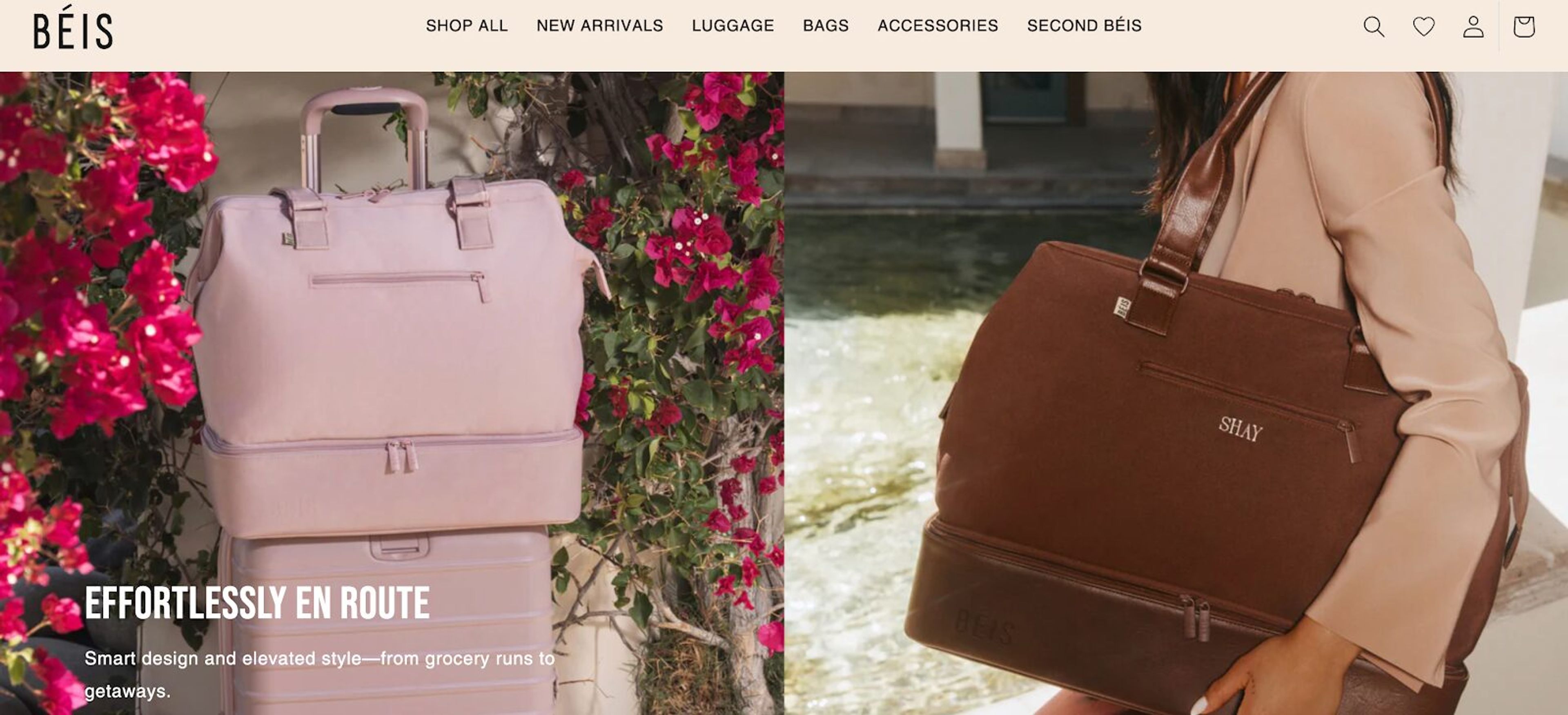
BÉIS keeps it short and stylish with “Effortlessly en route.” This homepage headline perfectly captures their brand promise: making travel easy and fashionable. It’s aspirational, direct, and deeply aligned with the brand's identity.
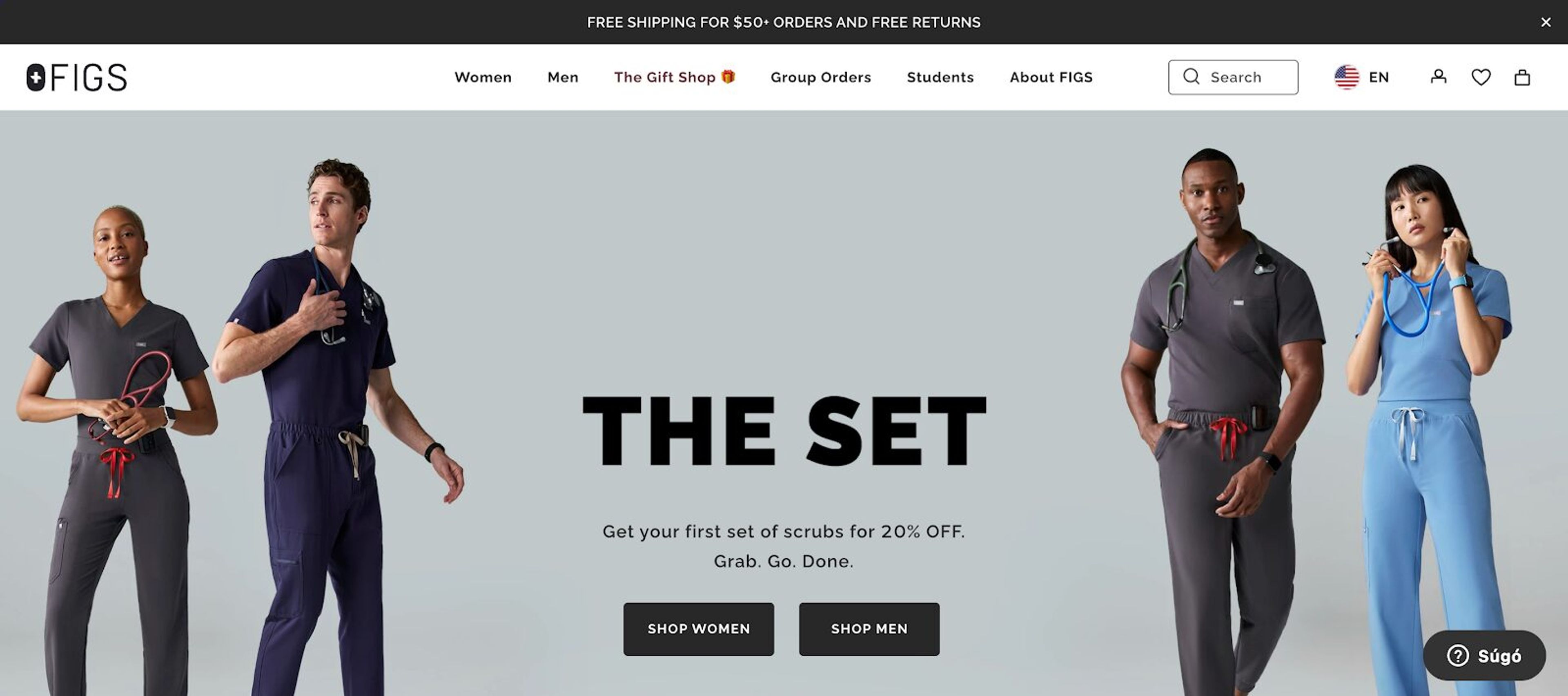
Figs goes ultra-minimal with just two words: “The set.” Designed for healthcare pros, this headline reflects industry lingo and confidence. It’s simple, sharp, and backed by strong imagery.
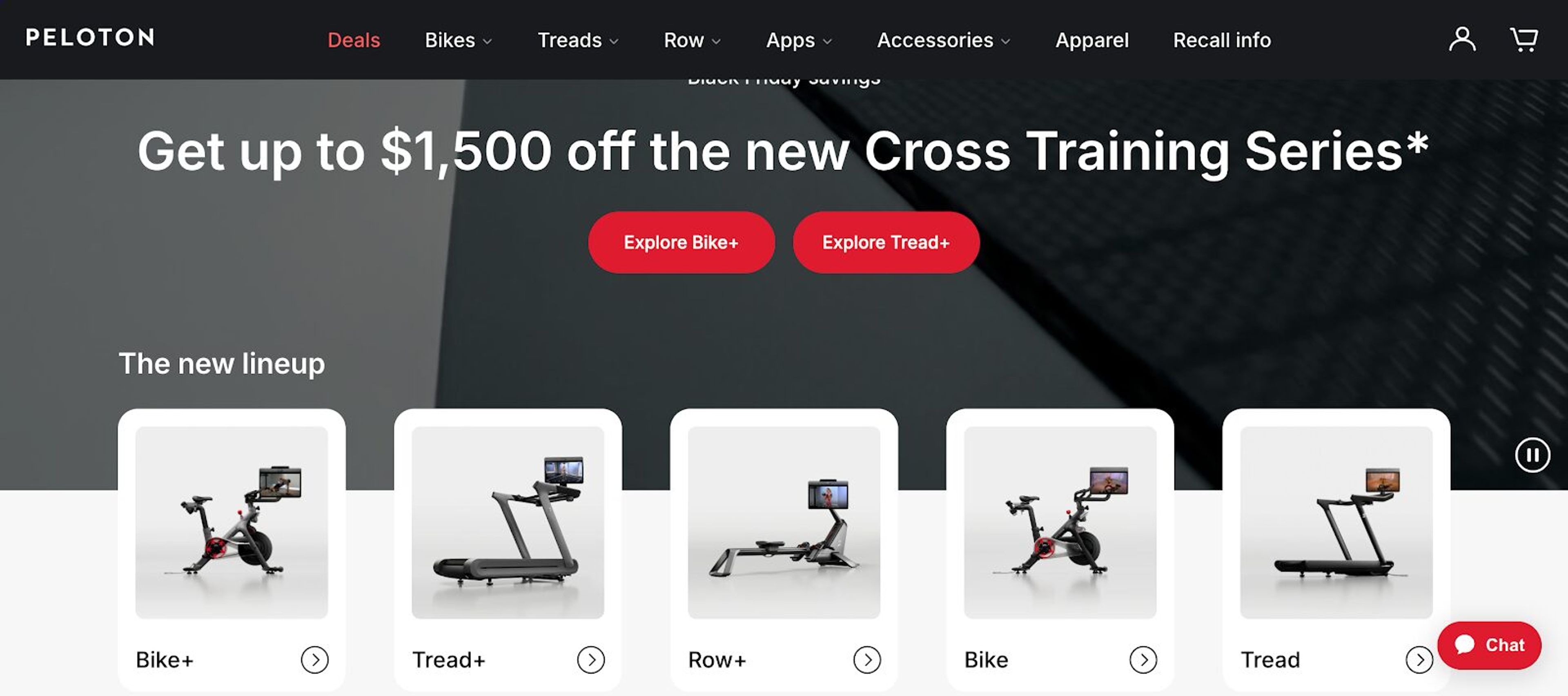
By offering “up to $1,500 off,” Peloton leads with a clear financial incentive. This benefit-driven approach speaks directly to users comparing high-ticket fitness equipment.
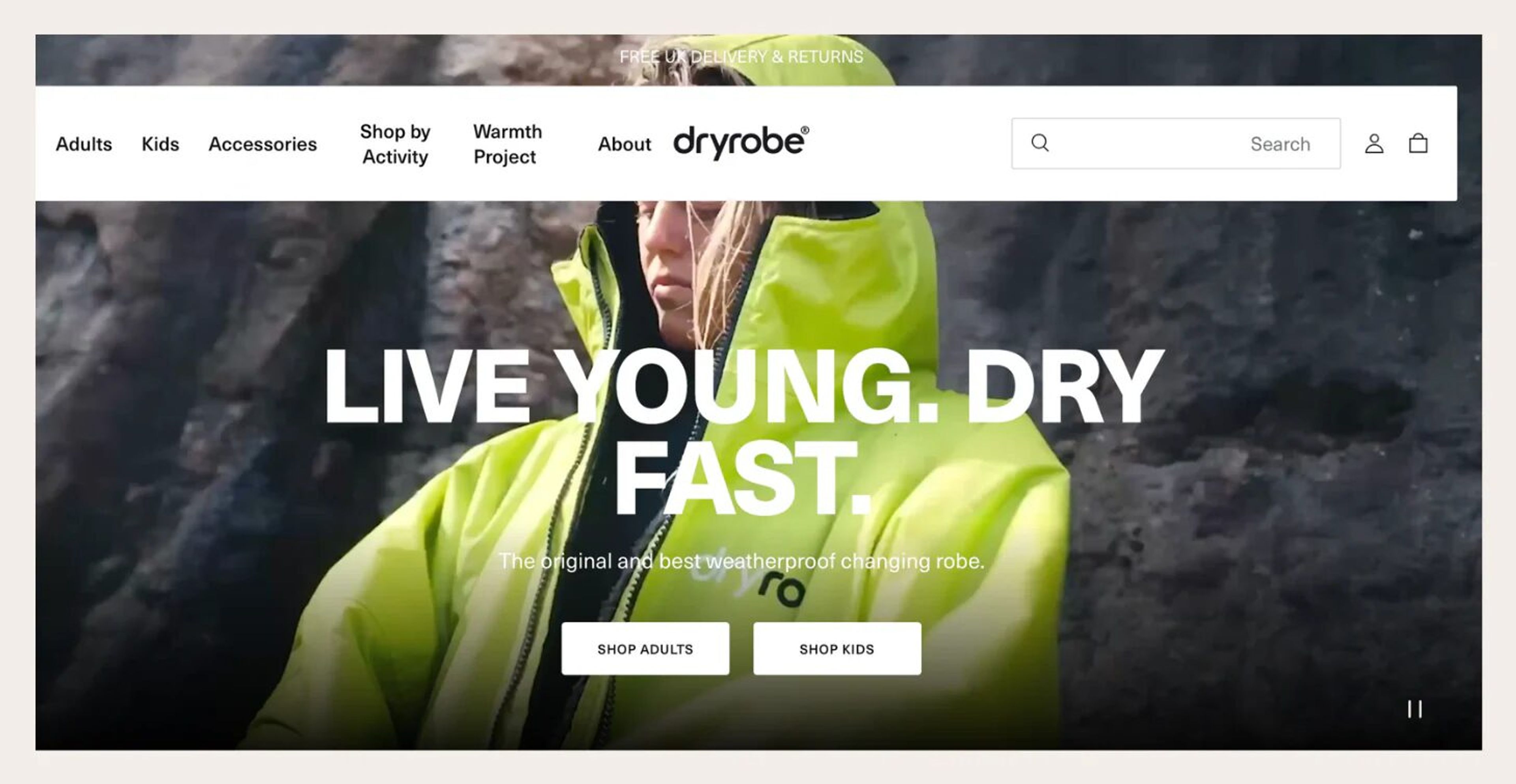
"Live young, dry fast" is a punchy, attention-grabbing headline that communicates Dryrobe’s core value immediately. It’s bold and direct, while the subheadline, "The original and best weatherproof changing robe," reinforces the product’s quality and reliability.
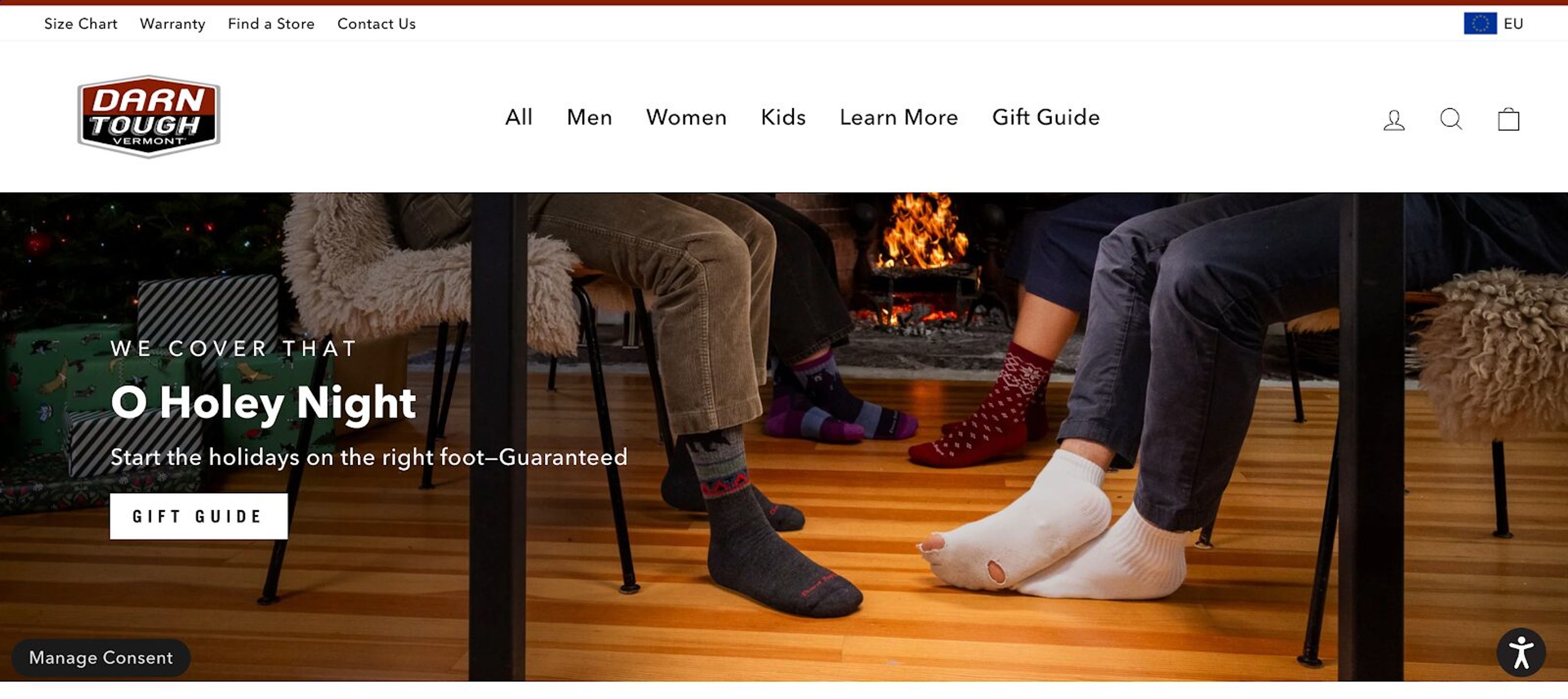
Darn Tough opts for clever wordplay: “We cover that, o holey night.” It's seasonal, funny, and directly references their durable sock product. Humor, when on-brand, can be a powerful differentiator.

With the headline “Resurrected from the archives,” Death Wish Coffee doesn't mince words. The bold, no-nonsense tone, paired with the striking imagery (skull logo and black packaging) directly communicates the product’s promise of strength and intensity, catering to coffee drinkers who want a powerful boost to their day.
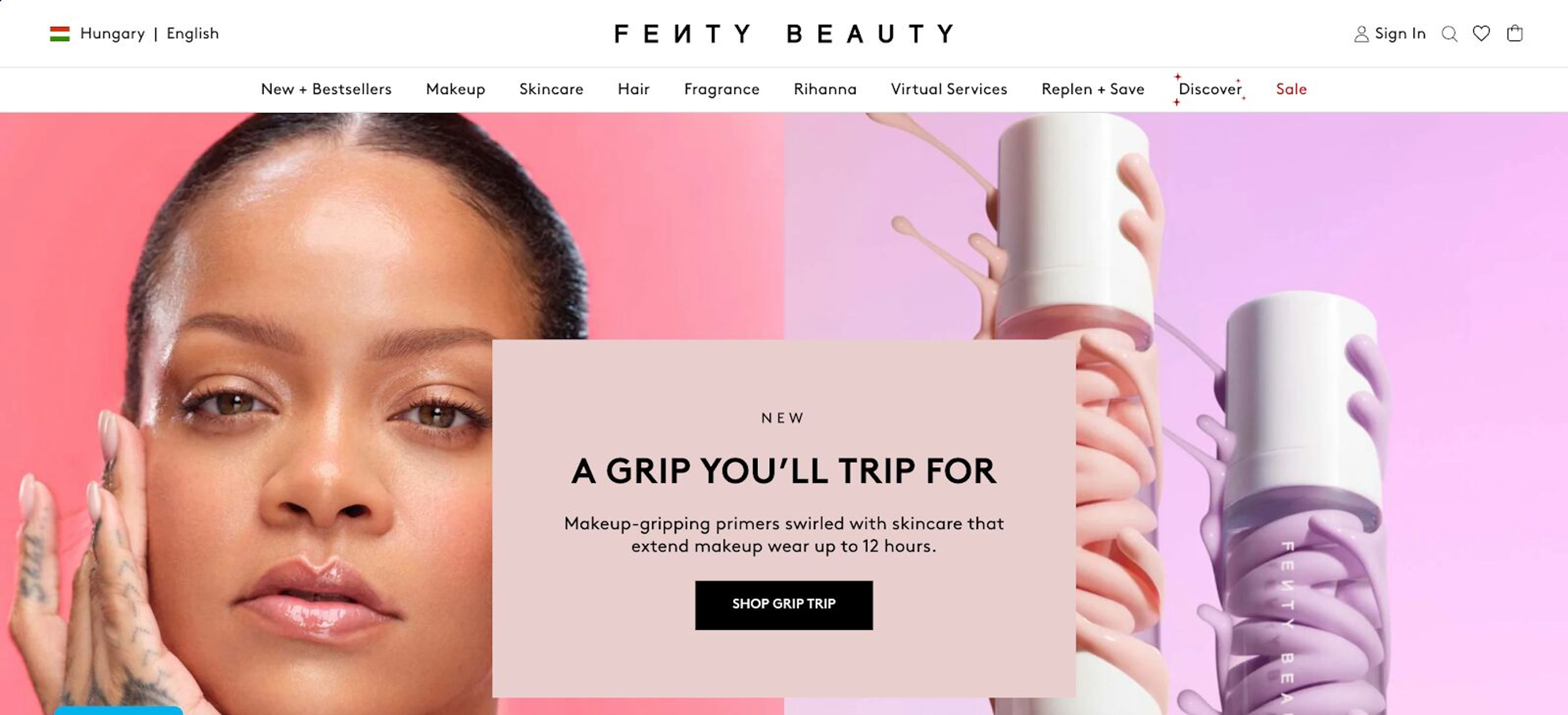
Fenty’s “A grip you’ll trip for” headline is bold and playful, reflecting the edgy, fun-loving tone that defines the brand. It's a product intro that feels more like a promise.
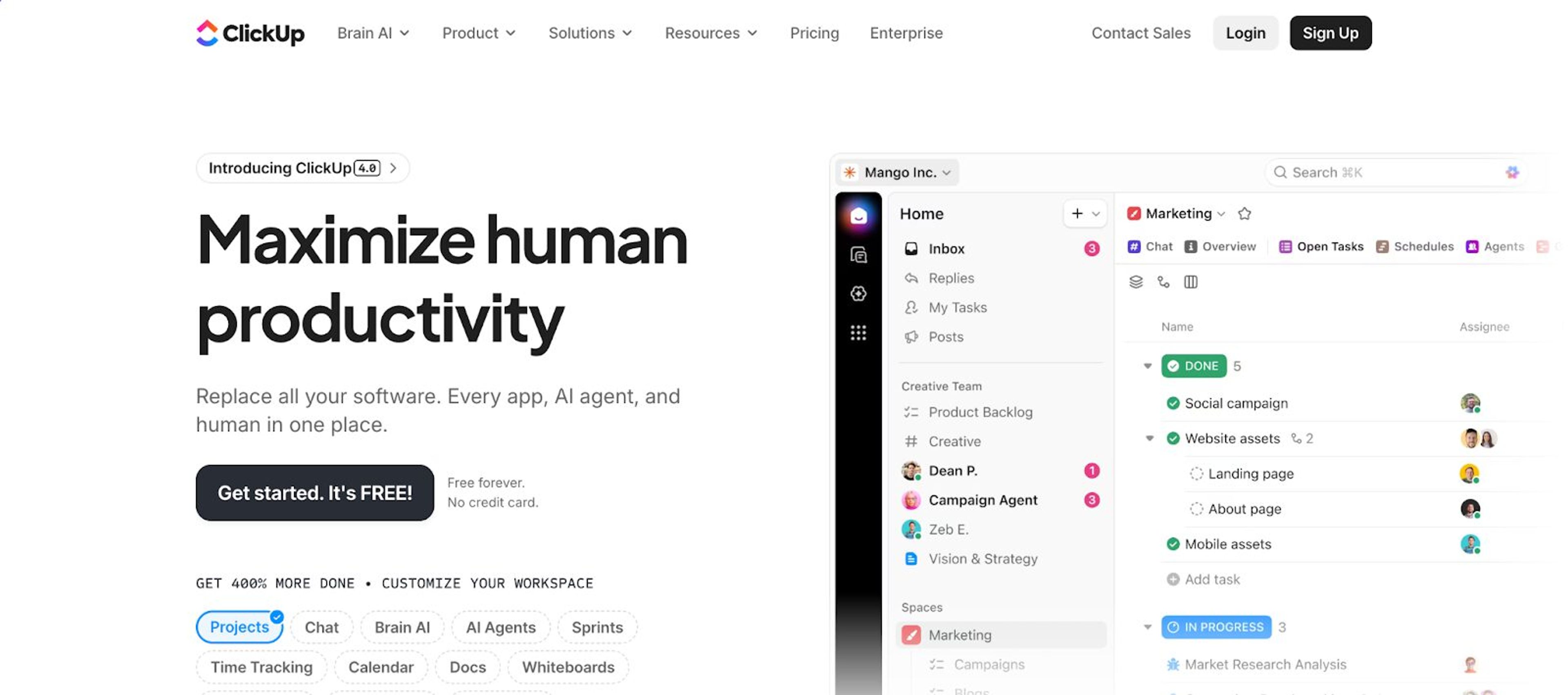
ClickUp’s headline, “Maximize human productivity,” is paired with a compelling subheadline: “Replace all your software. Every app, AI agent, and human in one place.”
This messaging communicates a powerful value proposition right away, positioning ClickUp as the all-in-one solution for productivity in both personal and professional settings.
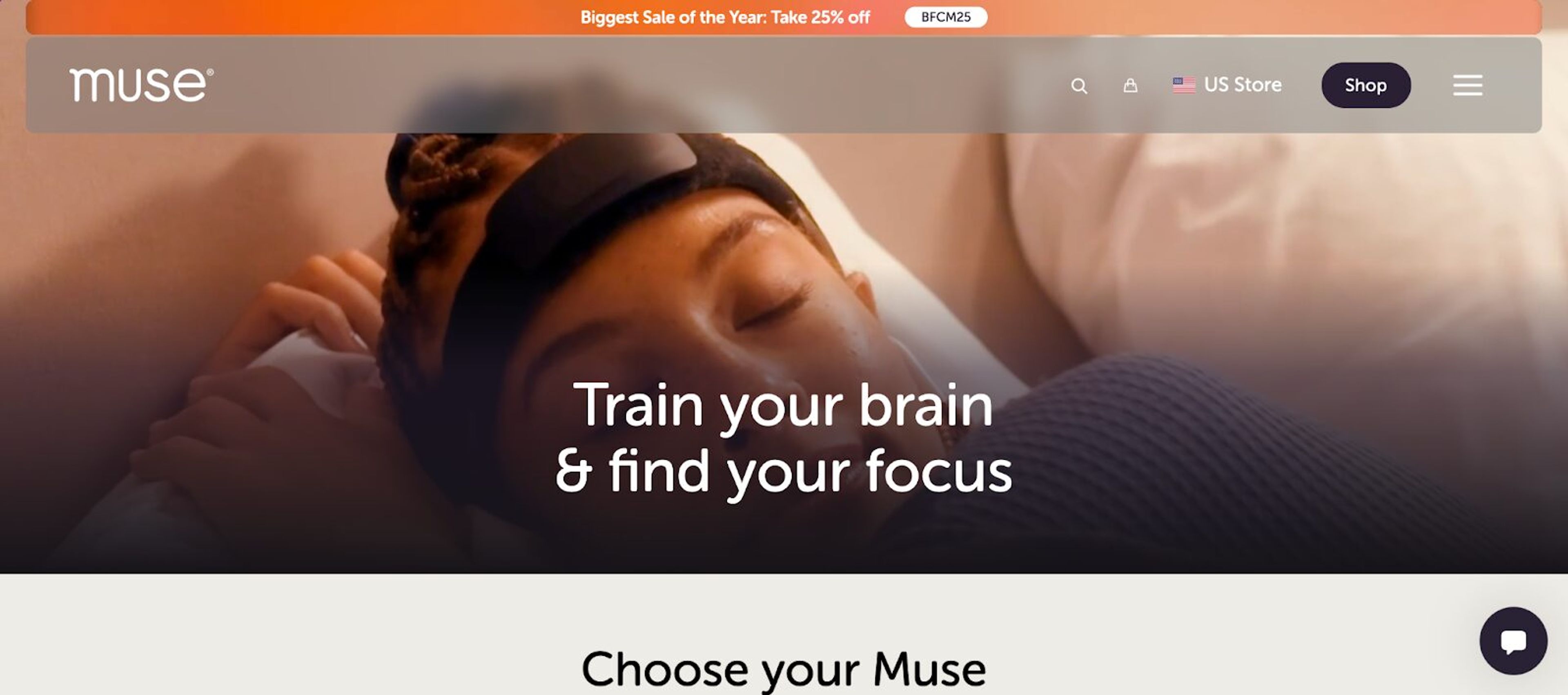
Meditation headband Muse offers a reassuring headline: “Train your brain. Find your focus.” It speaks directly to users looking for a tool to enhance their mental clarity.
The headline promises a transformative experience while aligning with the brand’s mission to help users improve their mental well-being through technology.
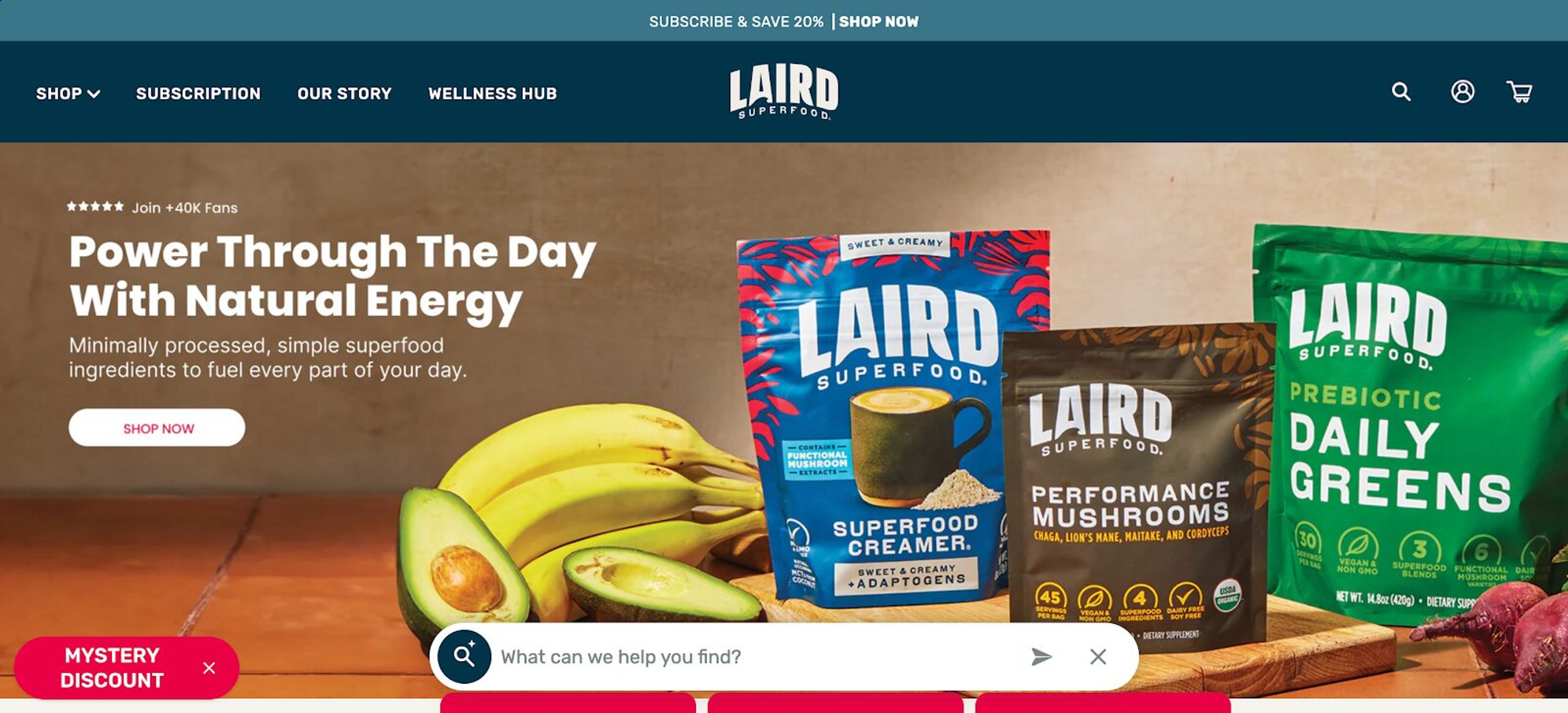
With “Power Through The Day with Natural Energy,” Laird nails the combo of product benefit and brand mission in one sentence. It’s clear, energetic, and motivating.
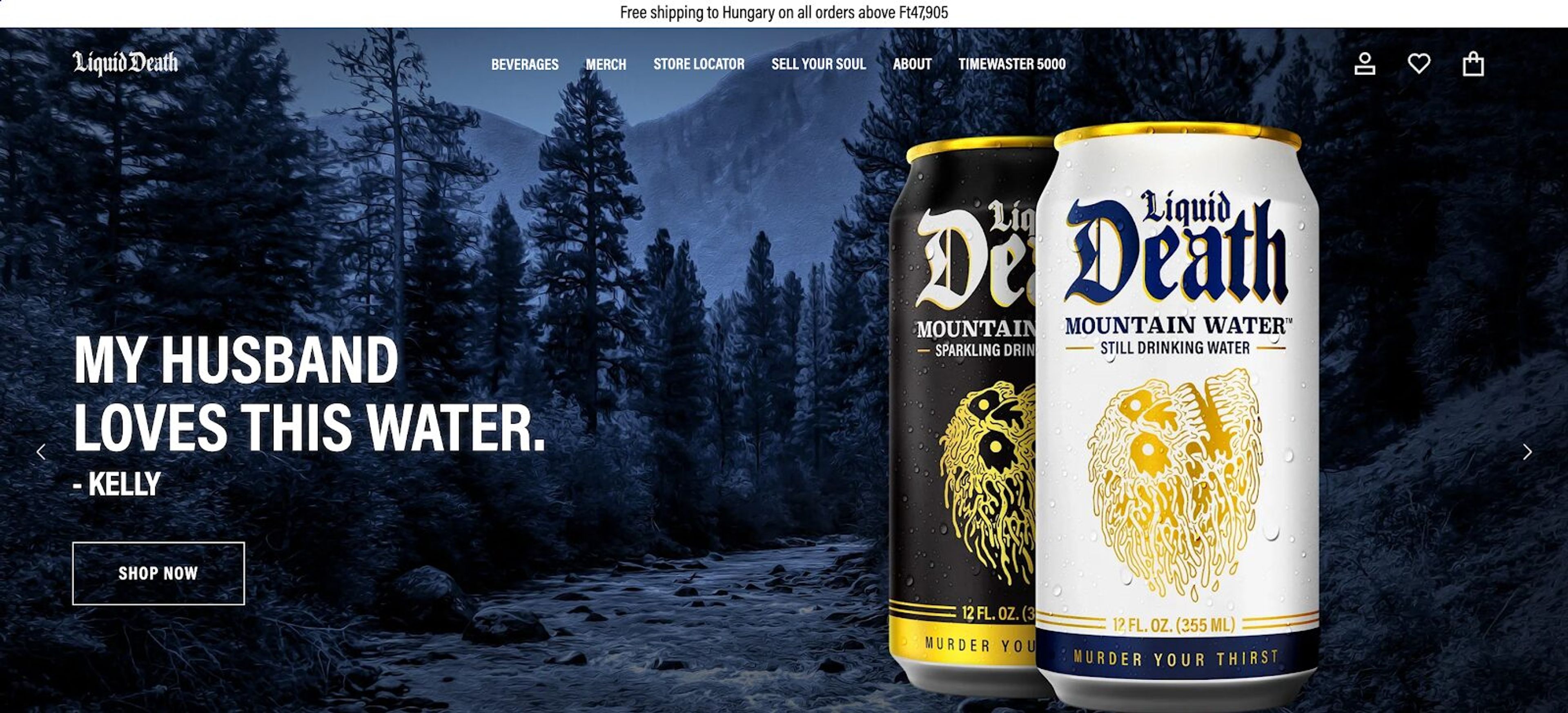
Liquid Death uses what appears to be a customer quote: “My husband loves this water.” It’s quirky, potentially satirical, and totally on-brand for a company known for its unconventional marketing.
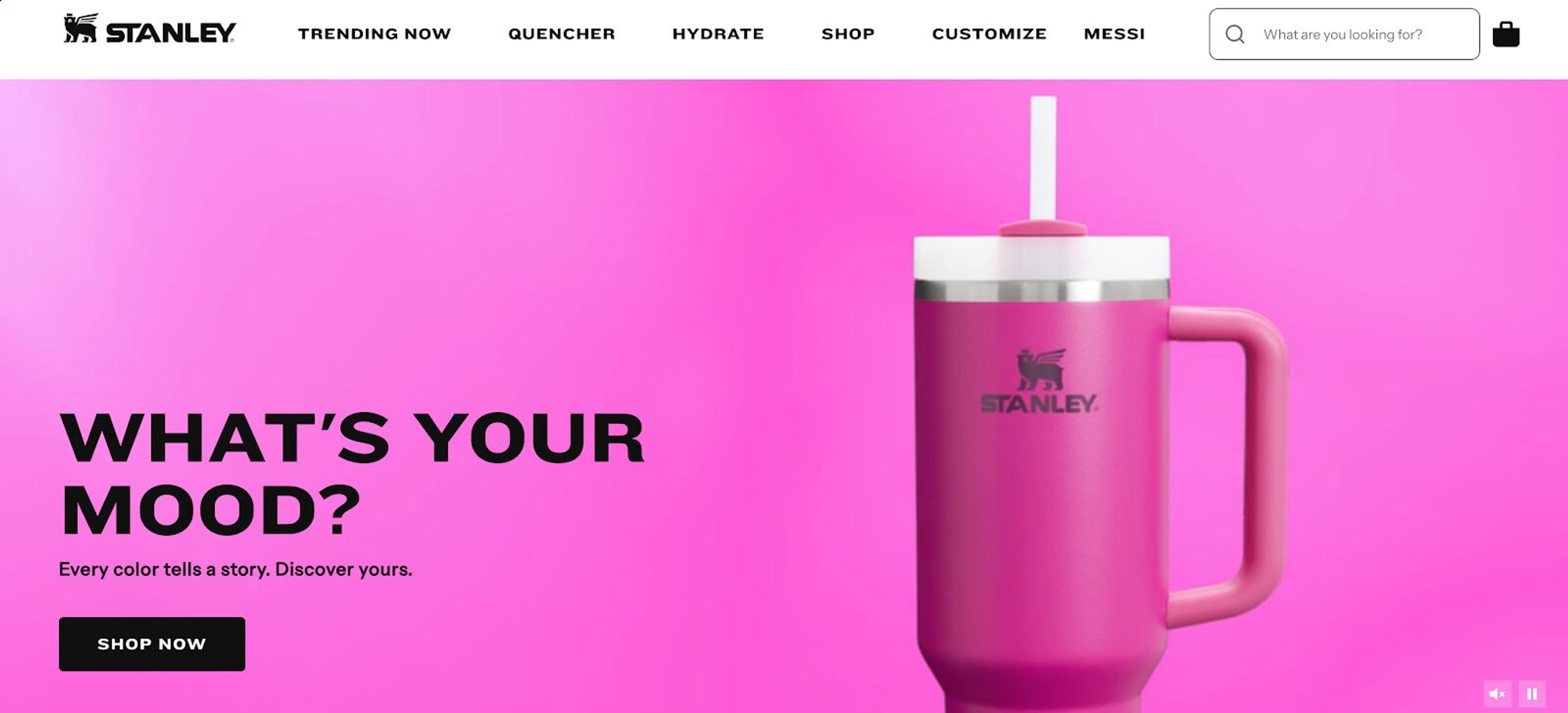
Stanley’s question, “What’s your mood?” introduces a color-based shopping experience. It’s interactive, personal, encourages an emotional response, and guides users without friction.
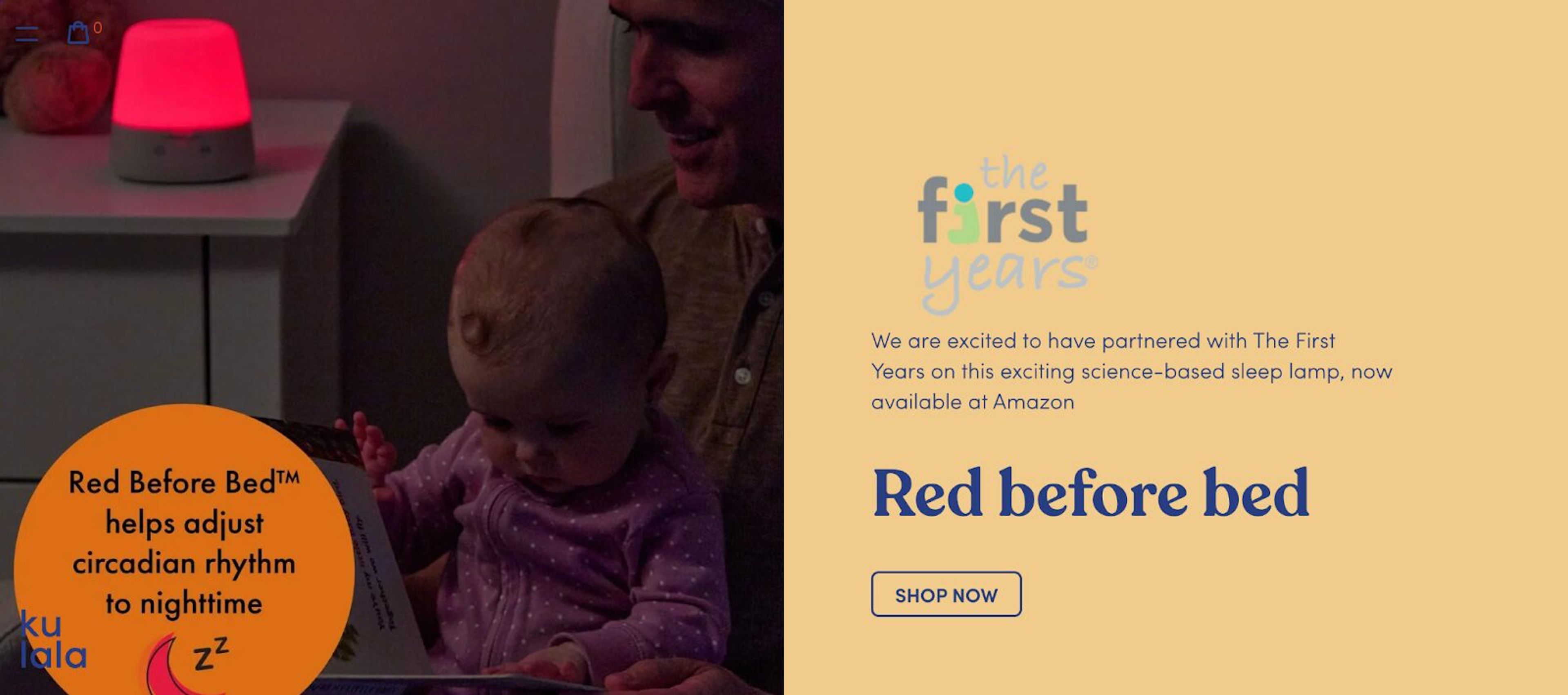
Kulala focuses on one key issue: helping babies sleep better. Their ultra-short headline, “Red before bed,” sparks curiosity and encourages visitors to read more.
The brand’s focus on science-backed solutions (plus their collaboration with another well-known name in the industry) builds trust and offers reassurance, making the purchase feel like a straightforward, safe choice for parents.
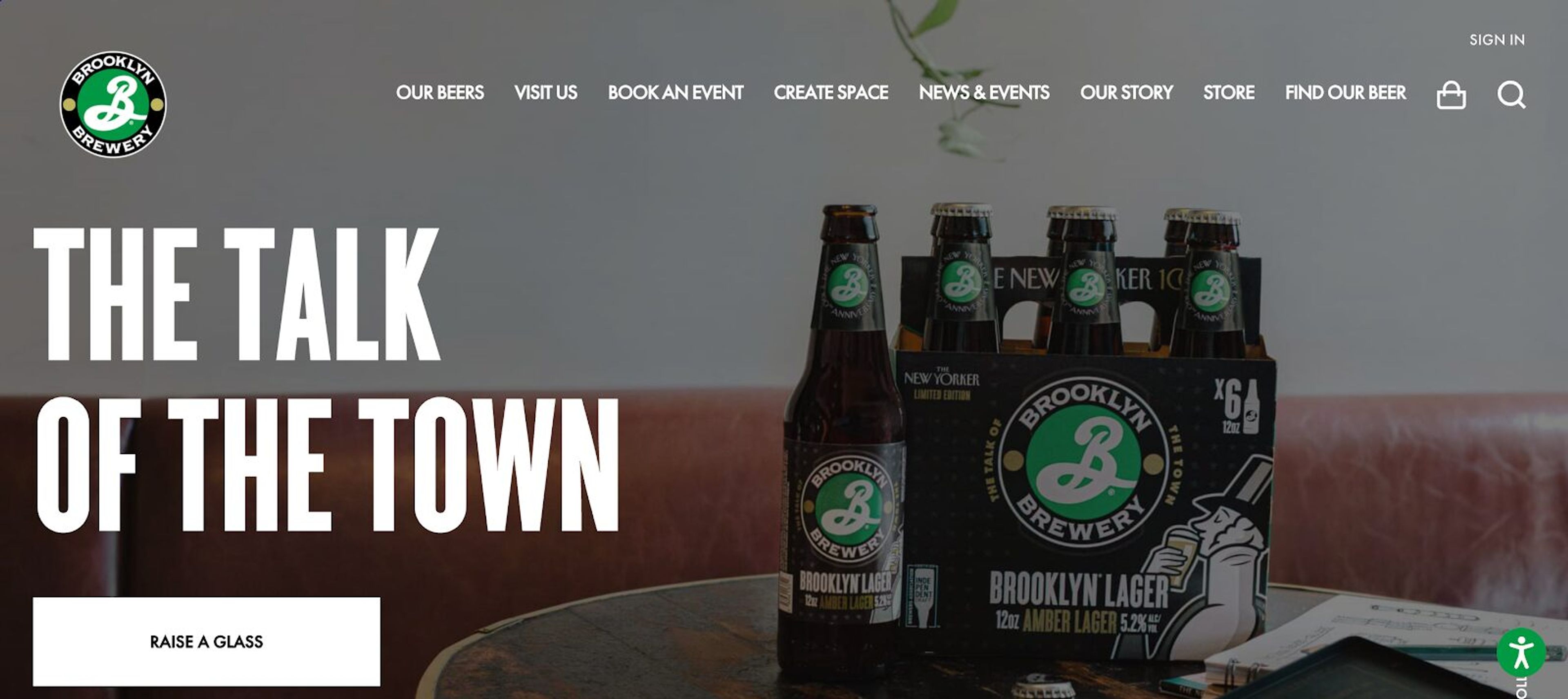
“The talk of the town” adds social buzz to a product launch, and with a CTA like “Raise a glass,” Brooklyn Brewery leans into community and celebration, which is perfectly aligned with their overallbrand voice.
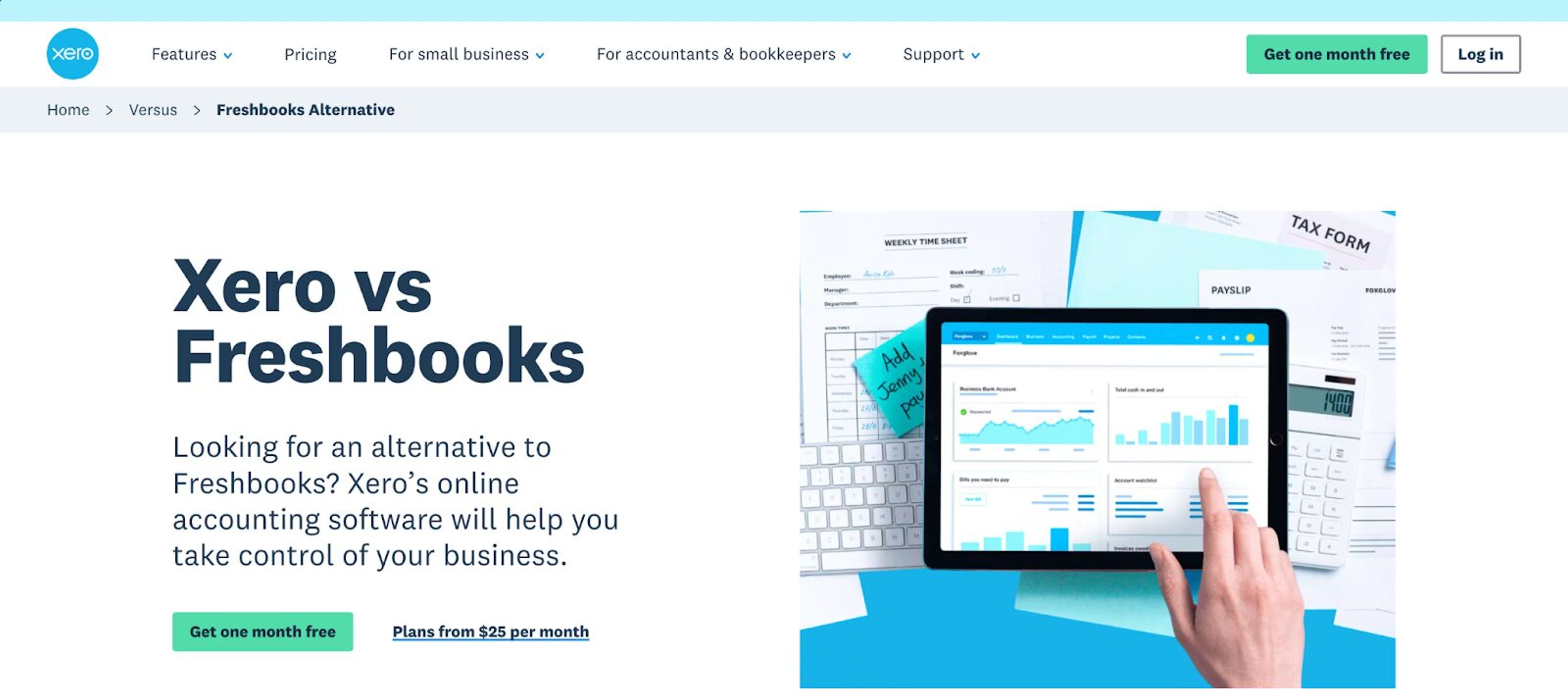
Xero’s headline positions its product as the superior alternative to FreshBooks.
By comparing the two and explaining why Xero is the better choice—“take control of your business”—it immediately offers clarity and provides a sense of confidence for users considering accounting software. This approach helps build trust with potential customers.
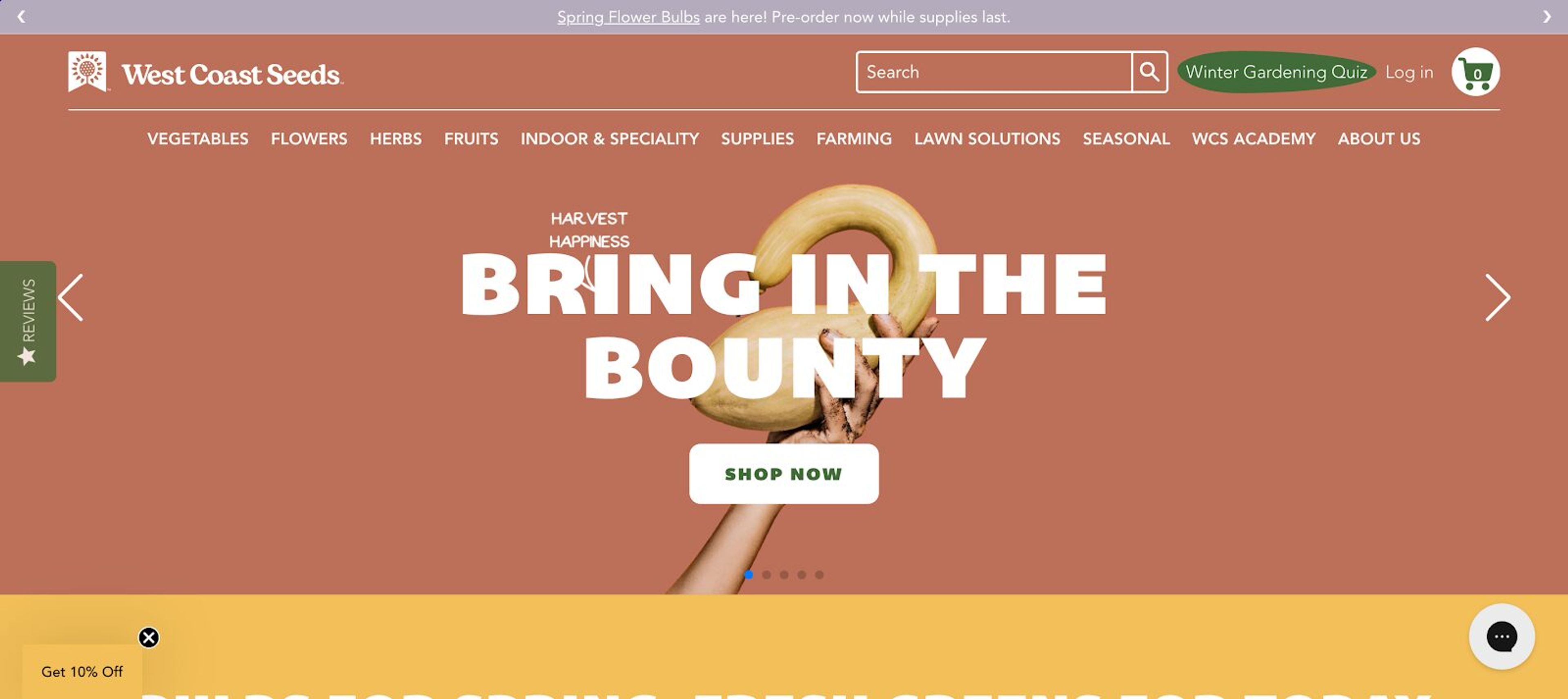
“Bring in the bounty” is rich with seasonal energy and optimism. It appeals to gardeners both emotionally and visually, creating a sense of abundance and reward.
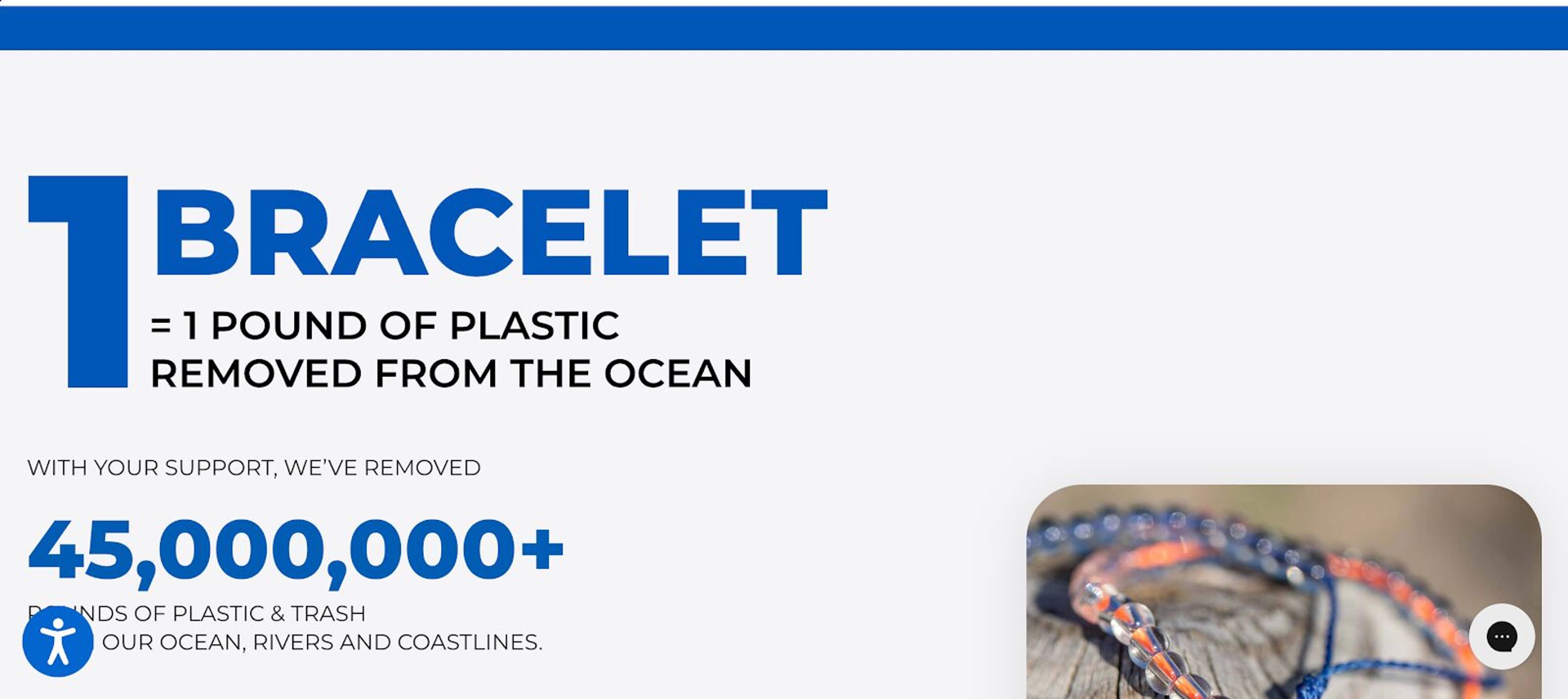
4ocean combines mission and proof with “1 bracelet = 1 pound of plastic removed from the ocean.” This headline instantly communicates impact, making the purchase feel meaningful.
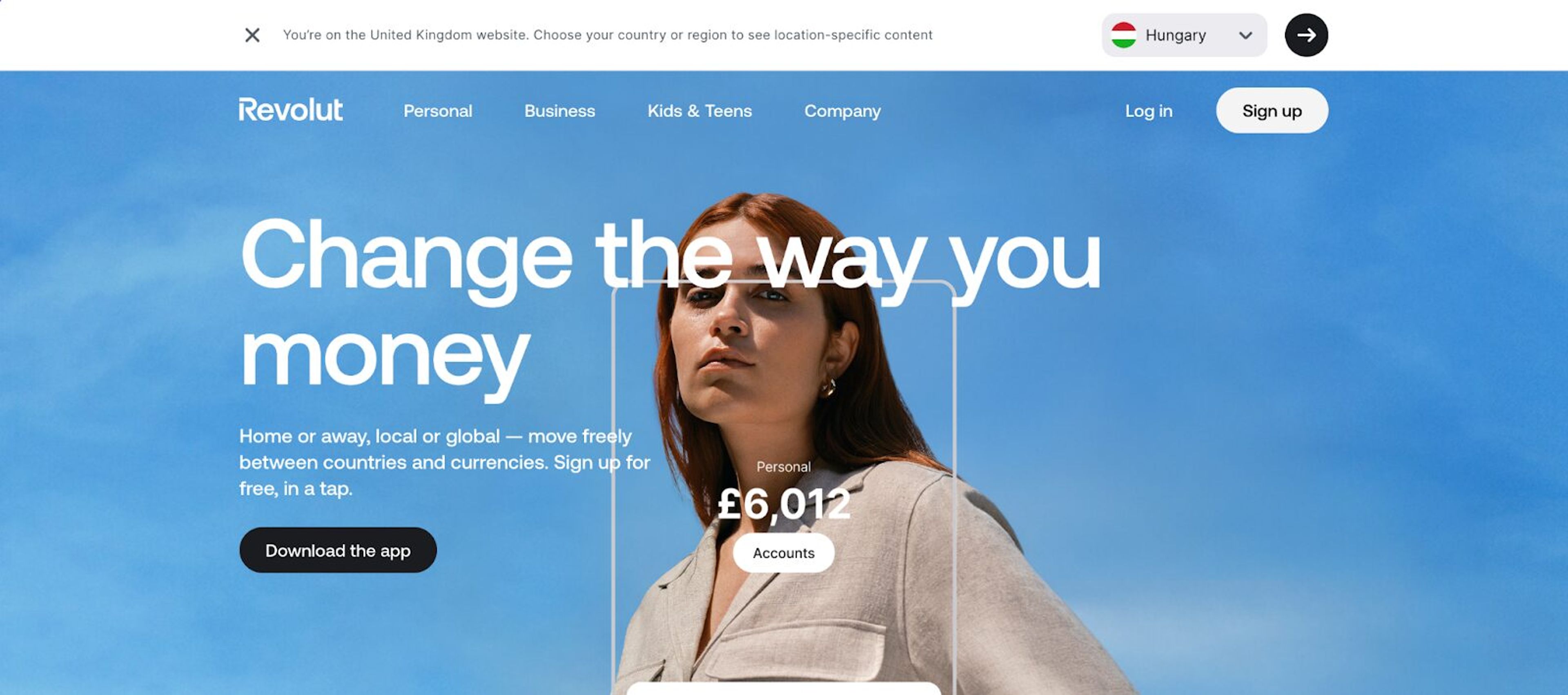
Revolut’s headline, “Change the way you money,” is both bold and transformative, signaling a shift in how users approach their finances.
The subheading, “Home or away, local or global—move freely between countries and currencies,” clearly communicates the brand’s global, flexible approach to financial management, all in just two sentences.
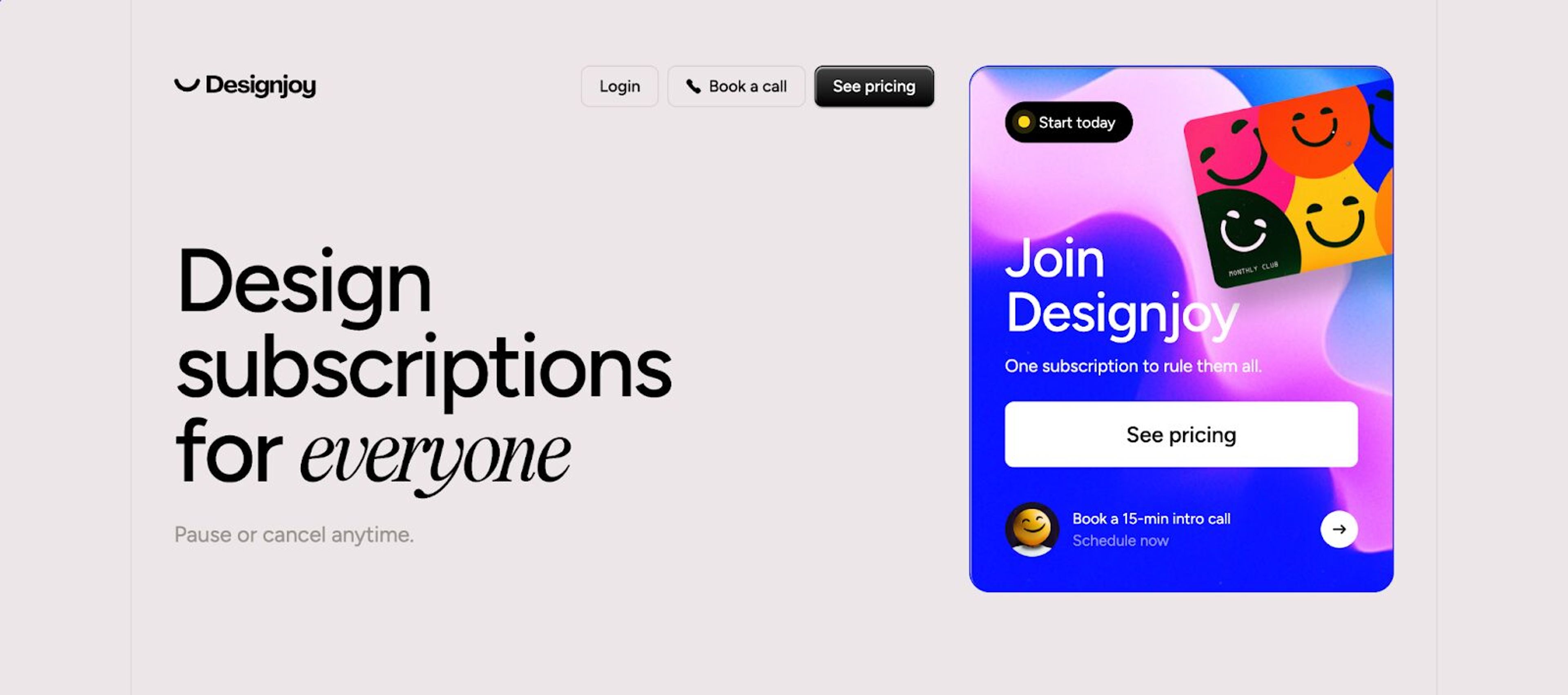
The headline “Design subscriptions for everyone” offers inclusivity, making design feel accessible to a wide audience.
The subheadline, “Pause or cancel anytime,” reassures visitors that they have control and flexibility, which helps reduce friction for those uncertain about committing to a subscription service.
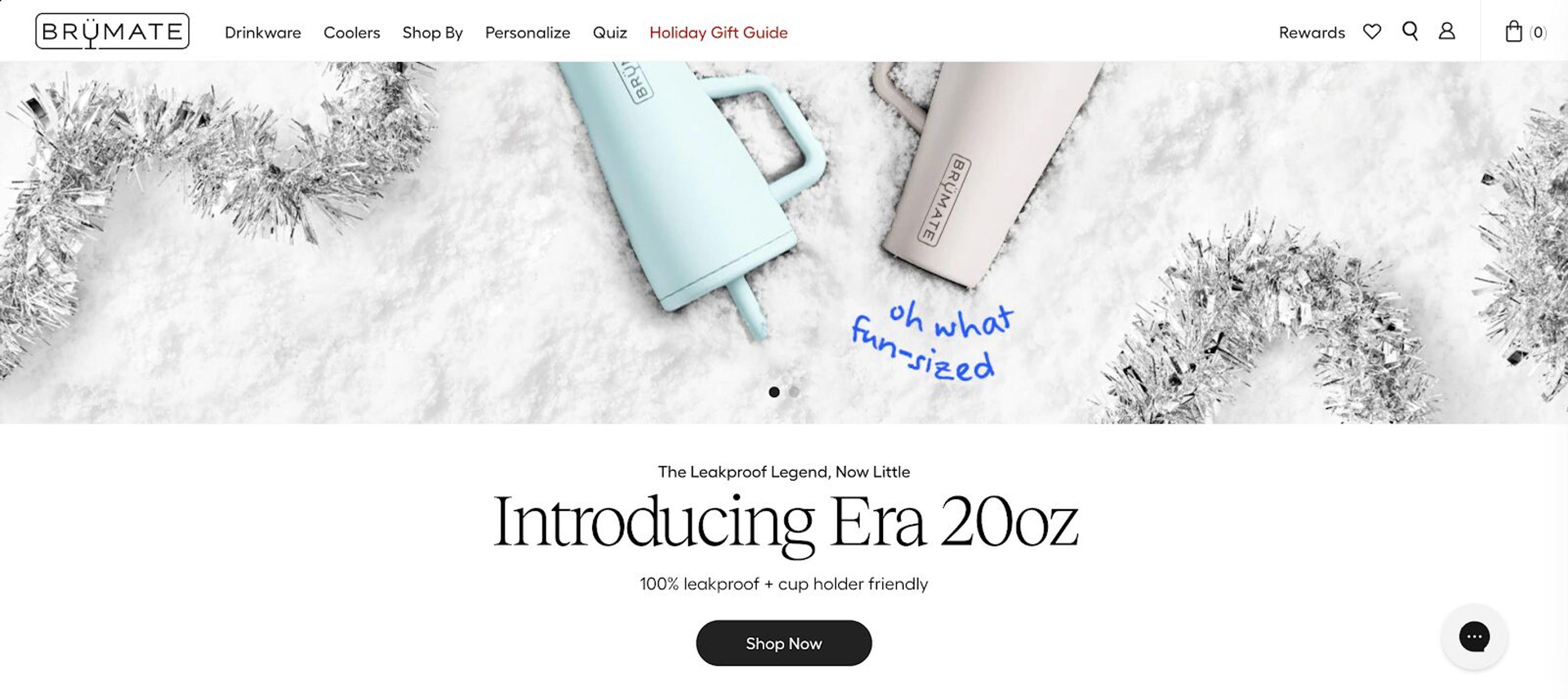
BrüMate launches a product with “The Leakproof Legend, Now Little. Introducing Era 20oz.” This headline is confident, clear, and centered on a standout feature that buyers care about.
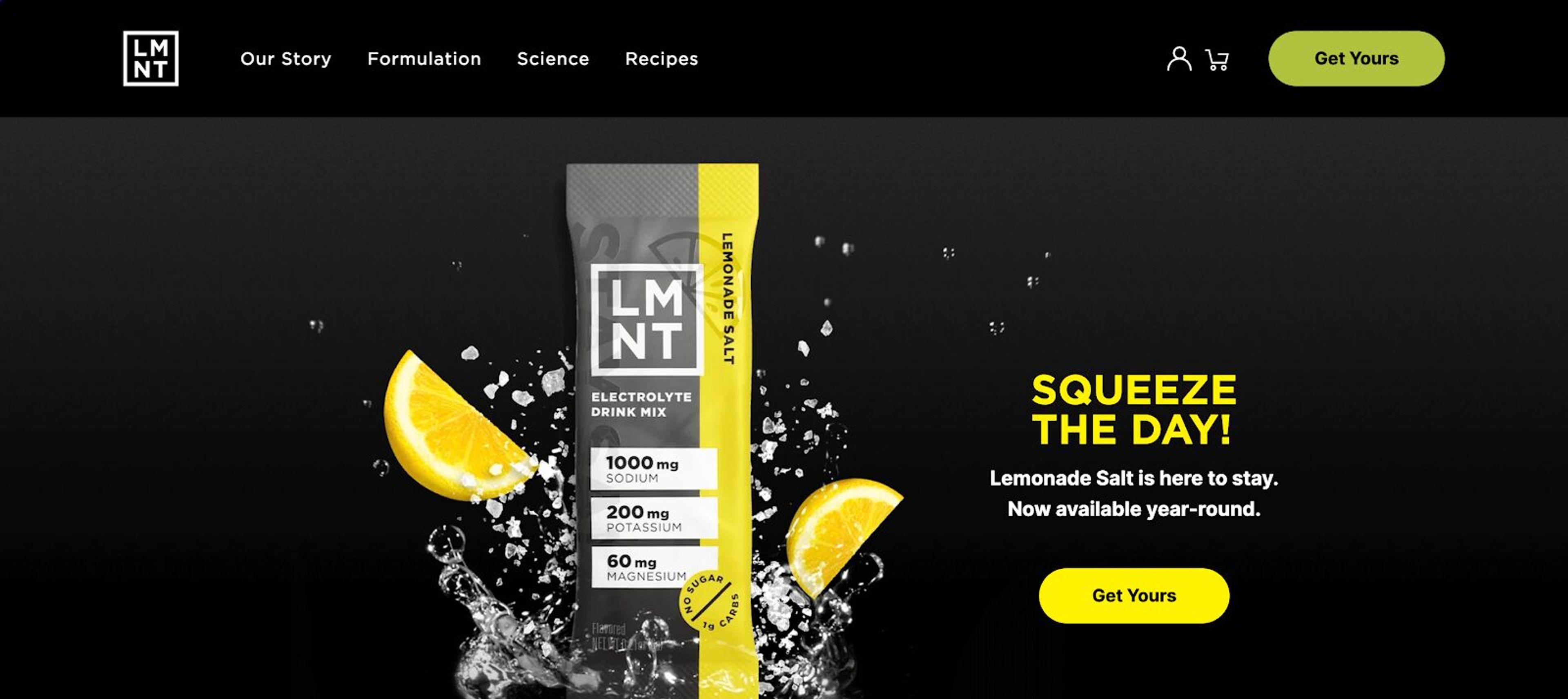
LMNT uses a fun pun, “Squeeze the day,” to connect the product (a citrus electrolyte drink) with an upbeat, energetic lifestyle. It’s playful and on-brand.
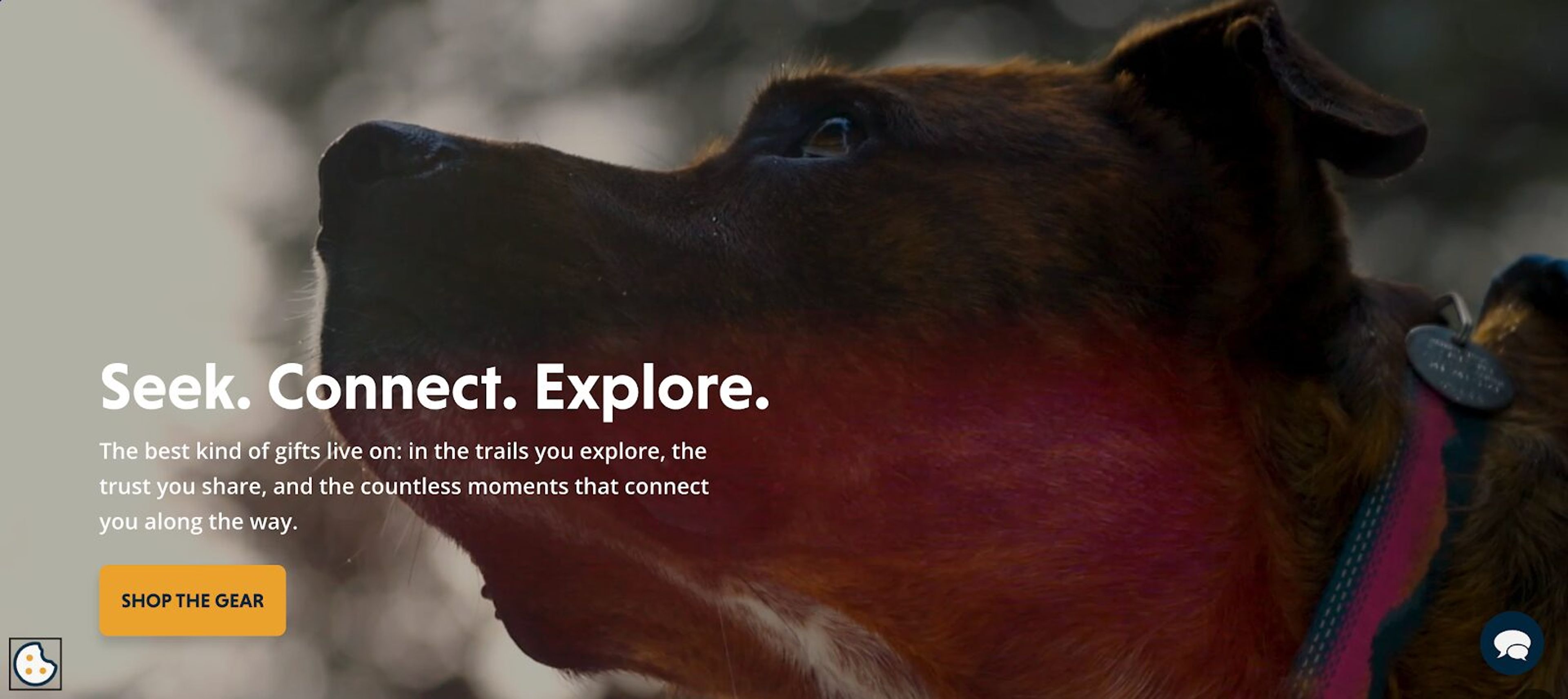
With “Seek. Connect. Explore.” Ruffwear encapsulates its entire mission in three verbs. It’s simple, powerful, and ideal for an audience that values adventure and purpose.
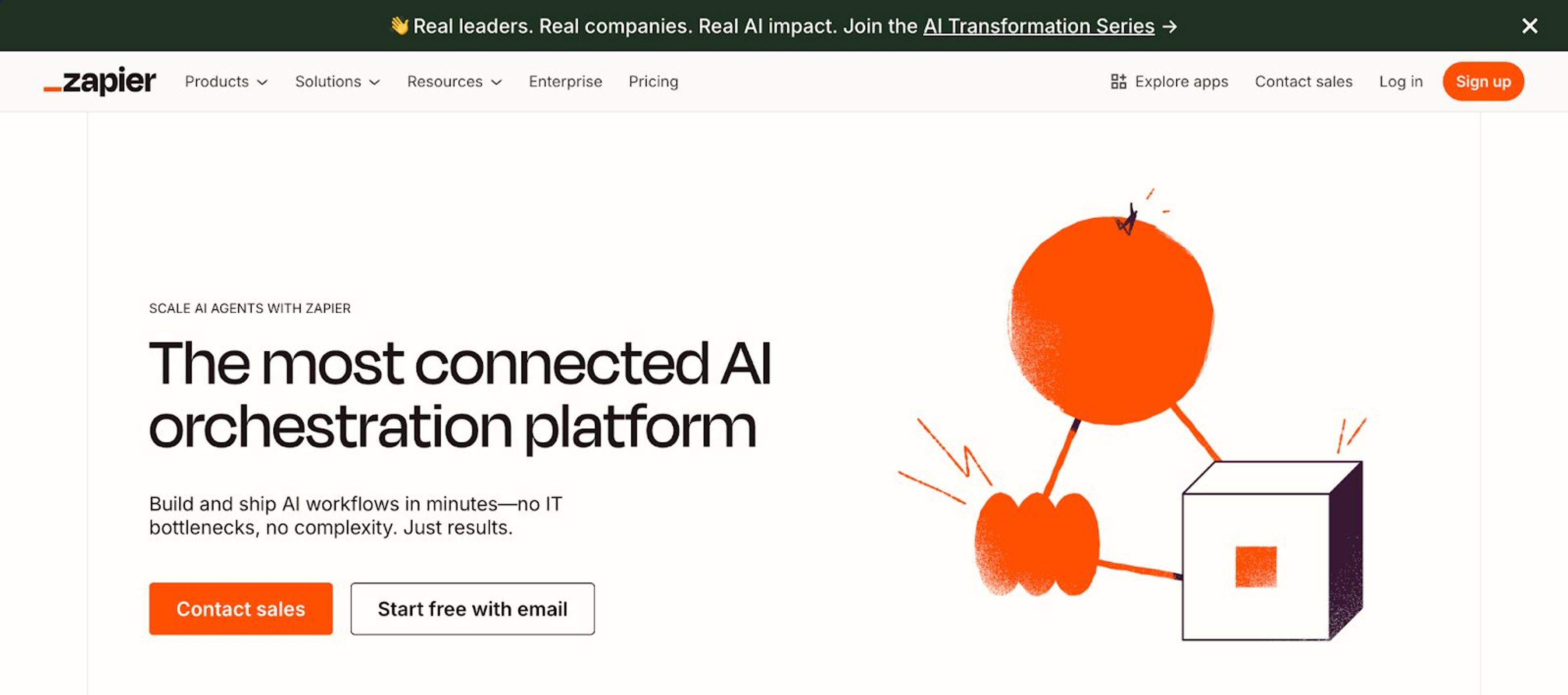
Zapier’s headline, “The most connected AI orchestration platform,” promises seamless integration of AI workflows.
The subheading, “Build and ship AI workflows in minutes—no IT bottlenecks,” effectively communicates the product's efficiency and ease-of-use, appealing to businesses looking to streamline operations without technical hurdles.
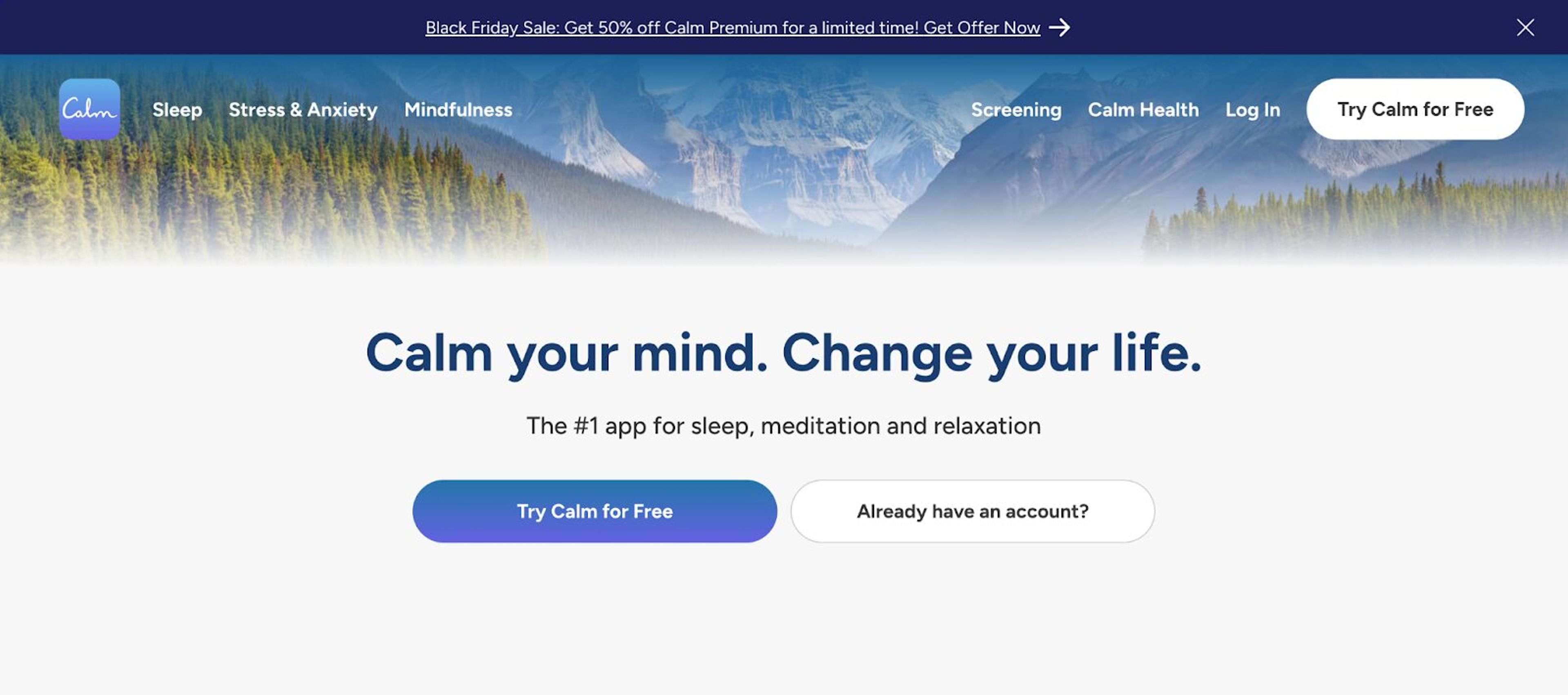
“Calm your mind. Change your life.” A simple, powerful promise that captures the app’s transformative impact. The subheading, “The #1 app for sleep, meditation, and relaxation,” reinforces its credibility and appeal.
If you want to create a headline that actually drives conversions, here’s a simple five-step process to follow:
Before you write anything, get clear on what you actually offer.
Ask yourself: What do we do, and who is this for?
Your headline should reflect that core promise. No one should leave your homepage wondering what you sell.
What’s the most important outcome your product or service delivers?
Is it saving time? Reducing stress? Making more money?
Focus your headline around the one result your audience cares most about.
Your visitors scan, they don’t read. Cut the fluff and aim for a clear, punchy message. If your headline can’t be understood at a glance, it’s too long, too vague, or both.
Specificity builds trust. Use real numbers, measurable results, and social proof to make your claim feel concrete.
For example: “Join 50,000+ freelancers using our invoicing tool.”
Don’t settle on the first version. A/B test different styles—benefit-driven, curiosity-based, proof-packed—and let the data show you what resonates.
With OptiMonk's A/B testing, you can test multiple headline variations in your popups and let the results decide which one stays.
A website headline is the first thing visitors see when they land on a page. It's a brief, compelling statement that captures attention, communicates the core message or value of the page, and encourages the visitor to take action or explore further.
Blog post headlines are designed to get clicks, usually through SEO or social media.
They often use curiosity, listicles, or how-to formats. Homepage headlines, on the other hand, are focused on conversions and must instantly communicate value to your target audience.
Focus on value and clarity. Use benefit-driven language, keep it short, and speak directly to your audience. Authenticity beats hype every time.
A headline is considered "clickbait" when it promises something sensational or misleading to grab attention but fails to deliver on that promise.
It often uses exaggerated or provocative language that entices users to click, but when they do, they find the content doesn’t meet their expectations.
While clickbait can drive clicks in the short term, it damages trust and user experience in the long run.
A good headline should include the main benefit or key message of your page, product, or post. It should be clear, concise, and relevant to your target audience. If applicable, include a strong call-to-action or a sense of urgency.
The headline should also align with the content and tone of the rest of the page to create a seamless user experience.
Bad headlines are often vague, too long, filled with jargon, or don’t clearly state the benefit. If your headline could work on any website, it probably won’t work on yours.
Your homepage headline is your website's handshake. It’s your one shot to say, “Hey, we’ve got exactly what you’re looking for.”
Make it count. Use proven formulas. Test relentlessly. And always write like your visitor's time is precious—because it is. Now go craft a headline that makes them want to scroll!

In this article, we'll share 30 actionable Black Friday marketing ideas for ecommerce businesses to make 2026 your most successful yet.
Learn about email marketing frequency for ecommerce stores. Most send 1-3 emails per week, with frequency adjusted by subscriber engagement and store type.
Let's take a look at the 21 best lead generation software for 2026 and discuss the features that any lead generation tool should have.